
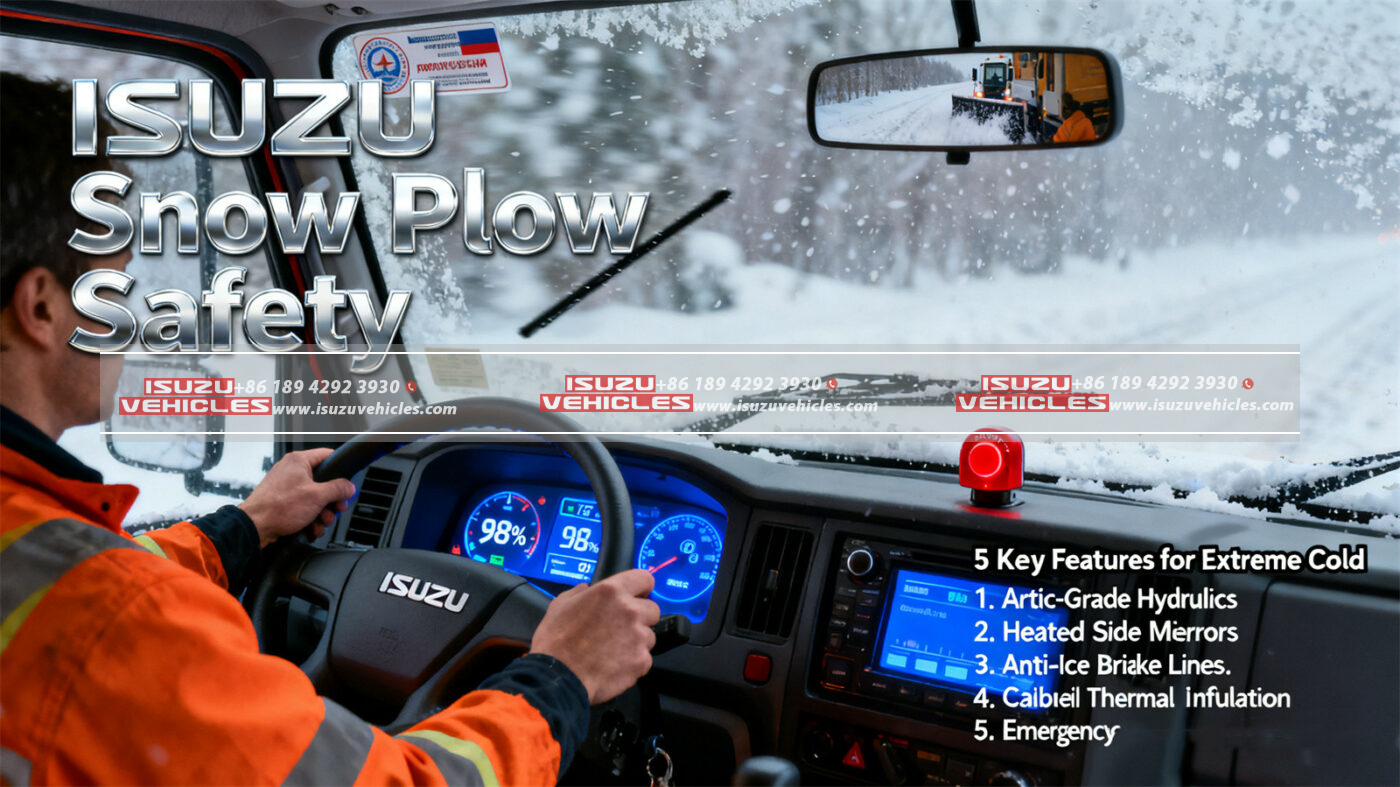
Winter across Russia is a season defined by contrasts — breathtakingly beautiful, yet brutally demanding for transportation and infrastructure. From the frozen expanse of Siberian highways to the slush-choked arteries of Moscow, efficient and safe snow removal operations are not merely matters of convenience but of national necessity. It is within this harsh and variable environment that ISUZU snow plows have earned a quiet reputation for dependability and thoughtful engineering, designed to protect not just the operators but also the machines and the public they serve.
This article takes a close, professional look at the most important safety features of modern ISUZU snow plows operating on Russian roads — from intelligent braking and traction systems to advanced cabin ergonomics and anti-collision technologies — and explores how these design choices integrate into the country’s complex logistical and climatic realities.
1. The Harsh Reality of Russian Winter Operations
The first step toward understanding the safety architecture of an ISUZU snow plow is acknowledging the unique operational context of Russia’s winter road network. Temperatures that can plunge below minus forty degrees Celsius in the north coexist with near-freezing rain and black ice in the western urban belt. Road surfaces are inconsistent, sometimes layered with compressed ice, sometimes obscured by dense, blowing snow. Visibility is often measured in meters rather than kilometers, while fatigue levels among drivers soar after long, nocturnal operations.
In these circumstances, safety engineering is not about luxury or comfort but survival. Every control, every sensor, and every algorithm in a snow plow must anticipate not just mechanical stress but human limitations and unpredictable environmental changes. ISUZU’s design philosophy acknowledges this intersection between machine endurance and human resilience, building vehicles that do not simply remove snow but maintain a stable operating ecosystem amid environmental hostility.
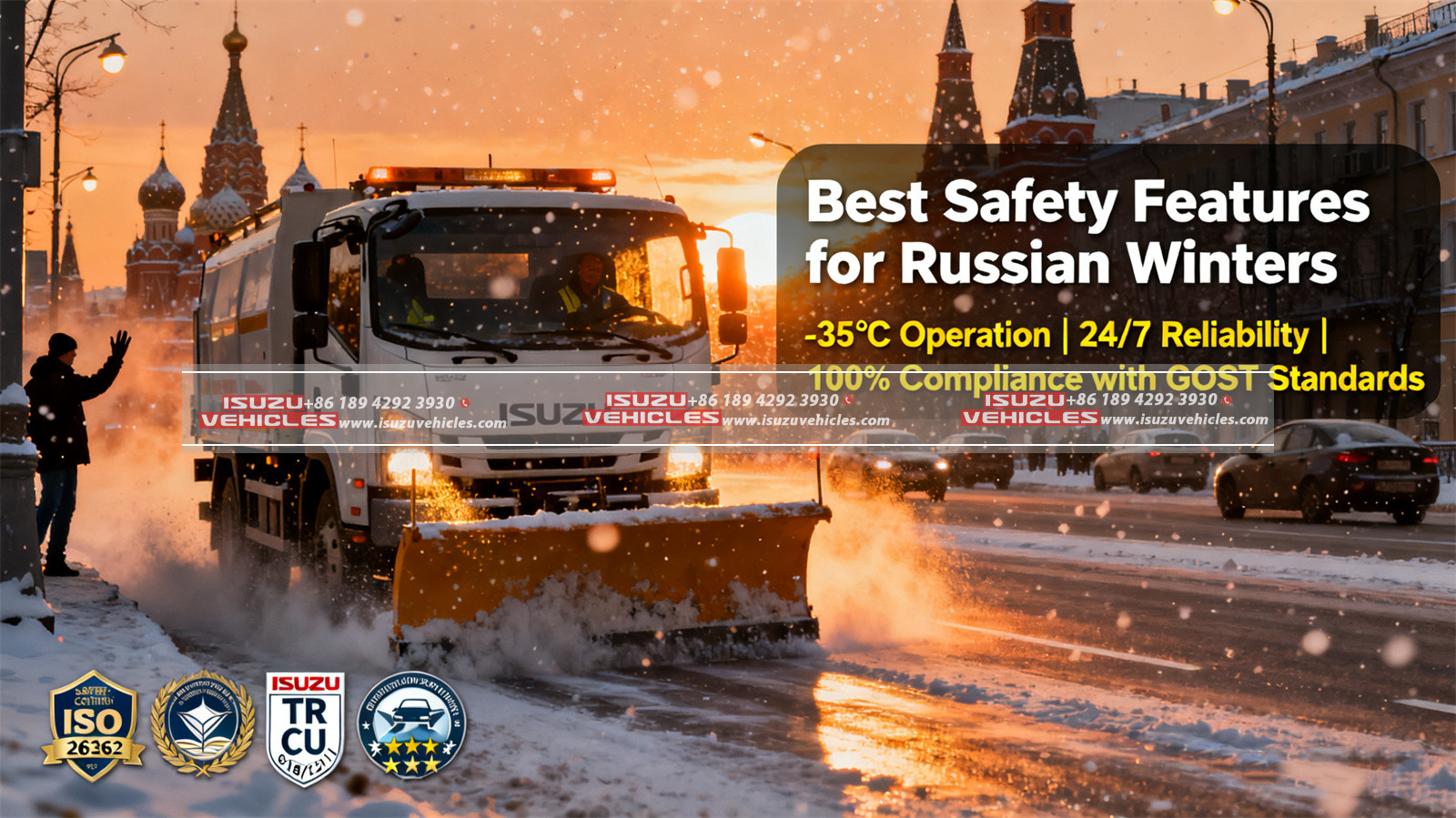
2. Intelligent Traction and Stability Management
Advanced Differential and Traction Control Systems
A snow plow’s stability begins at its foundation — the drive system. ISUZU snow plows are typically derived from heavy-duty truck platforms equipped with intelligent traction control and locking differentials designed to automatically adapt to surface conditions. When a wheel loses traction on ice or compacted snow, torque is redistributed to those with better grip, minimizing wheel spin and preserving directional control.
This dynamic control mechanism works in concert with electronic stability programs that monitor lateral acceleration, steering angle, and yaw rate, adjusting engine torque or braking pressure on individual wheels to maintain composure on slippery gradients. In Russia’s mixed terrain — where highways climb icy slopes one moment and descend into slush-filled depressions the next — this ability to modulate traction in real time becomes the difference between smooth progress and operational delay.
Adaptive Load Distribution
Snow accumulation and uneven plow resistance impose variable loads on the chassis. ISUZU’s adaptive suspension systems integrate sensors that redistribute weight dynamically, ensuring that both axles retain optimal traction. This prevents the classic “nose dive” tendency of front-heavy plow configurations, which can destabilize steering at high speeds or during sudden braking.
In practical terms, this feature reduces driver fatigue by creating predictable, uniform handling, especially when navigating snowbanks, tight intersections, or icy bridges common across northern regions.
3. Hydraulic System Safety and Energy Efficiency
Pressure Regulation and Thermal Protection
One of the most overlooked safety concerns in snow plows is the hydraulic system that raises, lowers, and angles the plow blade. Hydraulic failure under freezing conditions can create hazardous situations, including uncontrolled blade movement or loss of plowing capability in the middle of an active operation.
ISUZU’s engineering teams have addressed this with automatic pressure regulation systems and thermostatically controlled hydraulic lines, preventing fluid thickening and ensuring consistent responsiveness even when ambient temperatures plunge below −30°C. Overpressure valves and reinforced seals further protect operators and mechanics from system bursts or leaks — a critical safeguard when maintenance must occur outdoors in subzero windchill.
Quick-Disconnect and Fail-Safe Valves
Maintenance and component replacement are frequent realities during prolonged snow removal campaigns. To minimize downtime and exposure risk, ISUZU plows often integrate quick-disconnect couplings with automatic shut-off valves. If a hydraulic line is detached, the valve closes immediately to prevent fluid loss and contamination. This seemingly minor feature represents a profound operational safety enhancement, reducing both environmental hazards and the risk of injury during field servicing.
4. Cabin Design: Human-Centered Ergonomics in Extreme Cold
Thermal Comfort and Visibility Management
In a typical Russian snow removal shift, drivers may spend 10 to 14 hours in the cab, often at night, in temperatures that can swing from freezing fog to sudden wind-driven snow. ISUZU’s cabin ergonomics have been designed with this grueling reality in mind. Multi-zone climate control maintains interior warmth evenly without causing windshield fogging, while advanced air-filtration prevents the accumulation of fine snow dust that can compromise visibility and breathing comfort.
Heated mirrors, wiper de-icing elements, and heated seat assemblies reduce driver distraction and ensure continuous operation without frost build-up. The cab’s insulation is acoustically engineered as well, cutting external engine and plow noise — a subtle but important factor in reducing mental fatigue during repetitive clearing routes.
Ergonomic Controls and Visibility Layout
Modern ISUZU plow cabins employ a command-oriented layout inspired by aviation and heavy-equipment ergonomics. Control levers for blade angle, lift, and spreader functions are positioned within natural reach zones to minimize repetitive strain. Digital displays present hydraulic pressure, temperature, and engine load in real time, helping operators anticipate system anomalies before they evolve into safety incidents.
Large panoramic windshields, narrow A-pillars, and optional 360° camera systems improve situational awareness, allowing precise edge control when plowing close to curbs or guardrails. These design decisions, though subtle, dramatically lower the likelihood of property damage or pedestrian accidents in dense urban environments.
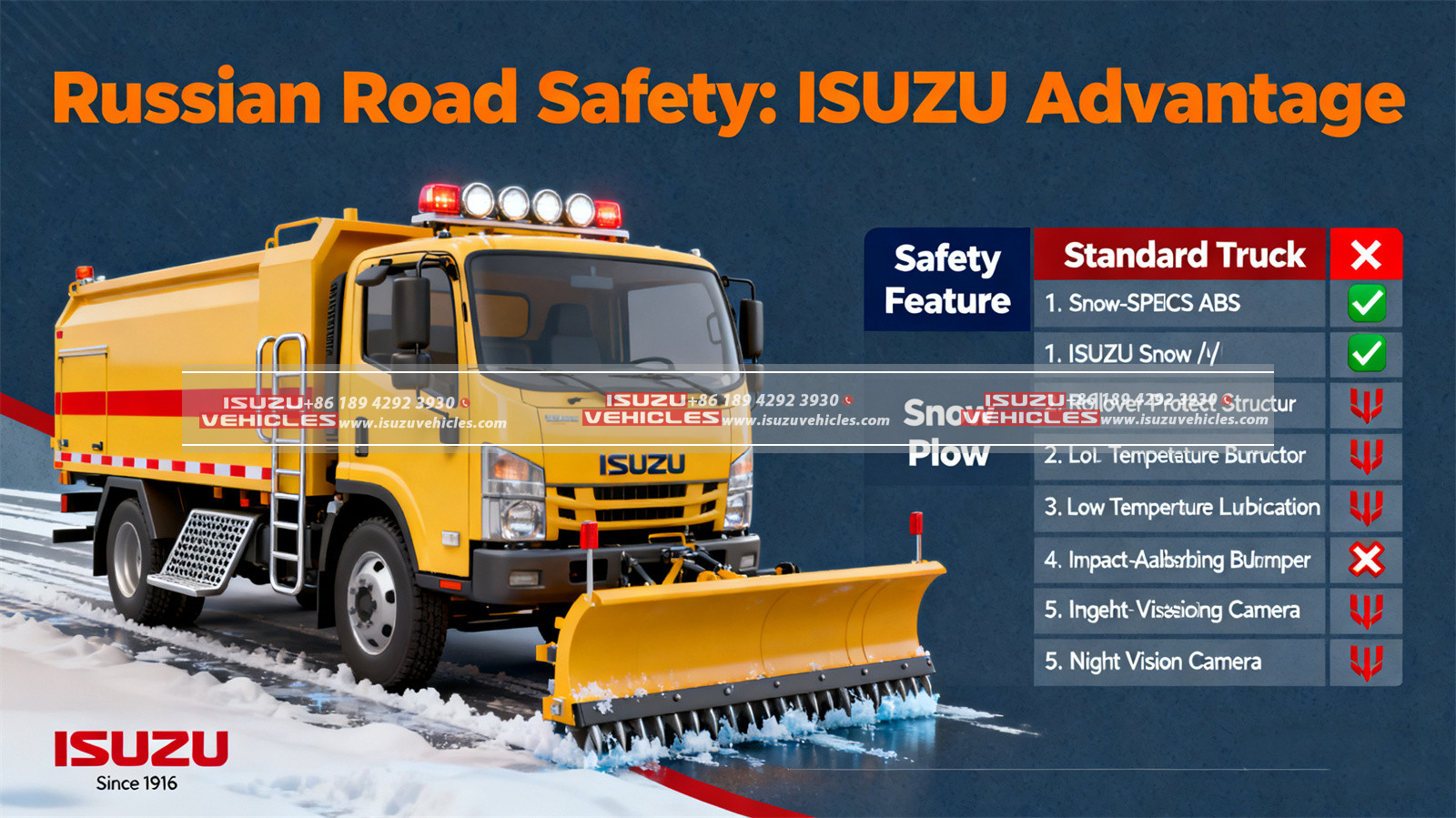
5. Advanced Lighting and Vision Systems
LED Illumination and Beam Optimization
Visibility is both the greatest asset and the most vulnerable point in winter operations. ISUZU snow plows are equipped with adaptive LED lighting arrays designed to cut through snow glare and fog without overwhelming the driver’s visual focus. Unlike conventional halogen beams, these LEDs maintain color temperature and brightness even in subzero temperatures and offer longer service life, reducing maintenance intervals.
High-mounted auxiliary lights illuminate the plow’s path ahead, while underbody and side lamps highlight the vehicle’s width — essential for coordination with following maintenance convoys and for avoiding roadside obstacles hidden beneath fresh snowfall.
Infrared and Camera-Based Assistance
In higher-end configurations, infrared imaging systems and multi-angle cameras assist operators when visibility drops to near zero. Real-time displays in the dashboard merge thermal imaging with radar feedback, outlining road edges and potential obstructions even when snow completely obscures lane markings. This technology, initially adopted in aviation and military logistics, has become a critical safety enabler for civil snow removal fleets operating through long polar nights.
6. Brake, Driveline, and Anti-Collision Integration
Anti-Lock Braking Systems and Hill-Start Assistance
Heavy plows carrying tons of compressed snow must manage massive momentum, particularly when descending icy gradients. ISUZU integrates anti-lock braking systems (ABS) tuned for low-friction surfaces, preventing wheel lock-up and maintaining steering control during deceleration. Coupled with hill-start assist, which prevents rollback on inclines, this feature set allows operators to focus on alignment and blade positioning rather than clutch-brake coordination in precarious conditions.
Proximity Sensors and Collision Avoidance
Urban snow removal involves navigating among parked cars, pedestrians, and other service vehicles. ISUZU plows employ proximity sensors along the front and side panels, providing audible and visual alerts when obstacles approach within a preset safety radius. Some configurations add radar-based automatic braking intervention at low speeds, halting the vehicle before a collision can occur.
These systems, combined with optional reverse cameras and dynamic steering assist, mitigate the inherent blind spots created by snowbanks or raised plow blades — an indispensable advantage for operators working in dense, unpredictable traffic patterns.
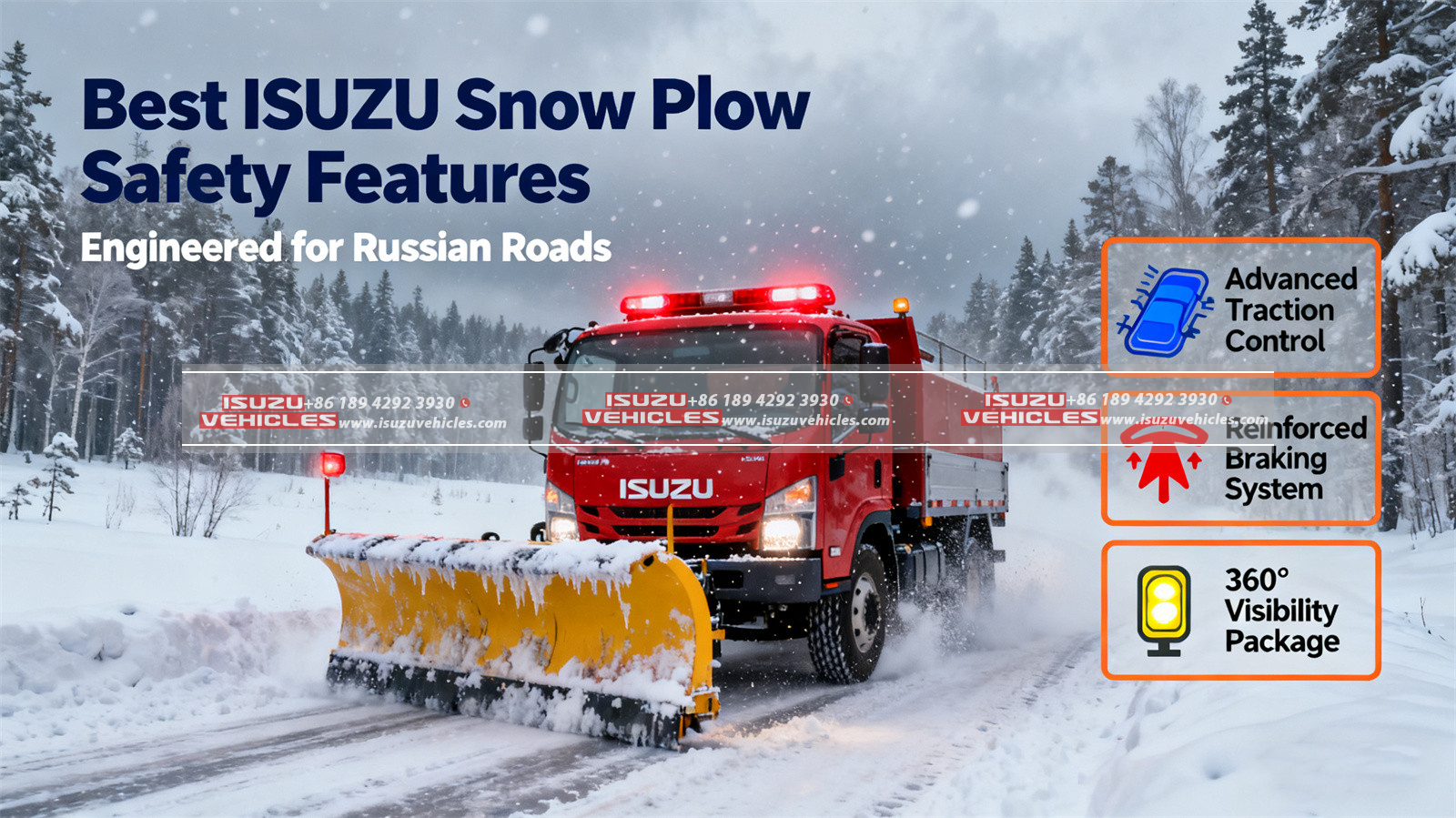
7. Fleet Management, Telemetry, and Predictive Maintenance
Real-Time Telemetry and Route Optimization
In modern Russian municipalities, snow removal is managed as a coordinated logistical network rather than a collection of independent vehicles. ISUZU’s integration with fleet management software allows each plow to transmit real-time telemetry — including position, blade status, fuel consumption, and hydraulic pressure — to a central control center.
This data-driven infrastructure allows supervisors to reassign vehicles dynamically based on changing weather and road priorities, ensuring that resources are deployed efficiently and safely. More importantly, real-time communication reduces isolation risk for drivers working in remote or blizzard-prone regions, allowing for rapid emergency response if mechanical or health incidents occur.
Predictive Maintenance and Diagnostic Alerts
Continuous sensor data feeds also enable predictive maintenance. Algorithms compare engine vibration patterns, hydraulic pressure variations, and brake wear rates against baseline models to forecast potential failures before they happen. In Russia’s remote regions, where spare parts and mechanical support can be days away, this capability prevents dangerous breakdowns during operations and significantly extends the service life of the vehicle.
8. Integrating ISUZU’s Broader Engineering Ecosystem for Safer Winter Infrastructure
ISUZU’s commitment to safety extends beyond the snow plow segment. The same engineering principles appear across the company’s broader vehicle ecosystem — from ISUZU Vehicles used in freight and municipal services to the ISUZU sweeper truck and ISUZU vacuum truck, which share chassis design philosophies emphasizing reliability, balanced load distribution, and operator protection.
This unified approach matters because many Russian municipal fleets operate mixed ISUZU lineups, where maintenance crews, mechanics, and operators can cross-train easily. Shared components reduce the learning curve, ensuring that safety protocols, diagnostic tools, and spare parts are interchangeable across multiple service types. In effect, ISUZU has built not just a snow plow but an integrated public service platform — a family of machines that support each other’s operational logic, maintenance cycles, and safety standards.
Such interoperability becomes critical in large-scale events such as sudden snowstorms or freezing rain emergencies, where sweepers, salt spreaders, and plows must coordinate in minutes. Consistent engineering across all ISUZU service vehicles ensures not only reliability but also predictability in handling, response, and control — the ultimate safety assurance in conditions where human and mechanical performance are both stretched to their limits.
Final Thoughts
The evolution of ISUZU’s snow plow safety systems represents a deeper philosophy about engineering in the service of people and the environment rather than machinery alone. On Russia’s winter roads — a world of long horizons, freezing air, and relentless logistics — safety is not achieved through a single feature or technology. It emerges from the thoughtful integration of systems: traction control talking to hydraulic pressure sensors, cameras augmenting human vision, ergonomics relieving fatigue, and predictive algorithms guarding against failure before it occurs.
In this synthesis of human intelligence and mechanical resilience, ISUZU has crafted vehicles that honor both the demands of the land and the skill of those who navigate it. The result is a snow plow that not only survives Russia’s winter but helps everyone else survive it too — a quiet, persistent force keeping movement possible when nature itself seems determined to stop it.