
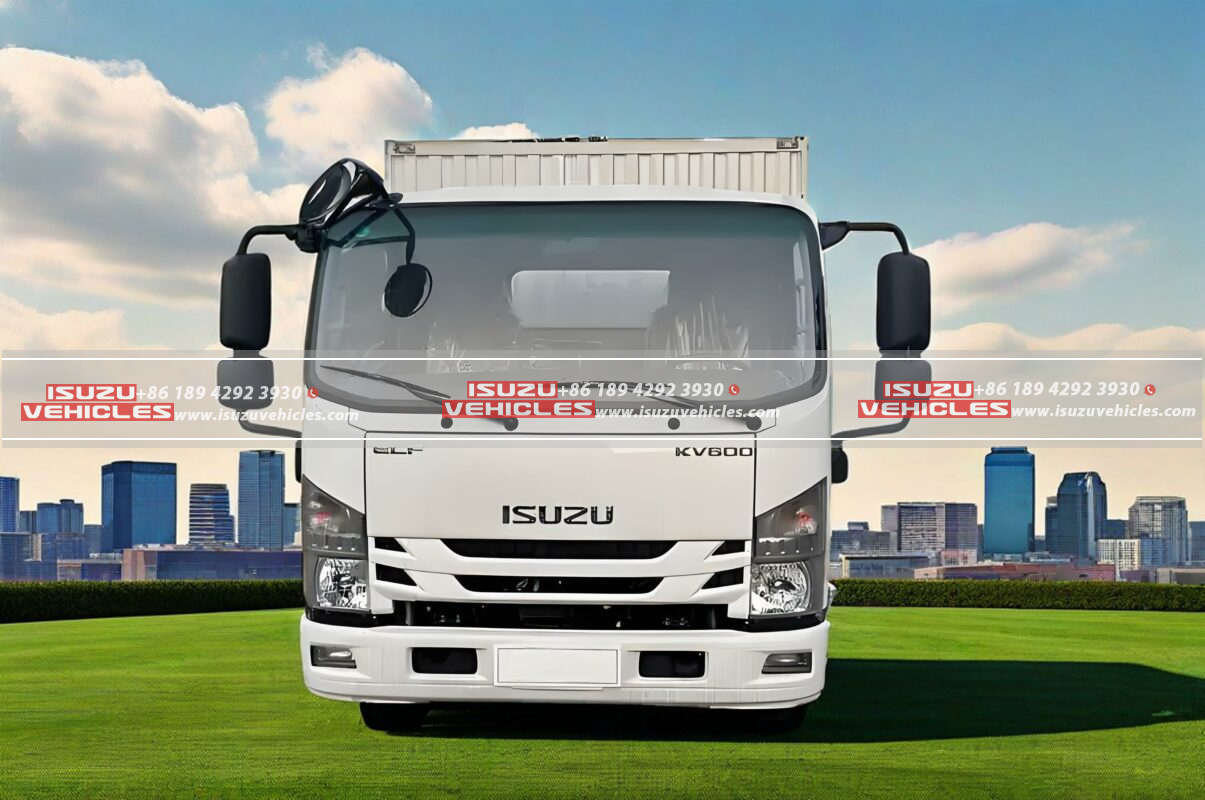
The mining frontier demands more than mere ruggedness; it requires an engineered defiance against forces that relentlessly dismantle conventional machinery. Within this unforgiving arena, the ISUZU work truck stands as a vital artery, hauling ore, personnel, and critical supplies across treacherous, unyielding terrain. Yet, the very core of its utility – the chassis frame – faces assaults that push standard engineering to the precipice of failure. Purpose-built Chassis Reinforcement Kits emerge not as an optional upgrade, but as an indispensable operational imperative, meticulously designed to transform the inherent robustness of ISUZU platforms into an unbreakable foundation capable of enduring the brutal, unceasing rhythms of mineral extraction. This strategic fortification transcends simple durability; it embodies a profound engineering response to the unique physics of mine site punishment, safeguarding productivity, personnel, and capital investment where compromise is not an option.
The Anatomy of Abuse – Why Mine Sites Demand Reinforced Foundations
Standard chassis frames, engineered for conventional road stresses and predictable loads, enter a fundamentally different realm within active mining operations. Here, the cumulative effect of extraordinary forces translates into accelerated structural degradation, manifesting in insidious fatigue cracks or catastrophic failures that cripple operations:
- Extreme and Dynamic Payload Stresses: Mining operations perpetually flirt with maximum payload capacities. The sheer static weight is compounded significantly by dynamic forces: the violent shudder during lifting and dumping cycles, the severe jolting when traversing deeply rutted haul roads or rock-strewn paths, and the intense loading/unloading impacts at processing points. These events amplify bending moments and shear forces acting on the chassis rails, particularly around suspension mounting points, load bed interfaces, and rear crossmembers, far exceeding nominal design parameters.
- Chronic Vibration Fatigue and Impact Hammering: Unpaved haul roads generate relentless, high-amplitude, low-frequency vibrations. Simultaneously, direct impacts from rocks, potholes, washboarding, and uneven surfaces deliver discrete, high-energy shocks. This dual assault – the perpetual tremor and the jarring hammer blows – relentlessly propagates microscopic fissures at stress concentrators like weld junctions, bolt holes, and suspension bracket edges, a relentless process known as cyclical fatigue.
- Severe Torsional Loading and Frame Twist: Off-road mining navigation subjects the chassis frame to complex torsional forces. This twisting action creates unequal stress distribution along the frame rails, straining crossmember connections, potentially leading to misalignment of critical drivetrain components, accelerated wear on engine mounts and suspension bushings, and ultimately, permanent deformation or cracking of the frame rails themselves.
- Aggressive Environmental Degradation: Beyond mechanical stresses, mining environments actively corrode and abrade structural components. Abrasive dust and grit constantly blasted against the chassis underside gradually erode protective coatings, while corrosive agents like moisture, chemical spills, and saline solutions attack exposed steel, creating pitting that weakens the frame and provides initiation points for fatigue cracks.
The Science of Fortification – Engineering Resilience into the ISUZU Frame
Authentic, high-performance Chassis Reinforcement Kits transcend simplistic plate additions; they are sophisticated structural augmentation systems born from rigorous engineering analysis and validated under punishing real-world conditions:
- Precision Targeting of Critical Zones: Leveraging Finite Element Analysis (FEA) and empirical data, these kits identify and strategically reinforce predictable high-stress failure points endemic to ISUZU frames under severe service. This systematic approach typically involves:
- Suspension Mount Fortification: Utilizing laser-cut, high-tensile steel plates contoured precisely to encapsulate and massively reinforce front spring hangers or airbag mounts and critical rear suspension brackets.
- Crossmember Junction Reinforcement: Applying robust gussets, fishplates, or wraparound sections at critical intersections where crossmembers meet the primary longitudinal frame rails, and crucially, employing upgraded, high-grade fasteners (e.g., ISO 10.9 or 12.9 bolts).
- Gooseneck/Fifth-Wheel Area Hardening (Tractor Applications): Incorporating substantial, engineered plates that distribute immense, concentrated forces transmitted through the kingpin across a significantly broader area of the frame rail.
- Tail Section & Frame Horn Armor: Reinforcing the extremities of the frame, particularly vulnerable during heavy dumping cycles and when impacting loading docks.
- Advanced Material Science & Fabrication Integrity: The efficacy hinges fundamentally on specialized, ultra-high-strength steels like Quenched and Tempered (Q&T) grades (e.g., QSTE, Hardox, Bisalloy) boasting yield strengths often exceeding 700 MPa and possessing superior fatigue resistance. Components are fabricated using precision laser cutting or plasma cutting, followed by robotic welding employing stringent procedures. The core engineering philosophy is intelligent stress distribution – carefully shaping reinforcement plates to gradually blend stresses into the parent frame material over larger areas, eliminating abrupt stiffness transitions.
- Non-Negotiable Installation Protocol: Performance critically depends upon flawless installation executed by certified professionals. This mandates meticulous surface preparation, controlled pre-heating as per Welding Procedure Specifications (WPS), precise execution using low-hydrogen electrodes to prevent hydrogen-induced cracking (HIC), followed by application of high-performance coatings.
Quantifying Resilience – Operational Imperative and Strategic Advantage
The strategic deployment of heavy-duty chassis reinforcement kits delivers tangible, far-reaching benefits that permeate every aspect of a mining operation’s efficiency, safety, and financial viability:
- Maximizing Operational Uptime & Asset Productivity: The paramount benefit is the drastic reduction, often near-elimination, of catastrophic frame-related failures that necessitate unscheduled downtime. Reinforced ISUZU trucks reliably complete haul cycles, adhering to production schedules for ore movement and support missions. This sustained operational availability directly translates into higher tons moved per shift and a demonstrably lower cost per operating hour.
- Extending Asset Lifespan & Protecting Capital Investment: By proactively mitigating fatigue and impact damage, reinforcement kits effectively double or triple the functional service life of the truck’s foundational structure. This postpones substantial capital expenditure for premature chassis replacement and enhances the residual value of the asset.
- Elevating Safety Standards & Mitigating Operational Risk: Preventing unforeseen frame failures drastically reduces the potential for loss of control incidents. Securely mounted bodies and loads are less likely to shift. This inherent structural integrity safeguards drivers, site personnel, and equipment, substantially reducing liability exposure.
- Optimizing Total Cost of Ownership (TCO): While an initial investment, the expenditure is demonstrably outweighed by avoiding recurring emergency repair costs, downtime losses, and premature asset replacement costs. Furthermore, reduced stress lowers maintenance interventions and component replacements across connected systems over the vehicle’s extended life. The commitment to structural resilience championed by ISUZU China for mining’s extreme demands is fundamentally applicable across severe-service applications. Heavy-duty ISUZU box trucks, consistently loaded to capacity in demanding logistics roles or navigating rough terrain, derive immense benefit from chassis reinforcement. Similarly, refuse collection vehicles enduring constant compaction cycles, specialized crane carriers, and robust utility service trucks subjected to twisting and vibration all require this engineered fortification to achieve the longevity and reliability demanded by arduous daily duties. Fortifying the chassis is thus revealed as a universal principle for unlocking the full potential of durability and lifecycle value engineered into ISUZU’s heavy-duty platforms.