
A Strategic Boost to National Transportation and Economic Resilience
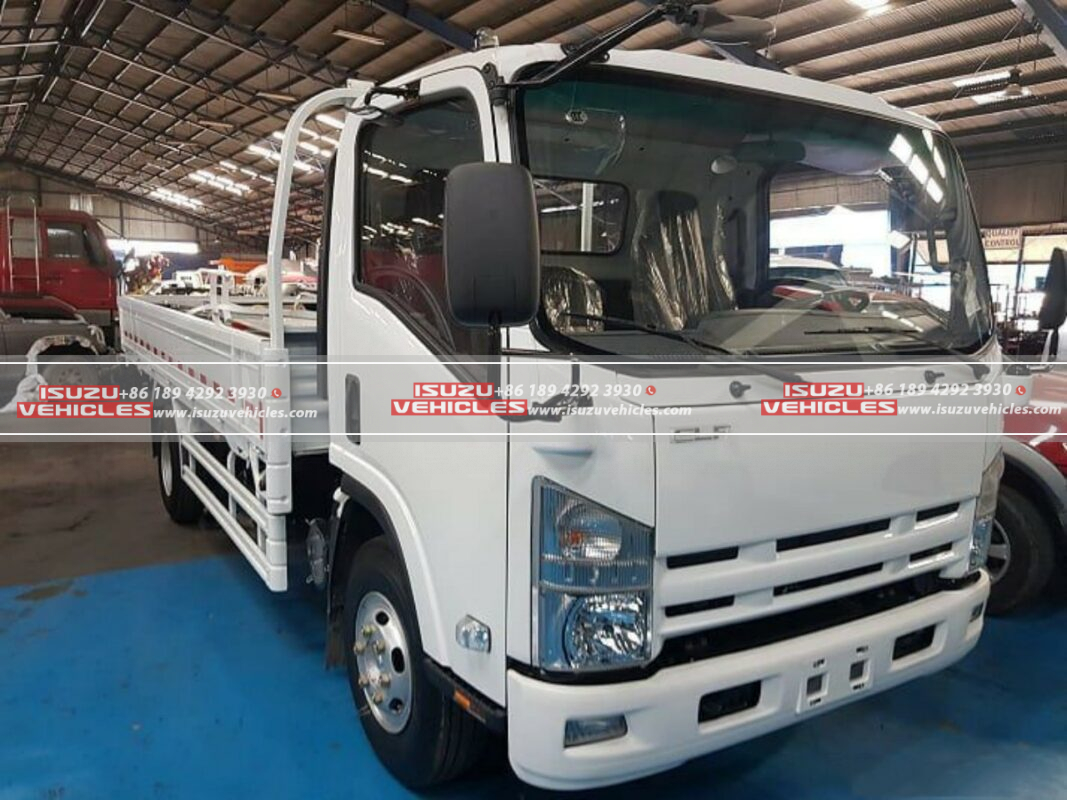
In a landmark development for the Dominican Republic’s transportation and logistics sector, the nation’s primary ports—led by the Port of Santo Domingo, Port of Caucedo, and Port of Haina—have officially received a historic shipment of 700 brand-new ISUZU N-Series and F-Series cargo trucks, marking one of the largest single-vehicle importations in recent national history. The arrival, coordinated through a public-private partnership between the Ministry of Public Works, the Dominican Institute of Roads (INDER), private freight operators, and Japan-based Isuzu Motors Limited, is poised to transform freight efficiency, reduce delivery times, and support sustainable economic growth across the island.
The containerized fleet arrived aboard the M/V Pacific Navigator, operated by NYK Line, docking at Caucedo International Terminal on March 31, 2025. Over the course of five days, all units were cleared through customs under special expedited procedures granted due to their strategic classification as “infrastructure-enhancing commercial assets.”
Key Highlights of the Delivery
- Unprecedented Scale & Model Distribution
- The shipment includes:
- 420 units of ISUZU NRR 500 (medium-duty, 7.5-ton capacity) – ideal for urban distribution.
- 230 units of ISUZU FVR 34 (heavy-duty, 15-ton capacity) – designed for intercity freight and agricultural transport.
- 50 specialized refrigerated variants (FVR 34 FR) equipped for cold-chain logistics, supporting pharmaceuticals and perishable exports.
- All models meet Euro 6 emission standards, aligning with the country’s green mobility agenda.
- The shipment includes:
- Strategic Deployment Across Sectors
The vehicles will be distributed among:- State-run logistics programs (30%) — enhancing government supply chains for food, medicine, and emergency relief.
- SME freight cooperatives (45%) — subsidized leasing options to empower small transporters.
- Export-oriented agribusinesses (25%) — particularly in coffee, cacao, and organic produce sectors requiring reliable cold transport.
- Economic and Environmental Impact
- Expected to reduce average cargo delivery time by up to 35% in rural corridors.
- Projected 18% reduction in fuel consumption compared to existing fleet averages due to ISUZU’s advanced 4JJ3-TCX diesel engine technology.
- Estimated annual CO₂ savings: ~12,500 tons, contributing to the Dominican Republic’s Nationally Determined Contributions (NDCs) under the Paris Agreement.
- Local Capacity Building & After-Sales Support
- Isuzu has partnered with Autocamiones del Caribe S.A., its official distributor, to establish three new technical training centres in Santiago, La Romana, and Barahona.
- A five-year warranty program and localised spare parts warehouse will ensure minimal downtime.
- Over 140 Dominican mechanics will undergo certification in hybrid-ready diagnostics and eco-driving protocols.
- Geopolitical and Trade Significance
This delivery reflects deepening Japan-Caribbean cooperation in infrastructure resilience. Funded partially through a soft loan from the Japan International Cooperation Agency (JICA), the initiative underscores the role of clean, durable Japanese engineering in supporting Global South development goals. It also strengthens the DR’s position as a regional logistics hub within the Caribbean Community (CARICOM) and Central America Free Trade Agreement (CAFTA-DR) networks.
Government and Industry Reactions
“This is not just about trucks—it’s about sovereignty in movement,” said President Luis Abinader during a ceremonial rollout event at the Haina Industrial Park. “With these 700 ISUZUs, we are lowering the cost of doing business, empowering entrepreneurs, and building a more connected, efficient, and greener Dominican Republic.”
Isuzu Motors’ Senior Vice President for Latin America, Kenji Tanaka, added:
“The Dominican Republic’s vision matches our philosophy: durability, reliability, and responsibility. These trucks are built for mountain passes, tropical humidity, and high-frequency use—they’re engineered for this terrain, this economy, and this future.”
Looking Ahead: Toward a Smart Freight Corridor
Beyond immediate deployment, the Ministry of Transport has announced plans to integrate these trucks into a National Digital Fleet Management System (SIGEFLOT), which will use GPS tracking, load optimization algorithms, and predictive maintenance AI to maximize uptime and route efficiency. Pilot telematics installations have already begun on 100 units destined for the San Juan–Azua–Pedernales corridor.
Additionally, discussions are underway for a second phase involving electric ISUZU ELF prototypes, potentially making the DR one of the first Caribbean nations to launch medium-duty electric cargo fleets by 2027.
Conclusion: A Milestone in Sustainable Mobility
The arrival of 700 ISUZU cargo trucks is far more than a logistical update—it is a transformative step toward modernizing the Dominican Republic’s backbone of commerce. By investing in durable, low-emission freight solutions and coupling them with local capacity development, the nation is setting a benchmark for smart, inclusive, and environmentally conscious infrastructure growth in the Caribbean region.
As the engines ignite and the wheels begin to turn, one thing is clear: the future of Dominican freight has just accelerated—efficiently, sustainably, and with purpose.