
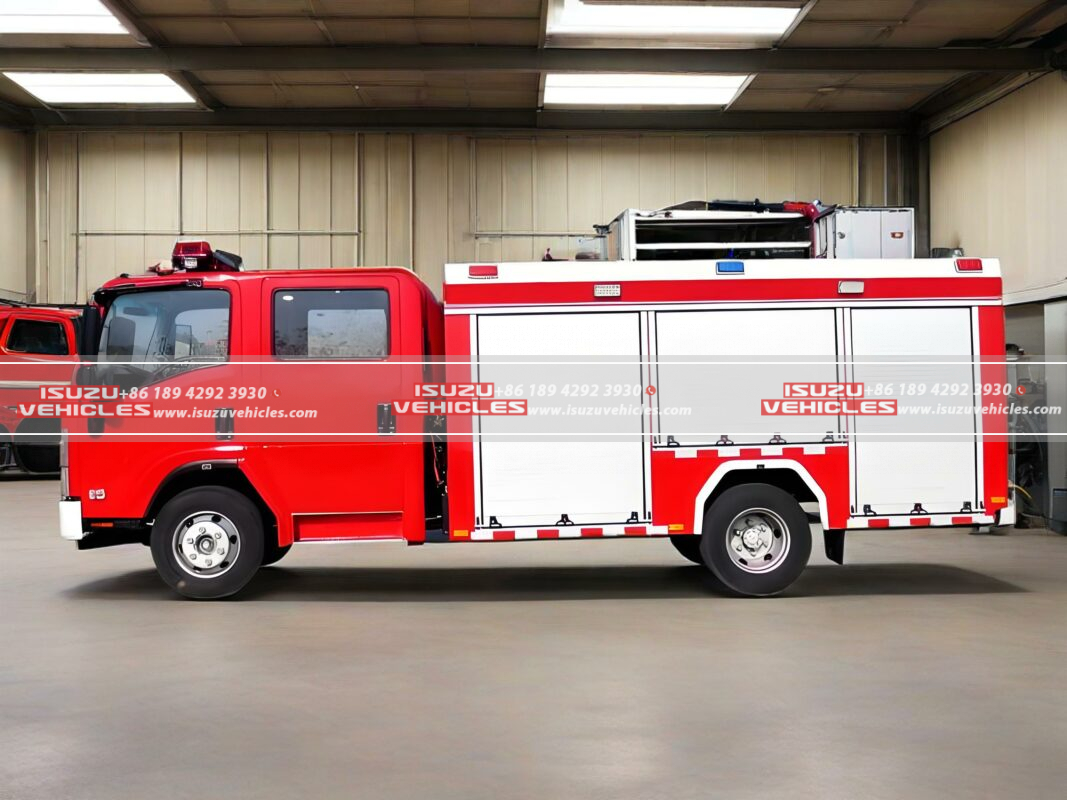
In the high-stakes arena of emergency firefighting, where seconds equate to property saved or lives lost, the pump operator stands as the unsung hydraulic engineer of the incident. Their mastery over the complex interplay of water flow, pressure, and appliance deployment directly dictates the effectiveness of the entire suppression effort. ISUZU Fire Trucks, renowned globally for their robust chassis engineering and reliable performance, provide an exceptional platform for these critical operations. However, the sheer mechanical capability of the pump is merely the foundation; true operational excellence is achieved only through rigorous, scientifically informed pump pressure protocols. Optimizing these protocols isn’t about adhering to abstract theory; it’s about translating engineering potential into life-saving kinetic energy on the fireground. This demands an intricate understanding of hydraulic principles, appliance limitations, environmental variables, and the specific capabilities engineered into the ISUZU apparatus, ensuring that every gallon pumped contributes maximally to rapid fire control and enhanced scene safety.
Fundamentals of Fire Pump Hydraulics: The Science Behind the Stream
Before delving into specific protocols, a firm grasp of core hydraulic principles governing fire pump operation is non-negotiable. Pump performance hinges on the relationship between three critical variables: Flow (measured in gallons per minute – GPM or liters per minute – LPM), Pressure (measured in pounds per square inch – PSI or bar), and the energy consumed to achieve them. The fire pump, fundamentally, is an energy conversion device, taking mechanical energy from the truck’s engine (via Power Take-Off – PTO) and converting it into hydraulic energy within the water.
- Friction Loss Dynamics: A paramount concept for pump operators is friction loss. As water travels through hoses, adapters, appliances, and even the truck’s internal plumbing, friction between the water molecules and the hose lining or pipe walls creates resistance. This resistance manifests as a pressure drop. Crucially, friction loss increases exponentially with flow rate and linearly with hose length, while decreasing slightly with larger hose diameters. Underestimating friction loss leads to inadequate pressure at the nozzle, resulting in ineffective streams and potentially catastrophic consequences. Modern ISUZU pump panels often integrate calculators or digital displays that assist operators in accounting for complex friction loss scenarios across multiple lines.
- Nozzle Reaction & Appliance Limitations: Every stream of water exiting a nozzle generates a reactive force pushing back on the nozzle operator and the appliance itself – nozzle reaction. This force increases dramatically with both pressure and flow. Understanding and anticipating this reaction is vital for firefighter safety and appliance stability. Furthermore, every piece of equipment – from hose and nozzles to monitors and standpipes – has maximum pressure ratings. Exceeding these ratings risks catastrophic failure, endangering personnel and compromising the operation. Protocols must rigorously respect these engineered pressure limitations.
- Elevation Considerations: Pumping to elevations significantly higher (uphill) or lower (downhill) than the pump itself introduces elevation pressure. Uphill operations require additional pressure to overcome gravity (approx. 0.434 PSI per foot of rise), while downhill operations necessitate careful pressure reduction to prevent damaging surges or hose blowouts at the lower point. Precise calculation and adjustment for elevation are critical components of safe and effective pressure management protocols on any ISUZU apparatus deployed in varied terrain.
ISUZU Engineering Excellence: Precision Hydraulics for Demanding Scenarios
ISUZU Fire Trucks are engineered with a deep understanding of these hydraulic challenges, integrating robust pumping systems designed for reliability, efficiency, and operator control under extreme conditions. Key engineering aspects directly impacting pressure protocol optimization include:
- High-Performance Pump Design: ISUZU utilizes multi-stage centrifugal pumps, often of midship or rear-mount configuration, renowned for their ability to deliver high flows at moderate pressures or lower flows at very high pressures – essential versatility for firefighting. These pumps feature precision-machined impellers and volutes designed to minimize internal turbulence and energy loss, maximizing hydraulic efficiency. Advanced priming systems, often vacuum-assisted or powered by dedicated engines, ensure rapid water pickup, a critical factor in initial attack effectiveness.
- Integrated Control Systems: Modern ISUZU pump panels are ergonomic command centers. They feature intuitive pressure governors (manual, pressure-limiting, or pressure-regulating types) allowing precise control over discharge pressure. Digital displays provide real-time feedback on engine RPM, pump discharge pressure, water tank level, and intake vacuum/pressure. Integrated flowmeters are increasingly common, providing direct GPM/LPM readings for each discharge, enabling operators to verify calculated flows instantly and adjust tactics accordingly. This level of instrumentation is fundamental for executing complex pressure protocols accurately.
- Chassis-Pump Synergy: The integration of the pump system with the ISUZU chassis is critical. Sufficient engine power (diesel engines typically ranging from 360-520+ HP in fire applications), robust PTO systems designed for continuous high-load operation, and optimized drivelines ensure power is transferred efficiently from the engine to the pump without undue stress on components. Adequate cooling systems (for both engine and pump transmission) prevent overheating during prolonged pumping operations, maintaining performance integrity throughout the incident. Reliability engineered into the ISUZU platform ensures the hydraulic system performs when seconds count.
Operational Pressure Protocols: From Theory to Tactical Execution
Translating hydraulic principles and leveraging ISUZU’s engineering requires concrete, actionable protocols. These are not static rules but dynamic frameworks guiding operator decision-making:
- Pre-Incident Pressure Calculations & Setup: Effective protocols start before the incident. This involves regular apparatus checks (pressure gauges calibrated, valves operational, intake strainers clear) and operator proficiency in calculating required pump discharge pressure (PDP). The fundamental PDP formula is: PDP = Nozzle Pressure (NP) + Friction Loss (FL) in Hose + Friction Loss in Appliance + Elevation Pressure (EP). Operators must be adept at quickly determining NP (based on nozzle type/setting), estimating FL based on hose size, length, and flow, adding appliance loss (often 10-25 PSI for complex manifolds or monitors), and adjusting for EP. Utilizing pump charts, pre-calculated “cheat sheets” for common hose lays, or onboard calculators is essential. Setting the initial pressure accurately avoids dangerous under-pressurization or wasteful over-pressurization.
- Dynamic Pressure Management During Operations: Fireground conditions are fluid. Protocols must empower operators to adapt pressure dynamically. Key scenarios include:
- Multiple Line Operations: Pumping several lines simultaneously requires calculating the total flow demand and ensuring the pump can deliver it within its capacity. Pressure must be set for the most demanding line (highest NP + FL + EP), potentially requiring pressure regulators or flowmeters on individual discharges to manage other lines effectively without exceeding appliance limits. ISUZU pumps are designed for such multi-line capability, but operator judgment is paramount.
- Master Stream Deployment: Operating deck guns, portable monitors, or ladder pipes places immense demand on the pump and requires very high flows (500-1500+ GPM). Protocols strictly enforce appliance pressure limits (often 100 PSI for monitors, 80 PSI for ladder pipes) and ensure sufficient large-diameter hose supply lines (minimizing friction loss) are deployed. Careful ramp-up of pressure and constant monitoring for stability are crucial to prevent dangerous nozzle reaction or equipment failure.
- Standpipe & High-Rise Operations: Supplying standpipe systems introduces significant friction loss in vertical piping and requires careful pressure management. Protocols typically involve pumping to the Fire Department Connection (FDC) at pressures calculated to deliver the required pressure at the standpipe outlet on the fire floor, avoiding excessive pressure that could damage system components or make hoselines unmanageable for interior crews. Residual pressure readings at the pump are vital indicators of system performance and water availability.
- Safety-Centric Pressure Limits: Every protocol is underpinned by absolute safety limits. These include:
- Appliance Maximum Pressure: Never exceeding the manufacturer’s rated pressure for any hose, nozzle, valve, or appliance.
- Hose Test Pressure Limits: Operating pressures must always be well below the hose’s service test pressure (typically 2/3 to 3/4 of test pressure).
- Intake Pressure Management: Maintaining positive pressure on the intake side when drafting (preventing pump cavitation) and strictly adhering to maximum intake pressure limits when using a pressurized source (e.g., hydrant) to prevent damage to the pump seals or plumbing. Intake relief valves on ISUZU pumps are critical safety devices in pressurized source scenarios.
- Crew Communication: Establishing clear communication channels between the pump operator and nozzle crews regarding pressure changes, flow adjustments, or potential hazards.
Training and Proficiency: The Human Element in Hydraulic Optimization
Even the most sophisticated ISUZU Fire Truck and meticulously crafted protocols are ineffective without highly trained, proficient pump operators. Optimization demands continuous, scenario-based training:
- Foundational Knowledge: Deep understanding of hydraulics theory, friction loss calculations for various hose configurations and appliances, nozzle types and pressures, elevation effects, and apparatus-specific components (location of valves, gauges, controls, safety devices).
- Practical Drills: Extensive hands-on practice is non-negotiable. Drills must simulate diverse scenarios: single and multiple handlines, master streams, drafting from various sources (ponds, portable tanks, hydrants with varying pressures), relay pumping, supplying standpipes, and managing pressure changes during operations. Emphasis on speed, accuracy under stress, and troubleshooting (e.g., priming issues, sudden pressure drops indicating burst hose) is critical.
- Technology Utilization: Training must incorporate the use of all onboard technology – pressure governors, flowmeters, digital displays, calculators – ensuring operators can leverage these tools efficiently during high-stress incidents.
- Incident Review & Continuous Improvement: Analyzing post-incident pump pressure data (if recorded) and crew feedback provides invaluable insights for refining protocols and identifying areas for further operator training. Optimization is an iterative process.
The Future of Pressure Management: Integration and Intelligence
The trajectory of fire service technology points towards even greater integration and intelligence in managing pump operations. Future ISUZU Fire Trucks are likely to feature even more sophisticated integrated control systems, potentially incorporating predictive analytics and artificial intelligence. Imagine systems that, based on pre-connected hose lays entered by the crew, automatically calculate and set optimal initial pressures, or AI algorithms that monitor multiple discharge pressures and flows in real-time, predicting potential friction loss issues or appliance overloads before they occur and alerting the operator. Enhanced telematics will allow incident commanders remote visibility into pump performance metrics. Automated pressure regulation could manage complex multi-line flows with greater precision, reducing operator cognitive load during critical phases. While the fundamental hydraulic principles remain constant, the tools for applying them with speed, precision, and safety will continue to evolve, pushing the boundaries of emergency response optimization. The principles of hydraulic efficiency and robust pressure management extend beyond the traditional pumper; they are equally critical for specialized ISUZU Tank Trucks performing water shuttle operations in rural settings or unique applications utilizing the ISUZU Pickup platform adapted for rapid initial attack, where understanding pressure dynamics on a smaller scale remains vital for effective initial fire control.