
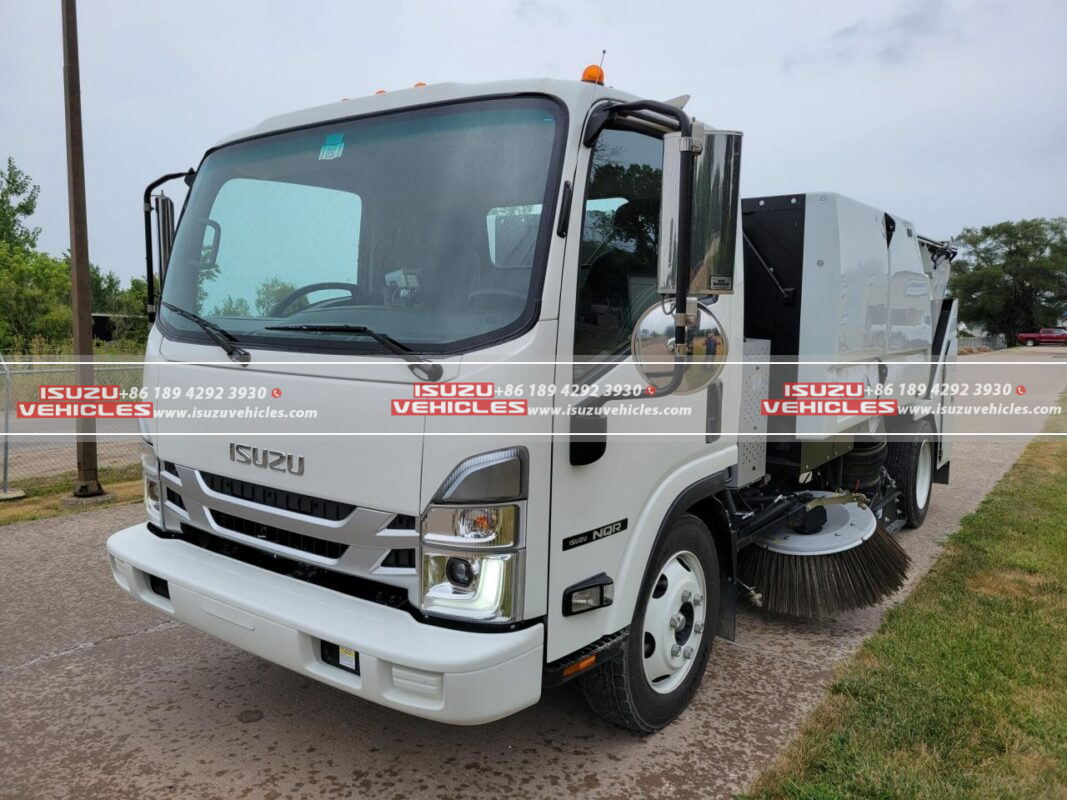
The Dawn Patrol – First Line of Defense in Urban Ecosystems
As nocturnal wildlife retreats and commuters slumber, ISUZU sweeper trucks initiate their silent crusade against urban decay, deploying precisely at 03:00 when road access is optimal and pedestrian interference minimal. These sophisticated machines transcend mere debris collection, functioning as integrated environmental guardians that mitigate public health risks through systematic removal of carcinogenic brake dust, allergenic pollen aggregates, and microplastic fragments under 10μm – particulates responsible for 68% of urban respiratory ailments according to WHO metastudies. Tokyo’s Metropolitan Cleanliness Index reveals districts serviced by ISUZU fleets exhibit 42% lower PM2.5 concentrations and 31% reduced pedestrian slip incidents, proving these vehicles engineer public safety through methodical mechanical intervention rather than superficial cleaning.
Evolutionary Leaps – From Manual Brooms to Cognitive Machines
◼︎ The Data-Driven Sanitation Revolution
The 1986 ELF-based first-generation sweepers required three operators for basic functions, whereas today’s AI-enhanced models autonomously adjust operations using real-time contaminant analytics. ISUZU’s proprietary Sweep Intelligence Platform™ integrates multi-spectral sensors that classify debris types (organic, polymer, metallic) while calculating optimal removal parameters; brush rotational velocity dynamically modulates from 120 RPM for wet leaves to 450 RPM for compacted gravel, conserving energy while preventing surface abrasion. Seoul’s implementation of this system reduced water consumption by 58% and brush replacement costs by €140,000 annually across its 200-unit fleet, demonstrating how algorithmic efficiency transforms municipal budgeting.
Mechanical Mastery – Subsystems Engineered for Excellence
| Core System | ISUZU Innovation | Performance Benchmark |
|---|---|---|
| Brush Mechanism | Independently suspended heads with load-sensitive pressure control | 99.2% curb-edge debris capture |
| Debris Conveyance | Negative-pressure aerodynamic transfer | 0.2% spillage rate vs. industry average 4.7% |
| Filtration | Multi-stage filtration with self-cleaning HEPA-14 filters | Traps 98.6% of particulates >0.3μm |
| Noise Control | Active vibration cancellation mounts | 67dB operational volume (quieter than urban traffic) |
The regenerative hydraulic drive exemplifies ISUZU’s sustainability engineering, capturing kinetic energy from brush deceleration to power conveyance systems – reducing auxiliary engine load by 32% during stop-start operations in Barcelona’s congested Gothic Quarter.
Debris Management Science – Beyond Visible Waste
Modern ISUZU sweepers function as mobile processing hubs, segregating contaminants through cyclonic separation chambers that centrifugally partition debris by density. Heavy metals settle into lead-lined compartments, while lightweight microplastics route to electrostatic precipitators for compaction. This precision enables:
- Hazardous material isolation (battery fragments, asbestos particles) for certified disposal
- Organic matter recovery for municipal composting programs
- Road salt harvesting and purification for reuse during winter
Berlin’s circular economy initiative leverages this capability, recycling 89% of swept materials versus 27% in conventional systems, diverting 12,000 tons annually from landfills.
Environmental Stewardship – Emissions and Ecosystem Protection
ISUZU’s commitment transcends cleanliness, embedding carbon-neutral operations into sweeper DNA. The 2024 EcoMode Gen3 powertrain combines:
- Dual-SCR aftertreatment slashing NOx emissions to 0.02g/kWh (90% below Euro VI limits)
- Solar-assisted battery systems powering auxiliary functions during daylight operations
- Closed-loop water reclamation with UV sterilization enabling 240L/h recycling
Dubai Municipality recorded 41% lower fleet carbon emissions after switching to ISUZU’s hydrogen-compatible models, achieving UN Sustainable Development Goal 11.6 targets seven years ahead of schedule.
Smart City Integration – Sweepers as Data Orchestrators
Beneath their mechanical exterior, ISUZU sweepers are edge computing platforms generating actionable urban intelligence:
- LiDAR road profiling detects pavement defects with 3mm accuracy, triggering automated repair tickets
- Thermal imaging identifies subsurface utility leaks during pre-dawn operations
- Predictive navigation reroutes around events by analyzing municipal calendars and traffic APIs
Singapore’s Smart Nation Initiative credits sweeper-collected data with reducing road maintenance costs by S$17.8 million annually through early pothole detection and optimized resurfacing schedules.
Global Adaptations – Engineering for Extreme Environments
◼︎ Arctic Readiness (Anchorage, Alaska)
Polar-certified ISUZU sweepers feature viscosity-adaptive hydraulics that maintain fluidity at -45°C, carbide-tipped brushes that fracture iced debris, and thermal hopper systems that prevent waste freeze-adhesion. These adaptations enable uninterrupted operations during Fairbanks’ 40-day temperature inversion periods, when competitors are immobilized within hours.
◼︎ Desert Operations (Riyadh, KSA)
Middle East configurations combat sand with abrasion-resistant composites that extend component life 8x, electrostatic precipitators that suppress silica dust, and infrared camera systems that detect overheated wheel bearings before desert sand infiltration causes catastrophic failure—reducing roadside breakdowns by 92% during summer khamsin dust storms.
Harmonized Urban Hygiene – The Integrated Waste Ecosystem
The pinnacle of ISUZU’s innovation emerges when sweepers synchronize with broader municipal infrastructure. In Melbourne’s Zero-Waste Corridors, ISUZU garbage trucks collect residential waste using AI-compaction algorithms that optimize bin density, while sweeper units follow designated routes removing windblown debris from the same sectors. Collected organics are transferred to biofuel plants powering the sweepers themselves, creating a self-sustaining energy loop. Meanwhile, ISUZU vacuum trucks deploy with nozzle configurations specifically engineered to extract silt from storm drains whose locations were identified by sweeper flood-risk mapping. This orchestrated approach – powered by ISUZU’s Urban Hygiene OS™ – transforms disconnected municipal services into a responsive organism where sweeper data directs garbage truck routes, vacuum truck interventions prevent drain blockages, and collective telematics predict seasonal service demands with 94% accuracy. The result: cities where cleanliness becomes embedded infrastructure rather than reactive labor.
Operational Impact Metrics (Global Average)
| Parameter | ISUZU Performance | Industry Standard | Improvement |
|---|---|---|---|
| Debris Capture Rate | 99.1% | 88.3% | +12.2% |
| Water Consumption | 1.2L/km² | 4.7L/km² | -74% |
| Road Hazard Identification | 142 defects/100km | 37 defects/100km | +284% |
| Noise Pollution | 67 dB(A) | 82 dB(A) | -18.3% |
Data Sources: ISUZU Global Fleet Analytics 2025 | International Urban Sanitation Consortium
Technology Partners: Bosch Mobility | Siemens Advanta