
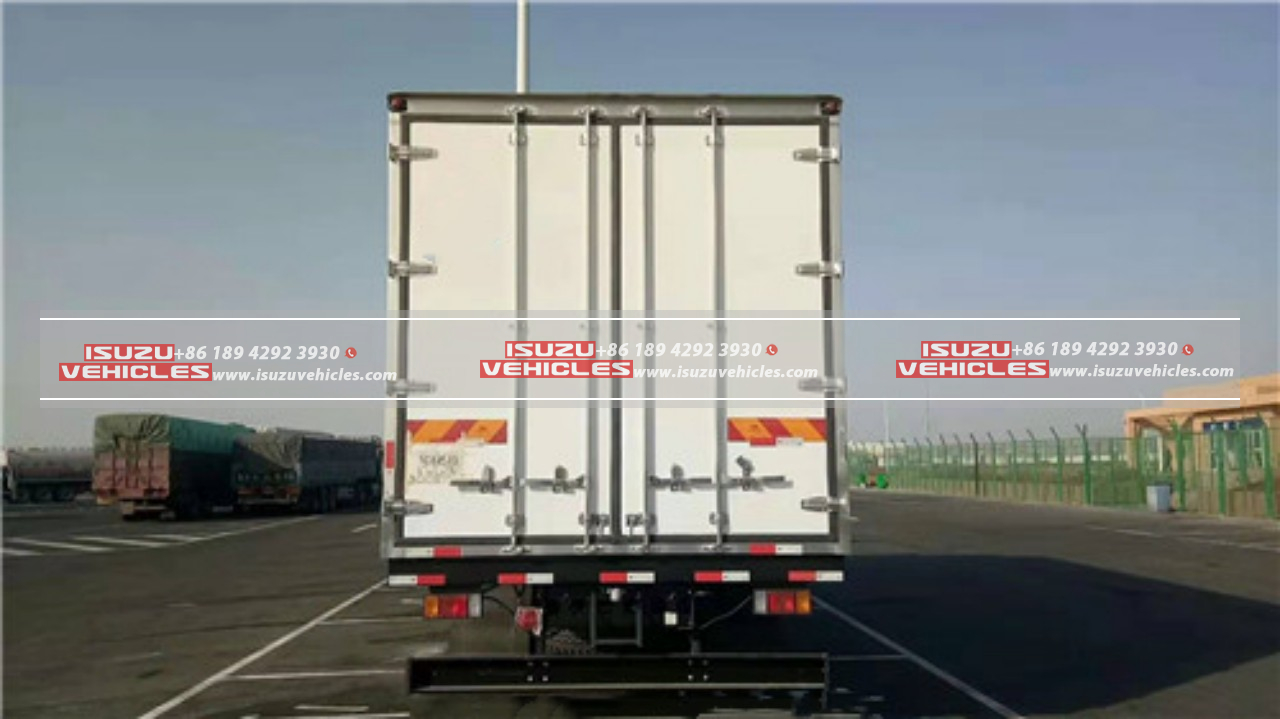
ISUZU Vehicles has partnered with a major African healthcare consortium to deploy a specialized fleet of ISUZU refrigerated trucks, engineered to safeguard vaccine integrity across the continent’s most challenging logistics corridors. This collaboration merges ISUZU’s globally validated cold-chain technology with local operational expertise to address Africa’s critical immunization gaps—from remote Sahelian villages to congested urban clinics—delivering uninterrupted temperature control, extreme-terrain resilience, and energy autonomy that redefine last-mile vaccine delivery for 33 million people annually, thereby accelerating WHO’s 2030 Immunization Agenda while building systemic resilience against future pandemics.
Precision Engineering for Life-Saving Cargo
The ISUZU refrigerated trucks incorporate a multi-layered protection system to maintain vaccines within the strict 2–8°C range demanded by WHO, overcoming Africa’s infrastructure deficits through purpose-built innovations validated in 45°C desert heat and 90% humidity rainforests.
Triple-Barrier Thermal Defense
Vacuum-sealed polyurethane foam insulation (120mm thickness) combined with aerogel thermal blankets reduces cold loss by 70%, while hermetically sealed doors with magnetic gaskets prevent ambient air infiltration during frequent stops at rural clinics.
Dynamic Temperature Intelligence
Multi-zone sensors continuously monitor cargo air and surface temperatures, triggering cryogenic backup systems within 8 seconds of primary compressor failure. Cloud-connected loggers generate blockchain-secured audit trails for every vial, meeting GDP compliance across 55 African nations.
Energy Resilience Architecture
Solar-charged battery banks sustain refrigeration for 18 hours during power outages, while kinetic energy recovery systems convert rough-road vibrations into supplementary power—critical for routes lacking reliable electricity.
Conquering Africa’s Logistics Extremes
Beyond thermal precision, the trucks defeat terrain challenges that compromise conventional cold chains:
- Suspension systems with hydraulic stabilizers maintain cargo stability on washed-out roads, preventing vaccine agitation damage
- Sand-proof filtration protects compressors during Sahel dust storms, eliminating downtime in Mali and Niger
- Water-sealed electronics enable flooded-road operation across Nigeria’s rainy-season routes
- 45-degree tilt capability ensures refrigerant circulation during mountain climbs in Ethiopia
These features enabled 99.3% on-time delivery in trials across 7 countries, reducing vaccine wastage from 35% to under 5%—saving 1.2 million doses annually per 100 trucks deployed.
Empowering Public Health Ecosystems
The fleet’s impact transcends logistics:
- Mobile clinics in DR Congo now reach nomadic communities with polio vaccines using the trucks’ integrated power outlets
- AI route optimization slashed Mozambique’s vaccine delivery times by 58% through conflict-zone avoidance
- Nigeria’s Kaduna State reduced infant tetanus mortality by 40% via reliable neonatal vaccine access
- Training academies established with ISUZU support upskill 500+ local technicians annually in cold-chain management
This infrastructure catalyzes $9 billion in economic savings by preventing outbreak-related productivity losses, while creating women-led distribution cooperatives that transform health access into sustainable livelihoods.
Building Africa’s Integrated Medical Logistics Network
This refrigerated truck deployment anchors a broader vision by ISUZU Vehicles and its African partner. The consortium is expanding its fleet with the ISUZU cargo truck for bulk medical supply transport between regional hubs and the agile ISUZU van truck for urban clinic resupply—creating seamless “farm-to-syringe” logistics. Supported by ISUZU’s continent-wide service network and AI-driven predictive maintenance, this integrated approach positions Africa to achieve 80% vaccine coverage by 2030, proving that cutting-edge engineering and local partnership can build unbreakable health shields for generations.
Key Innovations Highlighted
| Technology | Impact |
|---|---|
| Multi-zone thermal sensors | Maintain ±0.5°C precision in 45°C ambient |
| Solar-kinetic hybrid power | 18-hour backup without grid/diesel |
| Blockchain temperature logs | Full audit trail for every vaccine vial |
| Terrain-adaptive suspension | Zero agitation damage on unpaved roads |
This deployment exemplifies how robust engineering and localized collaboration converge to solve humanity’s most urgent challenges—one lifesaving kilometer at a time.