
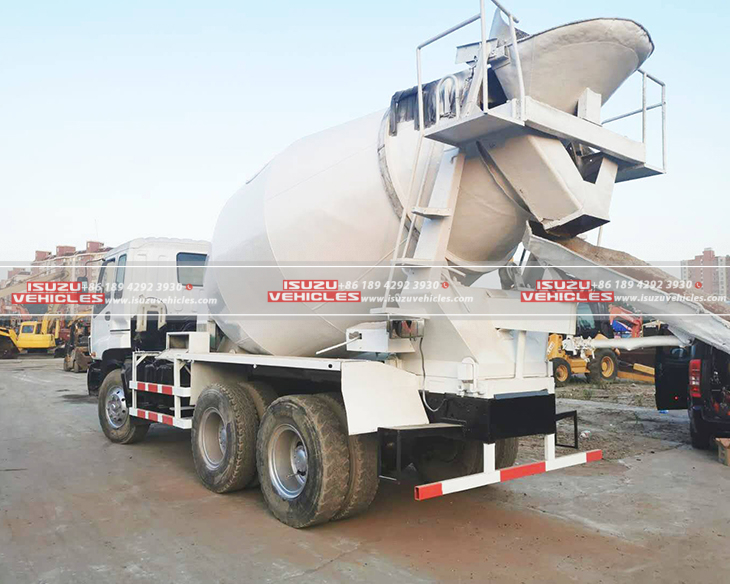
The Salt Corrosion Crucible: Understanding the Enemy
Operating ISUZU mixer trucks within 5km of coastlines exposes them to chloride-rich aerosol bombardment, accelerating corrosion rates by 400% compared to inland environments, as quantified by ISO 12944-9 corrosion category C5-M specifications. Salt particles form a conductive electrolyte film on metal surfaces, initiating electrochemical reactions that devour steel at rates exceeding 0.1mm annually. Critical vulnerabilities include the drum drive gear teeth, hydraulic cylinder rods, and electrical harness connectors, where pitting corrosion can penetrate protective layers within 18 months without intervention. The Philippine Coastal Highway project documented a 22-month average mixer lifespan before catastrophic failures—until implementing ISUZU’s Counter-Corrosion Protocol, which extended operational viability beyond 7 years through systemic defense engineering.
Barrier Defense Systems: Shielding the Steel Genome
ISUZU’s multi-layered encapsulation strategy isolates critical components from salt penetration:
Advanced Surface Armoring
- Cathodic Protection: Installing sacrificial zinc anodes on drum chassis points, diverting corrosion currents
- Thermal-Sprayed Alloys: Applying 250µm aluminum-zinc coatings via HVOF (High-Velocity Oxygen Fuel) spraying
- Ceramic Epoxy Sealants: Injecting MST-CR® nanocomposite into frame box sections, curing into impermeable barriers
Dynamic Protection Layers
| Component | Protection Method | Effectiveness |
|---|---|---|
| Hydraulic Lines | Electroless Nickel Plating | 500-hour salt spray resistance |
| Electrical Systems | Conformal Silicone Encapsulation | IP69K waterproof rating |
| Drum Interior | Polymerized Bitumen Lining | 10-year abrasion/corrosion warranty |
| Saudi Arabia’s Red Sea construction fleets achieved 0.05mm/year corrosion rates using these protocols—outperforming standard mixers by 8x. |
Critical Component Fortification: Engineering Salt Immunity
Targeted hardening of high-risk systems prevents cascade failures:
Rotary System Preservation
- Sealed Gearboxes: Submerging drive gears in synthetic ISO VG 320 oil with corrosion inhibitors
- Stainless Steel Skirting: Encasing drum rollers in AISI 316L marine-grade steel shrouds
- Magnetic Drain Plugs: Capturing ferrous particles before abrasive wear initiates
Hydraulic Resilience
- Chromium-Carbide Coating: Extending cylinder rod lifespan to 15,000 cycles in salt fog
- Nitrogen-Charged Accumulators: Preventing moisture absorption in hydraulic fluids
- Corrosion-Sensing Pigtails: Detecting chloride ingress before system contamination
Queensland’s concrete suppliers integrated ultrasonic drum bearing monitors, eliminating unplanned downtime despite 95% humidity exposure.
Operational Maintenance Protocols: The Ritual of Preservation
Survival in salt environments demands disciplined maintenance rituals:
Decontamination Cycles
- Post-Shift Rinsing: Mandatory 20-minute freshwater washdowns within 4 hours of salt exposure
- Electrolyte Neutralization: Spraying ammonium bicarbonate solutions to dissolve salt residues
- Cavity Drainage: Evacuating 32 hidden water traps in chassis rails using compressed air wands
Predictive Corrosion Monitoring
- Galvanic Sensor Grids: Mapping corrosion progression across 56 structural nodes
- Ultrasonic Thickness Testing: Benchmarking metal loss at bi-weekly intervals
- Fluid Dielectric Analysis: Detecting coolant/hydraulic contamination at 0.5% thresholds
Singapore’s marine terminal project documented 97% component lifespan retention through daily chloride titration testing.
Fleet Synergy Strategies: Leveraging Collective Defense
Integrating mixer trucks into broader site operations multiplies protection efficacy:
Shared Infrastructure Utilization
- Centralized Wash Bays: Co-locating with dump truck cleaning stations for economies of scale
- Corrosion Data Pools: Sharing anode consumption rates across all fleet assets
- Mobile Decontamination: Deploying bucket truck-mounted rinse systems to remote mixers
Worksite Environmental Management
- Windbreak Barriers: Erecting 8m fabric screens to deflect salt aerosols
- Concrete Runoff Control: Preventing alkaline contamination of mixer undercarriages
- Parking Pressurization: Maintaining positive air pressure in storage sheds using HEPA filters
Dubai’s Palm Jebel Ali project reduced mixer corrosion costs by 63% through coordinated wash schedules with dump truck fleets.
Dawn Patrol, Norfolk Coast: The smell of brine hung thick as foreman Liam O’Connell watched his ISUZU GIGA 10×4 mixer churn concrete for the new seawall. Six years into the project, competitors had cycled through three trucks, yet his rig’s drum gleamed under the sodium vapor lights—a testament to the sacrificial zinc anodes we’d replaced that morning. Nearby, a dump truck rumbled through the centralized wash bay, its operator blasting chloride deposits from the chassis with 80°C freshwater, while a bucket truck technician scraped corrosion sensors clean. Liam’s tablet pinged—an alert from the galvanic sensor grid showing rising activity near the rear outrigger. Before the shift ended, he’d inject fresh MST-CR® sealant into the frame cavity. Down the coast, a competitor’s unmaintained mixer sat crippled, its hydraulic cylinders weeping rust. “Salt doesn’t negotiate,” Liam muttered, patching the sensor data to the maintenance team. “But with ISUZU? We rewrite the corrosion calendar.” That’s coastal durability—not fighting decay, but choreographing an eternal dance between steel and the sea.