
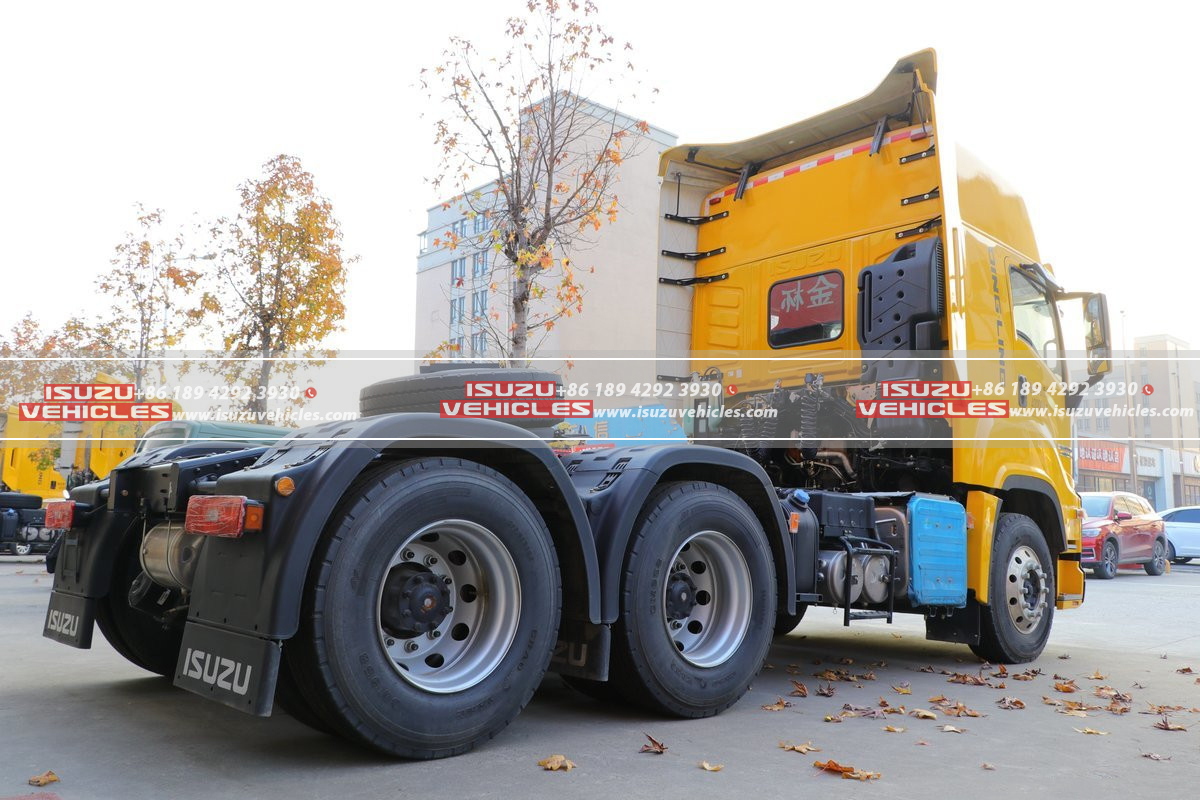
In the unforgiving calculus of heavy-duty operations – where a 0.5mm frame twist under 45-ton loads translates into catastrophic fatigue failure within 18 months, or a 3% drivetrain efficiency loss consumes €28,000 annually in wasted diesel – selecting a chassis transcends mere specification matching. ISUZU commercial platforms demand understanding the interplay between dynamic torsion forces, metallurgical fatigue limits, and operational entropy. Beyond gross vehicle weights (GVW), the true metric lies in stress amplitude profiles, duty cycle severity factors, and maintenance-induced downtime costs. This is engineering anthropology applied to moving mountains.
1. Decoding Operational DNA: Load Dynamics and Environmental Pathology
The chassis is a living system reacting to load behaviors, not static weights. Misdiagnosis here guarantees premature failure.
Load-Induced Stress Mapping
- Multi-axis force analysis must quantify not just vertical GVW, but horizontal shear forces during sudden stops, torsional stresses on uneven terrain, and harmonic vibrations from auxiliary equipment. ISUZU’s FEA models reveal that refuse compactor sideloads generate 140% higher frame fatigue than static weight suggests.
- Payload distribution algorithms should identify concentration points: container trucks impose 80% load on rear axles, whereas mobile crane counterweights shift 55% forward during lifts, demanding customized frame section moduli.
Environmental Degradation Vectors
- Corrosion acceleration modeling: Coastal operations degrade mild steel fasteners 8x faster than inland use. ISUZU’s hot-dip galvanized frames with 280μm zinc coatings withstand 3,000+ salt spray hours – critical for chemical tankers.
- Thermal cycling resilience: Brake discs in mining applications endure 1,200°C→20°C cycles daily. ISUZU’s vented disc designs with chromium-molybdenum alloys reduce thermal cracking by 70% versus standard cast iron.
2. The Powertrain Matrix: Aligning Torque Curves with Terrain Algorithms
Engine specs alone are meaningless without contextual intelligence. Power must manifest precisely where friction, gradient, and inertia conspire against motion.
Intelligent Combustion Architecture
- Altitude-compensated turbocharging maintains 100% torque delivery up to 3,500m – non-negotiable for Andean mining ISUZU GIGA trucks where atmospheric pressure drops 30%.
- Transient response engineering: ISUZU’s 7.8L 6HK1-TCS engine achieves 95% peak torque at 1,200rpm, crucial for ISUZU tractor trucks pulling low-RPM high-load B-doubles from standstill.
Drivetrain Configuration Calculus
- Kinetic energy recovery integration: Downhill braking on 12% grades generates 2.1MWh/month recoverable energy. ISUZU’s retarder-optimized transmissions channel this through PTO-driven generators, powering cement mixer drums without engine load.
- Axle ratio topology: A 0.2 ratio miscalculation increases fuel consumption 9% on highway cycles. ISUZU’s adaptive ratio selection balances 4.88:1 for quarry ramp climbs and 3.55:1 for highway segments within single missions.
3. Frame and Suspension: The Geometry of Load Immortality
Chassis flex isn’t an inconvenience – it’s the progenitor of metal fatigue. ISUZU treats rigidity as a measurable religion.
Metallurgical Theology
- High-strength low-alloy (HSLA) steel frames with 690MPa yield strength resist deformation 3x longer than standard 350MPa steel under cyclical overloads.
- Robotic laser-welded joints achieve 98% penetration depth versus manual welding’s 75%, eliminating stress risers at critical junctions like fifth-wheel mounts.
Suspension as Dynamic Geometry
- Variable-rate parabolic springs deliver 50% softer ride unloaded (preventing cargo damage) yet stiffen exponentially at 70% compression to handle max payload impacts.
- Intelligent damping systems: ISUZU’s magneto-rheological shock absorbers alter viscosity within 15ms when pothole sensors detect imminent impact, reducing frame shock loads by 45%.
4. The Control Systems Ecosystem: Predictive Failure Interdiction
Modern chassis are data factories. ISUZU transforms sensor streams into pre-emptive survival strategies.
Operational Telemetry Forensics
- Strain gauge neural networks: 142 sensors map frame stress in real-time, flagging micro-yield points before cracks propagate. Historical data shows 92% of fractures originate at <0.3mm deformations.
- Thermographic wear forecasting: Infrared cameras detect brake drum hotspots at 180°C – 70°C below failure threshold – triggering automatic cooling protocols.
Autonomous Failure Containment
- Oil condition spectroscopy: Onboard fluid sensors detect coolant ingress into engine oil at 0.5% contamination levels, averting bearing corrosion months before pressure drops.
- Corrosion potential monitoring: Electrochemical sensors alert when road salt concentration on frame rails exceeds 200mg/m², initiating automated undercarriage rinsing.
5. Vocational Synthesis: Configuring for Extreme Specialization
Off-the-shelf solutions guarantee mediocrity. ISUZU’s chassis become extensions of your mission’s DNA.
ISUZU Tractor Truck Configurations
- Dynamic fifth-wheel optimization: GPS-linked height adjustment maintains 1.2° nose-down trailer attitude during hill climbs, reducing drag by 18% and preventing trailer sway resonance.
- PTO-driven efficiency systems: Engine-mounted 45kW generators power reefer units without auxiliary engines, saving 14,000L/year in diesel per truck.
ISUZU GIGA Mining Archetypes
- Rock-impact armor systems: 6mm Hardox 500 belly guards deflect 50kg rock strikes at 80km/h, while sacrificial skid plates slide replaceable without welding.
- Dust ingestion countermeasures: Centrifugal pre-cleaners remove 94% of <10μm particulates before air hits filters, extending engine life by 8,000 hours in silica-rich environments.
Specialized Equipment Integration
- Anti-resonance mounting: Hydraulic dampers between chassis and concrete mixer drums isolate 4-8Hz vibrations – the frequency range causing structural fatigue in drum bearings.
- Electromagnetic compatibility (EMC) shielding: Fiber-optic control lines prevent interference from welding rigs or MRI mobile units mounted on ambulances.
The Resonance of Reliability
When an ISUZU GIGA hauls 90 tons of iron ore through the Pilbara’s corrugated roads, its triumph isn’t merely in torque or tonnage – but in the silent mathematics of endurance: frame flex measured in arc-seconds, bearing temperatures regulated within 2.5°C bands, fatigue cycles counted in billions. The same HSLA steel surviving mining punishment now enables ISUZU tractor trucks to achieve 2 million km between frame cracks on European highways; the magneto-rheological dampers absorbing quarry impacts now deliver vibration-free precision for mobile labs. In this domain where forces meet formalism, ISUZU doesn’t just build chassis – engineers temporal resilience against entropy’s relentless tide.