
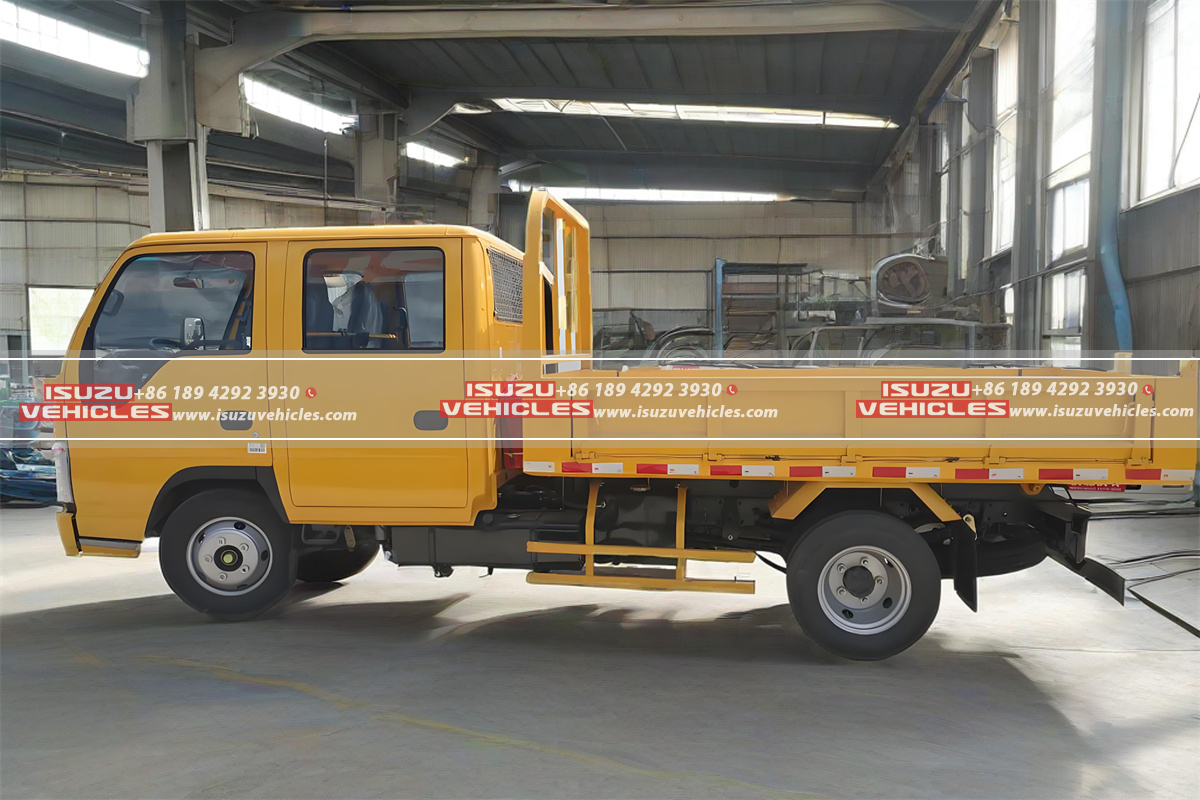
1. Understanding What “Heavy Loads” Really Mean in Daily Operations
When people ask whether an ISUZU dump truck is truly built for heavy loads, the question usually reflects real-world concerns rather than abstract specifications, because hauling capacity is only one part of a much larger picture that includes stability, durability, control, and long-term performance under repeated stress. In construction, landscaping, waste management, and infrastructure projects, heavy loads are not occasional challenges but daily realities, involving soil, gravel, demolition debris, asphalt, or aggregate that must be transported efficiently without compromising safety or reliability. ISUZU has built its reputation by designing trucks that function consistently in these demanding conditions, focusing not only on how much weight a truck can carry, but how well it carries that weight over thousands of cycles, varied terrain, and extended operating hours. This practical approach is what separates a capable dump truck from one that looks strong on paper but struggles in everyday use.
2. Chassis Strength and Structural Engineering
At the core of any dump truck’s ability to handle heavy loads is its structural foundation, and ISUZU places significant emphasis on chassis design and load distribution.
Reinforced Frames for Load Stability
An ISUZU dump truck is built on a reinforced ladder-frame chassis engineered to manage constant weight stress without excessive flexing or fatigue. This structural rigidity plays a critical role when transporting dense materials, as it helps distribute the load evenly across the frame, reducing strain on specific points and extending the overall service life of the vehicle. Over time, this design minimizes the risk of cracks, misalignment, or premature wear that can plague under-engineered trucks.
Balanced Weight Distribution
Heavy loads can quickly become dangerous if not properly balanced, and ISUZU’s chassis geometry is designed to maintain stability during both transport and dumping. Even weight distribution improves braking performance, steering response, and overall control, especially when operating on uneven surfaces or navigating tight job sites.
3. Powertrain Performance Under Load
A dump truck’s engine and transmission must work together seamlessly to move heavy materials efficiently, and ISUZU’s powertrain philosophy emphasizes control, reliability, and longevity rather than raw horsepower alone.
Torque-Focused Diesel Engines
ISUZU diesel engines are widely recognized for delivering strong low-end torque, which is essential when starting from a standstill with a fully loaded bed or climbing grades with heavy material onboard. This steady torque output allows smoother acceleration, reduced drivetrain stress, and better traction control, all of which are critical when hauling heavy loads in challenging conditions.
Transmissions Designed for Work
The transmission systems in ISUZU dump trucks are calibrated to handle frequent stop-and-go driving, slow maneuvering, and heavy payloads without overheating or excessive wear. This balance between power and precision ensures that the truck responds predictably under load, supporting both productivity and safety.
4. Dump Body Design and Load Handling
The dump body itself plays a significant role in how well a truck manages heavy loads, and ISUZU-compatible dump bodies are designed with both strength and efficiency in mind.
Durable Bed Construction
Dump bodies paired with ISUZU trucks are typically constructed from high-strength steel or reinforced alloys that resist abrasion, impact, and deformation caused by heavy or sharp materials. This durability ensures that the bed maintains its shape and functionality even after years of hauling rock, concrete, or debris, reducing downtime caused by repairs or replacements.
Hydraulic Systems Built for Repetition
Lifting heavy loads repeatedly requires a dependable hydraulic system, and ISUZU dump truck setups are engineered to provide consistent lifting power with smooth operation. Reliable hydraulics reduce strain on components and allow for controlled dumping, which is especially important when unloading in confined or uneven spaces.
5. Safety, Control, and Driver Confidence
Handling heavy loads safely depends not only on mechanical strength but also on how confidently the driver can control the vehicle in real-world conditions.
Braking and Stability Systems
ISUZU dump trucks are equipped with braking systems designed to perform reliably under load, providing predictable stopping power even when the truck is fully loaded. Stability-focused design elements help reduce body roll and maintain traction, which is essential when transporting heavy materials through job sites or public roads.
Driver-Centered Cab Design
Driver comfort and visibility directly influence safety, particularly during long shifts or demanding hauling schedules. ISUZU cabs are designed to offer clear sightlines, ergonomic controls, and supportive seating, helping drivers stay alert and focused while managing heavy loads throughout the day.
6. Built for Heavy Loads and Long-Term Versatility
An ISUZU dump truck proves its capability not through marketing claims but through consistent performance in demanding environments where heavy loads are part of everyday work rather than exceptional tasks. Its combination of structural strength, torque-focused powertrains, durable dump bodies, and driver-centered design makes it a reliable choice for businesses that need dependable hauling capacity without sacrificing control or longevity. Beyond hauling applications, many operators value how ISUZU trucks integrate into diverse fleets, working alongside specialized vehicles such as a bucket truck for elevated access projects or a mixer truck for concrete transport, reinforcing ISUZU’s role as a versatile platform across multiple industries. This adaptability, combined with proven durability, explains why ISUZU dump trucks continue to earn trust as workhorses built to carry heavy loads day after day, year after year.