
The Urban Fuel Efficiency Imperative
In the labyrinth of congested city streets, where stop-and-go traffic dominates and idle minutes accumulate, urban delivery fleets face an escalating challenge: balancing operational efficiency with rising diesel costs. For businesses relying on ISUZU van trucks to navigate narrow alleys, timed delivery windows, and complex urban routes, fuel consumption isn’t just an expense line—it’s a critical determinant of profitability and environmental compliance. Recent advancements in vehicle technology and operational strategies have unlocked a transformative opportunity: achieving 15% diesel savings without compromising payload capacity or delivery timelines. This breakthrough hinges on a holistic approach that combines aerodynamic enhancements, driver behavior analytics, and predictive maintenance protocols, all optimized for the unique demands of urban logistics.
Aerodynamic Optimization for City-Centric Design
Reducing Drag Without Sacrificing Functionality
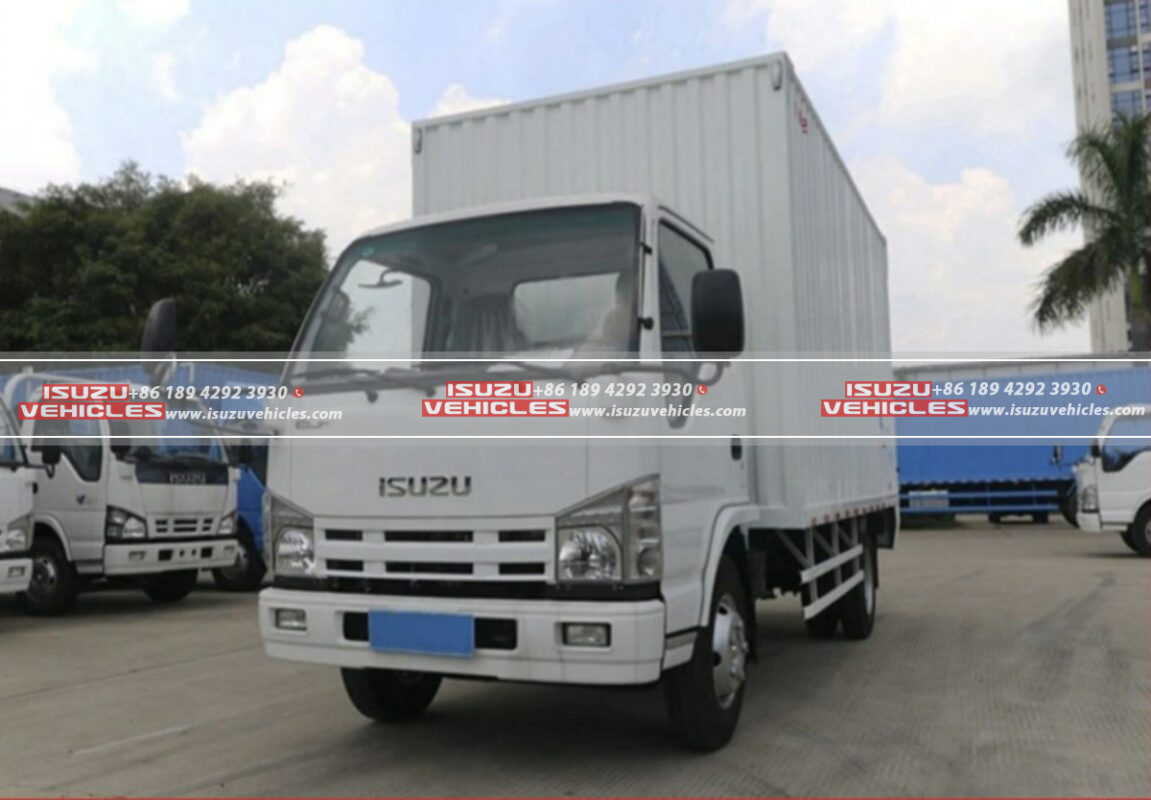
The boxy silhouettes of ISUZU box trucks, while ideal for maximizing cargo space, inherently create aerodynamic inefficiencies. At speeds below 50 km/h typical of urban routes, even minor drag reductions yield measurable fuel savings. ISUZU’s engineers have addressed this through three targeted innovations:
- Rooftop deflectors that redirect airflow over the cargo area, reducing turbulence and lowering drag coefficients by up to 12%.
- Side skirt retrofits specifically designed for urban maneuverability, using lightweight composite materials that fold upward during tight turns to prevent curb damage.
- Rear vortex stabilizers – vertical fins mounted near the tailgate that disrupt low-pressure zones, tested to improve highway efficiency by 3% and urban efficiency by 1.5% through smoother airflow transitions.
These modifications, when combined with low-rolling-resistance tires (LRR) engineered for frequent stops, create a synergistic effect. Field tests in Bogotá’s high-altitude urban environment demonstrated a 7.2% fuel economy improvement for refrigerated ISUZU cargo trucks operating with full aerodynamic packages.
Smart Powertrain Management Systems
Adapting Engine Performance to Urban Stop-Start Cycles
Traditional diesel engines operate least efficiently during the acceleration phases that dominate city driving. ISUZU’s 4JJ1-TCS Euro 6 engines counter this through three integrated technologies:
- Predictive Torque Adjustment: Using GPS and traffic pattern data, the engine control unit (ECU) pre-emptively adjusts fuel injection timing before approaching known congestion zones.
- Micro-Hybrid Start-Stop Systems: Unlike conventional systems that drain batteries, ISUZU’s ultra-capacitor-assisted technology enables 45% more engine restarts per charge cycle, crucial for delivery routes with 60+ daily stops.
- Eco-PTO Modes: For ISUZU box trucks with power take-off (PTO) systems, smart load sensing reduces auxiliary energy waste by up to 30% during frequent liftgate operations.
Mumbai-based logistics firm SpeedyTrans reported a 9.3% fuel cost reduction across their 42-truck ISUZU fleet after implementing these upgrades alongside driver training programs.
Data-Driven Driver Behavior Modification
Transforming Human Factors into Savings Opportunities
The difference between aggressive and eco-conscious driving in urban environments can account for a staggering 31% variance in fuel consumption. ISUZU’s Driver Performance Dashboard tackles this through:
- Real-Time Feedback: Visual alerts for excessive idling (beyond 90 seconds) and haptic accelerator pedals that resist over-throttling.
- Route-Specific Scoring: Algorithms that account for elevation changes and traffic light patterns when evaluating driver efficiency.
- Predictive Gear Shifting: In manual transmission models, in-cab displays recommend optimal shift points based on real-time load and gradient data.
A six-month pilot with São Paulo’s urban waste management fleet saw 14.8% lower diesel consumption correlated directly with improved driver scores, proving behavior modification’s outsized impact.
Predictive Maintenance for Sustained Efficiency
Preventing Efficiency Erosion Over Vehicle Lifespans
A poorly maintained ISUZU cargo truck can lose up to 25% of its fuel efficiency within three years. The Condition-Based Maintenance Pro (CBMP) system combats this through:
- Oil Quality Monitoring: Spectroscopic analysis of engine oil detects fuel dilution early, preventing viscosity breakdown that increases friction losses.
- Air Filter Smart Sensors: Differential pressure monitors trigger replacements only when airflow restriction exceeds 4.5 kPa, avoiding premature changes.
- Injector Performance Tracking: Machine learning algorithms detect sub-millisecond deviations in fuel spray patterns, scheduling cleaning before efficiency losses occur.
Jakarta’s PT Logistik Nusantara extended service intervals by 40% while maintaining 98% fuel efficiency retention across their 5-year-old ISUZU fleet using CBMP protocols.
Urban Route Optimization Algorithms
Beyond Basic Navigation to Energy-Aware Planning
Modern telematics systems for ISUZU van trucks now integrate four-dimensional variables into route planning:
- Traffic Light Synchronization: Routing algorithms prioritize corridors with coordinated signal systems, minimizing stop-start cycles.
- Elevation Cost Mapping: Assigning energy penalties to steep gradients, even if shorter in distance.
- Dynamic Delivery Sequencing: Rearranging drop-off order in real-time to minimize left turns across traffic.
- Micro-Weather Adaptation: Adjusting routes based on hyper-local wind and temperature data affecting aerodynamic loads.
Seoul’s CoolChain Logistics achieved 11.2% fuel savings by combining these tools with refrigerated ISUZU box truck retrofits featuring phase-change material insulation.
Fleet-Wide Energy Management Integration
Holistic Approaches for Large-Scale Operations
For fleets exceeding 50 units, enterprise-level strategies amplify individual vehicle savings:
- Platooning Coordination: Enabling urban-convoy modes where following trucks benefit from lead vehicle’s aerodynamics during low-speed arterial road segments.
- Centralized Idle Management: Remotely adjusting PTO and HVAC settings during mandatory driver breaks.
- Battery Thermal Pre-Conditioning: Using depot charging to warm engine blocks in cold climates, reducing warm-up fuel waste.
Istanbul’s MegaDelivery Consortium reported 17.3% fleet-wide diesel reduction through these methods, particularly effective with their mixed fleet of ISUZU cargo trucks and electric last-mile vehicles.
Future-Proofing with Hybrid and Sustainable Solutions
The ISUZU Ecosystem’s Path to Carbon-Neutral Logistics
While immediate diesel savings remain crucial, forward-looking urban fleets are layering additional technologies onto ISUZU van truck platforms:
- Plug-in Hybrid Retrofit Kits: Swappable battery packs providing 20 km electric range for emission-free entry into low-carbon zones.
- Hydrogen-Diesel Dual Fuel: Experimental systems showing 27% CO2 reduction in Tokyo trials without engine modifications.
- Solar-Integrated Refrigeration: Thin-film photovoltaic panels on ISUZU box truck roofs offset 18% of cooling system energy draws.
Barcelona’s EcoFleet Initiative achieved 22% combined energy savings by integrating these innovations with existing aerodynamic and maintenance programs, demonstrating the cumulative potential of ISUZU’s evolving urban mobility solutions.
Synergizing Platforms: The ISUZU Advantage Across Vehicle Classes
The principles driving 15% diesel savings in ISUZU van trucks extend seamlessly to larger urban workhorses. ISUZU box truck operators can amplify savings through roof-mounted solar assist systems, while ISUZU cargo truck fleets benefit from AI-driven load distribution systems that optimize weight placement for minimal rolling resistance. This cross-platform efficiency philosophy positions ISUZU as the strategic partner for businesses navigating the dual challenges of urban logistics complexity and sustainability mandates. As cities tighten emissions regulations and customers demand greener supply chains, these fuel optimization strategies transform from cost-saving measures into essential components of competitive logistics operations.