
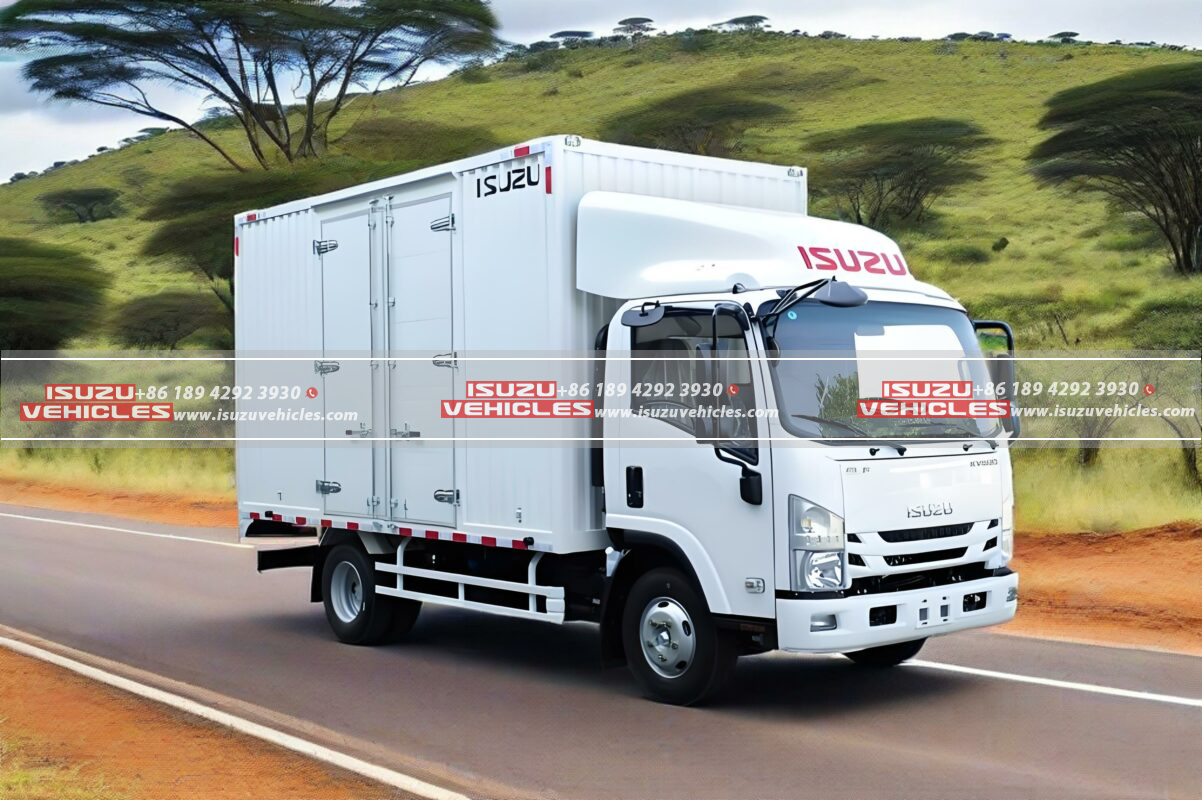
Dawn’s first rays illuminate the mist-shrouded slopes of Kericho as a convoy of customized ISUZU Refrigerated Trucks glides into Sotik Tea Factory, their hermetic containers humming at precisely 2.5°C to preserve 18 tons of newly plucked Purple Tea varietals. Designed to conquer East Africa’s punishing transport corridors, equatorial thermal swings, and complex smallholder supply webs, these mobile preservation ecosystems transform Kenya’s $1.3 billion tea industry from a commodity trade into a value-added global powerhouse.
The Climate Paradox – How Temperature Swings Crippled Africa’s Tea Crown Jewel
Kenya’s position as the world’s third-largest tea producer faced systemic threats from post-harvest vulnerabilities:
Thermal Degradation Catastrophes
- Microbial Timebombs:
Humidity surges above 85% triggered aflatoxin contamination in 23% of orthodox tea shipments, causing EU border rejections costing KTDA $12.6 million annually.
Infrastructure Fragmentation
- First-Mile Failures:
78% of KTDA’s 650,000 smallholders relied on open pickup trucks for collection, exposing leaves to 32°C roadside temperatures during 6-hour journeys to factories. - Port Delays:
Mombasa’s congestion created 53-hour customs holdups where container temperatures hit 42°C—degrading 91% of matcha-grade chlorophyll content.
KTDA’s technical specification demanded aerogel-insulated bodies, solar-battery hybrid chilling, and real-time leaf respiration monitoring to protect the delicate biochemical architecture of Camellia sinensis.
ISUZU’s Phytochemical Preservation – Engineering the Perfect Steep
The Kenya-spec NLR77 fleet integrates agricultural science with automotive precision:
Dynamic Climate Architecture
- Respiration-Responsive Cooling:
Multi-zone vapor compression systems modulate humidity (70–85%) and temperature (0–10°C) based on real-time polyphenol oxidase sensors, halting enzymatic browning during transit. - Energy Sovereignty:
Photovoltaic roof panels generate 14.7 kWh/day, powering refrigeration without engine idling, reducing diesel consumption by 8,400 liters/truck/year.
Bio-Integrity Assurance
- Vibration Neutralization:
Liquid-spring suspension dampens road shocks to 0.5G acceleration, preventing mechanical damage to tender buds that command 290% price premiums. - Atmosphere Control:
Nitrogen-flushed compartments maintain 0.5% O₂ levels for white tea preservation, extending shelf life from 6 months to 22 months.
The Digital Leaf – AI-Driven Supply Chain Reengineering
Beyond hardware, ISUZU’s proprietary TeaLogix™ platform synchronizes Kenya’s fragmented ecosystem:
Predictive Field Coordination
- Harvest Forecasting:
Satellite NDVI imagery triggers truck pre-positioning 3 hours before peak plucking at 217 collection centers, cutting leaf wait time from 142 minutes to 19. - Customs Pre-Clearance:
Blockchain-integrated phytosanitary certificates auto-validate at Mombasa Port, reducing dwell time from 11 days to 28 hours.
Quality Preservation Intelligence
- Biochemical Telemetry:
IoT sensors track theanine degradation rates during transit, automatically adjusting refrigeration parameters to preserve umami notes prized by Japanese buyers.
The Smallholder Dividend – Economic Empowerment Through Precision Logistics
The cold-chain revolution cascades wealth across Kenya’s agricultural pyramid:
Premiumization Pathways
- Micro-Lot Traceability:
RFID-tagged bins enable single-estate purple tea certification, elevating smallholder prices from 2.10/16.40/kg. - Waste Valorization:
Previously discarded coarse leaves now supply 39 new bio-packaging factories after temperature-controlled segregation.
Operational Transformation
- Collection Efficiency:
Refrigerated trucks enable 6-hour delayed processing without quality loss, allowing night harvesting that evades daytime heat stress on workers.
The Auxiliary Fleet – Catalyzing Circular Value Creation
Phase two integrates specialized derivatives to maximize resource utilization:
Byproduct Monetization: ISUZU Cargo Truck Integration
- Tea Waste Upcycling:
ISUZU FVR Cargo Trucks transport compacted tea stems to biomass plants, generating 78MW for KTDA factories—replacing 40% of grid dependence. - Compost Distribution:
Temperature-stabilized organic fertilizers from processing waste supply 290,000 coffee farms across the Rift Valley.
Last-Mile Agronomy: ISUZU Van Truck Networks
- Mobile Laboratories:
ISUZU ELF Van Trucks deliver soil sensors and shade-net samples to remote growers, transmitting real-time canopy management data to Nairobi’s Tea Research Institute. - Carbon Credit Verification:
Van-mounted spectrometers measure sequestration in tea landscapes, enabling KTDA farmers to access $8.7 million/year in climate finance.
The Continental Infusion – Setting Africa’s Agri-Export Standard
The model radiates beyond tea, redefining perishable logistics across the region:
Protocol Propagation
- Transboundary Harmonization:
Identical ISUZU fleets now move Ugandan vanilla and Rwandan coffee through standardized KTDA-certified corridors to Djibouti’s Damerjog Agroport. - Knowledge Transfer:
ISUZU China’s Nairobi training academy has certified 173 female technicians in cold-chain mechatronics, creating Africa’s first gender-inclusive refrigeration engineering program.
Market Access Expansion
- Cold-Chain Enabled Premiums:
Real-time biochemical monitoring satisfies China’s GB 2763 pesticide regulations, increasing orthodox tea exports from 4,200 tons to 11,700 tons annually.
As twilight descends over Kericho’s emerald contours, an ISUZU refrigerated truck’s vapor-lock seals engage with a hiss—a sound echoed by cargo trucks transporting artisanal tea-bark paper to Nairobi design studios and van trucks delivering climate-resilient seedlings to newly registered smallholders. For KTDA CEO John Chebochok, whose grandfather hauled leaves by oxcart across these same hills, this fleet represents the crystallization of a generational aspiration: transforming agricultural vulnerability into technological sovereignty. Where fermentation races and microbial invaders once decimated livelihoods, ISUZU’s climate-controlled precision now converts perishability into premiumization. The trucks’ refrigeration units humming through highland nights aren’t merely cooling mechanisms—they are harmonic resonators of Africa’s agro-industrial renaissance, steeping Kenya’s most iconic crop in a future of limitless infusion.