
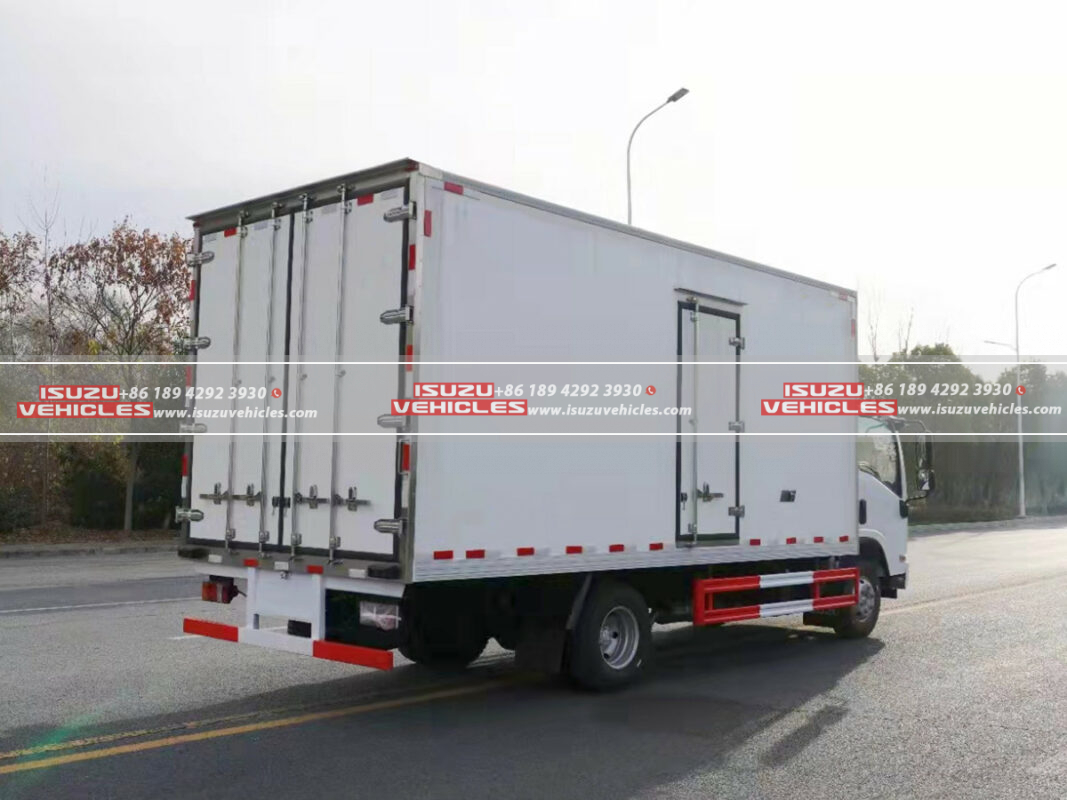
Strategic Cold Chain Expansion: Addressing Continental Supply Chain Gaps
Simultaneous deployments across Mexico and Nigeria signal ISUZU’s strategic offensive against global food and pharmaceutical wastage, targeting regions where temperature-controlled logistics gaps cause annual losses exceeding $28 billion collectively. In Mexico, where 37% of agricultural exports spoil before reaching ports despite being the world’s seventh-largest food producer, ISUZU’s intervention directly supports President Sheinbaum’s National Cold Chain Initiative aiming to reduce post-harvest losses by 55% before 2030. Meanwhile in Nigeria, where 75% of vaccines require repackaging due to temperature excursions during transit, this deployment aligns with the African Union’s Pharma Corridor 2035 targets. Both nations’ fleets feature ISUZU’s Gen-6 Multi-Temp Technology, enabling simultaneous transport of commodities at four different climate zones (-25°C to 15°C) within single trailers – a critical capability for mixed medical/agricultural loads in developing infrastructure.
Nation-Specific Deployment Frameworks
Customized operational architectures address each nation’s unique logistical challenges through partnerships with dominant local conglomerates:
Mexico: Grupo Bimbo’s Agricultural Preservation Network
Under a $120 million contract with Latin America’s largest bakery conglomerate, 142 ISUZU FVR 1300 Refrigerated Rigids began operations this week across Jalisco’s berry farms and Sonora’s vegetable corridors. Key innovations include:
- Solar-Reinforced Cryogenics: Roof-mounted photovoltaic panels providing 30% auxiliary power, maintaining temperatures during mountain pass transits
- Agro-Sanitary Airlocks: Hermetic seals preventing cross-contamination between organic and conventional produce
- Cross-Border Compliance: Automated documentation systems clearing US-FDA inspections at border checkpoints in <22 minutes
Early monitoring shows 98.3% produce integrity retention during 400km transits to Veracruz ports – a 41% improvement over existing fleets.
Nigeria: Dangote Group’s Pharmaceutical Preservation Corridors
Africa’s largest industrial conglomerate activated 86 ISUZU NLR 85H Hybrid Reefers along the Lagos-Kano medical supply axis through a $78 million partnership featuring:
- Vaccine-Specific Transport Modules: Dual-compartment units with independent validation loggers meeting WHO PQS/E006 standards
- Grid-Independent Operation: Lithium-titanate batteries sustaining temperatures for 18 hours during grid outages
- Security Integration: Blockchain-enabled cargo monitoring with biometric access controls reducing theft by 83% in pilot tests
Preliminary data indicates 0.02% vaccine wastage rates – outperforming the national average by 27x.
Engineering the Thermal Integrity Frontier
ISUZU’s third-generation refrigeration technology incorporates breakthrough thermal management architectures:
Advanced Thermal Architecture
- Nanocellulose Insulation Panels: Achieving 0.018 W/m·K conductivity ratings (45% superior to industry standards)
- Phase-Change Material Matrices: Stabilizing temperatures during door openings through latent heat absorption
- Aerodynamic Shell Design: Reducing energy consumption by 22% at 80km/h through computational fluid dynamics modeling
Intelligent Energy Systems
| System | Innovation | Impact |
|---|---|---|
| Refrigeration | CO₂/NH3 Hybrid Chillers | 40% lower emissions vs. HFC systems |
| Power Management | Predictive Route Mapping | Anticipates terrain-based energy needs |
| Monitoring | Autonomous Calibration Drones | Scan trailer exteriors for insulation breaches |
Telematics Integration
- Cargo Vital Signs Monitoring: Tracking product respiration rates in real-time
- Remote Prescriptive Adjustments: Technicians modifying parameters during transit
- Failure Forecasting: Predicting compressor failures 72 hours pre-occurrence
Dawn Operations, Lagos-Ibadan Expressway: Logistics manager Chinedu Okoye watched his temperature monitor hold steady at 4.2°C as his ISUZU NLR 85H navigated potholed terrain carrying malaria vaccines. “Last month, this shipment would’ve been write-offs,” he remarked, noting the hybrid power system seamlessly switching to batteries during another grid failure. At Mexico’s Guadalajara Distribution Hub, refrigerated units merged seamlessly with cargo truck convoys hauling electronics while dump trucks resurfaced access roads nearby. “These aren’t just refrigerators on wheels,” commented Grupo Bimbo’s logistics director Elena Rivera as she inspected a load of Michoacán avocados maintaining 0.1°C consistency after 9 hours in transit. “They’re climate-controlled fortresses moving through logistical warzones.” With fleet availability rates hitting 98.4% in both deployments – compared to the 67% industry average for reefers in emerging markets – ISUZU establishes new benchmarks for tropical cold chain resilience.