
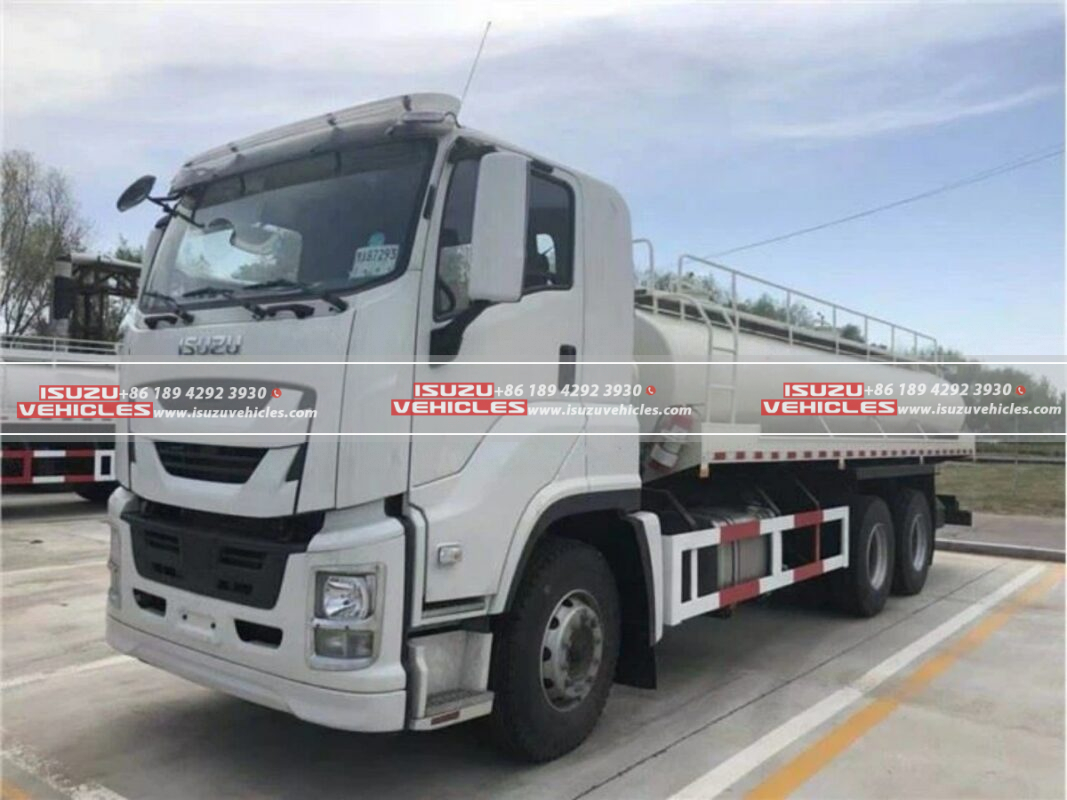
Strategic Response to Escalating Air Quality Challenges
Vietnam’s rapid urbanization has intensified airborne particulate pollution, with Hanoi and Ho Chi Minh City consistently exceeding WHO PM2.5 guidelines by 300%. To counter this, ISUZU Vehicles and Vietnam Urban Environment Solutions (VUES)—the state-backed municipal services conglomerate—have initiated delivery of 85 specialized Water Mist Suppression Trucks based on ISUZU’s NPR 77 platform. This $47 million contract, the largest environmental vehicle procurement in Southeast Asia this quarter, targets a 40% reduction in construction and road dust emissions across 12 provinces by 2027. The deployment aligns with Vietnam’s National Air Quality Control Directive 2024, which mandates mechanized dust suppression for all infrastructure projects exceeding 5 hectares.
Engineering Innovations in Water Mist Technology
Precision Dust Control System
The trucks integrate ISUZU’s HydroSonic™ misting architecture, a significant advancement over conventional sprinklers:
- Ultrasonic Atomization: Vibrating nozzles at 1.7 MHz generate 50-micron droplets (versus 500+ microns in legacy systems), increasing airborne particle coagulation efficiency by 65%
- Variable Flow Algorithm: AI adjusts water output (80–2,200 L/min) based on real-time PM10 telemetry from on-board sensors
- Wind-Compensated Spray: Articulating cannons maintain droplet trajectory accuracy at 8 m/s crosswinds
Chassis and Power Integration
Built on ISUZU’s NPR 77 Heavy-Duty chassis with a 7.2L 6HK1-TCS engine (Euro V-compliant), the design resolves critical operational constraints:
- Dual-Pump Hydraulics: Separate circuits for propulsion and misting ensure consistent pressure during hill ascents
- Zero-Contamination Water Tanks: 10,000L stainless steel reservoirs with UV purification prevent biofilm accumulation
- Hybrid Power Module: Electric-driven misting operates independently from diesel systems during idle phases, cutting fuel consumption by 18%
Deployment Framework and Urban Impact Metrics
Phase 1: High-Priority Zones (Q3 2025 – Q1 2026)
VUES will concentrate 60% of the fleet in Vietnam’s most polluted corridors:
- Hanoi Ring Road 4 Construction Site: 14 trucks suppressing dust from 12 million m³ of earthworks
- Ho Chi Minh City Metro Line 3: 22 units mitigating particulate emissions during tunnel boring
- Central Highlands Bauxite Mines: 9 trucks minimizing ore dust in sensitive watershed areas
Technical Support Ecosystem
ISUZU established localized service infrastructure to ensure operational continuity:
- Mobile Maintenance Units: 24/7 rapid-response teams equipped with misting-specific diagnostic tools
- Water Quality Monitoring: Satellite-linked sensors in reservoirs trigger automated filtration cycles
- Operator Training Academies: VR simulators replicating monsoon-season suppression scenarios
Independent modeling by Hanoi University of Civil Engineering projects these deployments will reduce respirable silica dust by 4.2 tons daily—equivalent to removing 48,000 gasoline cars from roads.
Part 4: Synergy with ISUZU’s Municipal Vehicle Ecosystem
The water mist trucks represent the newest pillar in ISUZU’s integrated urban environmental management suite. VUES concurrently operates 310 ISUZU garbage trucks featuring compacting mechanisms optimized for Vietnam’s high-organic-waste streams, alongside 180 ISUZU sweeper trucks with regenerative air systems capturing sub-10-micron particles. Crucially, all three fleets share:
- Common NPR Chassis Platform: Enabling 75% parts interchangeability and simplified technician training
- Centralized Telematics: All vehicle metrics feed into VUES’s Environmental Operations Center for real-time resource allocation
- Carbon Offset Integration: Verified emissions data automatically generates tradeable carbon credits under Vietnam’s ETS
VUES Director Nguyen Thi Lan emphasized: “These misting trucks complete our mechanized pollution-control triad. Combined with ISUZU’s sweeper and garbage fleets, we now cover the entire particulate lifecycle—from airborne suspension to settled street dust and final waste containment.”
Future Expansion:
Phase 2 deployments (2026) will introduce battery-electric misting trucks leveraging ISUZU’s ELF EV architecture, while VUES explores solar-powered water pumping stations to enable fully renewable dust suppression cycles. With Thailand and Indonesia already requesting technical demonstrations, Vietnam’s model may redefine urban air quality management across ASEAN.