
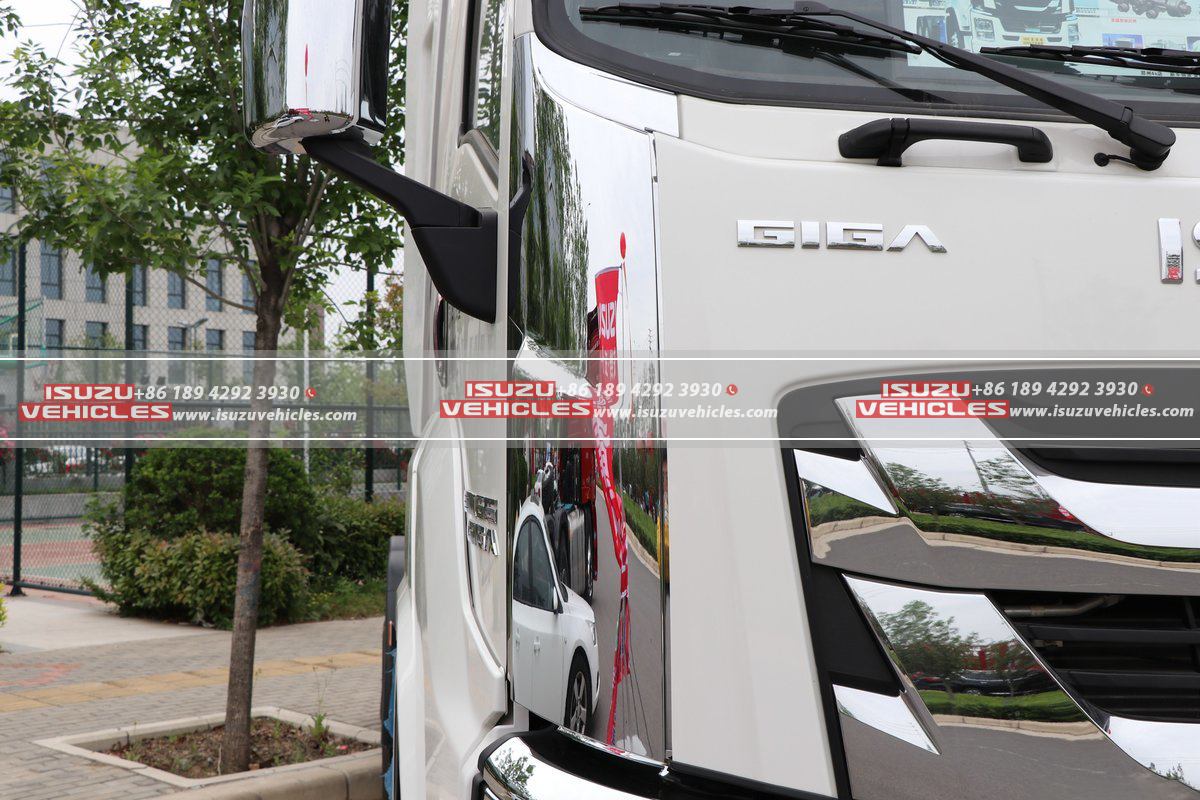
In the realm where off-the-shelf trucks become Arctic drilling rigs, mobile neurosurgery units, or autonomous concrete batch plants, the ISUZU truck chassis transforms from a transport platform into a three-dimensional canvas for industrial imagination. This metamorphosis demands more than bolt-on equipment – it requires chassis DNA recalibration, where frame harmonics synchronize with cement mixer drum rotations, electrical systems self-adapt to mega-welder loads, and suspension geometries morph for desert survey missions. The difference between a functional upfit and an engineered symbiosis lies in mastering the physics of adaptation.
1. Structural Re-Engineering: Beyond Reinforcement Plates
When specialty equipment exerts forces orthogonal to a chassis’ design intent, mere strengthening invites catastrophic resonance.
Dynamic Load Path Remapping
- Harmonic neutralization: Cement mixer drums generating 12Hz torsional vibrations require eccentric mass dampers mounted at precisely calculated nodes on ISUZU FVR frames, reducing bearing failures by 70% through destructive interference tuning.
- Multi-axis reinforcement: Mobile crane installations demand triangulated outrigger portals laser-welded to frame rails, distributing 280-ton-meter bending moments across six crossmembers rather than concentrating stress at lift points.
Material Science Integration
- Composite hybrid structures: For fuel tankers hauling liquefied hydrogen at -253°C, ISUZU employs carbon-fiber reinforced frame extensions with thermal break interfaces preventing cold-embrittlement of standard steel.
- Corrosion-engineered architectures: Oceanographic research builds integrate Monel alloy chassis inserts in splash zones, resisting saltwater corrosion 200x longer than galvanized steel.
2. The Power Distribution Nexus: Beyond Auxiliary PTOs
When hydraulic systems demand 120L/min at 350 bar while simultaneously powering 480V MRI units, conventional power take-offs become bottlenecks.
Intelligent Energy Routing
- Tri-modal PTO ecosystems: ISUZU’s modular system combines engine-mounted mechanical PTOs for high-torque applications (e.g., wreckers), transmission-integrated hydraulic pumps for smooth variable flow (crane operation), and 48V DC/AC inverters for sensitive electronics – all managed through a single CANbus power router.
- Load-shedding intelligence: During peak surgical tool activation in mobile hospitals, the system temporarily reduces air compressor speed to prioritize 0.1% voltage stability for laser scalpels.
Thermal Energy Recapture
- Exhaust-driven turbines convert waste heat into 28kW supplemental power for refrigeration units on ISUZU GIGA-based cold chain transporters, reducing primary fuel consumption by 18%.
- Regenerative hydraulic circuits capture boom lowering energy in aerial platforms, storing it in nitrogen accumulators for subsequent lift cycles.
3. Control System Symbiosis: Creating Unified Intelligence
Specialty equipment fails when its brain operates independently from the chassis nervous system.
Neural Network Integration
- Sensor fusion gateways: Firefighting builds integrate pump pressure sensors, water tank levels, and chassis stability controls into a single AI module that automatically adjusts engine RPM and outrigger pressure during ladder pipe operations.
- Predictive interference mitigation: In mobile broadcasting trucks, spectrum analyzers pre-emptively reconfigure ECU frequencies to prevent electromagnetic interference with satellite uplinks at critical transmission moments.
Autonomous Safety Envelopes
- Dynamic stability forecasting: For fluid tankers, real-time slosh modeling combined with route topography data automatically restricts speed before sharp curves when lateral forces risk exceeding 0.35G thresholds.
- Collision geometry awareness: Airport crash tenders integrate LiDAR with chassis controls, calculating approach angles to aircraft fuselages and automatically adjusting bumper height to align with door sills.
4. Environmental Hardening: Mission-Specific Fortification
A chassis crossing Antarctic ice shelves faces different adversaries than one navigating chemical plant spill zones.
Extreme Temperature Architectures
- Arctic operational kits: Include viscosity-optimized fluids maintaining flow at -55°C, ceramic-bearing alternators eliminating lubricant failure, and cabin air-recirculation systems preventing windshield icing during stationary operations.
- Desert survival packages: Feature sand-intrusion defense systems with positive-pressure cab filtration, radiator jet-injection cleaning for dust-clogged fins, and UV-reflective paint reducing aircon loads by 35%.
Hazardous Material Protocols
- Intrinsic safety integration: Fuel tankers incorporate static dissipation systems with 10-megaohm resistance grounding straps and vapor concentration sensors that disable pumps at explosive thresholds.
- Decontamination readiness: Biohazard response units feature seam-sealed cabin interiors with negative-pressure airlocks and corrosion-resistant cable routing withstand repeated bleach exposure.
5. Vocational Synthesis: Precision-Tailored Configurations
True customization transcends equipment mounting – it reimagines the chassis as an organic component of the mission.
ISUZU Tractor Truck Transformations
- Aerodynamic symbiotic trailers: Developed with wind tunnel testing, chassis-mounted vortex generators align with trailer contours at highway speeds, reducing drag by 22% in auto-carrier configurations.
- Dynamic weight distribution: Fifth wheels with active load sensors automatically adjust kingpin pressure during livestock transport, preventing panic-inducing trailer oscillations during abrupt maneuvers.
ISUZU GIGA Mining Evolution
- Autonomous readiness architecture: Pre-wired for LiDAR clusters, AI processing units, and redundant braking systems allowing conversion to driverless haulage with minimal retrofitting.
- Modular damage containment: Quick-release powertrain cradles enable engine swaps in 3.5 hours versus standard 14 hours – critical for remote site operations.
Specialized Interface Ecosystems
- Human-machine symbiosis: Mobile crane cabs feature haptic control sticks transmitting chassis tilt feedback through operator grips, allowing intuitive compensation during lifts on uneven terrain.
- Self-configuring maintenance: When service trucks detect mounted welding equipment, they automatically reconfigure electrical load profiles and schedule enhanced alternator inspections based on duty cycle analysis.
The Symphony of Adaptation
When an ISUZU GIGA chassis evolves into a 300-ton mobile crane, its triumph lies not in the obvious hydraulics or outriggers – but in the invisible harmonies: frame resonances tuned to dampen harmonic vibrations from uneven drum rotations, thermal expansion coefficients matched between chassis and mounted cement mixer, CANbus networks that negotiate power allocation between surgical lasers and climate control. This same engineering philosophy allows ISUZU tractor trucks to become precision livestock transporters where vibration spectra are engineered to calm nervous herds, or transform into seismic survey platforms detecting subterranean formations through tire contact patch analysis. In transcending its base form, the ISUZU chassis achieves mechanical transcendence – becoming not merely a vehicle, but the very embodiment of its mission.