
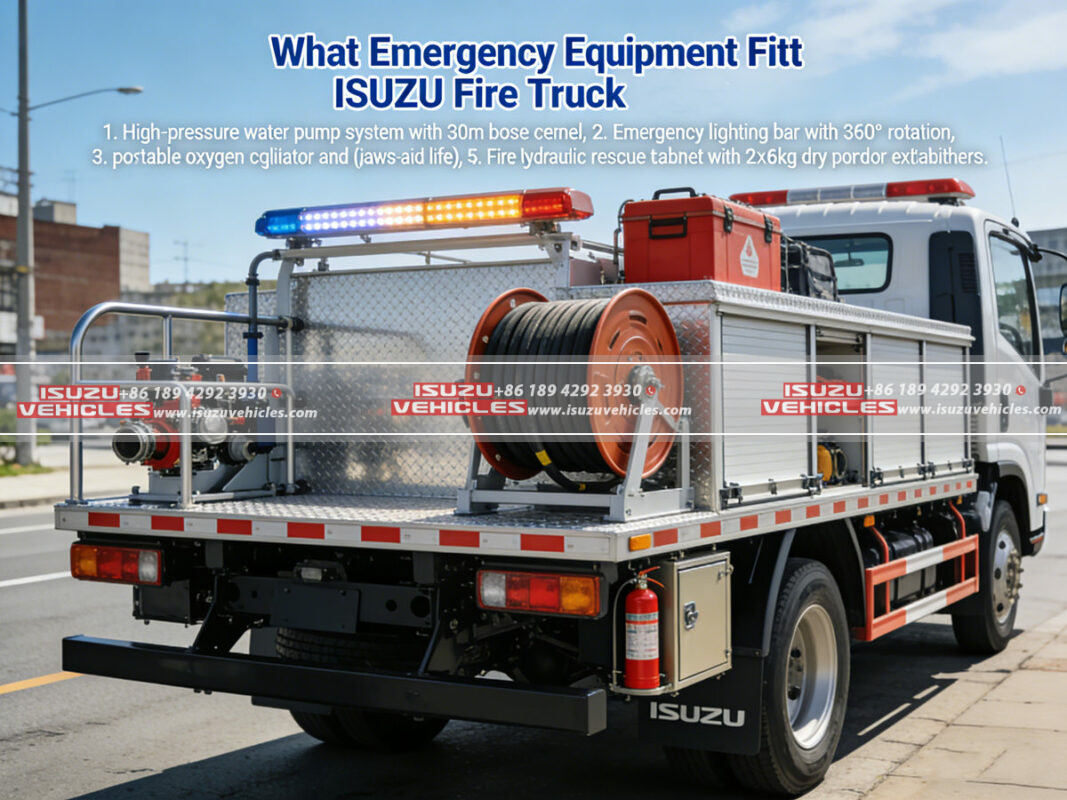
In the high-stakes arena of firefighting and emergency response, seconds count and reliability is paramount. ISUZU F Series chassis have emerged as a global cornerstone for fire apparatus manufacturers, prized for their exceptional durability, robust frame strength, and proven off-road capability under punishing conditions. These platforms provide the critical foundation upon which life-saving emergency equipment is mounted, transforming a heavy-duty truck into a sophisticated, mission-ready firefighting system. Selecting the right equipment integration isn’t merely a procurement exercise; it’s about ensuring seamless synergy between the chassis’s inherent capabilities and the advanced firefighting technology it carries, enabling crews to attack fires aggressively, perform complex rescues, and protect communities with unwavering confidence. Understanding the core and specialized apparatus that perfectly fits these rugged ISUZU platforms is essential for departments aiming to maximize operational effectiveness and firefighter safety.
The ISUZU F Series Advantage: Engineered for Emergency Demands
The widespread adoption of ISUZU F Series chassis – particularly the FVR, FYJ, and FTR models – across diverse fire service applications stems from several fundamental engineering strengths. Firstly, the legendary ladder frame chassis, constructed from high-tensile steel using advanced manufacturing techniques, delivers unmatched torsional rigidity and load-bearing capacity. This inherent structural integrity is non-negotiable when supporting tons of water, complex aerial devices, heavy rescue tools, and specialized equipment, ensuring stability during dynamic operations and minimizing stress-induced failures over the vehicle’s lifespan. Secondly, ISUZU’s renowned diesel powertrains offer a compelling blend of reliable horsepower, high torque output at low RPMs, and remarkable fuel efficiency. This translates directly to the power needed to drive high-pressure pumps, operate hydraulic rescue tools, run extensive lighting arrays, and propel the fully loaded vehicle rapidly to the scene, even on inclines or challenging terrain, without compromising operational endurance. Furthermore, ISUZU’s commitment to global serviceability ensures parts availability and technician expertise are accessible, minimizing potential downtime which is unacceptable in emergency services.

Core Firefighting Modules: Pump, Tank, and Water Delivery Systems
The heart of any fire apparatus is its ability to rapidly deploy water or agent. On ISUZU chassis, integration is designed around maximizing payload efficiency and operational performance.
High-Capacity Mid-Ship Pumps & Tanks
Central to this is the NFPA-compliant fire pump, typically a mid-ship mounted centrifugal unit ranging from 750 GPM (Gallons Per Minute) to over 2000+ GPM for larger rescues or industrial units. These pumps are meticulously engineered to leverage the chassis engine’s power via robust power take-off (PTO) systems, ensuring smooth engagement and sustained high-pressure output crucial for effective fire streams. Mounted directly behind the cab or integrated into the body, these pumps feed from onboard water tanks. ISUZU chassis readily accommodate tanks constructed from durable materials like polypropylene or stainless steel, with capacities ranging from 500 gallons for initial attack units to well over 3000 gallons for tender operations, strategically placed to maintain optimal weight distribution and a low center of gravity for enhanced vehicle stability on uneven ground during pumping operations.
Advanced Foam Systems and CAFS
Beyond plain water, modern firefighting demands precise agent application. Integrated Class A/B foam proportioning systems are standard, allowing operators to accurately mix foam concentrate from onboard tanks (typically 20-100+ gallons) into the water stream, significantly improving fire knockdown and reducing water usage. Compressed Air Foam Systems (CAFS) represent a further evolution, injecting compressed air into the foam solution to create a highly effective, adherent blanket that smothers fires faster and provides superior penetration into deep-seated fires. Both systems are seamlessly controlled from the pump panel, requiring robust integration with the chassis electrical systems and pump drive.
Aerial Apparatus Integration: Ladders, Platforms, and Articulating Booms
For reaching elevated emergencies, ISUZU chassis provide a stable base for various aerial devices, transforming them into essential ladder trucks or quint combinations.
Mid-Mount & Rear-Mount Aerial Ladders
Heavy-duty steel or aluminum aerial ladders, ranging from 65 to 110+ feet, are commonly mounted midship or rear of the cab on specialized subframes that distribute immense twisting and bending forces directly into the ISUZU chassis frame rails. These subframes incorporate sophisticated stabilizer systems – often hydraulic outriggers with large footprint pads – deployed swiftly to create an immobile platform before ladder extension. The ladder’s hydraulic power unit, demanding significant power, is efficiently driven by the chassis engine through dedicated PTOs, ensuring smooth, reliable operation under load.
Elevating Platforms and Articulating Towers
For scenarios requiring a stable work platform for rescue or elevated master stream operation, hydraulic articulating booms or telescopic platforms are mounted. These devices offer greater maneuverability around obstacles than straight ladders and provide a secure basket for firefighters. Precision load sensing systems and interlock controls are vital safety components integrated with the chassis systems to prevent operation outside safe parameters. The integration demands rigorous engineering to manage the significant weight and dynamic forces exerted during articulation and extension while maintaining critical chassis stability.

Rescue and Extrication Tool Integration: Powering the Jaws of Life
Rescue operations demand immediate access to immense hydraulic power. ISUZU chassis excel at supporting high-capacity hydraulic rescue tool (HRT) systems, commonly known as the “Jaws of Life.” These systems rely on dedicated hydraulic power units (HPUs) mounted on the chassis, featuring robust diesel engines or powerful PTO-driven pumps capable of generating the ultra-high pressures (upwards of 10,000 psi) required to operate spreaders, cutters, rams, and combination tools. The HPU requires careful placement for accessibility, weight distribution, and minimizing hose runs to tool storage compartments. Efficient quick-coupling systems and strategically routed hydraulic hose reels ensure tools can be deployed rapidly to the incident site. Integration extends to reliable electrical controls and interlocks, often managed via the vehicle’s central electrical system, ensuring immediate readiness when seconds matter most in extricating trapped victims.
Specialized Hazardous Materials and Technical Response Equipment
Facing chemical, biological, radiological, or complex technical incidents requires specialized tools securely mounted and readily accessible. ISUZU chassis provide the adaptable platform for HazMat response modules and technical rescue support vehicles.
Containment, Detection, and Decon Systems
Air monitoring and detection equipment (PID, FID, Raman spectrometers, radiation detectors) requires secure, vibration-dampened mounting and immediate power access. Chemical sealing and containment kits, overpack drums, and non-sparking tools need specialized compartmentalization with spill containment. Critically, decontamination systems – ranging from pop-up showers to elaborate trailer-mounted setups – demand significant water capacity (often supported by the vehicle’s booster tank or separate supply), drainage solutions, and ample compartment space for tents, pumps, and cleaning agents. Power requirements for lighting, ventilation blowers, and detection equipment necessitate substantial auxiliary generators integrated onto the chassis.
Confined Space and Trench Rescue Support
Technical rescue units leverage the ISUZU’s stability and payload for shoring systems, air bags, rope rescue equipment, atmospheric monitors, and breathing air cascade systems. Secure storage for bulky gear, integrated breathing air compressor systems utilizing chassis power, and robust external lighting towers are essential integrations. The chassis’s ability to access rough terrain is crucial for reaching collapsed structures or remote trench incidents.

Critical Support Systems: Power Generation, Scene Lighting, and Command
Beyond direct firefighting and rescue tools, ISUZU fire apparatus integrate vital support systems that enhance operational capability and safety throughout an extended incident.
Command, Communications, and Data Systems
Modern fire trucks function as mobile command centers. Integration includes robust mobile data terminals, radio communication suites (often multiple bands), GPS tracking, and telematics systems for fleet management and incident coordination. These require clean, reliable power, extensive antenna mounting solutions, ergonomic workstation design within the cab or body, and sophisticated electrical management systems to prevent interference and ensure constant connectivity.
Scene Illumination and Auxiliary Power
High-intensity light towers, often hydraulically or electrically telescoping, provide daylight-like illumination for night operations or obscured environments. LED technology minimizes power draw while maximizing output. Independent auxiliary diesel generators (typically 5kW – 20kW+) are mounted to provide clean, stable power for all onboard electronics, scene lighting, rescue tools, and HVAC systems without draining the vehicle’s starting batteries or requiring the main engine to run constantly, reducing noise and emissions at the scene. Climate control systems within crew compartments are essential for rehabilitation and equipment protection in extreme weather.
Versatility Beyond Firefighting: Platform for Diverse Emergency Roles
The inherent strength and adaptability of ISUZU F Series chassis make them ideal platforms not just for traditional engines and ladders, but for a wide spectrum of specialized emergency vehicles crucial to comprehensive community safety. ISUZU tanker trucks, purpose-built for transporting massive volumes of water (often 3000+ gallons) to rural or water-scarce fire scenes, leverage the chassis’s payload capacity and durability for repeated high-stress water shuttle operations over challenging roads. Similarly, specialized configurations like the ISUZU bucket truck find vital roles within municipal and utility emergency response fleets; equipped with insulated aerial lifts, these units become indispensable for rapid power restoration after storms, rescue operations involving electrical infrastructure, or accessing difficult-to-reach areas during complex incidents, demonstrating the platform’s remarkable versatility beyond conventional fire suppression. This inherent flexibility ensures that communities investing in ISUZU-based emergency vehicles gain a multifaceted asset capable of adapting to evolving threats and operational demands for years of dependable service.