
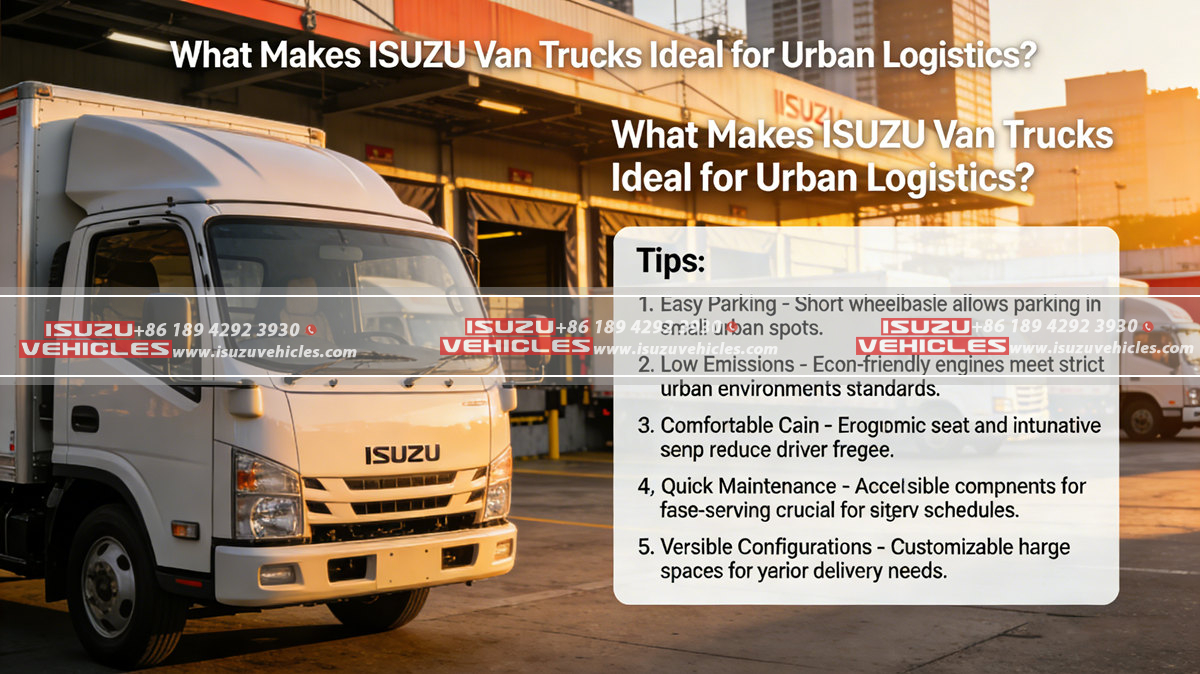
Urban logistics has evolved into one of the most demanding segments of commercial transportation, shaped by dense traffic, restricted delivery windows, tight loading zones, and growing expectations for speed and reliability. In this environment, vehicle selection directly affects operational success, cost control, and service quality. ISUZU van trucks have earned a strong reputation in city-based distribution networks not by accident, but through a carefully balanced combination of compact engineering, durability, driver-centric design, and adaptability to diverse urban tasks. Their strengths are not defined by a single feature, but by how multiple design elements work together to address the realities of modern city logistics.
Compact Design Optimized for Dense Urban Environments
One of the defining challenges of urban logistics is navigating crowded streets while maintaining delivery efficiency, and ISUZU van trucks are purpose-built to excel in this space.
Short Wheelbase and Tight Turning Radius
Urban routes frequently involve narrow streets, alleyways, underground parking entrances, and crowded loading docks where maneuverability is critical. ISUZU van trucks are engineered with optimized wheelbase lengths and steering geometry that allow for sharp turning angles without sacrificing stability. This compact footprint enables drivers to make precise movements in constrained environments, reducing time spent repositioning and lowering the risk of minor collisions that can disrupt delivery schedules.
Balanced Dimensions Without Compromising Cargo Space
Despite their city-friendly size, ISUZU van trucks maintain impressive internal cargo capacity through intelligent space utilization. The cab-forward design places the driver over the front axle, maximizing usable cargo length without increasing overall vehicle length. This balance allows operators to transport meaningful payload volumes while remaining compliant with urban size restrictions and parking regulations.
Powertrain Efficiency Suited to Stop-and-Go Operations
City logistics rarely involves steady cruising speeds; instead, it is defined by frequent stops, variable traffic flow, and short delivery intervals, all of which place unique demands on a vehicle’s powertrain.
Engine Tuning for Urban Driving Cycles
ISUZU engines are known for their torque-focused output, delivering strong low- and mid-range performance that suits urban driving conditions. Rather than prioritizing high-speed power, these engines provide smooth acceleration from standstill and consistent responsiveness at lower speeds, reducing driver fatigue and improving fuel efficiency in stop-and-go traffic.
Fuel Economy and Emissions Control
Urban fleets are increasingly pressured to reduce fuel consumption and meet stricter emissions standards. ISUZU van trucks integrate advanced fuel management systems and emissions technologies that help operators achieve compliance without sacrificing performance. Lower fuel consumption directly translates into reduced operating costs, an especially important advantage for high-frequency urban delivery routes where margins can be tight.
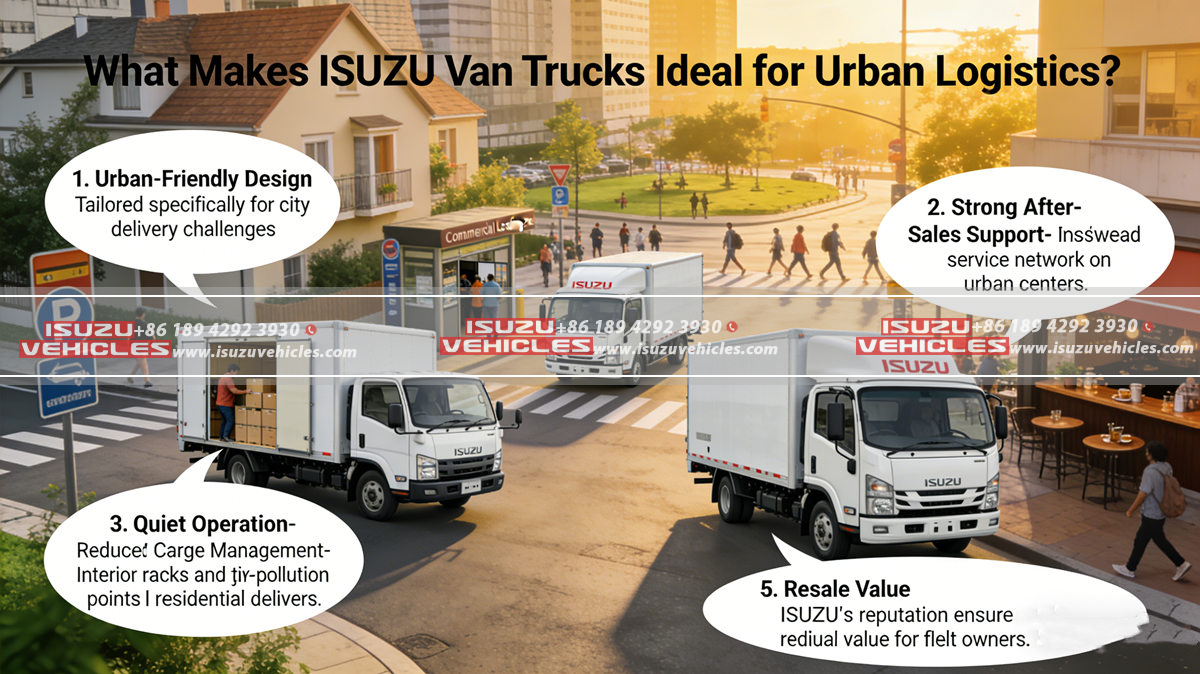
Driver-Centered Ergonomics for High-Frequency Deliveries
In urban logistics, driver productivity is closely linked to vehicle ergonomics, as drivers may enter and exit the cab dozens of times per day while navigating complex delivery environments.
Cab Layout and Visibility
ISUZU van trucks are designed with a clear focus on driver comfort and situational awareness. Large windshields, strategically positioned mirrors, and well-placed instrument panels provide excellent visibility, which is essential when operating in pedestrian-heavy urban areas. Enhanced visibility reduces stress, improves reaction times, and contributes to overall road safety.
Ease of Entry and Exit
Frequent stops demand a cab design that minimizes physical strain on drivers. Low step-in heights, wide door openings, and thoughtfully placed grab handles allow drivers to enter and exit the vehicle quickly and safely. Over the course of a workday, these ergonomic considerations significantly reduce fatigue, helping maintain consistent performance and lowering the risk of workplace injuries.
Flexible Cargo Configurations for Diverse Urban Tasks
Urban logistics is rarely uniform, often requiring vehicles to handle different cargo types, delivery schedules, and customer requirements within a single route.
Adaptability to Multiple Body Styles
ISUZU van trucks support a wide range of cargo body configurations, from enclosed dry vans to temperature-controlled units and specialized service bodies. This flexibility allows fleet operators to tailor vehicles precisely to their operational needs without investing in multiple vehicle platforms. As delivery demands shift, the same chassis can be reconfigured to support new applications, extending vehicle lifecycle value.
Efficient Loading and Unloading Design
Urban deliveries often occur in restricted spaces with limited time allowances. ISUZU van trucks feature flat cargo floors, well-aligned door openings, and low loading heights that streamline handling operations. Faster loading and unloading not only improve route efficiency but also reduce the duration a vehicle occupies public space, an increasingly important consideration in busy city centers.
Long-Term Reliability and Total Cost Advantages
Beyond daily performance, urban logistics vehicles must deliver dependable service over years of intensive use, often under challenging conditions.
Durability Built for Continuous Operation
ISUZU’s reputation for reliability is rooted in conservative engineering principles that prioritize durability over short-term performance gains. Robust chassis construction, proven driveline components, and simplified mechanical systems help ISUZU van trucks withstand the constant start-stop cycles and variable loads typical of urban logistics. This durability reduces unexpected downtime and supports predictable fleet scheduling.
Maintenance Accessibility and Fleet Support
Routine maintenance plays a major role in controlling long-term operating costs, and ISUZU van trucks are designed with service accessibility in mind. Easily reachable service points and a global support network allow maintenance tasks to be completed efficiently, minimizing vehicle off-road time. For fleet operators, this translates into lower lifecycle costs and more consistent asset utilization.
When viewed as an integrated solution rather than a single-purpose vehicle, ISUZU van trucks demonstrate why they are so well suited to the complexities of urban logistics. Their compact yet capable design, efficient powertrains, driver-focused ergonomics, and flexible cargo options combine to create a platform that performs reliably in demanding city environments. Whether deployed for last-mile delivery, service support, or multi-stop distribution, the operational philosophy behind these vehicles aligns closely with the needs of modern cities. This same approach carries across the broader ISUZU lineup, including the adaptable ISUZU cargo truck, reinforcing ISUZU’s position as a trusted partner for efficient, sustainable, and professional urban logistics operations.