
Introduction: The Critical Lifeline of Genuine Parts in the Outback
For operators running ISUZU crane trucks in remote mining outposts, distant construction sites, or far-flung utility corridors, a breakdown isn’t just an inconvenience—it’s a catastrophic halt to vital operations with severe financial repercussions. In these environments, where the nearest dealership might be hundreds of kilometers away over challenging terrain, the question of sourcing genuine parts becomes paramount. While the temptation to use aftermarket alternatives for immediate fixes exists, the long-term reliability, safety, and performance of specialized vehicles like ISUZU crane trucks demand authentic components. This guide explores proven, practical strategies for securing genuine ISUZU parts, even when civilization feels a world away.
Why Genuine Matters – Beyond the Price Tag for Critical Assets
The upfront cost difference between genuine and aftermarket parts can be significant, especially under budget pressure. However, in remote operations, this difference is often dwarfed by the hidden costs of inferior components. Genuine parts are engineered and manufactured to exacting ISUZU specifications. They undergo rigorous testing for durability, fitment, and performance under the extreme loads and conditions crane trucks endure. Using non-genuine parts risks:
- Premature Failure: Substandard materials or imprecise tolerances lead to faster wear, causing repeat failures and unplanned downtime. A failed crane hydraulic pump seal sourced locally might get you moving, but for how long?
- Compromised Safety: Crane operations involve significant risk. Critical components like boom hydraulics, steering linkages, or braking systems that fail due to inferior parts can have devastating consequences for personnel and equipment.
- Voided Warranty: Utilizing non-genuine parts for core components can invalidate existing warranties on your expensive crane truck chassis or crane superstructure, leaving you solely responsible for major future repairs.
- Reduced Resale Value: A well-maintained ISUZU crane truck with a documented history of genuine parts commands a premium price. Aftermarket part usage raises red flags for discerning buyers.
In remote areas, where a single breakdown can cost tens of thousands in lost productivity and recovery, the reliability engineered into genuine parts is a non-negotiable investment.
Proactive Strategies – Building Your Remote Parts Sourcing Network
Reactive scrambling when a part fails is the worst strategy for remote operations. Proactive planning is essential:
- Leverage Your Authorized ISUZU Dealer Network: Don’t just know your closest dealer; identify dealers strategically located near major transport routes leading to your operational areas. Build relationships with their parts managers. Discuss your remote operational profile. Many dealers offer dedicated fleet support programs, including:
- Consignment Stocking: Negotiate to hold critical, high-failure-rate parts specific to your crane truck models (e.g., specific sensors, PTO seals, hydraulic filters) at the dealership on consignment for your exclusive, rapid access.
- Emergency Dispatch Agreements: Establish clear protocols (and costs) for emergency parts courier services, even via air freight if necessary. Knowing this option exists and its lead time is crucial.
- Advanced Forecasting: Provide your dealer with vehicle VINs and anticipated maintenance schedules. They can help forecast part needs and pre-order items with longer lead times.
- Embrace ISUZU’s Digital Parts Platforms: Major dealers and ISUZU itself often offer sophisticated online parts portals. These allow you to:
- Precise Identification: Search by VIN to ensure you’re ordering the exact part needed for your specific chassis and crane configuration. This is vital for complex integrated systems.
- Real-Time Availability: Check stock levels at the dealer warehouse or central distribution centers instantly.
- Order Placement & Tracking: Place orders 24/7 and track shipment progress meticulously – essential visibility when coordinating remote logistics.
- Develop Local Partnerships (Carefully): If there’s any local truck repair presence, even if not ISUZU-specific, establish a rapport. While they likely won’t stock genuine ISUZU crane parts, they might be willing to receive and securely store parts shipped in for you, acting as a local holding point you can access faster than a distant dealer yard.
Mastering Logistics – Getting the Part from “A” to Remote “B”
Securing the part at the dealer is only half the battle. Getting it to your stranded crane truck is the critical next phase:
- Understand All Shipping Options: Move beyond standard road freight. Investigate:
- Consolidated Freight Services: Companies specializing in remote logistics often run regular routes. Your part can piggyback on these scheduled runs, often more cost-effectively than dedicated couriers.
- Air Freight: While expensive, it’s sometimes the only viable option for truly urgent, critical components. Know which local airstrips are accessible and which freight forwarders service them. Factor this cost into your contingency planning.
- Backloading: Explore opportunities where transport vehicles returning to your remote site might have space to carry your part.
- Maintain a Critical Spares Inventory On-Site: This is arguably the most effective strategy for minimizing downtime, albeit requiring investment. Analyze your fleet’s maintenance history and crane-specific vulnerabilities. Stock:
- High-Failure Items: Filters (fuel, oil, hydraulic, air), belts, common hoses, bulbs, fuses, specific grease types.
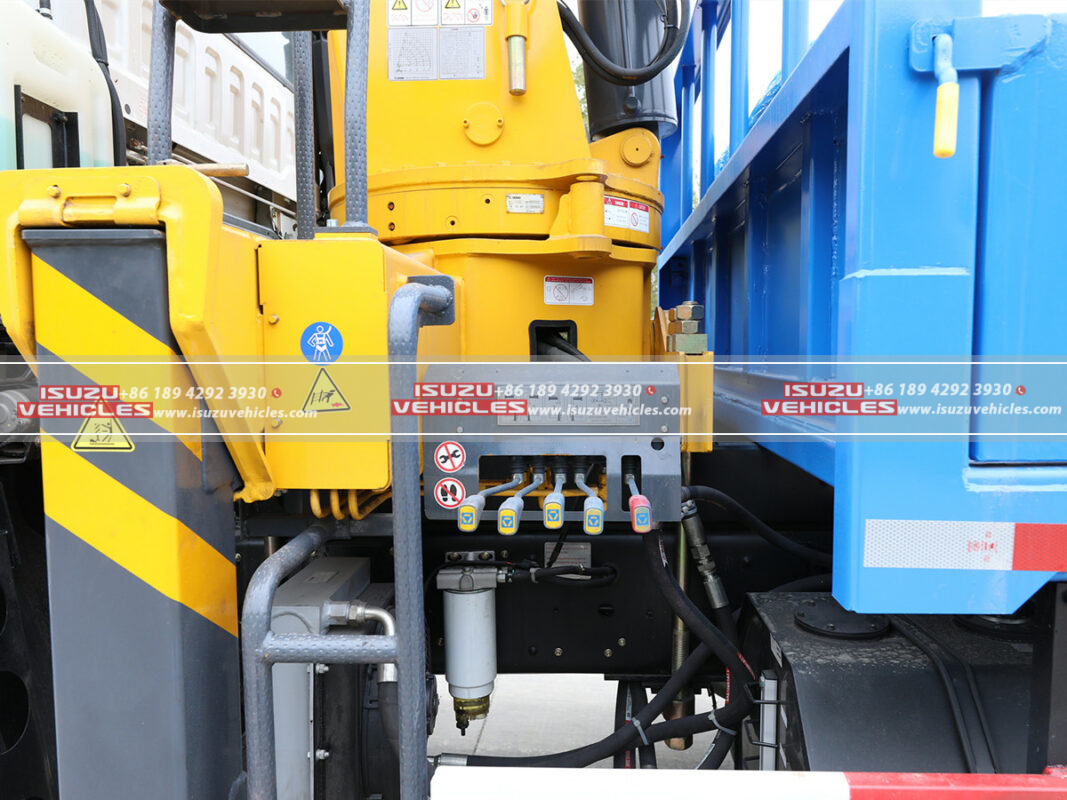
- Crane-Critical Components: Key hydraulic seals, specific valve cartridges (if prone to issues), PTO linkage parts, specialized fittings unique to your ISUZU crane configuration. Rotate stock based on shelf life.
- Implement Rigorous Inventory Management: Use a simple spreadsheet or specialized software to track your on-site spares – part numbers, quantities, locations (especially if spread across multiple vehicles or site containers), and expiration dates. Conduct regular audits.
Special Considerations for the ISUZU Bucket Truck
While sharing the robust N-Series or F-Series chassis with crane trucks, ISUZU bucket trucks present unique part challenges due to the integrated aerial device and its constant movement:
- Focus on Hydraulic System Integrity: The heart of the bucket truck. Prioritize sourcing genuine parts for:
- Hydraulic Pumps & Valves: Critical for smooth, safe boom operation. Aftermarket equivalents rarely match the precision and longevity required.
- Cylinder Seals & Hoses: Subject to constant flexing and pressure cycles. Genuine seals ensure leak-free operation and prevent costly cylinder rebuilds. Genuine hoses meet strict burst pressure and flex life ratings.
- Rotation Gearboxes/Slew Rings: Ensure genuine bearings and gears for reliable, precise turntable movement.
- Electrical & Control Components: The intricate control systems (joysticks, limit switches, sensors, proportional valves) demand exact genuine replacements for calibration and safety system compatibility. A non-genuine sensor can cause erratic boom behavior.
- Structural & Wear Items: Genuine bushings, pins, and liners for the boom sections are essential for minimizing slop and wear, ensuring precise positioning and structural soundness. Always insist on genuine ISUZU bucket truck parts for these critical interfaces and hydraulic cores.
Leveraging the ISUZU Pickup – Your Support Workhorse Don’t overlook the humble ISUZU Pickup (D-Max) often supporting the main fleet. Keeping it reliably mobile with genuine parts is key for running errands, fetching smaller components, or transporting crews when the crane truck is down. Common needs include suspension components (especially if used off-road), drivetrain parts (CV joints, prop shafts), and electrical items. Genuine parts ensure this vital support vehicle doesn’t become another stranded asset. Utilize the same parts portals and dealer relationships; often, common D-Max parts are more readily stocked even in regional areas than specialized crane components.
Sustaining Operations – The Long-Term Remote Parts Mindset
Sourcing genuine parts remotely is an ongoing discipline, not a one-time fix. Embed these practices:
- Vehicle Data is King: Maintain meticulous service records for each ISUZU crane truck, including every part replaced (with genuine part numbers). This history aids in predicting failures and ensures correct future ordering. Keep physical and digital copies accessible remotely.
- Empower Your On-Site Team: Train key personnel on using the online parts portals (basic lookups), proper part identification (using VIN plates), understanding critical spares inventory, and initiating the parts request process. Clear communication protocols between site mechanics and your central parts coordinator/dealer are vital.
- Continuous Network Review: Regularly reassess your dealer relationships, logistics partners, and on-site spares inventory. Are lead times changing? Are new freight options available? Are you experiencing recurring failures indicating a need to stock a new part? Update your contingency plans annually.
- Cost-Benefit Analysis Rigor: While genuine is paramount, conduct honest evaluations. For a non-safety-critical, easily accessible component with a very low failure rate, a high-quality aftermarket option might be a temporary remote solution. However, default to genuine, especially for anything related to the crane, drivetrain, steering, brakes, or safety systems. Factor the true cost of downtime into every decision.
- Collaborate with ISUZU: Engage with ISUZU corporate or your major dealer’s fleet team. They may have insights into regional parts depots, planned dealer expansions, or specialized support programs for remote industrial customers they are developing. Your feedback on parts availability challenges can also influence their distribution strategies.
Successfully operating ISUZU crane trucks in remote locations hinges on recognizing that genuine parts are the bedrock of reliability and safety. By strategically leveraging dealer networks, embracing technology for precise ordering, mastering complex logistics, maintaining a smart critical spares inventory, and fostering a proactive, disciplined approach across your entire team, the tyranny of distance can be overcome. The upfront effort and investment in building a resilient genuine parts supply chain pay exponential dividends in uptime, safety, and the long-term profitability of your remote operations.