
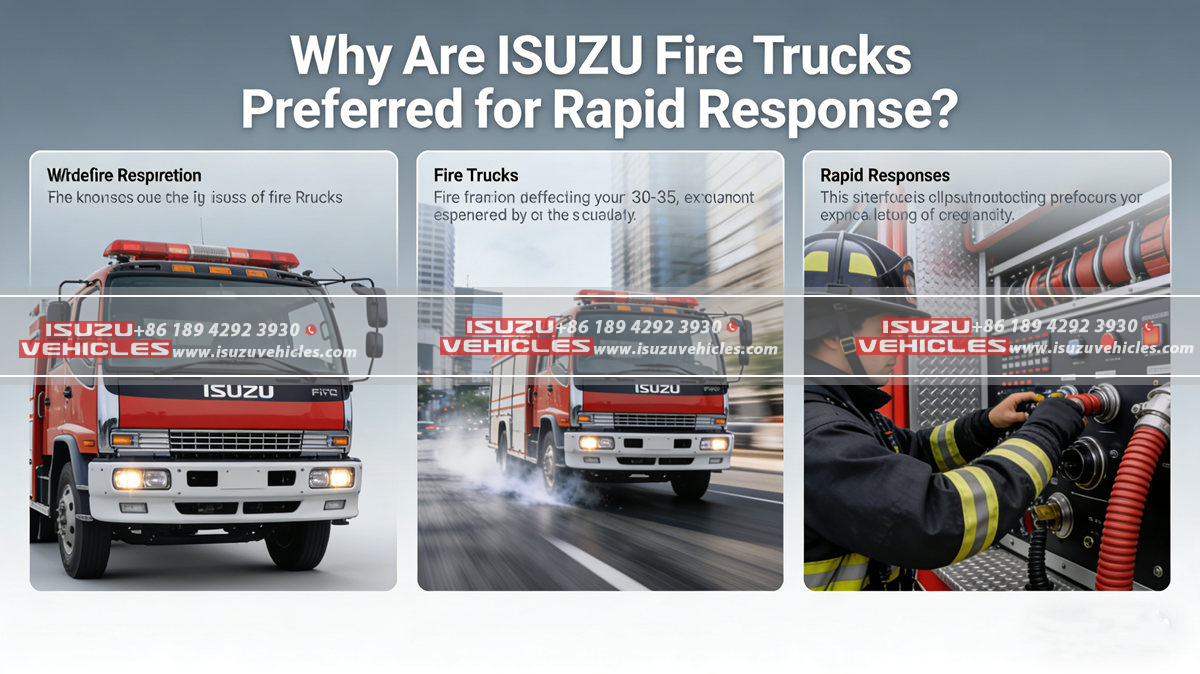
In emergency response, time is not simply a metric; it is the difference between containment and escalation, between property saved and property lost, and in many cases, between life and death. Fire departments around the world therefore evaluate vehicles not only on specifications, but on how reliably and predictably they perform under pressure, in traffic, and across varied terrain. ISUZU fire trucks have earned a strong reputation in this demanding context, not through marketing claims, but through consistent real-world performance that aligns with the operational realities of rapid response. Their preference among emergency services reflects a combination of drivetrain responsiveness, chassis balance, equipment integration, and long-term dependability that supports firefighters when every second counts.
Powertrain Responsiveness Designed for Emergency Acceleration
Rapid response begins the moment a fire truck leaves the station, and the vehicle’s powertrain characteristics play a decisive role in how quickly and safely it can reach the scene.
Strong Low-End Torque for Immediate Movement
ISUZU engines are engineered to deliver high torque at low and medium engine speeds, which is particularly valuable in emergency operations where immediate acceleration from a standstill is critical. Fire trucks frequently start under full load, carrying water, pumps, ladders, and crew, and the ability to move decisively without hesitation allows drivers to merge into traffic and clear intersections more efficiently. This torque-focused design supports smooth, controlled acceleration rather than abrupt power delivery, which improves traction and stability during rapid departures.
Transmission Matching for Urban and Mixed Terrain
The transmission systems used in ISUZU fire trucks are carefully matched to engine output, ensuring that gear changes remain predictable and responsive even under sudden throttle inputs. In urban environments with frequent stops and turns, this coordination reduces power lag and helps drivers maintain momentum through congested streets. In mixed terrain scenarios, such as suburban or semi-rural response routes, consistent power delivery supports confident hill climbs and controlled descents without sacrificing speed.
Chassis Stability and Handling Under High-Speed Conditions
Speed alone does not define rapid response; the ability to maintain control and stability at speed is equally essential for safe and effective emergency driving.
Balanced Weight Distribution with Firefighting Equipment
Fire trucks carry uneven and dynamic loads, including water tanks, hoses, pumps, and rescue tools, all of which influence center of gravity. ISUZU chassis designs emphasize balanced axle loading and structural rigidity, allowing vehicles to remain stable during high-speed cornering and sudden lane changes. This balance reduces body roll and enhances steering predictability, which is crucial when navigating traffic while responding to an emergency.
Suspension Tuning for Control and Comfort
ISUZU fire trucks feature suspension systems tuned specifically for heavy-duty, high-response applications. These systems absorb road irregularities without excessive oscillation, enabling drivers to maintain control on uneven pavement, speed bumps, or poorly maintained roads. At the same time, improved ride comfort helps reduce driver fatigue during extended response periods, supporting sustained operational readiness.
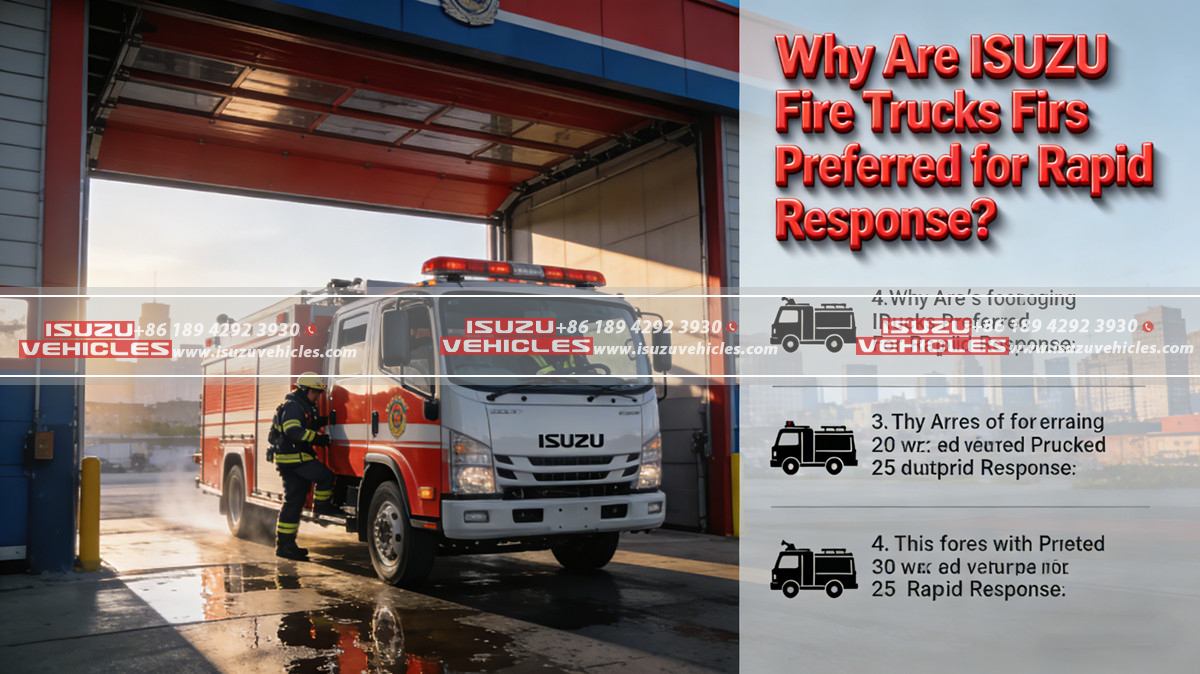
Compact Maneuverability in Congested Environments
Many emergency calls occur in densely populated urban areas where narrow streets, parked vehicles, and heavy traffic complicate access to the scene.
Optimized Turning Radius for Urban Access
ISUZU fire trucks are often selected for their relatively compact dimensions and efficient steering geometry, which allow them to navigate tight corners, narrow alleys, and crowded intersections more effectively than larger, less agile platforms. This maneuverability directly translates into faster arrival times, especially in older city districts where road infrastructure was not designed for large emergency vehicles.
Cab-Forward Design Enhancing Visibility
The cab-forward configuration commonly used in ISUZU trucks places the driver closer to the front axle, improving forward visibility and spatial awareness. In emergency driving, clear sightlines help drivers anticipate obstacles, pedestrians, and traffic behavior more accurately. Enhanced visibility also supports precise positioning upon arrival, allowing crews to deploy equipment quickly without unnecessary vehicle repositioning.
Reliability and Readiness Under Continuous Emergency Duty
Fire trucks must remain ready at all times, often idling for long periods and then transitioning instantly into high-load operation, a cycle that places unique stress on mechanical systems.
Proven Durability in Severe Duty Cycles
ISUZU’s engineering philosophy prioritizes durability and thermal stability, which are critical in emergency vehicles that may experience long idle times followed by rapid acceleration and sustained high engine load. Robust cooling systems, conservative engine tuning, and high-quality drivetrain components help ensure consistent performance even under repeated emergency response cycles.
Maintenance Simplicity and Predictable Servicing
Rapid response capability depends on vehicle availability, and availability depends on maintenance efficiency. ISUZU fire trucks are designed with accessible service points and straightforward mechanical layouts, allowing routine inspections and repairs to be completed quickly. Predictable maintenance schedules reduce the risk of unexpected downtime, ensuring that vehicles remain operational when emergencies arise.
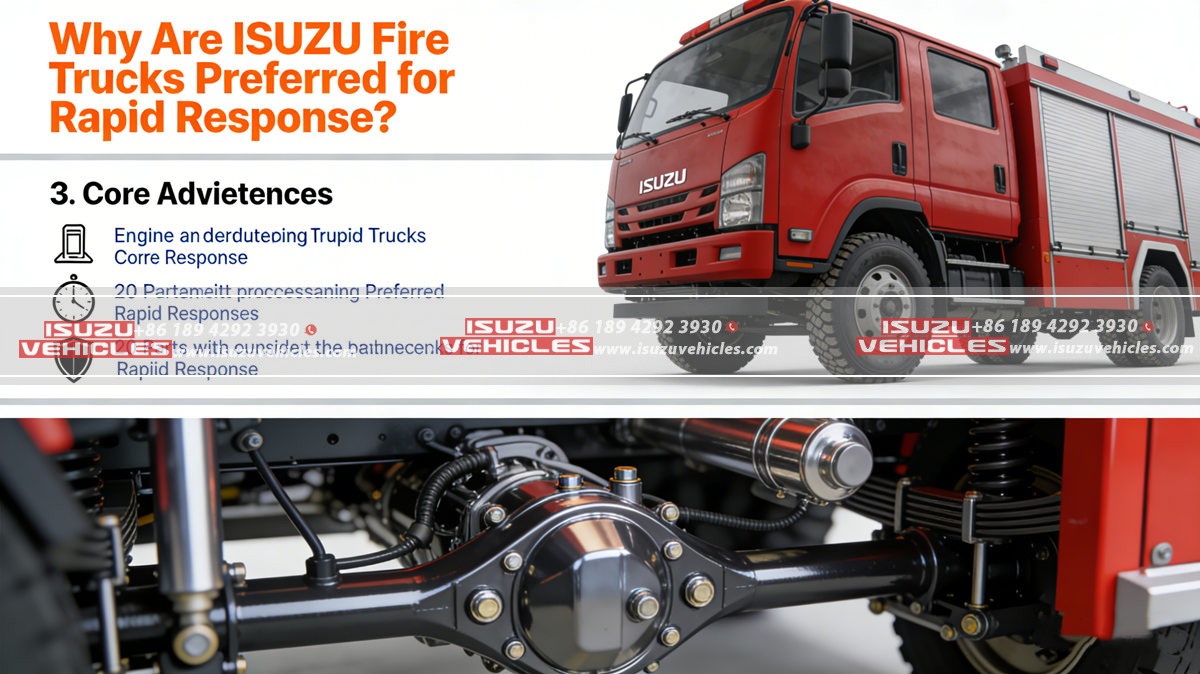
Seamless Integration with Firefighting and Rescue Equipment
A fire truck’s effectiveness is defined not only by how fast it arrives, but by how quickly crews can begin working once it reaches the scene.
Efficient Equipment Layout and Accessibility
ISUZU fire truck platforms support flexible body and equipment layouts that prioritize accessibility and workflow efficiency. Compartments are designed to allow firefighters to retrieve hoses, tools, and protective gear with minimal movement, reducing setup time and improving response coordination. Thoughtful integration of pumps, valves, and control panels ensures that critical systems are immediately accessible under stress.
Adaptability Across Specialized Firefighting Roles
Modern fire departments often operate a range of specialized vehicles, each tailored to specific response scenarios. ISUZU platforms adapt well to these needs, supporting configurations for aerial access, water transport, rescue operations, and technical support. This adaptability allows departments to maintain consistent driving characteristics and maintenance practices across diverse vehicle types, improving overall fleet efficiency.
The preference for ISUZU fire trucks in rapid response scenarios reflects a holistic alignment between vehicle design and emergency service demands. From responsive powertrains and stable chassis dynamics to maneuverability in congested environments and dependable readiness under continuous duty, these vehicles support firefighters at every stage of an emergency call. This same engineering philosophy extends across ISUZU’s broader specialized vehicle lineup, whether applied to elevated access platforms such as an ISUZU bucket truck or high-capacity water transport solutions like an ISUZU tanker truck, reinforcing ISUZU’s reputation as a trusted foundation for mission-critical response vehicles where speed, reliability, and control are non-negotiable.