
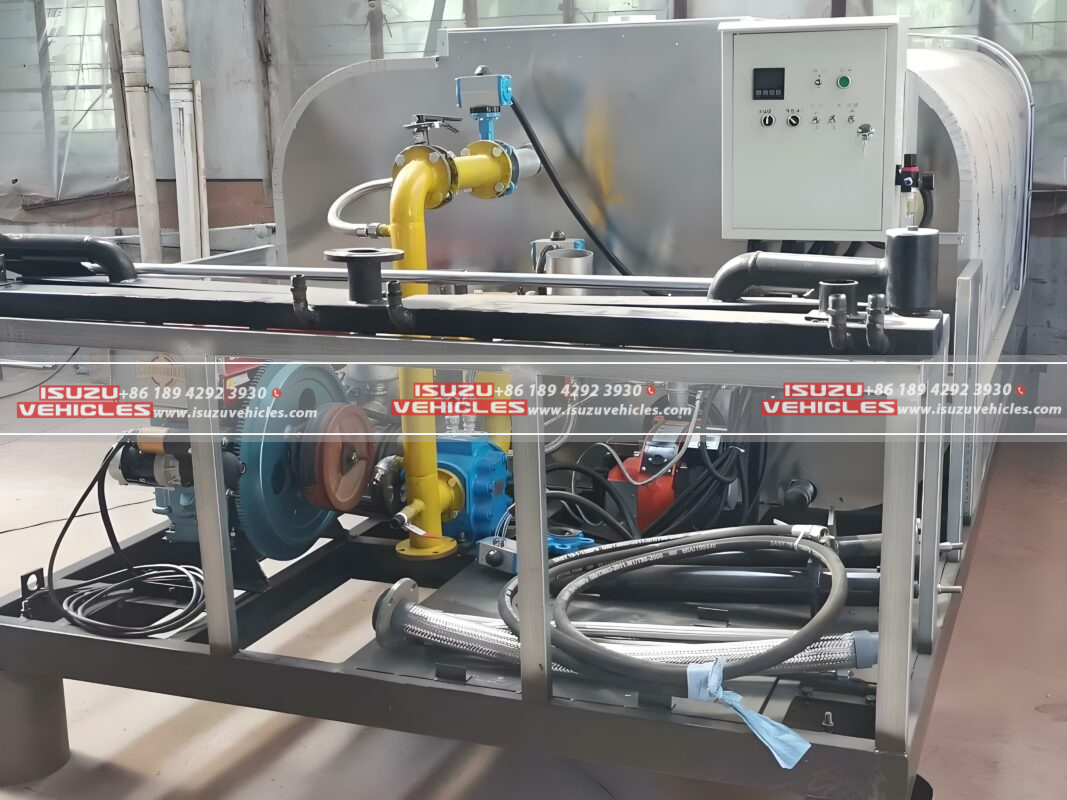
In the fast-paced world of road construction and infrastructure development, precision, reliability, and operational efficiency are not just desirable—they are essential. Among the most critical pieces of equipment on any paving job site is the asphalt distributor, a specialized vehicle responsible for evenly applying liquid bitumen or emulsions before the laying of asphalt mixtures. For contractors relying on Isuzu-based chassis for their specialized vehicles—such as ISUZU dump trucks modified into asphalt distributors or ISUZU bucket trucks repurposed for auxiliary roles—ensuring peak performance begins with one often-overlooked yet vital practice: regular calibration.
While Isuzu has built a global reputation for producing durable, fuel-efficient, and highly adaptable commercial vehicles, even the most robust machinery can fall short without meticulous maintenance and system verification. Calibration—the process of adjusting and verifying the accuracy of flow meters, spray bar nozzles, pump systems, valves, and control panels in an asphalt distributor—is not merely a recommended maintenance step; it is a cornerstone of quality assurance, cost management, environmental compliance, and long-term equipment sustainability. This article explores the multifaceted importance of routine calibration, specifically within the context of Isuzu-powered asphalt distributors, drawing parallels to related Isuzu utility vehicles such as the ISUZU dump truck and ISUZU bucket truck where relevant.
Ensuring Application Accuracy and Project Quality
One of the primary functions of an asphalt distributor is to deliver a precise and uniform layer of binder across the pavement surface. Whether operating on urban streets, highways, or rural roads, inconsistent application rates—either over-spraying or under-spraying—can lead to premature pavement failure, poor adhesion between layers, and increased lifecycle costs. Over time, wear and tear on spray nozzles, clogging from residual bitumen, or drift in electronic sensors can cause significant deviations from factory-set specifications.
Regular calibration ensures that the volume of asphalt emulsion or hot bitumen being applied per square meter remains consistent with engineering requirements. For Isuzu-based distributors—often retrofitted from rugged Isuzu NPR or FSR chassis known for their reliability in harsh environments—this precision becomes even more crucial. These platforms are typically chosen for their durability and ability to operate in remote or challenging terrains, meaning errors in material distribution cannot easily be corrected post-application. A well-calibrated system guarantees that each liter sprayed contributes effectively to the structural integrity of the pavement, aligning with industry standards such as those set by ASTM D5977 or AASHTO M295.
Moreover, because many Isuzu dump trucks are upgraded into custom-built asphalt distributors through third-party conversions, the integration of aftermarket spraying systems introduces additional variables that must be monitored. Unlike factory-engineered specialty vehicles, these hybrids require extra diligence in calibration to ensure compatibility between the original engine management system and newly installed hydraulic or pneumatic controls.
Maximizing Operational Efficiency and Reducing Material Waste
Asphalt emulsions and modified bitumens represent some of the most expensive components in road surfacing operations. Unchecked distribution inaccuracies can result in excessive usage, leading to unnecessary expenditure and diminished profit margins. Consider a scenario where a poorly calibrated flow meter delivers 10% more binder than required across a 5-kilometer stretch: this single error could translate into thousands of dollars in wasted materials, not to mention the potential need for remedial grinding or rework.
Routine calibration mitigates this risk by validating the entire dispensing chain—from the main storage tank to individual spray tips. It allows operators to detect gradual degradation in performance before it escalates into costly inefficiencies. Additionally, modern Isuzu engines, particularly those equipped with common-rail diesel technology and advanced ECMs (Electronic Control Modules), benefit significantly from synchronized auxiliary systems. When the distributor’s metering system is accurately aligned with engine RPM and vehicle speed sensors, the result is optimal fuel-to-output ratio and smoother operation.
Interestingly, lessons learned from maintaining other Isuzu workhorses—such as the ISUZU bucket truck used in overhead utility maintenance—highlight similar principles. In both cases, hydraulic consistency and sensor fidelity directly impact job outcomes. Just as a misaligned boom arm can compromise safety during power line repairs, an uncalibrated spray bar can undermine pavement longevity. The underlying philosophy remains the same: trust nothing, verify everything.
Extending Equipment Lifespan and Preventing Costly Repairs
Mechanical systems degrade over time, especially when exposed to high temperatures, viscous fluids, and constant vibration—all common conditions in asphalt distribution. Nozzles may erode, seals can deteriorate, and pumps might lose prime due to internal slippage. Without regular diagnostic checks via calibration procedures, minor issues evolve into major failures.
For fleets utilizing ISUZU dump trucks converted into asphalt distributors, the original drivetrain and suspension were designed for load-carrying, not continuous fluid handling. Therefore, added stress from prolonged pumping cycles necessitates proactive monitoring. Calibration intervals provide opportunities not only to assess measurement accuracy but also to inspect associated components like filters, check valves, and heater coils. Early detection of anomalies enables preventive maintenance, reducing downtime and avoiding catastrophic breakdowns mid-project.
Similarly, the hydraulic systems found in ISUZU bucket trucks serve as instructive analogs. These vehicles rely on precise pressure regulation and fluid dynamics to safely elevate workers and equipment. Routine testing and recalibration of pressure gauges and cylinder actuators are standard practice—why should asphalt distributors be treated any differently? Both applications demand reliability under pressure, literally and figuratively.
By institutionalizing calibration into preventive maintenance schedules—ideally every 100 hours of operation or at least quarterly—fleet managers preserve not only the functionality of the distributor but also the integrity of the host Isuzu chassis. This holistic approach reinforces the value proposition of Isuzu’s design: longevity through simplicity, enhanced through vigilance.
Compliance with Regulatory Standards and Environmental Responsibility
Modern construction projects are increasingly governed by stringent regulatory frameworks concerning material usage, emissions, and environmental stewardship. Government agencies and municipal authorities often require documentation proving that binders have been applied within specified tolerances. Inaccurate distribution can lead to non-compliance penalties, rejection of completed sections, or reputational damage.
Calibration records serve as auditable proof of adherence to project specifications. They demonstrate due diligence in quality control and reinforce accountability across the supply chain. Furthermore, precise application reduces overspray and runoff, minimizing contamination risks to nearby soil and water sources—a growing concern in environmentally sensitive areas.
Isuzu’s commitment to low-emission technologies and sustainable engineering resonates strongly here. Their newer models comply with Euro 4, Euro 5, and even EPA Tier 4 standards, emphasizing clean combustion and reduced particulate output. However, these environmental gains can be undermined if ancillary equipment operates inefficiently. An uncalibrated distributor that burns excess fuel to maintain inadequate pump pressure contradicts the very ethos of eco-conscious construction. Thus, calibration supports both regulatory compliance and corporate sustainability goals.
Additionally, accurate calibration indirectly supports safer worksite practices. When crews don’t need to revisit sections due to uneven coating, exposure to traffic, heat, and hazardous fumes is minimized. This intersects with broader occupational health considerations relevant to all Isuzu utility vehicles, including bucket trucks performing roadside tasks near live traffic.
Conclusion: Treating Calibration as a Strategic Investment
In conclusion, regular calibration of ISUZU asphalt distributors transcends basic maintenance—it is a strategic imperative rooted in quality, economy, compliance, and sustainability. While the Isuzu brand is synonymous with toughness and dependability, its true potential in specialized applications like asphalt distribution is unlocked only through disciplined system oversight. Whether the platform originated as an ISUZU dump truck modified for new duties or shares technological DNA with service-oriented variants like the ISUZU bucket truck, the principle remains unchanged: precision engineering demands precision upkeep.
Contractors who integrate systematic calibration into their operational rhythm gain measurable advantages: fewer callbacks, lower material costs, extended equipment life, and stronger client trust. In an industry where margins are tight and competition fierce, such differentiators matter immensely. Rather than viewing calibration as a periodic inconvenience, forward-thinking operators recognize it as a form of insurance—an investment in consistency, credibility, and long-term success.
Ultimately, the road to excellence in pavement construction isn’t paved solely with asphalt; it’s laid with data, diligence, and deliberate care. And for those building that road atop a trusted Isuzu foundation, regular calibration ensures every drop counts.