
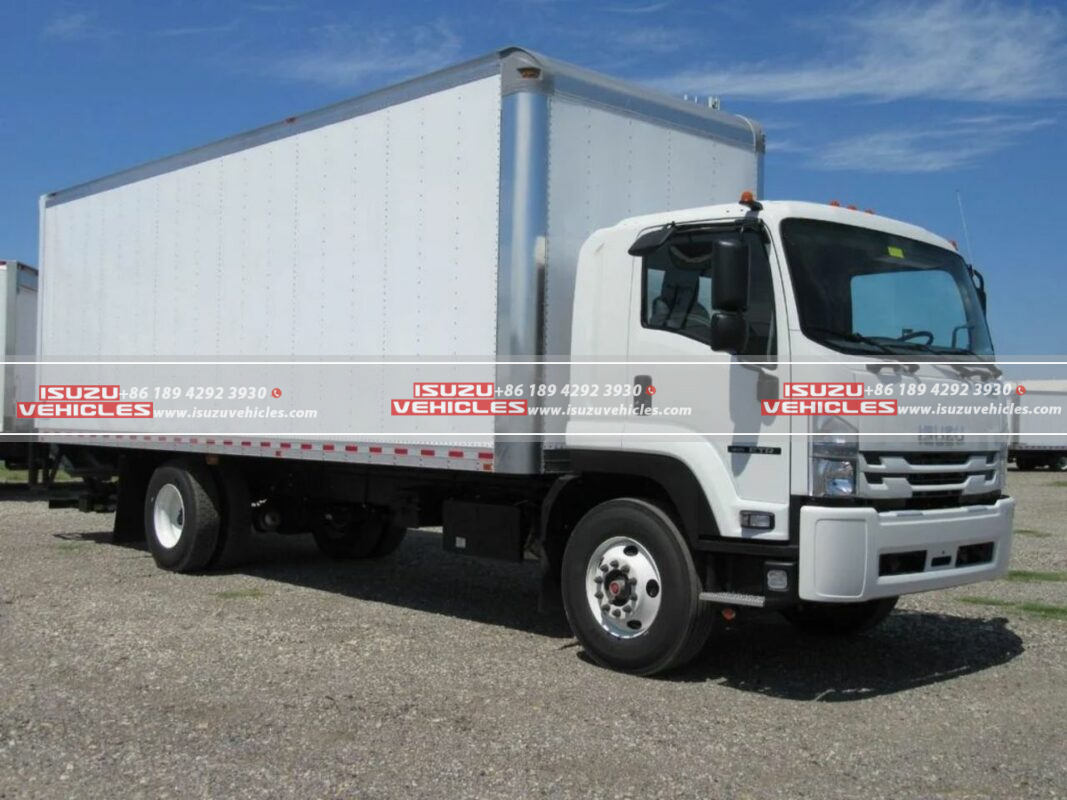
Running a small business that relies on regular product deliveries requires vehicles that are dependable, cost-efficient, and versatile enough to handle different types of cargo and routes. For many entrepreneurs, choosing the right delivery truck becomes a crucial operational decision because it affects daily logistics, operating costs, and customer satisfaction. Among options in the commercial vehicle market, ISUZU box trucks are recognized as practical solutions for small- and medium-sized delivery operations.
These trucks are widely used across industries such as retail distribution, furniture delivery, food supply logistics, and parcel transportation. Their popularity stems from a combination of durable engineering, efficient diesel engines, and body configurations that can be tailored to specific business needs. While large logistics companies often operate heavy-duty fleets, many smaller businesses require vehicles that balance cargo capacity with manageable size, affordability, and ease of operation.
Understanding whether ISUZU box trucks are suitable for small business delivery involves examining their design, operating costs, cargo flexibility, and long-term reliability. When these factors are evaluated together, it becomes easier to see why many business owners choose them as the backbone of their delivery operations.
Understanding What ISUZU Box Trucks Are
A box truck, sometimes referred to as a cube truck or straight truck, is a vehicle with a fully enclosed cargo compartment that is mounted directly on the truck chassis. The cargo area forms a rectangular box shape, allowing businesses to transport goods safely while protecting them from weather, dust, and road debris.
ISUZU box trucks are typically built on medium-duty chassis platforms that provide a stable frame and efficient powertrain. These trucks are designed to carry moderate payloads while remaining compact enough for urban driving and frequent stop-and-go delivery routes.
Most box truck configurations include:
- A fully enclosed cargo box
- Rear roll-up or swing doors
- Optional side access doors
- Interior cargo securing systems
- Optional refrigeration or insulation systems
Because of this flexible structure, a single vehicle can serve multiple delivery purposes, making it especially valuable for small businesses that handle varied products.
Advantages of ISUZU Box Trucks for Small Business
For entrepreneurs who rely on transportation to move goods to customers or retail locations, the advantages of ISUZU box trucks extend beyond simple cargo capacity.
Fuel Efficiency and Operating Costs
Operating expenses can quickly add up for businesses that perform daily deliveries. One of the strengths of ISUZU trucks is their efficient diesel engines, which are designed to deliver strong torque while maintaining relatively low fuel consumption. This balance is important for businesses that operate within cities or travel moderate distances between warehouses and customers.
Lower fuel usage means lower overall transportation costs, which helps small companies maintain profitability while offering reliable delivery services.
Compact Size with Practical Cargo Space
Many delivery trucks that offer large cargo capacities are too bulky for urban environments, particularly in older cities where roads are narrow and parking spaces are limited. ISUZU box trucks strike a practical balance between size and capacity.
Their compact chassis design allows drivers to maneuver through tight streets, loading zones, and crowded commercial districts, while still providing enough cargo volume to transport substantial shipments.
Ease of Driving and Handling
Small business owners often employ drivers who may not have experience operating large heavy-duty trucks. ISUZU designs many of its commercial vehicles with user-friendly controls, responsive steering, and relatively smooth ride characteristics.
The driving experience is closer to that of a large van rather than a heavy tractor-trailer, which helps reduce driver fatigue and training requirements.
Cargo Flexibility for Different Business Needs
One of the reasons ISUZU box trucks are widely used in small business fleets is their ability to support multiple types of cargo operations.
Retail and Parcel Delivery
Retailers and online stores frequently use box trucks to transport packaged goods from warehouses to retail outlets or directly to customers. The enclosed cargo area keeps items secure and protected during transit.
Interior cargo rails, shelving systems, and tie-down points can be installed to prevent items from shifting during transport.
Food and Beverage Distribution
Food suppliers and beverage distributors often require clean, temperature-controlled transportation. In these situations, box trucks can be equipped with insulation panels or refrigeration systems.
When fitted with a cooling unit, the truck effectively becomes a Refrigerated truck, capable of transporting perishable goods such as dairy products, frozen foods, and fresh produce while maintaining safe storage temperatures.
Furniture and Equipment Transport
Companies that deliver furniture, appliances, or office equipment benefit from the large, unobstructed cargo space offered by box trucks. The rectangular design maximizes usable volume and makes it easier to load bulky items.
Liftgates can also be installed to simplify loading heavy cargo without the need for loading docks.
Durability and Long-Term Reliability
For small businesses operating on limited budgets, purchasing a truck is a significant investment, and reliability becomes a critical factor in vehicle selection.
ISUZU has built a strong reputation for manufacturing commercial vehicles that can handle demanding work schedules without excessive maintenance requirements. Their diesel engines are designed to run for extended periods while maintaining stable performance, even under heavy loads.
The chassis frames used in ISUZU box trucks are also built to withstand repeated cargo loading and rough road conditions, which helps extend the lifespan of the vehicle.
Routine maintenance is generally straightforward, and parts availability is widespread in many regions, which reduces downtime when servicing is required. These factors help ensure that delivery vehicles remain operational and productive over many years of use.
Cost Considerations for Small Business Owners
While purchasing any commercial vehicle requires financial planning, ISUZU box trucks often provide a cost-effective option when compared with larger heavy-duty trucks.
The initial purchase price for a medium-duty box truck is typically more affordable than a full-size tractor-trailer combination, making it accessible for smaller companies or startups.
In addition to the purchase price, several operational factors contribute to long-term cost efficiency:
- Moderate fuel consumption
- Lower insurance costs compared with large trucks
- Manageable maintenance expenses
- Good resale value
Because of these advantages, many businesses begin their delivery operations with a single box truck and gradually expand their fleets as their logistics needs grow.
How ISUZU Box Trucks Fit Into a Growing Fleet
As a business expands, its transportation requirements often evolve. Companies may eventually need specialized vehicles for different tasks, but ISUZU box trucks frequently remain a central component of the fleet because of their flexibility and practicality.
For example, a small food distributor might start with a basic delivery truck and later add a temperature-controlled vehicle for perishables. A construction supply company may use box trucks for equipment transport while relying on other specialized trucks for road construction work.
Within larger commercial fleets, box trucks often operate alongside vehicles designed for specific infrastructure or material transport tasks. In these cases, delivery trucks may share operations with equipment such as a Refrigerated truck used for cold-chain logistics, a dump truck transporting raw materials, or even specialized road construction vehicles like an asphalt distributor truck.
Across these diverse applications, ISUZU Vehicles continue to play an important role in helping businesses move goods efficiently, maintain reliable delivery schedules, and support the daily logistics operations that keep modern industries running smoothly.