
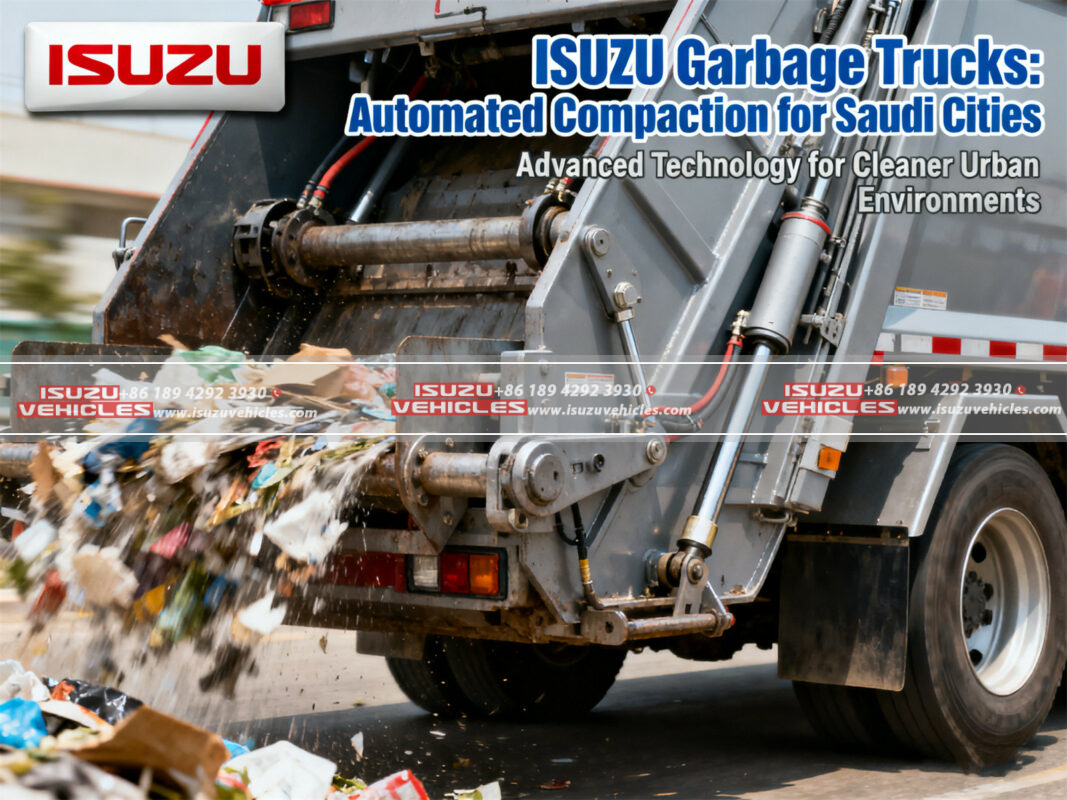
The Saudi Waste Crisis – Why Manual Systems Collapse Under Volume
Saudi cities face a perfect storm of waste management challenges:
- Demographic Pressure: Mecca’s population swells from 2M to 7M during Hajj, generating 12,000+ tons of daily waste – enough to fill 3 Olympic pools.
- Climate Extremes: Thermoplastics in standard compactors soften at 60°C, causing hydraulic leaks and seal failures during summer peaks.
- Labor Constraints: Rising expat levies and 50% operator turnover rates cripple manual collection reliability.
Traditional trucks operate at 35-40% compaction ratios, requiring fleets 2.5x larger than automated alternatives. In contrast, ISUZU’s ASLs achieve 0.85-ton/m³ compaction density – enabling fewer trips, lower fuel burn, and dramatic fleet rationalization.
ISUZU ASL Core Technology – Smart Compression Engineering
Adaptive Compaction Algorithms
At the heart of ISUZU’s solution lies the i-Compress AI module, which dynamically adjusts compression plates based on real-time load analysis:
- Material Sensing: Near-infrared scanners classify waste into 6 categories (organics, plastics, textiles), optimizing pressure profiles to prevent jams from mattress springs or date palm fronds.
- Moisture-Responsive Cycling: In humid coastal zones like Dammam, the system shortens compression cycles when organic content exceeds 60%, reducing foul-water leakage by 92%.
- Overload Prevention: Strain gauges halt compaction at 8,500 kg/m³, protecting the reinforced H-frame chassis from torsion stress on Saudi Arabia’s uneven service roads.
Desert-Proofed Hydraulics
The dual-circuit oil cooling system maintains viscosity in 50°C ambient temperatures:
- Phase-Change Coolant Reservoirs: Micro-encapsulated PCMs absorb heat during compression cycles, sustaining oil temperatures below 80°C.
- Ceramic-Coated Pistons: Reduce friction wear from sand-contaminated grease, extending service intervals to 1,000 hours – double the industry standard.
Operational Economics – The 40% Cost Reduction Blueprint
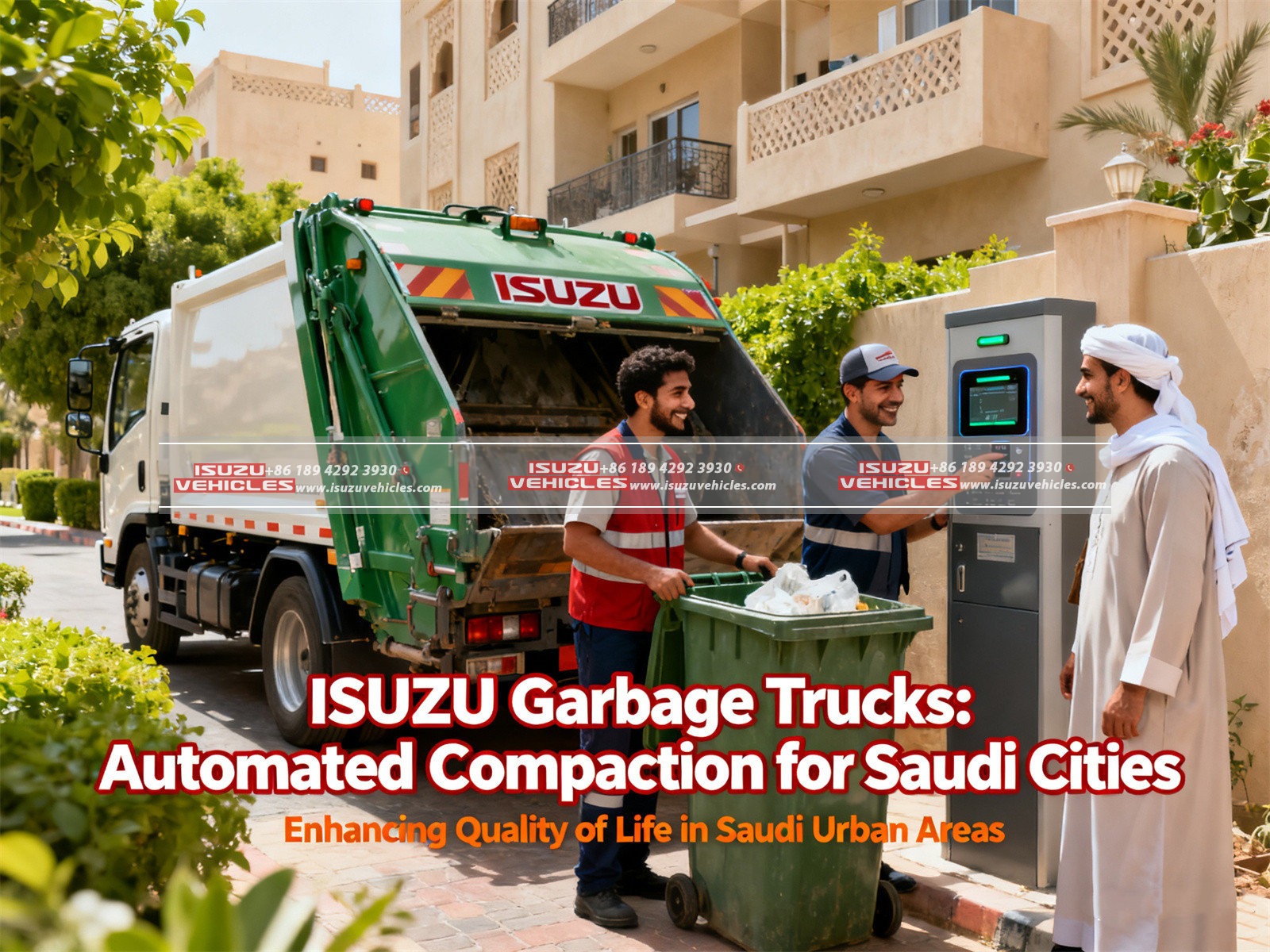
Taif Municipality’s 18-month trial with ISUZU ASLs revealed transformative savings:
| Metric | Legacy System | ISUZU ASL | Improvement |
|---|---|---|---|
| Fuel Use/Ton Collected | 9.8 L | 5.2 L | 47% ↓ |
| Collection Time/Bin | 8 min 20 sec | 3 min 15 sec | 61% ↓ |
| Fleet Size (100k homes) | 32 trucks | 19 trucks | 41% ↓ |
| Annual Maintenance | $23,500/truck | $11,200/truck | 52% ↓ |
Key savings drivers include automated bin-ID scanning (eliminating route sheets) and regenerative hydraulics capturing 30% of compression energy.
Climate Adaptations – Beating Heat, Sand, and Salinity
ISUZU has re-engineered every subsystem for Arabian durability:
- Corrosion Defense: Zinc-nickel electroplated chassis + cathodic protection resist salt spray exceeding ISO 9227 C5 standards.
- Sand Mitigation: Triple-sealed bearing hubs with centrifugal dust ejectors extend axle life to 500,000 km in Riyadh’s silica-rich air.
- Heat Management: Rear-mounted radiators avoid debris clogs, while Cerakote®-coated exhausts lower under-hood temperatures by 18°C.
The result? 92% fleet availability during Jeddah’s August humidity peaks versus 54% for European imports.
Vision 2030 Alignment – Waste Tech as Infrastructure Catalyst
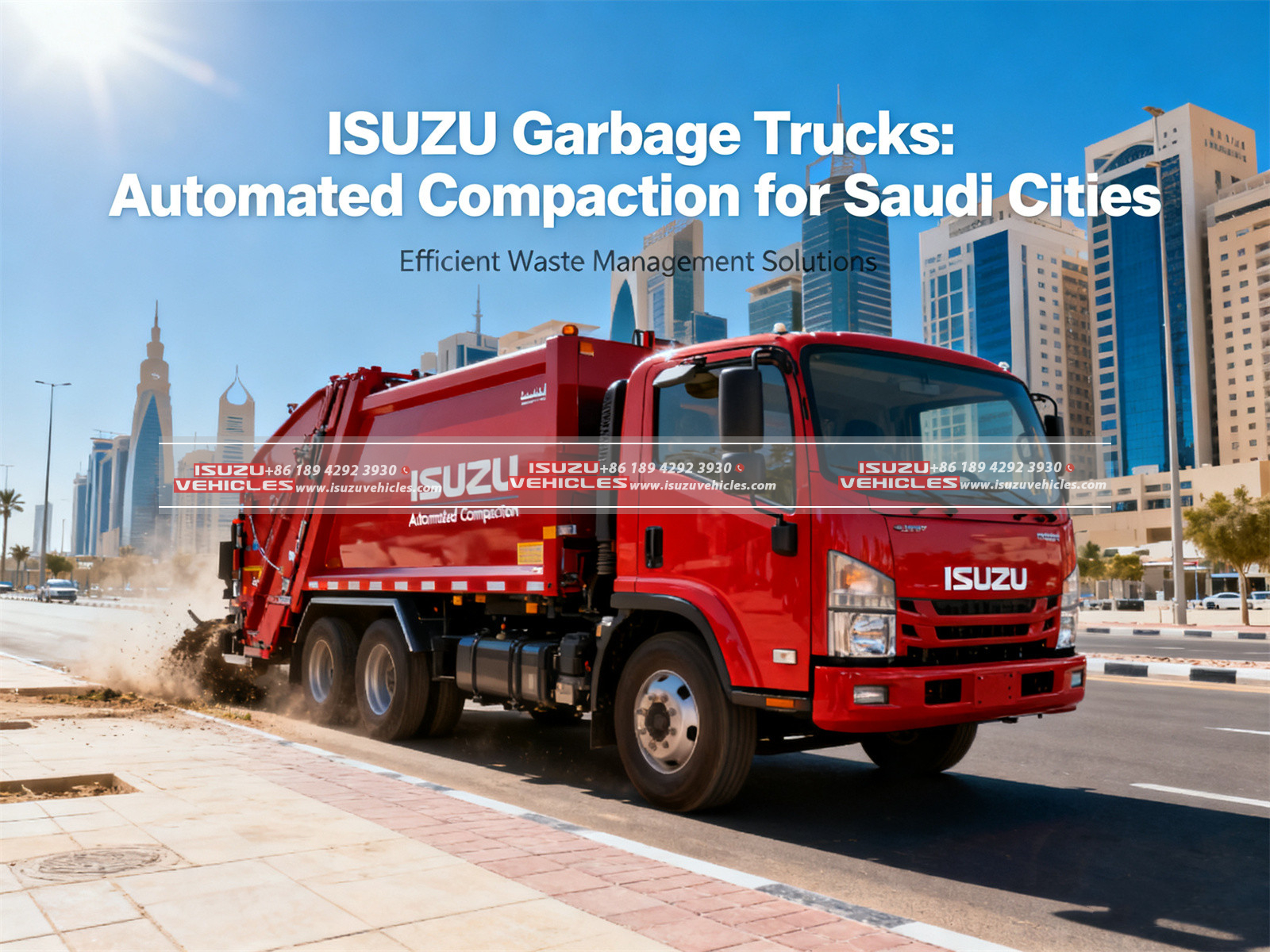
ISUZU’s tech stack directly enables Saudi sustainability targets:
- Landfill Diversion: High compaction density allows direct transport to Neom’s waste-to-energy plants without transfer stations, cutting handling costs.
- Carbon Neutrality: 22% lower diesel consumption per ton collected shrinks Riyadh’s annual waste-related emissions by 19,000 tons of CO₂e.
- Saudization Compatibility: Arabic-language touchscreens and automated systems reduce operator skill requirements, supporting local hiring mandates.
Fleet Integration – Unifying Waste Operations Under the ISUZU Ecosystem
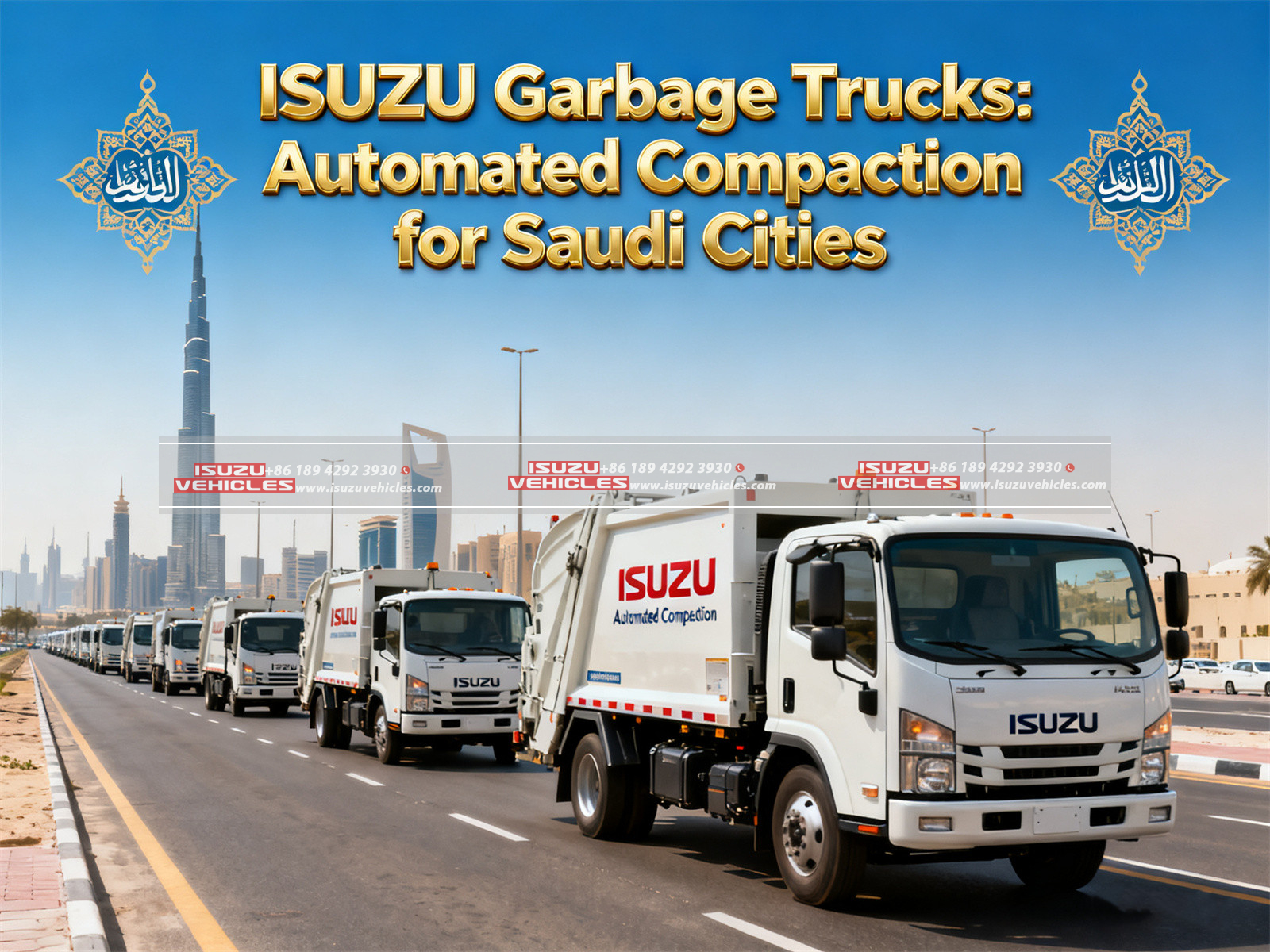
For municipalities managing multiple waste streams, standardizing on ISUZU platforms yields compounding benefits:
- Shared Telematics: The ISUZU CONNECT™ platform monitors compactor cycles, sweeper broom wear, and vacuum tank levels across all assets via a unified dashboard.
- Modular Maintenance: Common 6HK1-TCG engine blocks across ISUZU garbage trucks, ISUZU sweeper trucks, and ISUZU vacuum trucks enable mechanics to service all units with 75% fewer part numbers.
- Training Synergy: Operators certified on ASL joystick controls can seamlessly transition to ISUZU sweeper broom interfaces, cutting retraining time by 70%.
Dammam’s integration of 47 ISUZU waste vehicles (compactors, sweepers, and vacuums) slashed spare parts inventory costs by $380,000 annually while achieving 95% route compliance.
The silent revolution unfolding in Saudi streets isn’t just about cleaner sidewalks – it’s about redefining waste economics in the world’s harshest operating environment. By transforming trash collection from a labor-intensive burden into a data-driven, energy-recovering process, ISUZU’s automated compactors deliver a rare trifecta: lower costs, higher reliability, and measurable sustainability gains. As Riyadh scales toward 15 million residents, this technology isn’t optional infrastructure; it’s the bedrock of livable urban futures.