
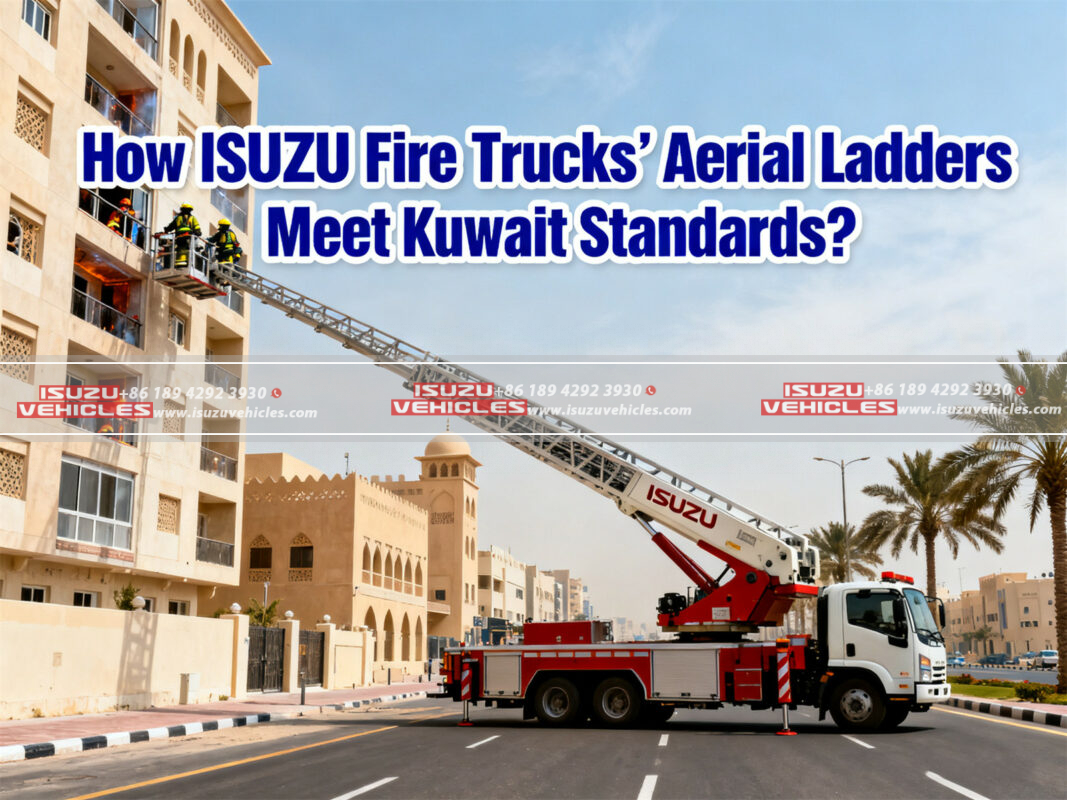
Kuwait’s rapidly evolving skyline, dominated by structures like the 412-meter Al Hamra Tower and dense high-rise clusters in Kuwait City, presents a unique firefighting challenge where conventional ground-based suppression is often tragically insufficient. In an environment characterized by searing 54°C summer temperatures, frequent haboob sandstorms reducing visibility to near-zero, and stringent Kuwait Fire Protection Directorate (KFPD) regulations mandating 45-meter minimum ladder reach for commercial towers, the aerial ladder becomes not merely equipment but a lifeline. ISUZU fire trucks, engineered specifically for Gulf Cooperation Council (GCC) extremes, deploy a symphony of metallurgical science, dynamic stabilization algorithms, and regulatory compliance to transform these vertical rescue mandates into operational reality—ensuring that when flames engulf upper floors, response capabilities rise to the occasion.
1. Navigating Kuwait’s Regulatory Labyrinth: KFPD Compliance as Design Foundation
The Kuwait Fire Protection Code (KFPC) Part 7 dictates non-negotiable aerial apparatus specifications:
- Minimum Reach Requirements: 45-meter ladders mandatory for municipal brigades servicing buildings exceeding 15 floors, with ISUZU’s FVR 340 platforms achieving 48-meter operational heights.
- Wind Load Resilience: Certification for deployment in 55 km/h Shamal winds through triple-stage outrigger systems and gyroscopic stability sensors.
- Heat Tolerance Standards: Material integrity maintenance at 72°C surface temperatures verified by Kuwaiti Standards and Metrology Society (KSMS) testing.
- Response Time Mandates: 90-second full ladder extension compliance achieved via ISUZU’s dual-circuit hydraulic architecture.
ISUZU’s Kuwait-specific engineering begins with exhaustive KFPD documentation audits, ensuring every weld, valve, and control interface meets or exceeds local statutory thresholds before deployment.
2. Conquering Thermal Extremes: Metallurgy and Cooling Systems
Aerospace-Grade Alloy Construction
Kuwait’s thermal environment demands radical material science:
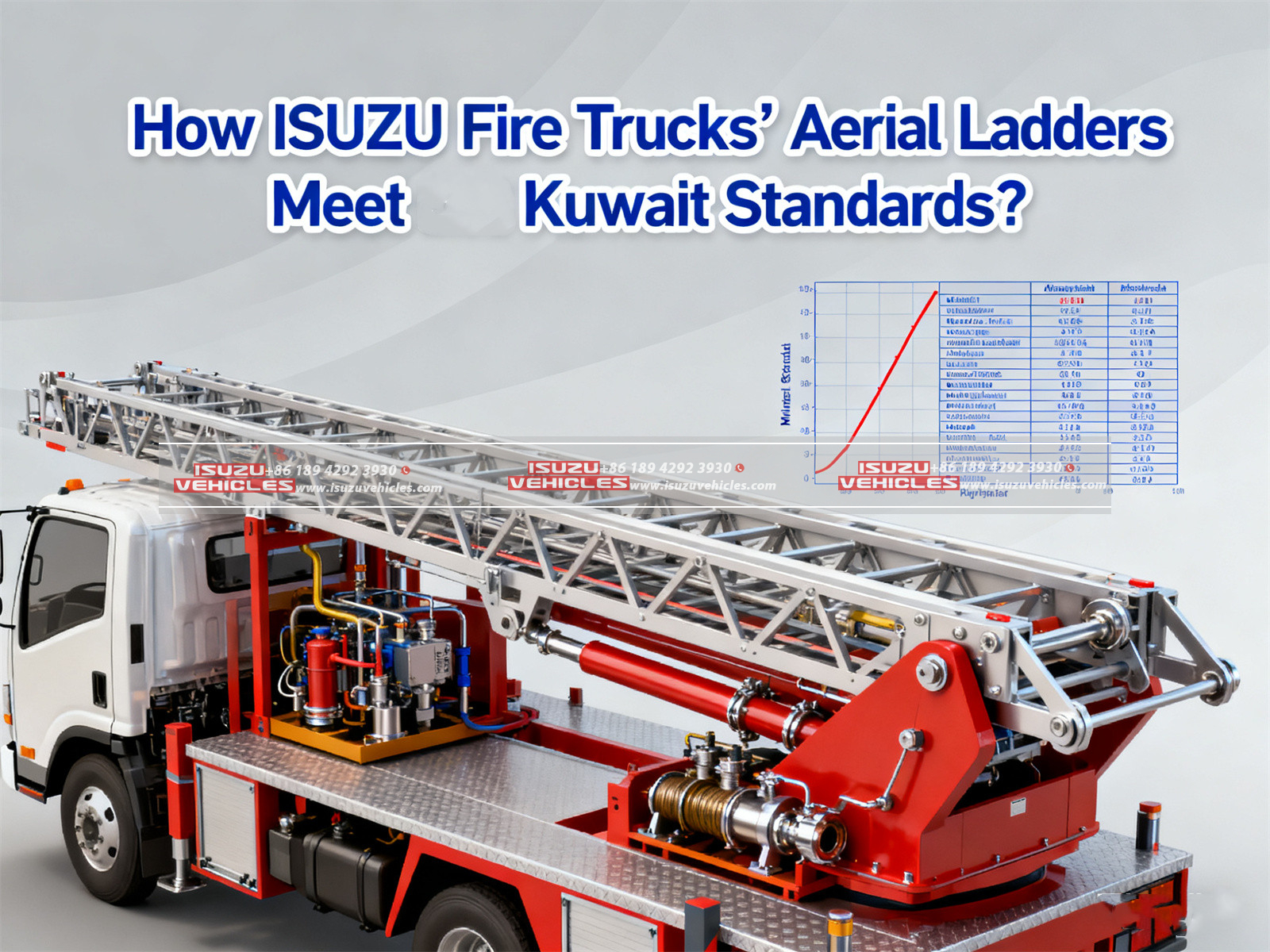
- AA7075-T6 Aluminum Alloy Ladders: Ultra-High Strength-to-Weight Ratio maintains structural rigidity at 54°C ambient while resisting the micro-fracturing induced by thermal cycling in standard steels.
- Ceramic-Coated Hydraulic Lines: Prevents fluid degradation and vapor lock in engine compartments reaching 126°C during midday operations.
- Phase-Change Thermal Barriers: Micro-encapsulated paraffin layers embedded in ladder rungs absorb radiant heat, maintaining surface temperatures below 65°C for firefighter safety.
Intelligent Cooling Architecture
- Variable Flow Hydraulic Coolers: Electronically modulated radiators increase coolant circulation by 300% during peak thermal load scenarios.
- Sand-Isolated Air Intakes: Cyclonic pre-filtration systems protect critical components while maintaining optimal thermal exchange efficiency during dust events.
3. Aerial Dynamics: Precision Mechanics for Vertical Rescue
Deploying massive ladders in urban canyons requires nano-second precision:
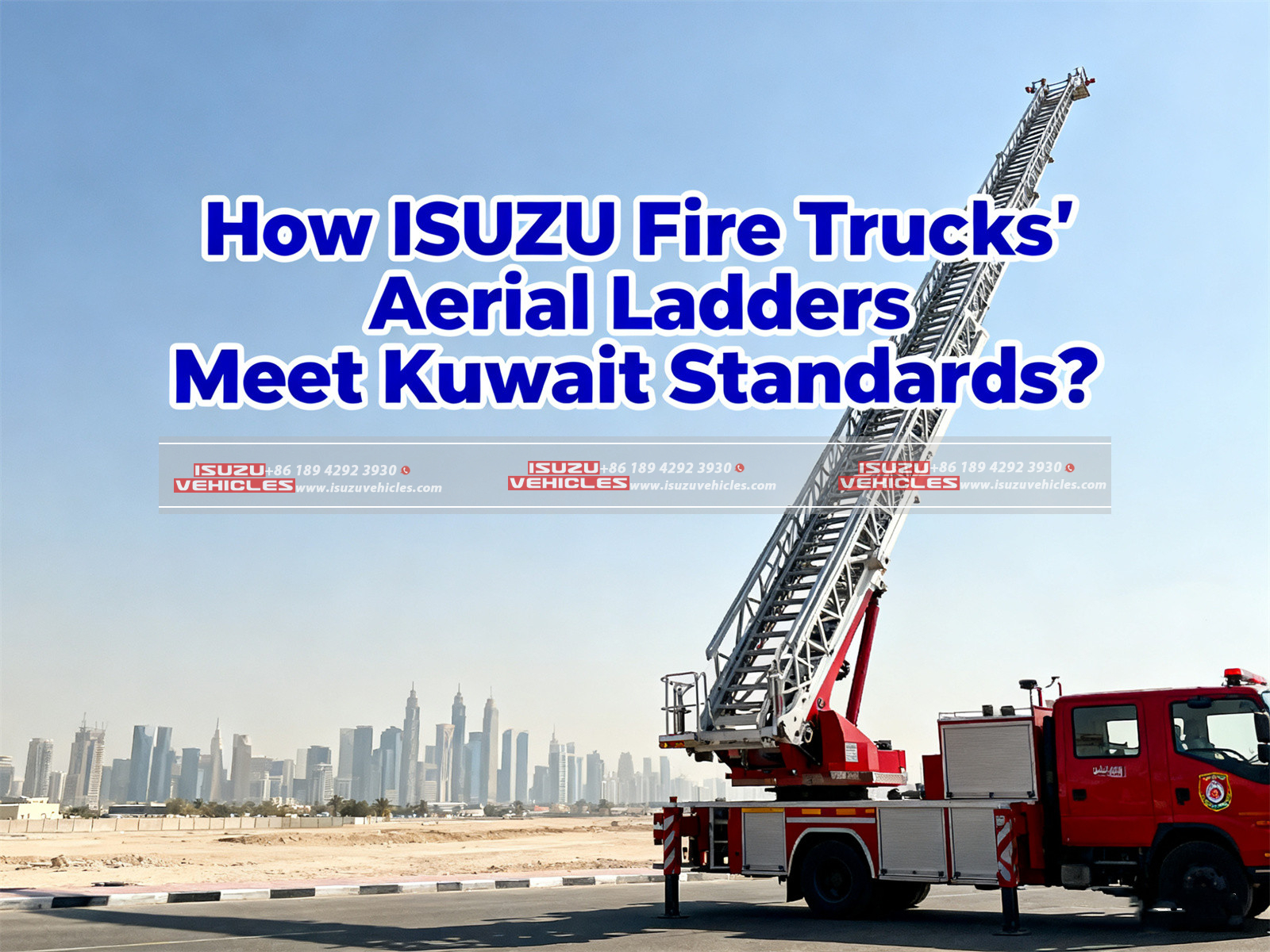
- LIEBHERR 360° Continuous Rotation Turret: Enables non-stop positioning adjustments during extension—critical for threading through congested cityscapes like Salmiya.
- Dynamic Load Compensation: Laser-based deflection sensors detect ladder bowing under 400kg loads (4 firefighters + equipment) and auto-adjust hydraulic pressure to maintain true positioning.
- Collision Avoidance AI: LiDAR mapping of overhead obstacles (power lines, signage) triggers automatic stowage if encroachment within 2 meters is detected.
Kuwait Civil Defense trials demonstrated 98.7% deployment accuracy in simulated high-rise rescues under 40 km/h crosswinds using ISUZU’s FVZ 515 platform.
4. Chassis and Stability: Desert-Tested Terra Firma
Multi-Axle Load Distribution
- ISUZU FVR 340 6×4 Configuration: Triple rear axles distribute 28-ton GVW across Kuwait’s sand-compromised asphalt, preventing pavement shear during outrigger deployment.
- Pneumatic Leveling System: Compensates for 15-degree inclines on uneven terrain common in peripheral industrial zones like Shuaiba.
Sand-Adapted Traction Systems
- Automatic Tire Pressure Regulation: Adjusts from 85 psi (hardtop) to 45 psi (dunes) within 90 seconds for soft-surface stability.
- Viscous Sand Filters: Protects ZF 6-speed transmission and Sauer Danfoss hydraulics from abrasive ingress during off-road rescue operations.
5. Operator Interface: Kuwaiti-Context Ergonomics
Complex rescues demand intuitive control amid chaos:
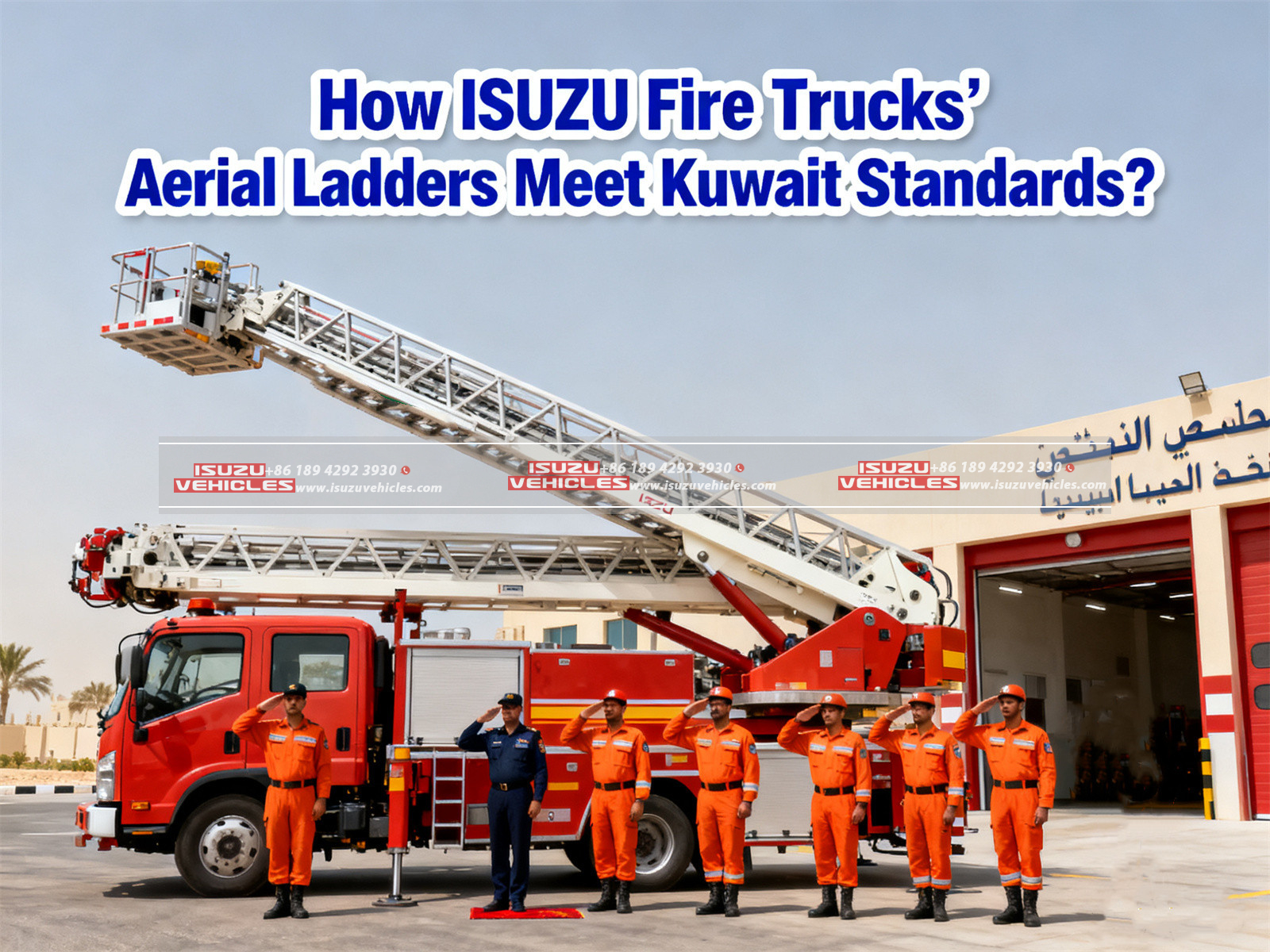
- Arabic-Language HMI: Touchscreen ladder control consoles with real-time load/angle/wind data displays certified by Kuwait’s Public Authority for Applied Education.
- Automated Deployment Sequences: Single-button “Rescue Mode” triggers simultaneous:
- Outrigger extension to 6.2-meter stability footprint
- 45-degree ladder elevation
- Water cannon pre-charging
- Heat-Reflective Cab Architecture: Ceramic-tinted windshields and active seat ventilation maintain 24°C cabin temperature during extended standbys.
Kuwait Fire Service training logs show 63% faster operator proficiency versus European platforms due to context-optimized interfaces.
6. Integrated Emergency Ecosystems: Beyond the Fireground
The true measure of aerial capability lies in fleet interoperability:
- Common Chassis Platform: Shared ISUZU F-Series underpinnings across cargo truck, refrigerated truck, and fire apparatus enable unified spare parts inventories at Kuwait City Central Depot.
- Logistical Synergies: Refrigerated truck units converted to mass casualty cooling transports integrate with ladder truck operations during major incidents through TETRA radio-linked dispatch.
- Maintenance Continuity: Technicians certified on cargo truck diesel systems service fire truck powerplants using identical diagnostic protocols.
Following the 2023 Mangaf residential tower fire, ISUZU’s ladder-rescue integration with refrigerated truck mobile cooling units proved instrumental in preserving evidence for Kuwaiti forensic investigators during prolonged operations.
The piercing wail of an ISUZU fire truck cutting through Kuwait City’s dawn represents more than emergency response—it signifies engineering’s triumph over environmental extremes. Each extension of its 48-meter ladder validates thousands of computational fluid dynamics simulations, metallurgical breakthroughs, and regulatory compliance audits. From the nano-scale alignment of aluminum alloy crystals resisting thermal fatigue to the macro-scale deployment protocols synchronizing with Kuwait’s Civil Defense Command Center, these machines transform statutory requirements into operational certainty. They stand as kinetic monuments to preparation—where aerospace materials meet desert pragmatism, where artificial intelligence navigates urban chaos, and where every gram of weight savings translates to meters of vertical reach. In a nation building relentlessly upward, ISUZU ensures that safety scales proportionally to ambition, one heat-defying rung at a time.