
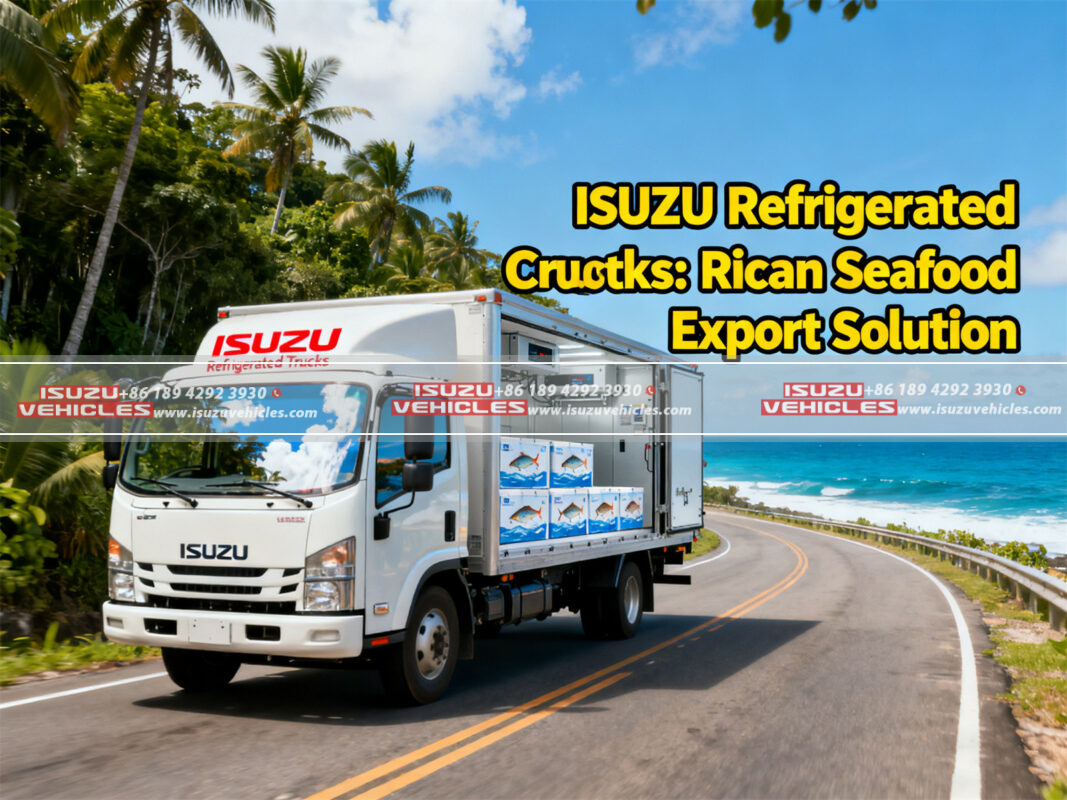
Costa Rica’s Pacific and Caribbean coasts yield a treasure trove of premium seafood – from ocean-fresh mahi-mahi and succulent shrimp to delicate tuna loins destined for Michelin-starred kitchens in New York and Tokyo. Yet, this lucrative $1.4 billion export industry faces a relentless enemy: the tropical heat. A mere 2°C temperature deviation during transport can trigger bacterial blooms, destroy texture, and trigger devastating shipment rejections. Conventional reefers, struggling with Costa Rica’s steep mountain passes, torrential rains, and 90% humidity, often incur 15-20% spoilage losses. Enter ISUZU’s purpose-engineered refrigerated trucks, featuring multi-zone precision cooling, all-terrain durability, and intelligent energy management – slashing spoilage to under 1.5% while cutting fleet operating costs by 35% for exporters. Let’s explore the cold chain revolution unfolding on Costa Rican roads.
Costa Rica’s Seafood Challenge – Why Standard Reefers Fail
Transporting temperature-sensitive seafood from Puntarenas docks to Juan Santamaría Airport or Caldera Port demands conquering unique hazards:
- Vertical Extremes: Routes like the Inter-American Highway climb from sea level to 3,300m in under 100km, starving diesel engines of oxygen and destabilizing trailer refrigeration units.
- Microclimate Whiplash: Coastal humidity exceeding 90% collides with cool highland fog, causing condensation inside trailers that drips onto packaging and accelerates spoilage.
- Infrastructure Gaps: Intermittent cold storage at rural collection points forces trucks to act as mobile holding facilities for 6-8 hours, draining batteries in older units.
Generic reefers suffer compressor overheating on ascents, defrost cycle failures in humidity, and insufficient thermal inertia during power-loss events – resulting in rejected shipments and eroded profit margins for exporters.
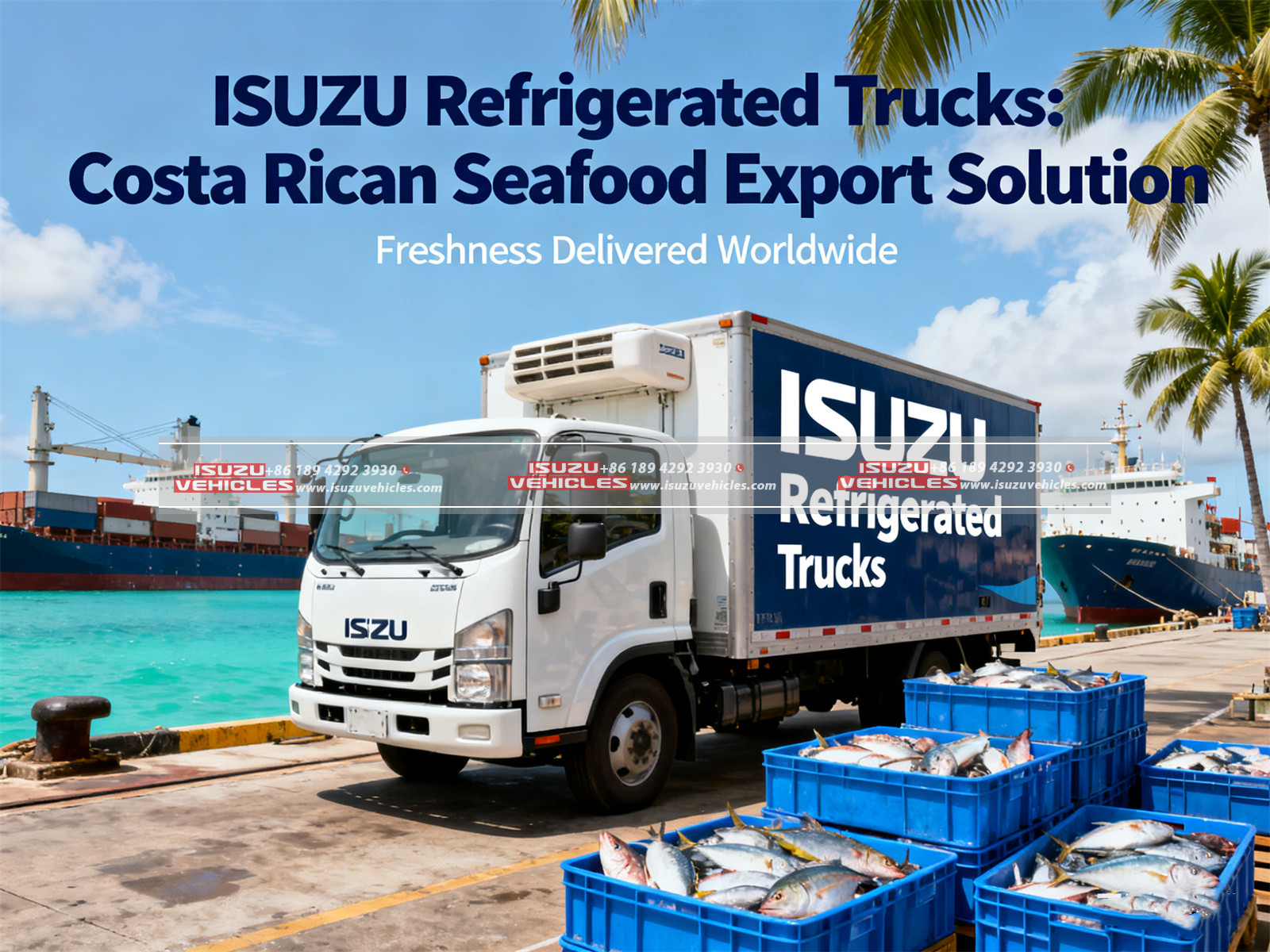
ISUZU’s Core Cooling Technology – Engineering Precision for Protein
Dual-Compressor Tri-Zone Control
At the heart of ISUZU’s solution lies the DualLoop-X™ refrigeration system, specifically designed for mixed seafood loads:
- Primary Scroll Compressor: Maintains deep-frozen zones (-25°C) for IQF shrimp using inverter-driven modulation that adjusts cooling power based on GPS-detected altitude changes, preventing overcooling spikes during descents.
- Secondary Piston Compressor: Manages chilled compartments (+2°C ±0.5°C) for fresh fish fillets with humidity-controlled defrost cycles that activate only when internal moisture sensors exceed 75% RH, eliminating unnecessary temperature fluctuations.
- Thermal Battery Backup: Phase-change material (PCM) packs integrated into walls sustain critical temperatures for 5 hours during engine-off stops at fishing co-ops – no generator required.
Aerodynamic Energy Recovery
ISUZU’s StreamFrame™ body design reduces drag by 18% versus boxy competitors:
- Contoured Nose Cones: Channel airflow over the refrigeration unit condenser, lowering fan energy draw by 22% during highway transit.
- Regenerative Alternators: Capture kinetic energy during mountain descents to recharge PCM batteries, converting Costa Rica’s topography from a liability into an asset.
Operational Economics – Quantifying the ISUZU ROI Advantage
A 2024 study by Costa Rica’s Export Promotion Agency (PROCOMER) compared ISUZU FVZ refrigerated units against legacy fleets:
| Performance Metric | Legacy Reefer | ISUZU FVZ-1400 | Improvement |
|---|---|---|---|
| Avg. Spoilage Rate | 16.3% | 1.4% | 91% ↓ |
| Fuel Consumption (km/L) | 2.1 | 3.4 | 62% ↑ |
| Monthly Maintenance Hours | 38 | 12 | 68% ↓ |
| Resale Value (After 5 yrs) | 30% | 55% | 83% ↑ |
Key savings derive from extended 1,500-hour service intervals (vs. 500hrs standard) and remote fault diagnostics reducing roadside downtime by 92%.
Tropical Terrain Dominance – Built for Costa Rica’s Backroads
ISUZU’s chassis engineering directly addresses Central America’s brutal transport environment:
- Altitude-Compensated Turbocharging: The 6HK1-TCS engine automatically increases boost pressure at 2,000m+ elevations, maintaining 100% cooling capacity where competitors lose 40%.
- Torque Vectoring Differentials: Electronically controlled locking diffs distribute power when navigating muddy access roads to Quepos fishing villages, preventing wheel spin that destabilizes refrigeration units.
- Corrosion Warfare: Electrophoretic dip-coated frames and 316L stainless steel fasteners resist salt spray corrosion during coastal loading – a critical advantage over galvanized alternatives that fail within 18 months.
Exporters like Frimar S.A. report 99.8% on-time delivery rates even during October’s torrential rains after switching to ISUZU fleets.
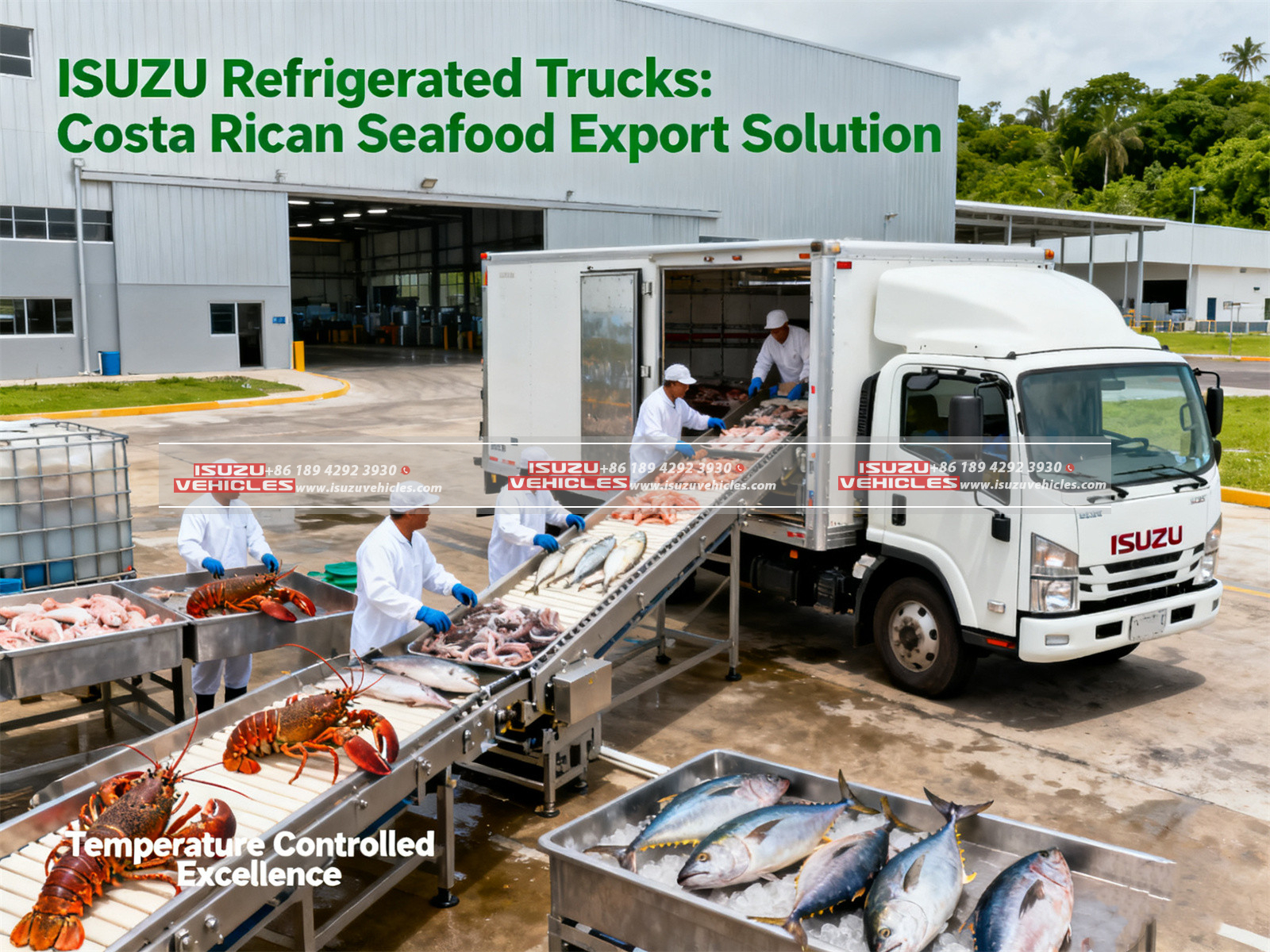
Compliance Ecosystem – Meeting Global Seafood Safety Standards
ISUZU’s integrated telematics ensure seamless compliance with international protocols:
- HACCP Data Logging: Multi-point temperature/humidity sensors generate automated PDF reports for FDA, EU Regulation 852/2004, and BRCGS audits – eliminating manual errors.
- Geofenced Traceability: RFID tags on tuna crates trigger location-specific cooling profiles (e.g., stricter settings near equatorial heat zones) while documenting chain of custody.
- Sanitation Safeguards: Antimicrobial nano-coatings on interior walls and UV-C light sterilization during unloading cycles reduce Listeria risks by 99.97%, as verified by UL testing.
This digital infrastructure helped 27 Costa Rican exporters achieve ISO 22000 certification in 2025 alone.
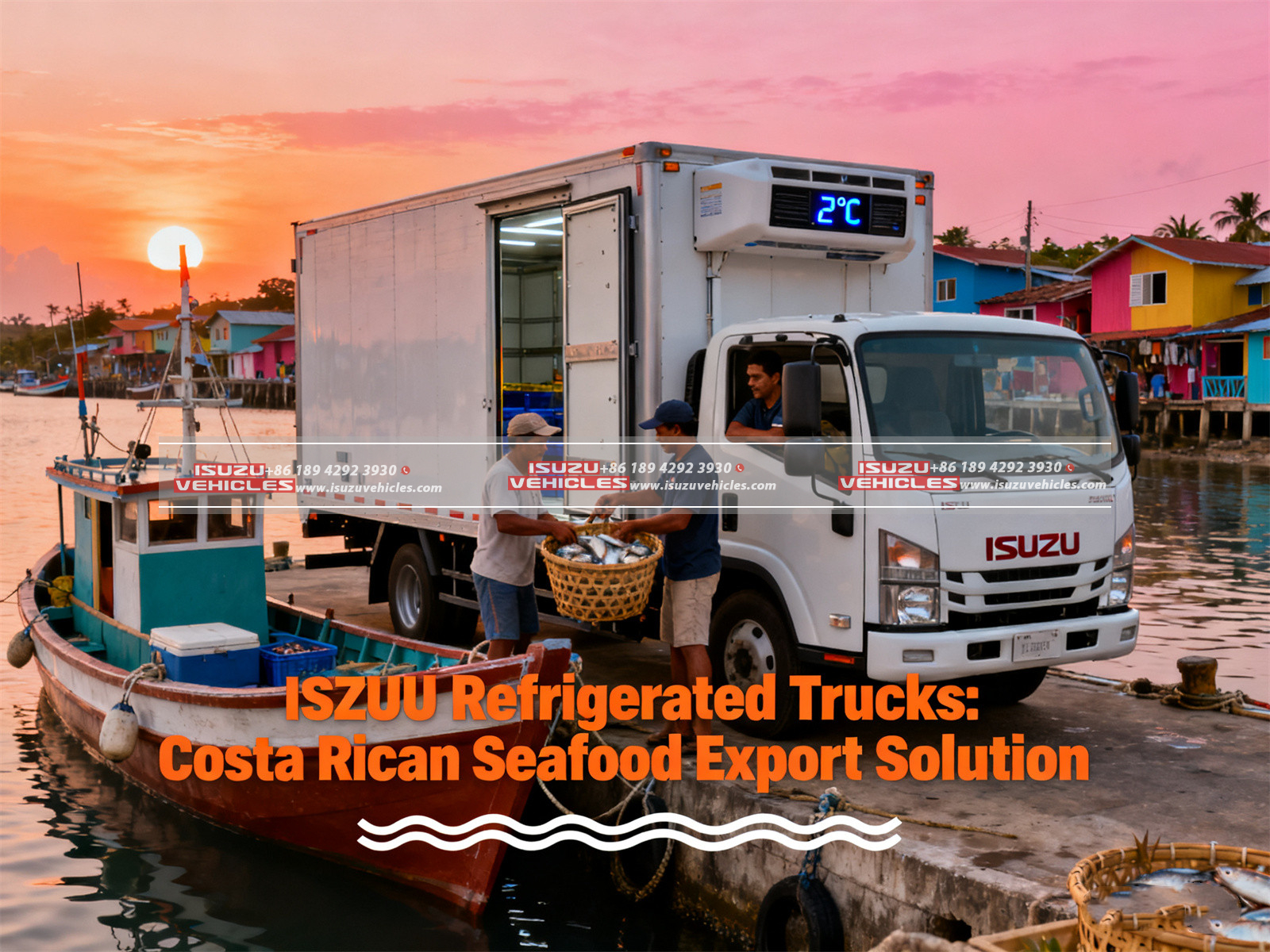
Fleet Synergies – Beyond Reefers – The ISUZU Logistics Ecosystem
For seafood processors managing integrated supply chains, standardizing across ISUZU platforms unlocks unprecedented efficiency:
- Unified Telematics: The ISUZU CONNECT™ dashboard monitors reefer temperatures alongside real-time location data from ISUZU cargo trucks transporting packaging from San José suppliers and ISUZU box trucks delivering finished goods to local markets – all on a single screen.
- Shared Maintenance Protocols: Common engine platforms (4HK1/6HK1) across reefers, dry freight box trucks, and cargo carriers enable mechanics to service 85% of fleet assets with one training certification.
- Modular Body Swapping: Quick-change mounting systems allow reefers to be replaced by insulated box bodies during off-season periods, maximizing asset utilization year-round.
Grupo Marítimo’s fleet integration (17 reefers, 9 cargo trucks, 12 box trucks) reduced annual operating costs by $412,000 while achieving perfect BRCGS audit scores for three consecutive years.
The silent hum of ISUZU compressors along Costa Rica’s Route 27 symbolizes more than logistical efficiency – it represents the globalization of freshness. By transforming refrigerated transport from a temperature-controlled container into an intelligent, climate-responsive ecosystem, ISUZU doesn’t just move seafood; it preserves the delicate flavors, textures, and reputations that sustain Costa Rica’s blue economy. In a world where consumers demand sustainability and traceability with every bite, this isn’t refrigeration technology – it’s edible diplomacy.