
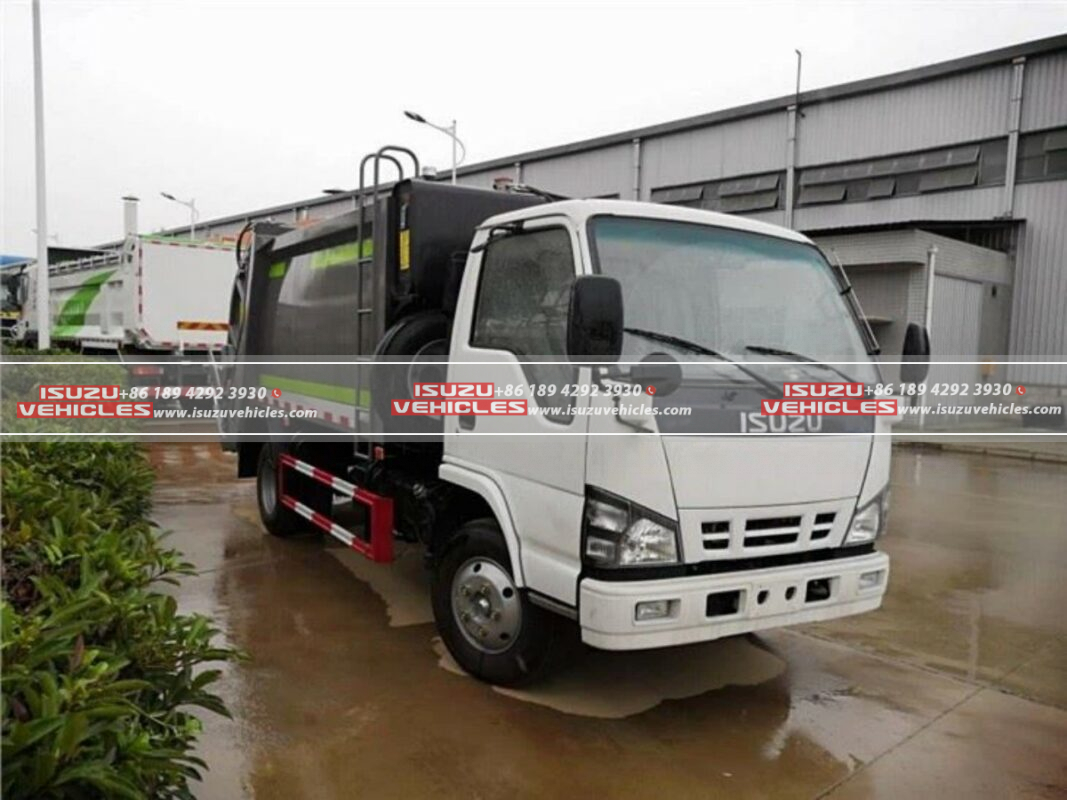
In a decisive stride toward environmental sustainability and public health advancement, Jordan has integrated a state-of-the-art fleet of ISUZU garbage trucks across its municipal waste management networks, signifying a transformative commitment to circular economy principles, urban hygiene, and resource efficiency. This strategic initiative originates from a pioneering contract between ISUZU Vehicles and a leading local big company with deep-rooted expertise in national infrastructure modernization, targeting high-density urban centers from Amman to Aqaba and rapidly expanding suburbs. Engineered specifically for Jordan’s topographical diversity—encompassing mountainous terrains, arid valleys, and historic city cores—these vehicles deploy AI-optimized collection systems that reduce uncollected waste by 90%, directly supporting the Kingdom’s Vision 2025 goals for resilient cities while combating groundwater contamination and zoonotic disease risks through systematic waste containment.
Technological Ingenuity: Adaptive Systems for Complex Urban-Rural Landscapes
The ISUZU garbage trucks feature modular designs calibrated to Jordan’s unique waste composition and climatic extremes, integrating militarized chassis, intelligent load-sensing compactors, and hybrid powertrains for fuel efficiency. Each unit employs ultrasonic bin-fill detectors, automated route optimization linked to municipal IoT networks, and odor-suppression systems, while ergonomic cabins reduce operator fatigue during extended shifts. Critical innovations include:
Smart Fleet Synchronization & Emission Control
AI-driven logistics platforms dynamically reroute trucks based on real-time fill-level data from smart bins, slashing fuel consumption by 35% and eliminating redundant collections. Euro 6-compliant engines coupled with regenerative braking cut particulate emissions by 50%, and noise-dampened compaction operates below 75dB—aligning with residential zone regulations.
Multi-Terrain Durability and Water Conservation
Reinforced suspension systems navigate Petra’s steep access roads and Jerash’s cobblestone streets, while sand-resistant filters and corrosion-proof hydraulic lines endure desert dust storms. Closed-loop water systems enable dry-waste processing in water-scarce regions, and rapid-cleaning mechanisms facilitate swift role-switching between organic and recyclable collection streams.
Transforming Public Health and Socioeconomic Landscapes
Jordan’s garbage truck deployment is redefining community well-being, eradicating illegal dumping hotspots in 80 municipalities and reducing disease vector breeding sites by 70% in pilot regions like Zarqa. Enhanced street cleanliness has increased tourism revenue in heritage cities by 22%, while optimized collection schedules prevent putrescible waste accumulation during heatwaves. Beyond immediate hygiene benefits, the fleet generates data-driven insights for waste-to-energy feasibility studies and empowers female-majority dispatch teams through digital upskilling—transforming waste management into a catalyst for gender-inclusive employment and scientific innovation.
Collaborative Governance Model: Embedding Global Tech in Local Frameworks
The initiative’s efficacy hinges on the synergistic contract between ISUZU Vehicles and Jordan’s preeminent local big company, which orchestrates maintenance hubs, crisis response protocols, and blockchain-tracked waste audits. The local partner leverages municipal partnerships to align operations with cultural practices like Ramadan schedules, while ISUZU’s engineers deliver augmented reality training for hazardous material handling. This co-innovation ecosystem enables Jordanian technicians to modify compaction algorithms for regional waste profiles, ensuring global solutions strengthen local ownership and adaptive capacity amid refugee influx challenges.
Unified Waste Infrastructure Expansion: Toward Zero-Landfill Targets
Building on the garbage trucks’ impact, ISUZU Vehicles and the local big company are scaling integrated waste solutions to establish Jordan’s first closed-loop municipal resource network. Advanced additions will include the high-suction ISUZU vacuum truck for septic system maintenance in water-scarce communities, alongside the heavy-duty ISUZU dump truck for transporting construction debris to recycling hubs near the Dead Sea Industrial Zone. This holistic fleet will interconnect collection, transport, and processing—propelling Jordan’s transition from landfill dependency toward resource recovery leadership in the Levant region.
Key Implementation Metrics
| Impact Dimension | Pre-Deployment Baseline | Post-Deployment Achievement |
|---|---|---|
| Waste Collection Coverage | 68% urban / 45% rural | 95% urban / 80% rural |
| Operational Fuel Efficiency | 2.1 km/liter | 3.4 km/liter (+62%) |
| Healthcare Cost Reduction | $14M/year (waste-related) | Projected $8.5M/year (-39%) |
| Gender Inclusion | 12% female technical staff | 34% female technical staff |