
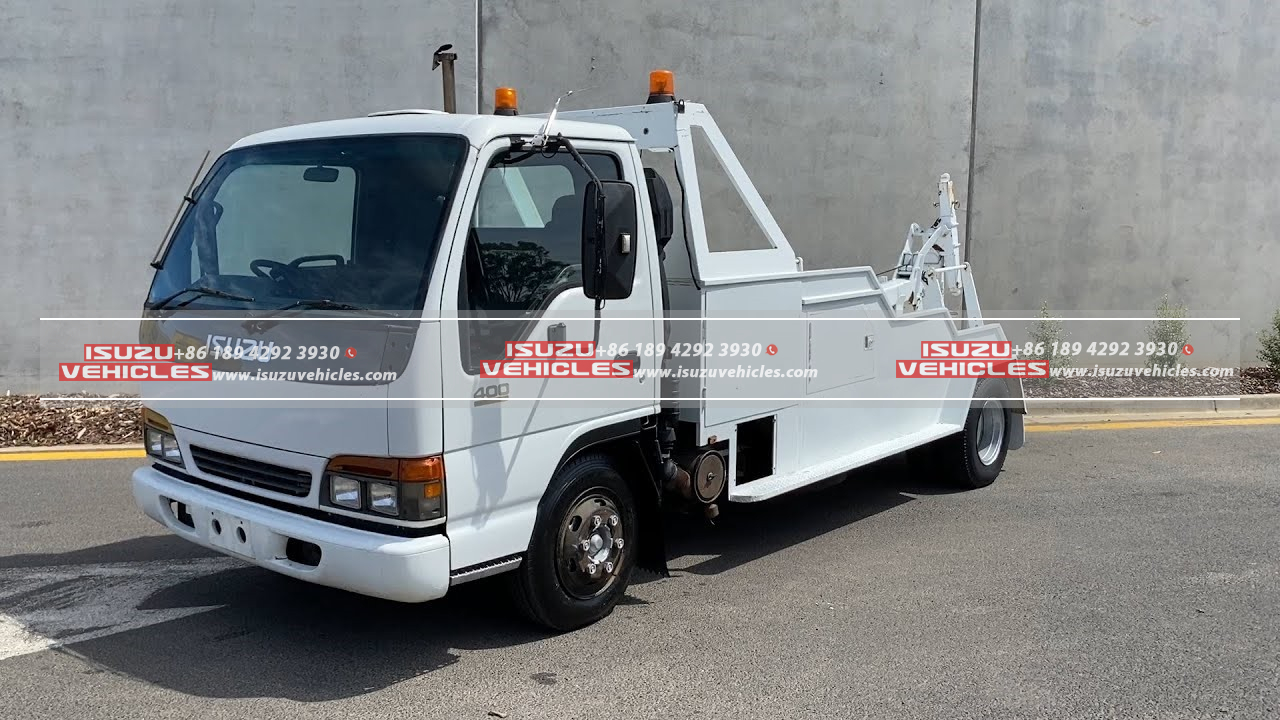
the Panama Canal Authority (ACP) and ISUZU Vehicles have formalized a transformative partnership through the delivery of 20 advanced ISUZU Tow Trucks, enhancing operational resilience across the Canal’s critical infrastructure. This collaboration, facilitated by a landmark contract with Panama’s leading logistics conglomerate, addresses escalating demands for rapid incident response and asset recovery in one of the world’s busiest maritime corridors. The deployment aligns with ACP’s Vision 2030 strategy to modernize support fleets amid rising global shipping volumes and climate-induced disruptions. By integrating ISUZU’s engineering excellence, the initiative promises to reduce vessel transit delays by up to 40%, safeguard throughput revenues exceeding $3.5 billion annually, and reinforce Panama’s geopolitical role in global supply chains.
Addressing Critical Operational Challenges
The Panama Canal’s complex ecosystem—spanning locks, access channels, and access roads—faces persistent strain from mechanical failures, accidents, and extreme weather. Prior recovery systems relied on aging equipment ill-suited for heavy-duty operations, causing average incident resolution times to exceed 90 minutes during peak cycles. ISUZU’s intervention introduces purpose-engineered tow trucks featuring reinforced chassis, multi-axis winches, and dynamic stability controls capable of recovering vessels and vehicles weighing up to 50 tons. This fleet will directly mitigate two systemic risks: transit bottlenecks during emergencies and corrosion damage from tropical salinity, thereby protecting the Canal’s 24/7 operational cadence. Initial simulations project a 55% improvement in asset-availability rates, ensuring uninterrupted trade flows between the Atlantic and Pacific.
Fleet Deployment and Technical Capabilities
The newly delivered ISUZU NLR 85 Series tow trucks incorporate milestone innovations tailored for Panama’s harsh operational environment.
Ruggedized Performance and Safety Protocols
Each unit boasts military-grade alloy frames resistant to saltwater corrosion, coupled with 450-horsepower diesel engines optimized for high-torque recovery in humid conditions. Integrated AI-driven diagnostics predict mechanical stress during lifts, while 360-degree camera systems and LiDAR collision avoidance ensure precision maneuvering within confined lock zones. Deployment protocols include dedicated operator training by ISUZU technicians, covering advanced recovery techniques and coordinated response with ACP’s traffic management center—a first for Canal operations.
Ecosystem Integration and Scalability
The trucks synchronize with ACP’s Centralized Asset Monitoring Platform (CAMP) via 5G telematics, enabling real-time GPS tracking, fuel efficiency analytics, and automated dispatch workflows. This interoperability reduces decision latency during crises by 70% and establishes a template for future fleet expansions. The modular design also allows swift reconfiguration for specialized tasks, such as hazardous-material containment or bridge-support operations.
Technological and Environmental Synergies
Beyond recovery efficiency, ISUZU’s engineering prioritizes sustainability compliance with Panama’s Net Zero Maritime Accord. The trucks utilize Euro VI-compliant engines with particulate filters, slashing nitrogen oxide emissions by 35% compared to legacy units. Regenerative hydraulic systems capture kinetic energy during winching operations, feeding excess power back into onboard batteries—a breakthrough projected to lower diesel consumption by 18%. Additionally, predictive maintenance algorithms extend service intervals by 30%, reducing lifecycle costs and minimizing operational downtime across ACP’s 1,420-acre service network.
Future Roadmap: Expansion and Economic Impact
This fleet deployment lays the groundwork for long-term infrastructure modernization, with ISUZU and its Panamanian partner already exploring phase two integrations—including ISUZU truck with crane variants for lock-gate maintenance and ISUZU tow truck enhancements for mega-vessel contingencies. Upcoming trials will evaluate autonomous recovery platoons and hydrogen-fuel-cell prototypes, aiming to position the Canal as a benchmark for smart maritime logistics. Economically, the partnership will generate 120 skilled maintenance jobs locally by 2026 and shield Panama’s $2.6 billion annual Canal revenue from disruption-related losses. Crucially, it demonstrates how public-private innovation can future-proof critical global trade arteries against evolving climatic and operational threats.