
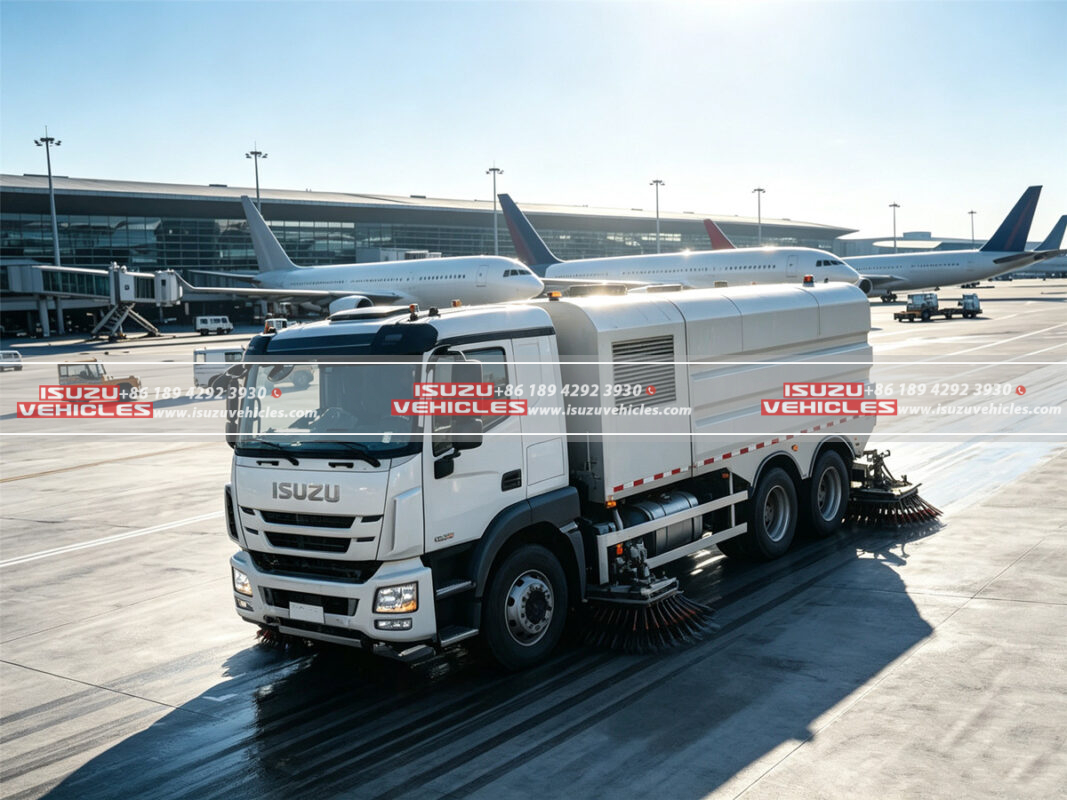
The Growing Importance of Runway Cleaning in Asia-Pacific Airports
The aviation industry in the Asia-Pacific region has experienced rapid growth over the past several decades, with major international airports handling millions of passengers, thousands of flights, and significant volumes of cargo every year. As air traffic continues to increase, maintaining safe and efficient airport operations has become more challenging, especially when it comes to runway management. Among all airport maintenance tasks, runway cleanliness is one of the most critical factors because even small foreign objects, dust accumulation, rubber deposits, or surface debris can affect aircraft safety during takeoff and landing.
An airport runway cleaning truck is a specialized maintenance vehicle designed to remove contaminants from airport movement areas, including runways, taxiways, aprons, and aircraft parking zones. These vehicles combine powerful sweeping systems, vacuum technology, water spraying functions, and high-efficiency cleaning mechanisms to ensure that aircraft operating surfaces remain clean and safe under demanding conditions.
For Asia-Pacific aviation hubs, where airports often operate around the clock with minimal downtime, reliable runway cleaning equipment is essential. Large international airports require vehicles that can complete cleaning tasks quickly, maintain consistent performance in different climates, and operate efficiently across extensive airfield areas.
The ISUZU Runway Cleaning Truck provides a practical solution for airport operators by combining a durable commercial vehicle platform with specialized sanitation equipment. Designed for continuous operation, these trucks offer strong mobility, reliable mechanical performance, and adaptable cleaning functions suitable for modern airport environments.
Why Runway Cleanliness Is Critical for Aviation Safety
Airport runways are exposed to various sources of contamination every day, including aircraft operations, weather conditions, maintenance activities, and surrounding environmental factors. Unlike normal roads, runways require extremely strict cleanliness standards because aircraft depend on precise surface conditions for safe operation.
Foreign Object Debris Prevention and Aircraft Protection
One of the biggest concerns in airport maintenance is foreign object debris, commonly known as FOD. Items such as small stones, metal fragments, rubber pieces, and loose materials can create serious risks when aircraft engines or landing gear come into contact with them.
During aircraft takeoff, jet engines generate powerful airflow that can pull nearby objects into engine systems. Even small debris can potentially damage critical components and create costly maintenance issues.
A professional runway cleaning truck helps reduce these risks by continuously removing unwanted materials before they become aviation hazards. Through sweeping, vacuuming, and washing systems, these vehicles maintain cleaner aircraft operating surfaces and improve overall flight safety.
Maintaining Runway Surface Performance
Aircraft require predictable runway conditions, especially during braking and landing operations. Accumulated rubber deposits from aircraft tires, dust, oil residue, and other contaminants can reduce surface friction and affect braking performance.
Regular cleaning operations help preserve runway grip levels and ensure that pilots can rely on consistent runway conditions during different weather situations.
For busy airports in the Asia-Pacific region, where tropical climates, heavy rainfall, and high humidity are common, frequent runway maintenance is especially important.
How Airport Runway Cleaning Trucks Work
Modern runway cleaning trucks are not simple road sweepers. They are highly specialized maintenance vehicles that combine several cleaning technologies into one integrated platform.
High-Speed Sweeping and Vacuum Systems
The core function of an airport cleaning truck is removing debris from large surface areas quickly and efficiently. High-performance rotating brushes collect loose materials from the runway surface, directing them toward a collection system.
Powerful vacuum equipment then removes smaller particles that traditional sweeping methods may leave behind. This combination allows the vehicle to clean both visible debris and fine dust particles.
The ability to complete large-scale cleaning operations quickly is essential for international airports, where runway availability directly affects flight schedules.
Water Spray and Surface Washing Technology
Many runway cleaning trucks include water spraying systems that help control dust and improve cleaning efficiency. Controlled water application helps loosen stubborn dirt, reduce airborne particles, and improve the effectiveness of sweeping operations.
In some airport environments, water systems are also used for specialized surface washing tasks, especially in areas affected by oil residue or accumulated contaminants.
This technology is similar to the functions found in a sprinkler truck, although airport cleaning vehicles are specifically designed with additional sweeping and debris collection capabilities.
Advantages of ISUZU Runway Cleaning Trucks for Asia-Pacific Aviation Hubs
Airports require maintenance vehicles that can deliver reliable performance under strict operational conditions. The advantages of ISUZU runway cleaning trucks come from their combination of durability, efficiency, and flexible equipment configuration.
Strong Chassis Performance for Continuous Airport Operations
Airport maintenance vehicles often operate for many hours every day, traveling across large airfield areas and performing repeated cleaning cycles. This requires a vehicle platform capable of handling continuous workload and challenging conditions.
ISUZU trucks are known for their durable chassis structures and reliable drivetrain systems, making them suitable for demanding airport applications. The reinforced frame provides stability while carrying cleaning equipment, water tanks, and debris collection systems.
This reliability helps airport operators reduce unexpected downtime and maintain consistent maintenance schedules.
Efficient Operation and Lower Maintenance Costs
Operational efficiency is extremely important for airports because maintenance activities must be completed without disrupting flight schedules. A reliable cleaning truck helps reduce the time required for runway preparation and allows maintenance teams to complete tasks more effectively.
Fuel efficiency, accessible service points, and durable components also contribute to lower long-term ownership costs.
For large aviation hubs managing multiple maintenance vehicles, these advantages can create significant improvements in fleet management.
Applications of Runway Cleaning Trucks in Major Aviation Facilities
Airport cleaning trucks are used across different types of aviation facilities, from international passenger airports to cargo terminals and military airfields.
International Passenger Airports
Major passenger airports require strict cleanliness standards because they handle large numbers of aircraft movements every day. Runway cleaning trucks support daily maintenance programs by ensuring that runways, taxiways, and aircraft parking areas remain ready for continuous operation.
In Asia-Pacific aviation hubs, where passenger volumes continue to increase, efficient cleaning equipment plays an important role in maintaining reliable flight schedules.
Cargo Airports and Industrial Aviation Zones
Cargo airports face additional challenges because freight operations often involve heavy equipment movement, ground vehicles, and increased activity around aircraft loading areas.
Runway cleaning trucks help maintain safe working environments by removing debris generated by cargo handling operations and vehicle movement.
Comparing Airport Cleaning Trucks with Other Municipal Cleaning Vehicles
Although many sanitation vehicles share similar technologies, airport cleaning trucks are designed for more specialized applications.
Runway Cleaning Truck vs Sweeper Truck
A conventional sweeper truck is mainly designed for urban roads, highways, industrial areas, and public spaces. It focuses on collecting dust, leaves, and general street debris.
An airport runway cleaning truck requires higher cleaning performance because aviation surfaces have stricter requirements. It must remove smaller particles, handle larger operational areas, and often operate at higher speeds while meeting airport safety standards.
While both vehicles use brushes and vacuum systems, airport cleaning trucks are engineered specifically for aviation environments.
Runway Cleaning Truck vs Sprinkler Truck
A sprinkler truck mainly focuses on water distribution, road washing, dust suppression, and landscape maintenance. It uses large water tanks and spray systems to improve environmental conditions.
A runway cleaning truck may include sprinkler functions, but its primary purpose is debris removal and aviation surface protection. The combination of sweeping, vacuuming, and washing makes it a more specialized airport maintenance solution.
Maintenance and Future Development of Airport Cleaning Vehicles
Long-term reliability is essential for airport maintenance equipment because operational failures can affect flight schedules and safety procedures.
Regular Equipment Inspection
Airport cleaning trucks require regular inspection of brushes, vacuum systems, hydraulic components, water pumps, and collection systems. Proper maintenance ensures that cleaning performance remains consistent.
Operators should also inspect mechanical components such as tires, brakes, and chassis systems to maintain safe operation across large airport areas.
Smart Technology Integration
Future airport cleaning vehicles are expected to adopt more intelligent technologies, including automated route planning, digital monitoring systems, and advanced cleaning control features.
These improvements will allow airports to optimize maintenance schedules, reduce operating costs, and improve overall efficiency.
As aviation continues to expand throughout the Asia-Pacific region, airports will increasingly depend on specialized maintenance solutions that combine reliability with advanced functionality. With strong commercial vehicle engineering, flexible configurations, and dependable performance, ISUZU Vehicles provide effective support for aviation infrastructure. Whether operating as an airport runway cleaning truck, a sweeper truck, or working alongside a sprinkler truck for comprehensive airfield maintenance, ISUZU solutions help aviation hubs maintain safer, cleaner, and more efficient operating environments worldwide.