
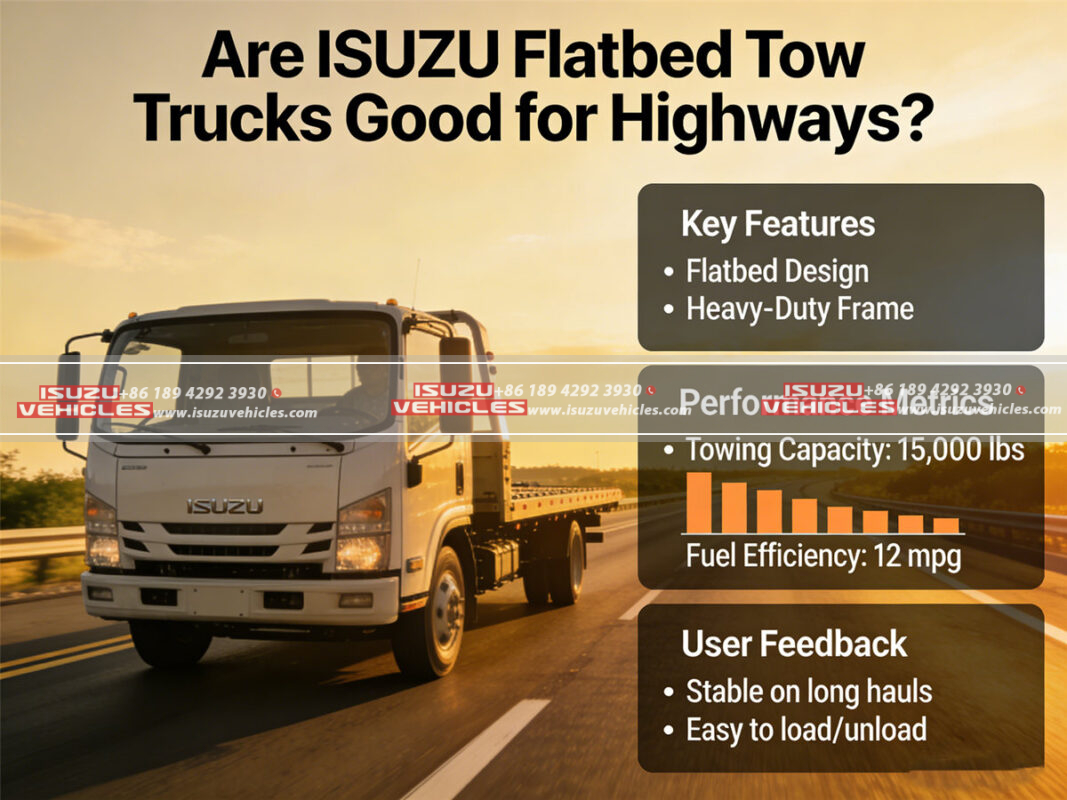
Understanding the Demands of Highway Towing Operations
Highway towing is a specialized segment of the roadside assistance and vehicle recovery industry, and it operates under a unique set of pressures that differ significantly from urban or short-distance towing services, because operators must respond quickly to incidents occurring at high speeds, manage disabled vehicles in active traffic lanes, and transport recovered assets safely over extended highway distances without compromising stability or safety. When fleet managers and independent operators evaluate equipment for this environment, a recurring and practical question emerges: are ISUZU flatbed tow trucks truly suitable for sustained highway operations?
The answer requires more than a simple yes or no response, because highway suitability depends on multiple interconnected factors, including chassis stability at speed, engine performance under load, braking capability, bed construction integrity, driver ergonomics, and long-term maintenance reliability. A tow truck that performs well on city streets may not necessarily deliver the same level of confidence when traveling at sustained highway speeds while carrying a mid-size SUV or light commercial vehicle on its bed.
ISUZU’s commercial chassis platforms are widely recognized for durability and balanced engineering, making them popular foundations for flatbed tow body installations. However, to determine whether they are genuinely well-suited for highway use, it is essential to analyze both mechanical performance and operational realities in depth.
Chassis Stability and High-Speed Performance
The foundation of any flatbed tow truck designed for highway service lies in its chassis engineering, because at elevated speeds even minor imbalances can compromise safety and handling.
Frame Strength and Structural Integrity
ISUZU flatbed tow trucks are typically built on medium-duty chassis platforms that feature reinforced frame rails designed to support significant payloads. When transporting a disabled passenger vehicle or light commercial van, the structural integrity of the chassis must absorb not only static weight but also dynamic forces generated during acceleration, braking, and lane changes.
On highways, these dynamic forces are amplified, particularly when sudden maneuvers are required to avoid obstacles or adjust to traffic conditions. A rigid frame minimizes torsional flex, which in turn enhances steering responsiveness and overall stability.
Suspension and Ride Control
Suspension performance plays a critical role in highway suitability. ISUZU platforms are engineered to balance payload capacity with ride comfort, utilizing heavy-duty leaf springs or advanced suspension configurations depending on model specifications. Proper suspension tuning reduces excessive body roll and mitigates vibration transfer from road surfaces to the bed assembly.
For towing operators who routinely travel long distances between service calls, reduced vibration also contributes to driver comfort and equipment longevity.
Engine Performance and Load Management
A flatbed tow truck operating on highways must maintain consistent speed under load without overtaxing the powertrain, particularly when transporting heavier vehicles across inclines or in challenging weather conditions.
Torque Delivery and Acceleration
ISUZU diesel engines are known for delivering strong low- to mid-range torque, which is particularly advantageous when merging onto highways with a loaded bed. Smooth acceleration under load reduces mechanical strain and allows drivers to integrate safely into fast-moving traffic.
In addition, sustained torque performance supports steady cruising speeds, minimizing the need for excessive gear shifting or engine strain during long hauls.
Cooling Systems and Thermal Stability
Highway towing often involves extended travel durations, especially when transporting vehicles to distant repair facilities. Efficient cooling systems ensure that engine temperatures remain stable even under continuous load conditions. This reliability reduces the likelihood of overheating incidents that could delay service and disrupt operational schedules.
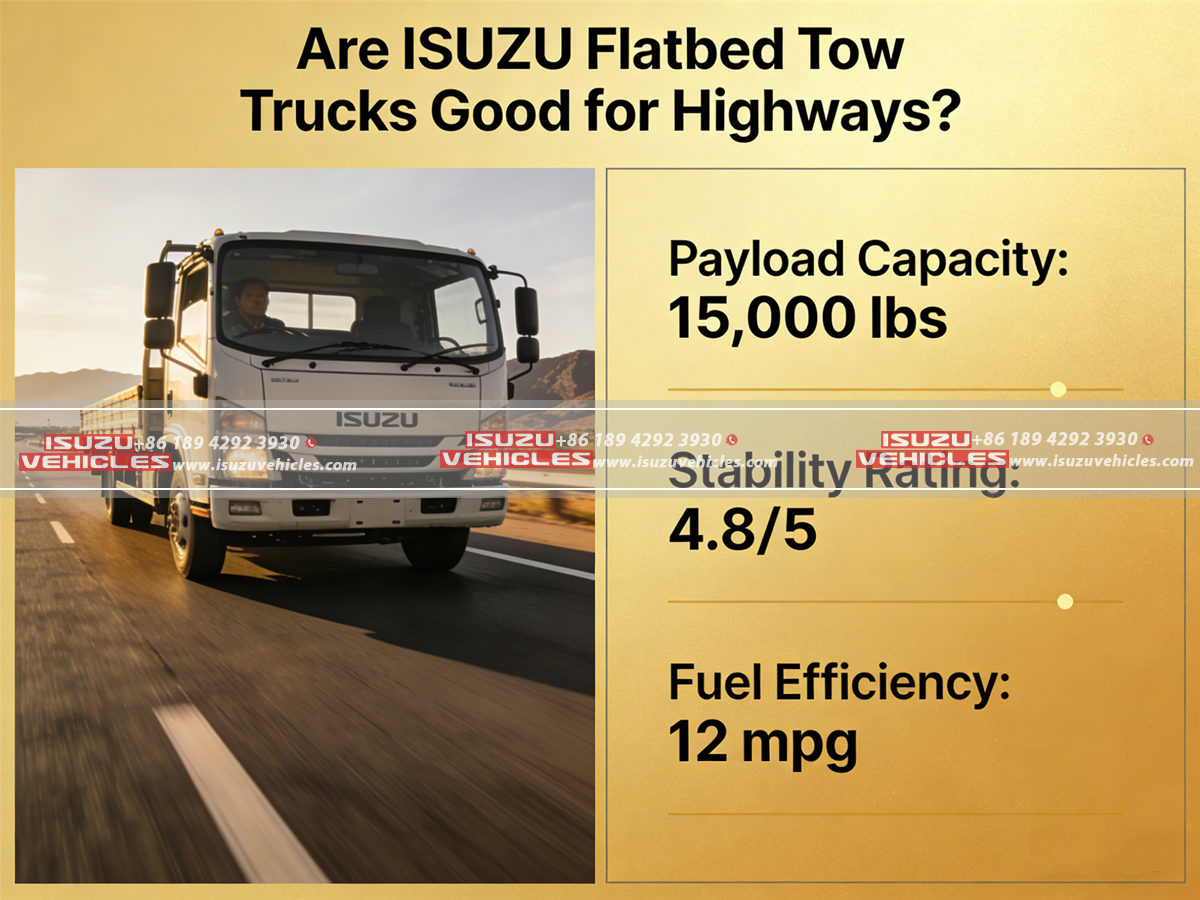
Flatbed Construction and Load Security
While the chassis and engine provide mobility, the flatbed assembly itself is central to highway safety, because improperly secured or unstable loads can create hazardous situations at high speeds.
Bed Material and Structural Reinforcement
Flatbeds mounted on ISUZU chassis platforms are commonly constructed from high-strength steel or aluminum alloy, each offering distinct advantages in terms of weight and durability. Reinforced cross-members and non-slip deck surfaces enhance load stability, ensuring that transported vehicles remain secure throughout transit.
Hydraulic tilt and winch systems must operate smoothly and reliably, particularly during roadside recovery scenarios where rapid loading is required to minimize traffic disruption.
Tie-Down Systems and Compliance
Highway regulations typically require securement systems that meet specific load rating standards. Heavy-duty straps, wheel nets, and anchor points must be properly rated for the vehicles being transported. ISUZU-based flatbed configurations are frequently equipped with certified tie-down systems that align with regulatory guidelines, supporting both safety and legal compliance.
Braking Systems and Highway Safety Features
Towing at highway speeds demands exceptional braking performance, especially when factoring in the additional weight of a loaded vehicle.
Anti-Lock Braking Systems and Stability Control
Modern ISUZU tow truck chassis commonly integrate anti-lock braking systems (ABS), which prevent wheel lockup during sudden stops. When combined with well-calibrated suspension systems, ABS enhances control and reduces stopping distances under emergency conditions.
Electronic stability features, where available, further support driver confidence by minimizing skid risk on wet or uneven highway surfaces.
Visibility and Warning Equipment
Highway towing frequently involves operating in low-visibility conditions, such as nighttime breakdowns or adverse weather. Adequate lighting, reflective markings, and rooftop warning systems are critical to alert approaching drivers. ISUZU platforms provide sufficient electrical capacity to power auxiliary lighting systems without compromising performance.
Driver Comfort and Operational Endurance
Highway towing is not solely about mechanical capability; it also demands sustained driver focus over long periods, often in stressful environments.
Ergonomic Cab Design
ISUZU cabs are generally designed with driver ergonomics in mind, offering adjustable seating, intuitive dashboard layouts, and climate control systems that contribute to reduced fatigue. For operators covering extensive highway distances, a comfortable driving environment enhances concentration and safety.
Noise insulation and vibration dampening further improve the overall driving experience, which is particularly valuable during extended service shifts.
Technology Integration
Modern tow operations may incorporate GPS tracking, dispatch communication systems, and onboard diagnostics. ISUZU chassis platforms are compatible with these technologies, enabling fleet managers to monitor performance metrics and optimize route planning.
Maintenance Considerations and Long-Term Reliability
Highway suitability must be evaluated not only in terms of immediate performance but also in relation to long-term durability and cost management.
Service Accessibility and Downtime Reduction
ISUZU’s widespread service network and parts availability contribute to reduced downtime, an essential factor for towing companies that rely on consistent vehicle availability. Routine maintenance for engines, hydraulic systems, and braking components ensures that flatbed tow trucks remain roadworthy and compliant with safety regulations.
Resale Value and Fleet Investment Strategy
Tow truck operators often cycle vehicles based on mileage and wear patterns. Chassis platforms known for reliability tend to retain stronger resale value, supporting sustainable fleet renewal strategies.
Strategic Role Within a Diversified Service Fleet
Flatbed tow trucks represent just one component of a comprehensive roadside and industrial service fleet. In many operations, these vehicles work alongside specialized assets such as a crane truck for heavy recoveries or a Bucket truck for elevated utility repairs. By selecting durable platforms from ISUZU Vehicles, towing companies can integrate reliable flatbed units into broader service portfolios, ensuring that highway recovery operations remain efficient, safe, and financially sustainable over the long term.