
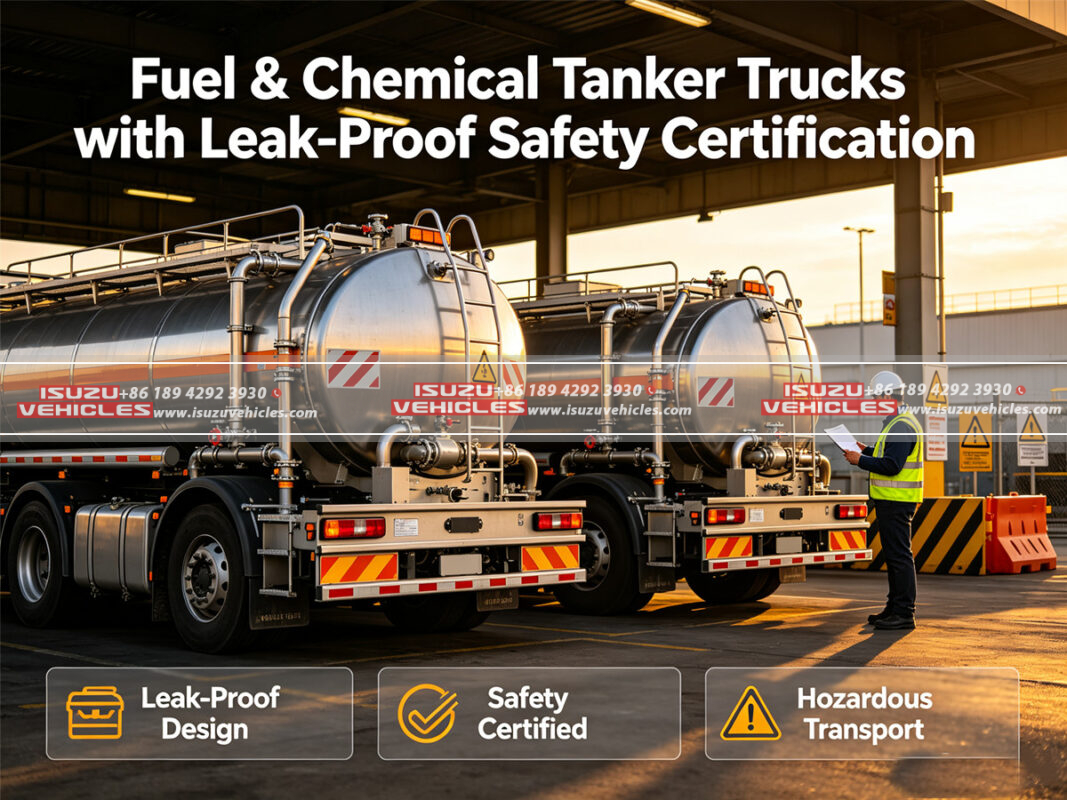
The Importance of Safe Liquid Transportation in Modern Industries
The transportation of fuel, chemicals, and other industrial liquids plays a critical role in supporting global manufacturing, energy supply chains, construction projects, agriculture, and emergency services. Unlike ordinary cargo transportation, liquid chemical and fuel transport requires specialized vehicles capable of preventing leakage, controlling pressure, and maintaining safety throughout the entire journey. A small failure in a tanker system can result in serious environmental damage, financial losses, and safety risks, which is why professional industries rely on advanced tanker solutions with strict quality and safety standards.
A Fuel & Chemical Tanker Truck is specifically designed to transport hazardous and non-hazardous liquids safely by combining a reinforced truck chassis, specially engineered tank body, reliable pumping equipment, and advanced safety protection systems. These vehicles are not simply trucks carrying liquid containers; they are complete transportation systems designed around risk prevention, operational stability, and long-term reliability.
Modern tanker trucks are commonly required to meet leak-proof standards and safety certifications that verify the integrity of the tank structure, valves, pipelines, and pressure control systems. These certifications help ensure that the vehicle can operate safely under different road conditions, temperature changes, and transportation distances.
Built on the trusted commercial vehicle foundation of ISUZU, ISUZU tanker trucks are widely used for fuel delivery, chemical transportation, industrial supply, and municipal applications. Their combination of durable chassis performance and adaptable tank configurations allows businesses to select suitable solutions according to specific liquid transportation requirements.
How Fuel & Chemical Tanker Trucks Achieve Leak-Proof Safety Performance
The most important requirement for any tanker truck is preventing leakage during loading, transportation, and unloading. Achieving this level of safety requires careful engineering throughout every part of the vehicle.
Advanced Tank Body Design and Material Selection
The tank body is the primary component responsible for containing fuel or chemicals, so its structure must provide excellent strength, corrosion resistance, and durability. Depending on the transported liquid, tanker bodies may use materials such as carbon steel, stainless steel, or aluminum alloy to achieve the required chemical resistance and weight balance.
For fuel transportation, the tank must withstand vibration, pressure changes, and repeated loading cycles. For chemical transportation, additional protection against corrosion and chemical reactions becomes essential.
The internal structure of professional tanker trucks is also carefully designed with reinforcement systems and anti-wave plates. These internal partitions reduce liquid movement during acceleration, braking, and turning, helping maintain vehicle stability and reducing stress on the tank walls.
Precision Welding and Sealing Technology
Leak prevention begins during the manufacturing process. High-quality tanker trucks use precision welding techniques to create strong and continuous joints throughout the tank structure.
After welding, tanks undergo inspection procedures to verify structural integrity and ensure there are no weak points that could lead to leakage. Sealing systems around valves, pipelines, and access openings are also carefully designed to prevent liquid escape.
This attention to detail is particularly important for chemical transportation because even small leaks can create environmental hazards or workplace safety concerns.
Safety Certification and Protection Systems for Tanker Truck Operations
Safety certification is a key factor when selecting a fuel or chemical tanker truck because it demonstrates that the vehicle has been tested according to specific technical and operational requirements.
Pressure Testing and Tank Inspection Standards
Professional tanker trucks undergo pressure testing procedures to verify that the tank can safely handle internal forces during transportation. These tests evaluate the strength of the tank body, weld quality, and sealing performance.
Inspection processes may include:
- Tank pressure testing
- Valve performance checks
- Pipeline inspection
- Structural integrity evaluation
- Emergency system verification
These procedures help confirm that the tanker can safely operate under real-world conditions.
Emergency Shut-Off and Safety Control Systems
Fuel and chemical tanker trucks are equipped with safety systems designed to reduce risks during unexpected situations. Emergency shut-off valves allow operators to quickly stop liquid flow if a problem occurs during loading or unloading.
Additional safety features may include anti-static grounding systems, fire protection equipment, pressure relief devices, and secure locking mechanisms for filling openings.
These systems are especially important when transporting flammable materials, where preventing ignition sources and controlling potential hazards are critical.
Operational Advantages of ISUZU Fuel and Chemical Tanker Trucks
Beyond safety, tanker trucks must also provide reliable operational performance because many industries depend on a continuous liquid supply. A well-designed tanker improves transportation efficiency while reducing maintenance requirements.
Reliable Chassis Performance for Heavy Liquid Loads
Liquid transportation creates unique challenges because the weight distribution changes as the tank is filled or emptied. A strong truck chassis is necessary to maintain stability and handling performance.
ISUZU tanker trucks are built with durable commercial chassis structures designed to support heavy payloads while maintaining driving comfort and reliability. The suspension system, braking system, and drivetrain are optimized for continuous operation under demanding conditions.
This makes them suitable for long-distance transportation routes, industrial supply operations, and regional distribution networks.
Efficient Pumping and Unloading Systems
A tanker truck must not only transport liquids but also provide efficient loading and unloading capabilities. Pump systems allow operators to transfer fuel, chemicals, or other liquids quickly and safely.
Modern systems provide controlled flow rates, reducing the risk of spills during transfer operations. Operators can manage the process through dedicated control systems that improve accuracy and reduce manual handling requirements.
Applications of Fuel and Chemical Tanker Trucks Across Different Industries
Fuel and chemical tanker trucks support a wide range of industries because many sectors depend on safe and reliable liquid transportation.
Energy and Fuel Distribution
Fuel tanker trucks are essential for transporting gasoline, diesel, aviation fuel, and other petroleum products from storage facilities to service stations, construction sites, factories, and commercial users.
Because fuel is highly sensitive to ignition risks, transportation vehicles must include strict safety features such as grounding systems, secure valves, and fire prevention measures.
Industrial Chemical Supply
Chemical industries require specialized tanker trucks to transport materials used in manufacturing, agriculture, mining, and processing operations. Different chemicals may require different tank materials, insulation systems, or protective coatings.
The flexibility of tanker truck configurations allows businesses to select vehicles suitable for specific chemical properties and transportation conditions.
Maintenance Practices for Long-Term Tanker Truck Safety
Regular maintenance is essential for keeping tanker trucks safe and reliable throughout their service life. Since these vehicles transport potentially hazardous materials, preventive inspection is more important than simply repairing problems after failure occurs.
Tank and Pipeline Inspection
The tank body, valves, and pipelines should be inspected regularly to identify corrosion, cracks, or sealing problems. Early detection helps prevent unexpected leakage and extends the service life of the vehicle.
Cleaning procedures are also important because chemical residue or fuel deposits can affect tank performance over time.
Chassis and Mechanical Maintenance
The truck chassis requires regular inspection of engine performance, braking systems, suspension components, and tires. A tanker truck carrying heavy liquid loads places significant stress on mechanical systems, making preventive maintenance essential.
Proper maintenance improves safety, reduces downtime, and helps businesses achieve better operational efficiency.
Future Development of Safer Tanker Transportation Solutions
As industries continue to focus on environmental protection and workplace safety, fuel and chemical tanker trucks are becoming increasingly advanced. Future developments are expected to include smarter monitoring systems, improved leak detection technology, automated safety controls, and more efficient fuel consumption.
Digital monitoring systems can provide real-time information about tank conditions, vehicle location, and operating status, allowing fleet managers to improve safety management and transportation efficiency.
In specialized emergency and municipal operations, tanker trucks may also work together with other professional vehicles. For example, a fire truck provides emergency response and fire suppression capabilities, while a sprinkler truck supports water distribution, dust control, and public maintenance tasks. These vehicles complement each other in industrial areas, cities, and large infrastructure projects.
With strong engineering, reliable safety systems, and flexible transportation solutions, ISUZU Vehicles continue to support industries that require secure fuel and chemical transportation, providing dependable performance for energy distribution, industrial supply chains, and specialized liquid transport operations around the world.