
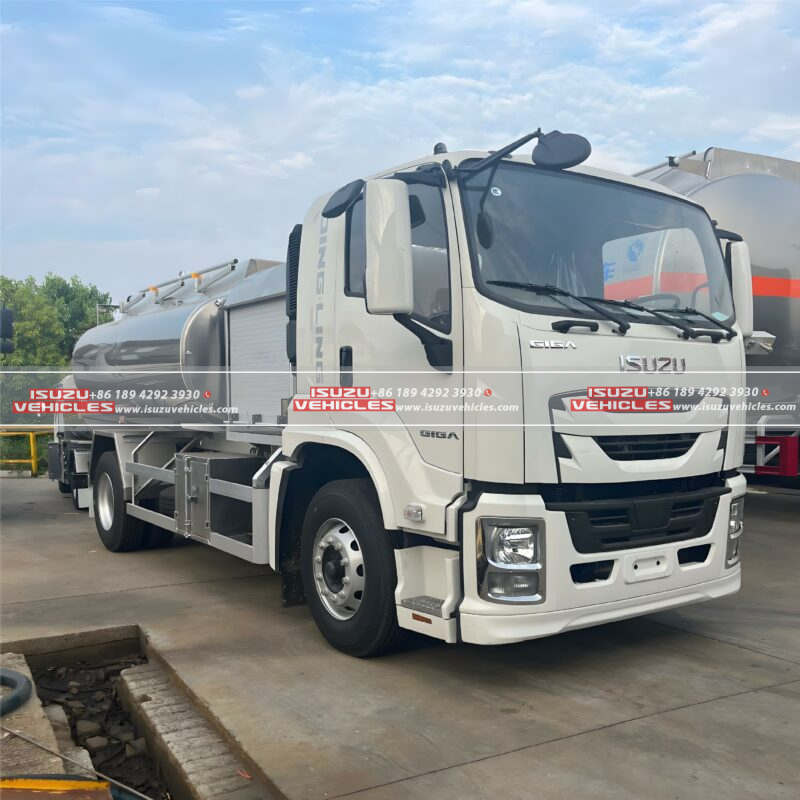
As Guyana’s transformative offshore oil boom continues to generate unprecedented national revenue and rapid economic expansion, the critical challenge of efficiently and safely distributing refined petroleum products across its diverse mainland terrain – encompassing dense coastal rainforests, major river systems, and newly developing industrial zones – is being decisively addressed through the strategic deployment of a sophisticated fleet of ISUZU tanker trucks. This vital initiative, born from a landmark contract between ISUZU Vehicles and the Guyana Energy Logistics Consortium (GELC), a major local entity formed specifically to manage the country’s escalating energy logistics demands, represents a multi-million-dollar investment designed to eliminate dangerous fuel bottlenecks, ensure nationwide supply security, and underpin the sustained growth of key sectors ranging from transportation and construction to power generation and burgeoning industrial operations. The deployment of these specialized ISUZU vehicles directly tackles the logistical complexities inherent in servicing remote mining outposts, burgeoning coastal urban centers, and critical agricultural regions, thereby transforming fuel accessibility from a persistent constraint into a reliable driver of Guyana’s accelerating development.
Section 1: The Fuel Imperative – Logistics as the Linchpin of Guyana’s Oil Boom
Guyana’s ascent as a global oil powerhouse, driven by massive offshore discoveries exceeding 11 billion barrels of recoverable resources, has propelled its economy to the forefront of global growth rankings. However, translating offshore crude wealth into tangible, on-the-ground economic progress hinges critically on the nation’s ability to establish and maintain a resilient, high-capacity domestic distribution network for refined fuels like gasoline, diesel, and aviation kerosene, essential lifeblood commodities for virtually every sector of the rapidly modernizing economy. Prior infrastructure, designed for a pre-oil era of modest demand, proved woefully inadequate, resulting in sporadic shortages that hampered mining operations in the interior, delayed crucial infrastructure projects, strained public transportation in cities like Georgetown and Linden, and inflated operational costs for businesses nationwide. The geographical hurdles are significant: vast distances separating the primary fuel storage terminals on the coast from consumers in the resource-rich hinterlands; road networks traversing challenging environments prone to seasonal flooding and requiring robust vehicle capability; and the absolute necessity for uncompromising safety standards when transporting highly flammable materials across varied and often demanding routes. Without a quantum leap in distribution capacity and reliability, the immense potential of the oil boom risked being undermined by an inability to deliver its most fundamental downstream products efficiently and safely to the points of consumption.
Section 2: The ISUZU Tanker Fleet – Precision Engineering for Safe, Efficient Fuel Logistics
The partnership between ISUZU Vehicles and GELC has centered on the deployment of a purpose-built fleet of ISUZU tanker trucks, meticulously configured to meet the exacting requirements of Guyana’s unique operating environment and stringent safety regulations governing hazardous material transport. These are not merely standard trucks adapted for tanker bodies; they represent integrated solutions where the renowned durability, reliability, and performance of the ISUZU chassis platform are seamlessly combined with state-of-the-art, safety-certified tanker bodies and advanced monitoring systems, creating a distribution backbone engineered for maximum uptime, payload efficiency, and incident prevention. The operational superiority of the fleet stems from several key design and implementation pillars:
- Uncompromising Safety Integration: Foremost in the fleet specification was the integration of advanced safety technologies, including cutting-edge roll stability control (RSC) systems specifically calibrated for high-center-of-gravity tankers, electronic braking systems (EBS) with load-sensing capability for optimal stopping power regardless of fuel level, and comprehensive anti-lock braking systems (ABS) ensuring directional stability during emergency maneuvers on potentially slippery surfaces. The tanker bodies themselves are constructed from specialized materials meeting the highest international safety standards (e.g., ASME, DOT), featuring critical safety valves, vapor recovery systems to minimize emissions during loading and unloading, robust internal baffle systems to control dangerous liquid surge, and advanced grounding systems to eliminate static discharge risks. Driver training, developed jointly by ISUZU specialists and GELC safety officers, emphasizes rigorous protocols for handling hazardous materials, defensive driving techniques for Guyana’s varied road conditions, and emergency response procedures.
- Optimized Payload Capacity and Fuel Integrity: Leveraging the high-strength steel frames and powerful, fuel-efficient ISUZU diesel engines – engineered to deliver consistent torque even in high ambient temperatures and humidity – the fleet maximizes legal payload capacity per trip, directly translating into fewer vehicle movements and reduced overall logistics costs for meeting Guyana’s soaring fuel demand. Furthermore, specialized interior coatings and dedicated compartmentalization within the tankers ensure the purity of different fuel grades (e.g., preventing gasoline contamination in diesel compartments) and protect against corrosion, crucial for maintaining the stringent quality standards demanded by modern engines and industrial equipment operating within Guyana’s developing sectors.
- Enhanced Operational Control and Efficiency: Each ISUZU tanker truck is equipped with integrated telematics systems providing GELC’s central command center with real-time data on vehicle location, speed, fuel levels, driving behavior, and critical system health parameters, enabling dynamic route optimization to bypass congestion or hazards, precise scheduling for depot loading and customer deliveries, and proactive maintenance scheduling based on actual usage patterns. This digital oversight significantly enhances fleet utilization rates, minimizes unplanned downtime through predictive maintenance alerts, and provides auditable data trails for compliance with stringent regulatory reporting requirements for hazardous goods transport.
Section 3: Fueling Sustainable Growth and Future Expansion
The impact of the ISUZU tanker fleet, now fully operational and managed by GELC, extends far beyond the immediate task of moving fuel from terminals to consumers. By establishing a demonstrably reliable, high-capacity distribution network, the initiative has instilled confidence across Guyana’s economy, enabling mining companies to plan large-scale operations in the interior with certainty regarding fuel supply, empowering construction firms to accelerate vital national infrastructure projects without fear of debilitating delays due to diesel shortages, and ensuring public transportation networks and essential services can operate consistently. The enhanced efficiency and safety record of the fleet directly contribute to stabilizing fuel prices by reducing the frequency and impact of supply disruptions that previously led to costly spikes, while the increased reach ensures remote communities and agricultural producers gain improved access to essential energy sources, fostering more equitable development. The resounding success of the initial tanker deployment has solidified the ISUZU-GELC partnership, with the existing contract framework explicitly accommodating future fleet expansion and diversification; plans are already advanced to integrate additional heavy-duty ISUZU GIGA truck chassis configured for even larger capacity fuel transport and specialized applications, while the proven capability of ISUZU dump truck models is being actively evaluated for supporting the massive earthmoving and construction activities directly fueled by the nation’s oil wealth, ensuring ISUZU’s robust platforms remain central to Guyana’s ongoing transformation. This strategic logistics infrastructure forms the indispensable circulatory system that allows the lifeblood of Guyana’s oil boom – refined petroleum products – to flow reliably and safely to every sector demanding its power, thereby cementing the foundation for sustained national progress and prosperity.