
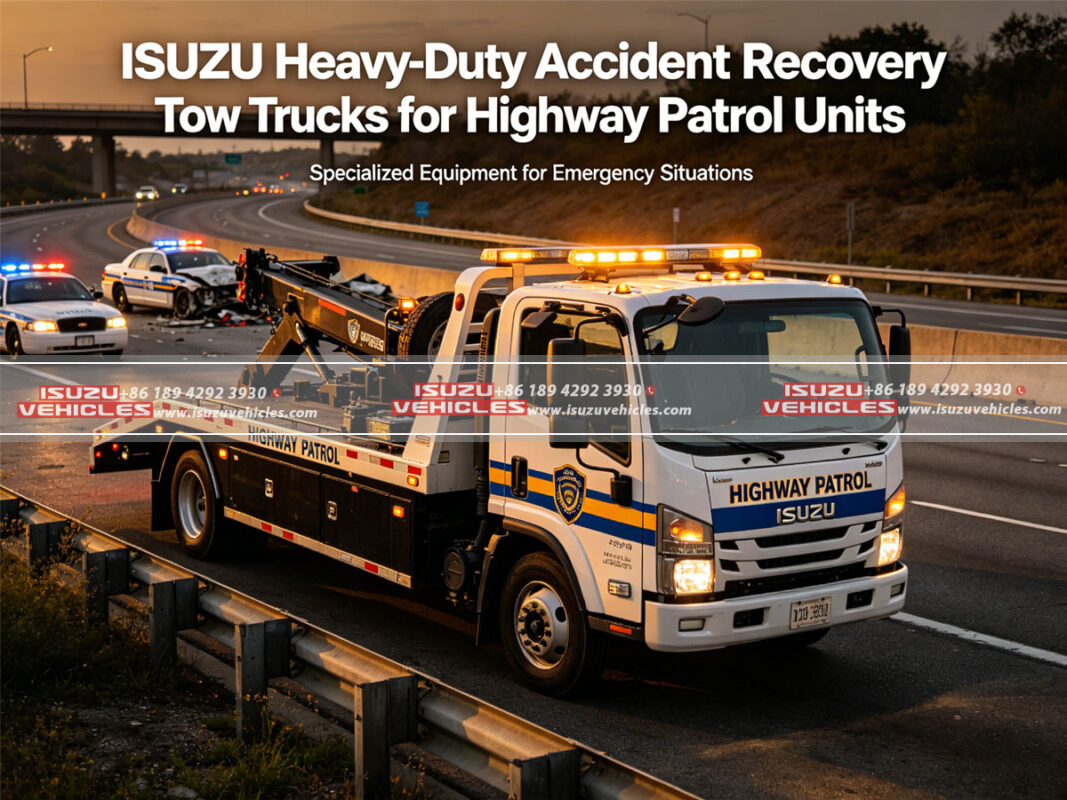
The Critical Role of Accident Recovery in Highway Safety
Highways are the arteries of modern transportation systems, supporting the continuous movement of goods and people across vast distances, yet they are also environments where high speeds and heavy traffic volumes can lead to serious accidents that require immediate and efficient response. When collisions occur, especially those involving large commercial vehicles, the complexity of recovery operations increases significantly, making specialized equipment an essential part of highway patrol and emergency management strategies.
Among the most vital assets in these situations are heavy-duty tow trucks, which are specifically designed to handle large-scale recovery tasks with precision and reliability. These vehicles not only assist in clearing accident scenes quickly but also play a key role in restoring traffic flow, minimizing disruptions, and ensuring the safety of both responders and road users.
Understanding Heavy-Duty Accident Recovery Tow Trucks
Heavy-duty accident recovery tow trucks are engineered to manage the most demanding recovery scenarios, including overturned trucks, multi-vehicle collisions, and incidents involving buses or other large vehicles. Unlike standard towing vehicles, these trucks are equipped with powerful winches, reinforced booms, and advanced stabilization systems that allow them to lift, pull, and transport heavy loads safely.
Their design reflects the need for versatility and strength, as recovery operations often take place in challenging conditions such as uneven terrain, adverse weather, or confined spaces on busy highways. The ability to adapt to these conditions while maintaining operational efficiency is what sets heavy-duty tow trucks apart from conventional towing solutions.
In addition to their mechanical capabilities, these trucks are often equipped with specialized tools and equipment that support a wide range of recovery tasks, from debris removal to vehicle stabilization, making them indispensable for highway patrol units.
Key Features That Define Performance and Reliability
The effectiveness of heavy-duty tow trucks lies in their ability to combine power, control, and durability into a single platform that can handle complex recovery operations without compromising safety.
High-Capacity Winching Systems
At the core of these trucks are powerful winching systems capable of exerting significant pulling force, which is essential for recovering overturned or immobilized vehicles. These systems are designed for precision, allowing operators to control the speed and direction of the pull with accuracy.
The reliability of the winch is critical, as it directly impacts the success of recovery operations and the safety of the surrounding environment.
Rotator Booms and Lifting Mechanisms
Many heavy-duty tow trucks are equipped with rotator booms that provide 360-degree lifting capability, enabling operators to recover vehicles from difficult angles without repositioning the truck. This feature is particularly valuable in tight or congested areas where maneuverability is limited.
Advanced lifting mechanisms also allow for the safe handling of heavy loads, reducing the risk of further damage to vehicles or infrastructure during recovery.
Stabilization and Safety Systems
To ensure safe operation, these trucks are fitted with outriggers and stabilization systems that provide a secure base during lifting and pulling activities. These systems are essential for maintaining balance and preventing tipping, especially when handling uneven or heavy loads.
Additional safety features, such as load monitoring systems and emergency shut-off controls, further enhance operational security.
Operational Advantages for Highway Patrol Units
For highway patrol units, the ability to respond quickly and effectively to accidents is crucial, and heavy-duty tow trucks provide a range of advantages that support this objective.
Rapid Scene Clearance
One of the primary goals of accident recovery is to clear the scene as quickly as possible to restore normal traffic flow. Heavy-duty tow trucks enable rapid removal of damaged vehicles, reducing congestion and minimizing the risk of secondary accidents.
Their efficiency is particularly important on busy highways, where delays can have widespread impacts on transportation networks.
Versatility in Complex Scenarios
Accident scenes can vary greatly in complexity, from simple breakdowns to multi-vehicle collisions involving hazardous materials. Heavy-duty tow trucks are designed to handle a wide range of scenarios, providing the flexibility needed to address different challenges effectively.
This versatility allows highway patrol units to rely on a single type of vehicle for multiple recovery tasks, simplifying fleet management.
Enhanced Safety for Responders
By reducing the need for manual intervention and providing controlled recovery processes, these trucks help protect responders from potential hazards. Operators can perform most tasks from a safe distance, minimizing exposure to traffic and other risks.
This focus on safety is essential for maintaining the well-being of personnel involved in recovery operations.
Integration with Emergency Response Systems
Heavy-duty tow trucks are not standalone assets but are integrated into broader emergency response systems that include law enforcement, fire services, and medical teams.
Coordination with First Responders
Effective accident recovery requires seamless coordination between different agencies, and tow truck operators often work closely with first responders to secure the scene and prioritize tasks. This collaboration ensures that recovery operations are carried out efficiently and without interfering with medical or investigative activities.
Clear communication and well-defined protocols are key to successful coordination.
Support for Incident Management
In addition to vehicle recovery, heavy-duty tow trucks contribute to overall incident management by assisting with traffic control, debris removal, and hazard mitigation. Their presence helps create a safer environment for all parties involved.
This multifaceted role highlights their importance in comprehensive emergency response strategies.
Use of Advanced Technology
Modern tow trucks are increasingly equipped with technology such as GPS tracking, real-time communication systems, and data logging capabilities, which enhance coordination and improve operational efficiency. These tools enable better decision-making and allow for more effective management of resources.
Technology integration also supports training and performance evaluation, contributing to continuous improvement.
Future Trends in Heavy-Duty Tow Truck Design
As transportation systems evolve and new challenges emerge, the design and functionality of heavy-duty tow trucks continue to advance, reflecting the need for greater efficiency, safety, and sustainability.
Automation and Remote Operation
Emerging technologies are paving the way for increased automation in recovery operations, including remote-controlled winching and lifting systems that allow operators to maintain a safe distance from hazardous situations. These innovations have the potential to further enhance safety and precision.
Automation also opens new possibilities for handling complex recoveries with greater efficiency.
Sustainability and Fuel Efficiency
Environmental considerations are influencing the development of more fuel-efficient engines and alternative power sources for heavy-duty tow trucks. These advancements help reduce emissions and operating costs while maintaining high performance standards.
Sustainable practices are becoming an integral part of modern fleet management.
Improved Ergonomics and Operator Support
Advances in cabin design and control systems are improving the overall operator experience, making it easier to manage complex equipment and reducing fatigue during long shifts. Enhanced visibility and intuitive controls contribute to safer and more efficient operations.
In the broader landscape of highway and municipal support fleets, heavy-duty accident recovery tow trucks serve as a cornerstone of effective incident management, working in coordination with specialized vehicles such as a crane truck for heavy lifting or a cherry picker truck for elevated access tasks, all of which contribute to a cohesive system often supported by the reliability and engineering excellence associated with ISUZU Vehicles.