
The Critical Importance of Spill Prevention in Fuel Transportation
Transporting fuel is an operation that combines logistical precision with uncompromising safety responsibility, because even a minor spill can result in significant environmental damage, regulatory penalties, operational downtime, and reputational harm for the carrier involved. For fleet managers and fuel distribution companies, understanding how ISUZU fuel tankers are engineered to prevent spills is not simply a matter of technical curiosity, but a central component of risk management and compliance strategy. Fuel—whether diesel, gasoline, aviation fuel, or other petroleum products—is highly flammable and environmentally sensitive, which means that every aspect of tanker design must prioritize containment integrity under both routine and emergency conditions.
Spill prevention begins long before a vehicle leaves the depot, as it is embedded into the structural design of the tank, the selection of materials, the configuration of compartments, and the integration of safety valves and monitoring systems. While the chassis provides mobility and structural support, the tanker assembly itself is a specialized system engineered to maintain containment even when subjected to vibration, acceleration, braking, temperature variation, and occasional abrupt maneuvers. ISUZU’s commercial chassis platforms, widely used across fuel distribution sectors, provide a stable and durable foundation upon which certified tanker bodies are installed, ensuring that spill prevention is supported at both structural and operational levels.
Tank Construction and Structural Integrity
The first and most fundamental layer of spill prevention in a fuel tanker lies in the physical construction of the tank itself, which must withstand internal pressure fluctuations, external impact forces, and long-term exposure to petroleum products without degradation.
High-Strength Materials and Welded Seams
Fuel tanks mounted on ISUZU chassis platforms are typically constructed from carbon steel, aluminum alloy, or stainless steel, depending on the intended cargo and regulatory environment. These materials are selected not only for their strength-to-weight ratio but also for their corrosion resistance and compatibility with various fuel types.
Precision welding techniques are used to create continuous, leak-resistant seams that minimize the possibility of microfractures or weak points forming over time. Quality control inspections, including pressure testing and non-destructive examination methods, are often conducted before the tanker is commissioned into service, ensuring structural integrity under operational stress.
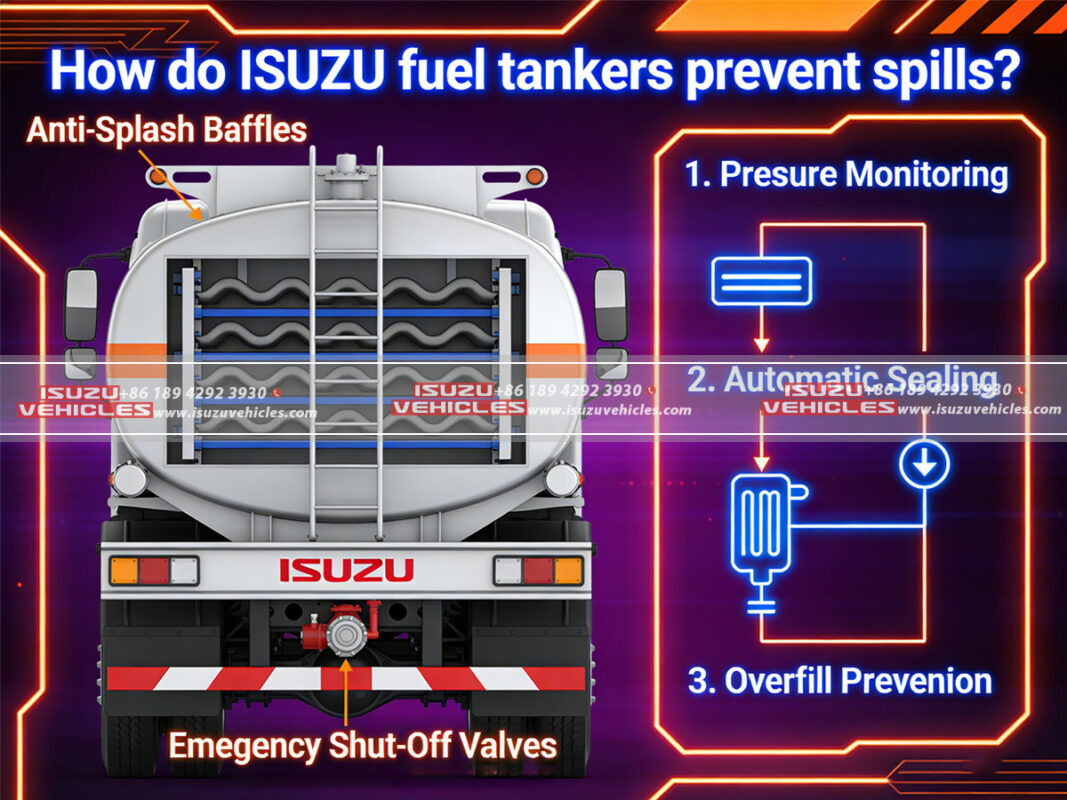
Compartmentalization and Internal Baffles
Modern tanker designs frequently incorporate multiple compartments within a single tank structure. Compartmentalization serves two purposes: it allows the transport of different fuel grades in one trip, and it reduces liquid surge during acceleration or braking.
Internal baffles play a critical role in spill prevention because uncontrolled liquid movement can generate destabilizing forces that stress tank walls and fittings. By dampening fluid motion, baffles help maintain balance and reduce the risk of structural fatigue, particularly during emergency braking scenarios.
Advanced Valve Systems and Overfill Protection
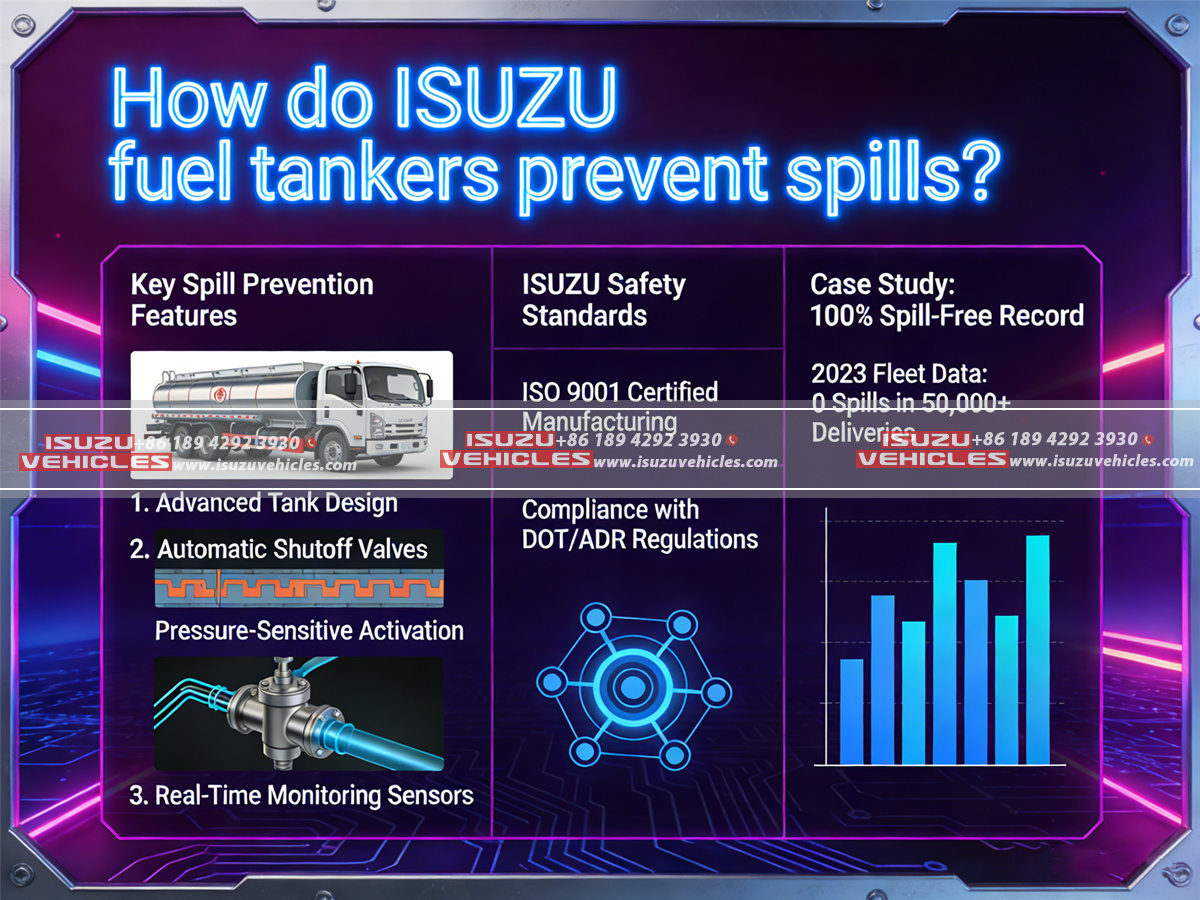
While structural integrity is essential, many fuel spills occur during loading or unloading operations rather than during transit. To address this risk, ISUZU fuel tanker configurations incorporate layered valve systems and monitoring mechanisms designed to prevent accidental overfill or discharge.
Bottom Loading and Sealed Transfer Systems
Bottom-loading configurations reduce the likelihood of splash-back and vapor release compared to traditional top-loading methods. Sealed couplings and secure hose connections ensure that fuel transfer occurs within a closed system, significantly reducing spill risk during high-volume loading operations.
Additionally, bottom discharge valves are typically protected by reinforced housings to guard against accidental impact from road debris or minor collisions, thereby preserving containment even under adverse conditions.
Overfill Sensors and Automatic Shutoff Mechanisms
Overfill prevention systems represent one of the most important safeguards against spillage. These systems use electronic sensors installed within each compartment to monitor fuel levels in real time. When fuel reaches a predetermined threshold, the system automatically signals the loading equipment to halt transfer operations, preventing overflow.
For operators managing tight delivery schedules, these automated safeguards provide both operational efficiency and regulatory compliance, reducing the likelihood of human error during high-pressure loading environments.
Chassis Stability and Dynamic Safety Features
Spill prevention is not solely about the tank body; the performance of the underlying chassis plays a decisive role in maintaining safe transport conditions. ISUZU’s medium- and heavy-duty commercial chassis platforms are engineered for load-bearing reliability, making them well-suited for tanker integration.
Weight Distribution and Center of Gravity
Fuel is heavy, and its weight shifts during transit. Proper axle configuration and balanced weight distribution are essential to maintaining a stable center of gravity. A well-engineered ISUZU chassis ensures that the tanker remains stable during cornering, braking, and highway travel.
By reducing excessive body roll and enhancing suspension responsiveness, the vehicle minimizes stress on tank mounting points, lowering the risk of structural compromise over time.
Braking and Stability Control Systems
Modern fuel tankers often integrate advanced braking systems, including anti-lock braking systems (ABS) and electronic stability control. These systems help maintain traction and prevent skidding during emergency maneuvers, which in turn reduces the probability of rollover incidents—a primary cause of major fuel spills.
The combination of reliable chassis engineering and safety control systems creates a multi-layered approach to spill prevention, ensuring that containment remains intact even when unexpected road conditions arise.
Operational Protocols and Maintenance Strategies
Even the most robust tanker design cannot prevent spills without disciplined operational practices and proactive maintenance. Fleet managers must treat spill prevention as a continuous process rather than a static design feature.
Routine Inspection and Seal Maintenance
Gaskets, seals, and valves require periodic inspection to ensure that wear and environmental exposure have not compromised their integrity. Regular maintenance schedules should include pressure testing, leak detection procedures, and valve function checks.
Preventive maintenance programs not only protect against spills but also extend the operational lifespan of the tanker, supporting long-term asset value retention.
Driver Training and Emergency Preparedness
Human factors remain one of the most significant variables in spill prevention. Comprehensive driver training programs emphasize safe loading procedures, defensive driving techniques, and emergency response protocols. Drivers should understand the dynamics of liquid cargo and how abrupt maneuvers can influence vehicle stability.
In addition, emergency spill kits and containment materials are typically carried onboard, ensuring rapid mitigation should an unforeseen incident occur.
Integrated Fleet Safety and Strategic Equipment Selection
Fuel distribution fleets rarely operate in isolation; instead, they form part of a broader commercial vehicle ecosystem that may include multiple vehicle types tailored to distinct logistical roles. A tanker truck designed for fuel transport differs fundamentally from a box truck used for dry goods delivery, yet both rely on robust chassis engineering and operational discipline to ensure safe service. By incorporating reliable platforms from ISUZU Vehicles, fleet operators can build diversified transportation strategies that prioritize containment integrity, structural resilience, and regulatory compliance, thereby reducing environmental risk while maintaining efficient fuel distribution networks across regional and national markets.