
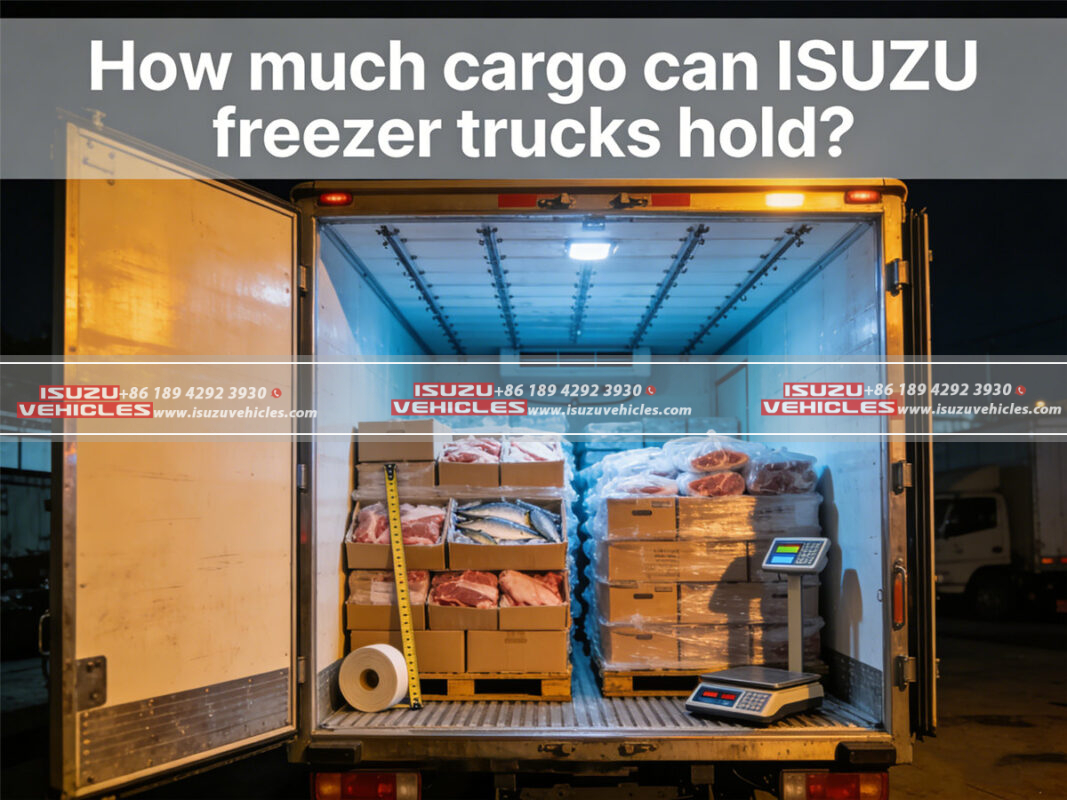
Cold-chain logistics has become an essential part of modern food distribution, pharmaceutical transportation, and temperature-sensitive product delivery. Businesses that handle frozen goods must rely on specialized vehicles capable of maintaining consistent low temperatures while transporting large quantities of cargo safely and efficiently. Among the widely used commercial vehicles in this sector, ISUZU freezer trucks are known for their reliability, practical cargo capacity, and efficient refrigeration systems.
For businesses considering a refrigerated transport vehicle, one of the most important questions is how much cargo a freezer truck can actually hold. While the refrigeration technology ensures proper temperature control, the truck’s chassis size, cargo box dimensions, payload rating, and insulation design all influence the amount of product that can be transported in a single trip.
Understanding the cargo capacity of ISUZU freezer trucks requires looking beyond simple volume measurements. The real carrying capability depends on both internal cargo space and the allowable payload weight, which together determine how efficiently a business can transport frozen products such as seafood, meat, dairy items, frozen meals, or pharmaceutical supplies.
Typical Cargo Capacity of ISUZU Freezer Trucks
The cargo capacity of a freezer truck is usually described in two different ways: cargo box volume and payload weight. Both factors must be considered when determining how much product the vehicle can realistically carry.
ISUZU produces refrigerated trucks on several chassis platforms, each designed for different transportation needs and route conditions. These trucks range from compact urban delivery vehicles to larger medium-duty trucks capable of handling regional distribution.
Typical cargo volume ranges include:
- 4–6 cubic meters for compact urban freezer trucks
- 8–12 cubic meters for medium delivery operations
- 12–20 cubic meters for larger regional distribution vehicles
In addition to cargo volume, payload capacity varies depending on the chassis model and axle configuration. Smaller vehicles may carry around 2–3 tons of frozen goods, while medium-duty models can often handle 4–8 tons of cargo.
Because frozen products are typically dense and packaged in cartons or containers, both the internal volume and the weight limit must be carefully balanced during loading.
Chassis Platforms Used in ISUZU Freezer Trucks
The cargo capacity of refrigerated vehicles is directly tied to the chassis platform used to build the truck. Different ISUZU freezer trucks are designed to meet specific transportation demands.
Light-Duty Urban Refrigerated Trucks
Smaller freezer trucks are usually built on compact chassis platforms designed for city distribution. These trucks are commonly used by restaurants, grocery suppliers, and catering companies that deliver frozen products to retail outlets or food service locations.
Typical characteristics include:
- Cargo box volume: 4–8 cubic meters
- Payload capacity: 2–3 tons
- Compact wheelbase for urban maneuverability
These trucks are particularly effective for daily deliveries where frequent stops and narrow streets require a smaller vehicle.
Medium-Duty Distribution Refrigerated Trucks
Medium-sized freezer trucks represent the most common category used in commercial cold-chain logistics. These vehicles offer significantly more cargo space while still maintaining manageable operating costs.
Typical specifications include:
- Cargo box volume: 10–15 cubic meters
- Payload capacity: 3–5 tons
- Stronger suspension and reinforced insulated body
Businesses that supply supermarkets, wholesalers, and regional retailers often rely on these trucks for reliable temperature-controlled deliveries.
Large Regional Refrigerated Transport Trucks
For long-distance distribution or large-scale logistics networks, larger ISUZU refrigerated trucks provide the highest cargo capacity. These trucks are designed to handle significant loads while maintaining consistent freezing temperatures over extended travel distances.
Typical characteristics include:
- Cargo volume: 15–20 cubic meters or more
- Payload capacity: 5–8 tons
- Powerful refrigeration units for stable temperature control
These vehicles are often used by food processing companies, seafood exporters, and pharmaceutical distributors.
Factors That Influence Cargo Capacity
Several technical factors determine how much cargo a freezer truck can safely transport. Understanding these variables helps businesses optimize loading efficiency while protecting product quality.
Insulated Body Construction
Unlike standard delivery vehicles, freezer trucks require heavily insulated cargo bodies to maintain low temperatures. The insulation panels are usually constructed with layers of polyurethane foam sandwiched between fiberglass or aluminum walls.
Although insulation is essential for temperature stability, it slightly reduces the usable interior space compared with a standard cargo vehicle of the same external dimensions.
Refrigeration System Size
The refrigeration unit installed on the truck also influences cargo capacity. Larger cooling units are often required for bigger cargo compartments or for transporting goods at extremely low temperatures.
These refrigeration systems add additional weight to the vehicle, which slightly reduces the allowable payload but ensures reliable cold-chain performance.
Cargo Packaging and Palletization
Frozen goods are typically packed in cartons, crates, or palletized containers. The way cargo is arranged inside the truck affects how efficiently the available space is used.
Palletized cargo improves loading speed and protects products during transport, but it can reduce total volume utilization due to pallet spacing and airflow requirements needed for proper cooling circulation.
Temperature Control and Storage Efficiency
Maintaining proper temperature is just as important as maximizing cargo capacity in cold-chain logistics. Even if a freezer truck has a large cargo volume, the refrigeration system must be capable of maintaining consistent temperatures across the entire compartment.
Typical Temperature Ranges
Most ISUZU freezer trucks are designed to maintain temperatures between -18°C and -20°C, which is the standard requirement for transporting frozen foods.
Some specialized vehicles may operate at even lower temperatures for specific pharmaceutical or medical applications.
Air Circulation Design
The interior of the refrigerated cargo box is carefully designed to allow cold air to circulate around the cargo. Air channels and ventilation gaps are included to ensure that the refrigeration system cools the entire load evenly.
Overloading the cargo area or blocking airflow paths can reduce cooling efficiency, which is why proper loading procedures are important for maintaining product quality.
Applications of ISUZU Freezer Trucks
Because frozen goods are transported across many industries, ISUZU freezer trucks are used in a wide range of commercial applications.
Food distributors rely on them to deliver frozen meat, seafood, dairy products, and ready-to-eat meals to supermarkets and restaurants. Ice cream companies frequently operate fleets of smaller refrigerated trucks to supply retail stores and convenience shops.
Pharmaceutical companies also depend on refrigerated vehicles to transport temperature-sensitive vaccines, laboratory samples, and medical supplies. In these cases, maintaining consistent temperatures during transport is essential for product safety.
The flexibility of refrigerated truck bodies allows businesses to customize interior shelving, pallet systems, and cargo tracking technology depending on the type of goods being transported.
Choosing the Right Freezer Truck for Your Business
Selecting the right refrigerated vehicle involves balancing cargo capacity, route requirements, and operational efficiency. Businesses that perform short-distance deliveries in urban environments may find smaller freezer trucks sufficient for daily operations.
Companies handling larger distribution networks often prefer medium or large vehicles that can carry greater volumes of frozen goods per trip, reducing transportation costs and delivery frequency.
In many logistics operations, refrigerated vehicles work alongside other types of commercial trucks within the same fleet. For example, temperature-controlled transport vehicles may operate together with a box truck for dry goods delivery or a general cargo truck used for non-perishable products. Within these diversified fleets, ISUZU Vehicles provide reliable transportation solutions for a wide range of industries, helping businesses maintain efficient logistics operations while ensuring that temperature-sensitive cargo arrives safely and in optimal condition.