
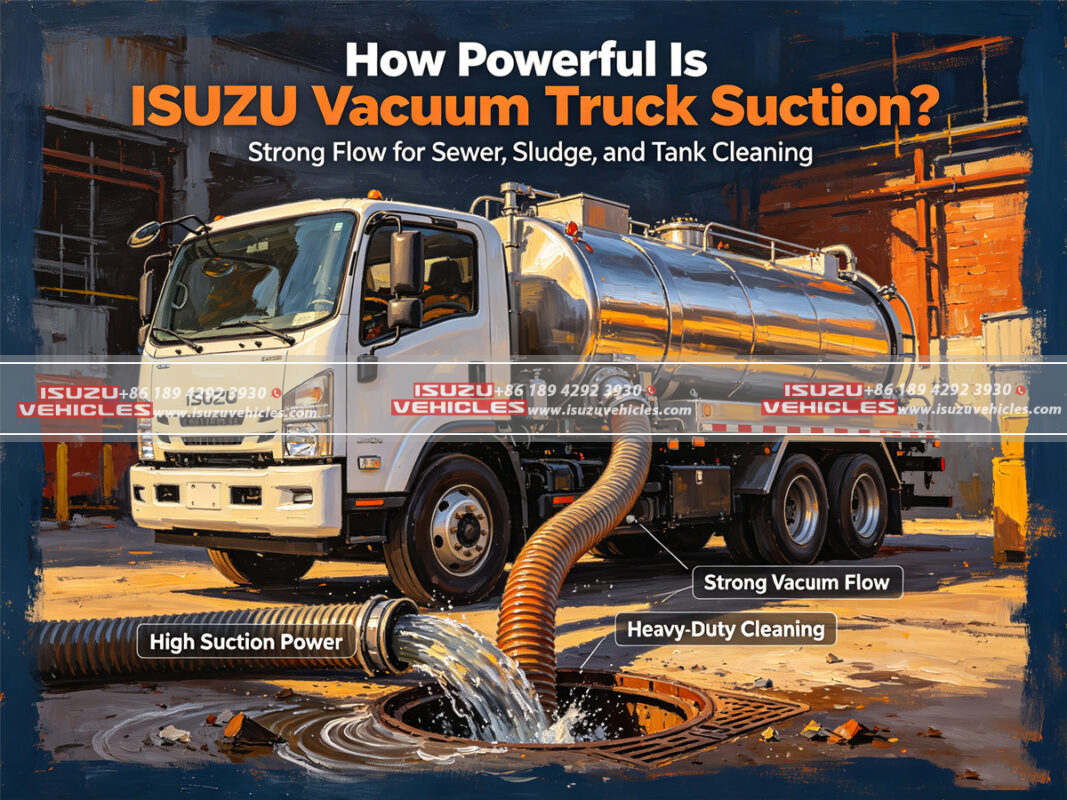
1. Understanding the Core Principle Behind ISUZU Vacuum Suction Power
The suction power of an ISUZU vacuum truck is not simply a matter of engine horsepower or pump size alone, but rather the result of a carefully engineered balance between vacuum pressure, airflow capacity, tank design, and sealing efficiency. In real-world operation, suction strength is generated by a high-performance vacuum pump that creates negative pressure inside a sealed tank, allowing atmospheric pressure to push liquid and semi-solid waste through the suction hose at remarkable speed.
At its core, the system is designed to maintain continuous airflow while sustaining strong vacuum levels, ensuring that even dense sludge, wastewater, and industrial residues can be extracted efficiently from deep or difficult environments.
Vacuum Pressure vs Airflow Balance
A key factor determining performance is the balance between vacuum pressure (measured in bar or kPa) and airflow (measured in m³/min). Higher vacuum pressure allows the truck to lift heavier and denser materials, while higher airflow ensures faster filling speed and smoother suction continuity. The ISUZU Vehicles engineering approach prioritizes optimizing both factors simultaneously rather than maximizing only one, resulting in stable and reliable suction performance under varying working conditions.
Continuous Operation Stability
Unlike basic suction systems that may experience pressure drops during prolonged operation, ISUZU vacuum systems are designed for stable, long-duration performance, which is essential for municipal and industrial cleaning tasks where downtime is costly and inefficient.
2. Vacuum Pump Technology and Engineering Strength
At the heart of suction capability lies the vacuum pump system, which determines how effectively the truck can generate and maintain negative pressure during operation.
High-Efficiency Rotary Vane or Liquid Ring Pumps
Most ISUZU vacuum trucks utilize either rotary vane or liquid ring vacuum pumps, both known for their ability to generate strong suction force while maintaining durability under harsh working conditions. These pumps are directly driven by the vehicle’s PTO (Power Take-Off) system, ensuring that engine power is efficiently transferred into vacuum performance without unnecessary energy loss.
Thermal Stability and Continuous Load Handling
One of the defining strengths of the system is its ability to maintain suction performance even under prolonged load conditions. The vacuum pump is engineered with cooling and lubrication systems that prevent overheating, allowing continuous operation in demanding environments such as sewage networks, industrial sludge pits, and storm drainage systems.
3. Real-World Suction Strength and Lifting Capability
The practical suction performance of an ISUZU vacuum truck is often measured by its ability to lift various types of materials from different depths and densities, which demonstrates its true operational strength beyond laboratory specifications.
Deep Suction Performance
In real-world conditions, an ISUZU vacuum truck can typically achieve suction depths of up to 7–10 meters depending on hose diameter, pump configuration, and material density. This makes it highly effective for underground septic tanks, manholes, and deep industrial pits where gravity-assisted flow is not possible.
Heavy Sludge and Semi-Solid Waste Handling
One of the most impressive aspects of its suction capability is the ability to handle high-viscosity sludge mixed with solid particles. This is achieved through high vacuum pressure combined with large-diameter suction hoses that reduce clogging risks and improve material flow consistency.
Rapid Filling Efficiency
Despite handling heavy materials, the system maintains fast tank filling cycles, allowing operators to complete multiple suction points within a short operational window, significantly improving productivity in municipal cleaning operations.
4. Tank Design and Airflow Optimization for Maximum Suction
The suction strength of a vacuum truck is not determined by the pump alone; tank design plays a critical role in maintaining airflow efficiency and preventing pressure loss during operation.
Reinforced Airtight Tank Structure
The vacuum tank is built using high-strength steel with fully welded seams to ensure airtight integrity. This structural design prevents air leakage, which is essential for maintaining consistent suction pressure throughout the operation cycle.
Internal Baffle System for Flow Stability
Inside the tank, baffle plates are installed to stabilize the movement of collected waste, reducing sudden pressure fluctuations that could weaken suction efficiency. This ensures smoother operation and safer transport of liquid waste during movement.
Optimized Hose and Valve System
Large-diameter suction hoses and precision-engineered valves help minimize resistance in the airflow path, allowing the vacuum system to maintain maximum efficiency even when operating under high-load conditions.
5. Performance in Different Working Environments
The suction capability of an ISUZU vacuum truck becomes particularly evident when evaluated across different environmental conditions and operational scenarios.
Urban Sewer and Drain Cleaning
In city sewer systems, suction power is essential for removing accumulated sludge, grease, and debris that obstruct wastewater flow. The vacuum truck’s ability to generate strong negative pressure ensures quick clearing of blockages and restoration of drainage systems.
Industrial Waste Management
In factories and processing plants, vacuum trucks handle chemical sludge, oil waste, and sediment deposits. Their corrosion-resistant tank systems and high suction power allow them to operate safely in environments where conventional equipment would struggle.
Emergency Spill Response
During environmental emergencies such as chemical spills or flooding, suction strength plays a vital role in rapid containment and removal. The ISUZU Vehicles vacuum system is designed to respond quickly under unpredictable conditions, providing reliable performance when it is needed most.
6. Engineering Efficiency and Fuel-to-Power Optimization
Another important aspect of suction power is how efficiently the system converts engine energy into vacuum performance without excessive fuel consumption.
PTO-Driven Power Efficiency
The Power Take-Off system ensures that engine energy is directly transferred to the vacuum pump, minimizing mechanical losses and improving overall system efficiency. This allows strong suction performance without requiring excessive engine strain.
Balanced Fuel Consumption Strategy
ISUZU vacuum trucks are engineered to deliver high suction performance while maintaining controlled fuel consumption levels, making them economically viable for long-term municipal and industrial use.
Durability Under Continuous Operation
Because vacuum operations often require extended working hours, ISUZU systems are built to maintain consistent performance without rapid wear, ensuring long service life even under heavy daily use.
7. Integration with Municipal Cleaning Systems
In modern urban sanitation networks, vacuum trucks are often deployed alongside other specialized vehicles to create a complete waste management ecosystem.
The ISUZU vacuum truck works in coordination with a sweeper truck for surface cleaning and a garbage truck for solid waste transport, forming a comprehensive cleaning chain that ensures both surface and underground environments remain sanitary. This integrated approach allows municipalities to maintain higher hygiene standards while improving operational efficiency across multiple waste handling systems.
Together, these systems demonstrate why ISUZU Vehicles remain a preferred choice in global sanitation fleets, offering a balance of suction strength, durability, and operational reliability across diverse working conditions.