
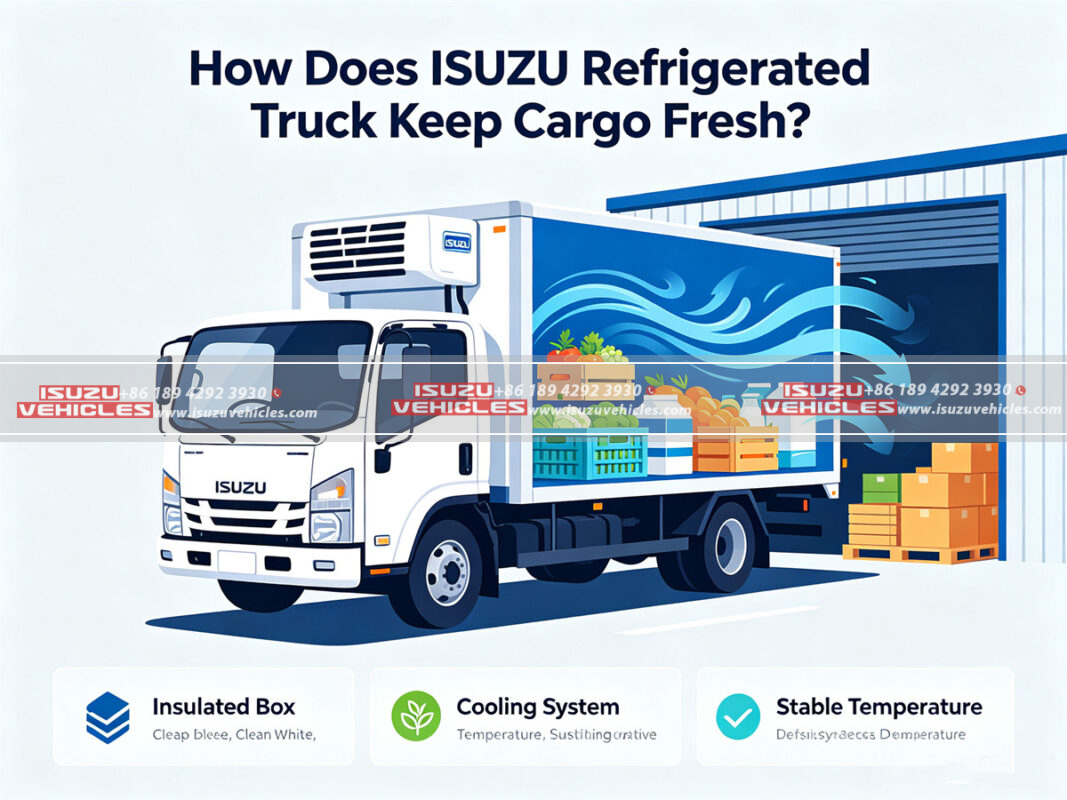
Understanding Temperature-Controlled Transport in ISUZU Refrigerated Trucks
In modern logistics and food distribution industries, maintaining product freshness during transportation is not simply an added advantage but an essential requirement that directly determines product quality, safety, and commercial value. The ISUZU Refrigerated Truck plays a central role in this cold chain system by providing stable, controlled temperature environments that ensure perishable goods remain in optimal condition from the point of origin to the final destination.
Built on the trusted engineering platform of ISUZU, these refrigerated transport vehicles are designed with a highly integrated system that combines thermal insulation, advanced refrigeration units, and intelligent airflow control to maintain consistent internal conditions regardless of external environmental changes. Whether transporting fresh produce, dairy products, frozen meat, seafood, or pharmaceutical supplies, the goal remains the same: preserving freshness and preventing temperature fluctuations that could compromise cargo integrity.
Unlike a standard van truck, which primarily focuses on general cargo transport without specialized temperature control, a refrigerated truck is engineered as a mobile cold storage unit. This distinction is critical because even slight temperature variations can significantly impact product shelf life, especially in industries where freshness is directly linked to consumer safety and regulatory compliance.
Thermal Insulation System and Cargo Compartment Design
One of the most important factors that enables an ISUZU refrigerated truck to maintain cargo freshness is its advanced thermal insulation structure, which acts as the first barrier against external heat transfer.
High-Density Insulation Materials for Temperature Stability
The cargo compartment is typically constructed using high-density polyurethane foam or similar insulation materials that are sandwiched between reinforced outer and inner panels. This layered structure significantly reduces heat conduction, ensuring that cold air generated inside the compartment remains trapped for extended periods.
This insulation system is carefully engineered to minimize thermal bridging, which is a common issue in poorly designed refrigerated units where external heat can seep through structural joints. By eliminating these weak points, ISUZU ensures that temperature stability is maintained even in extreme weather conditions such as high heat or humidity.
Sealed Cargo Structure and Air Leakage Prevention
Another critical design element is the airtight sealing system used in doors, joints, and panel connections. Rubber gaskets and reinforced locking mechanisms prevent warm air from entering the cargo space while ensuring that cold air remains contained within the insulated chamber.
This level of sealing precision is essential in preventing temperature fluctuations during frequent door openings, especially in urban delivery scenarios where multiple stops are required. The result is a controlled environment that behaves more like a stationary cold storage unit rather than a moving vehicle.
Refrigeration Unit Technology and Cooling Performance
The refrigeration system is the heart of any ISUZU Refrigerated Truck, responsible for actively generating and maintaining low temperatures inside the cargo compartment regardless of external conditions.
Independent Cooling Units and Temperature Control
Most ISUZU refrigerated trucks are equipped with independent refrigeration units that operate separately from the vehicle’s main engine. These units are powered either by the engine or auxiliary systems and are capable of maintaining precise temperature ranges depending on cargo requirements.
Advanced digital control panels allow operators to set and monitor temperature levels in real time, ensuring that perishable goods such as frozen food or pharmaceuticals remain within safe storage thresholds throughout the journey.
Rapid Cooling and Temperature Recovery Systems
One of the most important performance features is the system’s ability to quickly restore internal temperature after door openings. During loading and unloading operations, cold air can escape, but ISUZU refrigeration units are designed with high-capacity compressors that rapidly bring the compartment back to its target temperature.
This rapid recovery capability is especially important in distribution chains that involve multiple delivery points, where maintaining consistent cold conditions is essential for product quality preservation.
Air Circulation and Internal Temperature Uniformity
Maintaining cold temperatures alone is not enough; ensuring that the temperature is evenly distributed throughout the cargo space is equally important for preserving product quality. ISUZU refrigerated trucks address this challenge through carefully designed airflow management systems.
Multi-Directional Airflow Design
The interior of the cargo compartment is engineered with strategically placed air ducts and circulation channels that distribute cold air evenly across all areas of the storage space. This prevents the formation of hot or cold spots, which could otherwise lead to uneven product preservation.
Proper airflow design ensures that items placed near the doors receive the same cooling efficiency as those located deeper inside the compartment, which is essential for maintaining uniform freshness across all cargo.
Humidity Regulation and Moisture Control
In addition to temperature control, humidity regulation plays a significant role in preserving freshness, especially for fruits, vegetables, and dairy products. Excess moisture can lead to spoilage, while overly dry conditions can affect product texture and quality.
ISUZU refrigerated systems often incorporate humidity control mechanisms that maintain balanced moisture levels within the cargo space, ensuring that products remain in their intended condition throughout transportation.
Operational Efficiency and Cold Chain Reliability
Beyond engineering design, the effectiveness of an ISUZU refrigerated truck is also defined by its performance in real-world logistics operations, where timing, efficiency, and reliability are critical.
Urban Distribution and Frequent Stop Management
In city-based delivery systems, refrigerated trucks often make multiple stops throughout the day. Each stop introduces a risk of temperature fluctuation, but ISUZU systems are designed to minimize this impact through fast cooling recovery and efficient door sealing systems.
This makes them particularly suitable for grocery distribution, restaurant supply chains, and retail logistics where freshness must be preserved despite frequent cargo access.
Long-Distance Cold Chain Transport
For intercity and regional logistics, maintaining stable temperatures over long durations becomes the primary challenge. ISUZU refrigerated trucks excel in this area due to their energy-efficient refrigeration systems and stable chassis performance, which reduces vibration and mechanical stress on cooling components.
This ensures that even during extended travel times, cargo remains within the required temperature range without degradation in quality.
Energy Efficiency, Maintenance, and System Longevity
A well-designed refrigerated transport system must not only perform efficiently but also remain cost-effective and easy to maintain over long operational cycles.
Fuel Efficiency and Power Optimization
Modern ISUZU refrigeration systems are designed to optimize energy consumption by adjusting compressor output based on real-time temperature conditions. This prevents unnecessary fuel usage while maintaining consistent cooling performance.
The integration of smart energy management systems also helps reduce overall operational costs, making refrigerated transport more sustainable for large-scale logistics operators.
Maintenance Accessibility and System Durability
Routine maintenance is essential for ensuring long-term reliability, particularly for refrigeration components such as compressors, condensers, and airflow systems. ISUZU trucks are designed with accessible service points that allow technicians to perform inspections and repairs efficiently.
This reduces downtime and ensures that vehicles remain operational even under demanding logistics schedules. The durability of both the chassis and refrigeration system contributes to long service life, making these trucks a valuable investment for cold chain operators.
Cold Chain Applications and Integrated Transport Ecosystem
The role of ISUZU refrigerated trucks extends far beyond simple food transportation, as they are now a critical component of global cold chain logistics systems that support multiple industries.
Food Distribution and Retail Supply Chains
One of the most common applications is in the transportation of perishable food products, where maintaining freshness directly impacts consumer satisfaction and regulatory compliance. From frozen meat to fresh produce, ISUZU refrigerated systems ensure that quality is preserved throughout the entire delivery process.
Pharmaceutical and Medical Logistics
In the pharmaceutical industry, temperature control is even more critical, as vaccines, insulin, and other temperature-sensitive medications require strict environmental conditions. ISUZU refrigerated trucks provide the precision and reliability needed to support these sensitive supply chains.
Integration with Broader Transport Networks
Within larger logistics ecosystems, refrigerated transport often works alongside other specialized vehicles such as the cargo truck for general freight distribution and the van truck for flexible urban deliveries. This interconnected system allows companies to manage diverse cargo requirements efficiently while maintaining operational consistency across different transport modes.
As global logistics continues to evolve, ISUZU Vehicles remain a trusted foundation for cold chain innovation, combining engineering precision, thermal control technology, and long-term reliability to support industries that depend on freshness, safety, and consistent performance.