
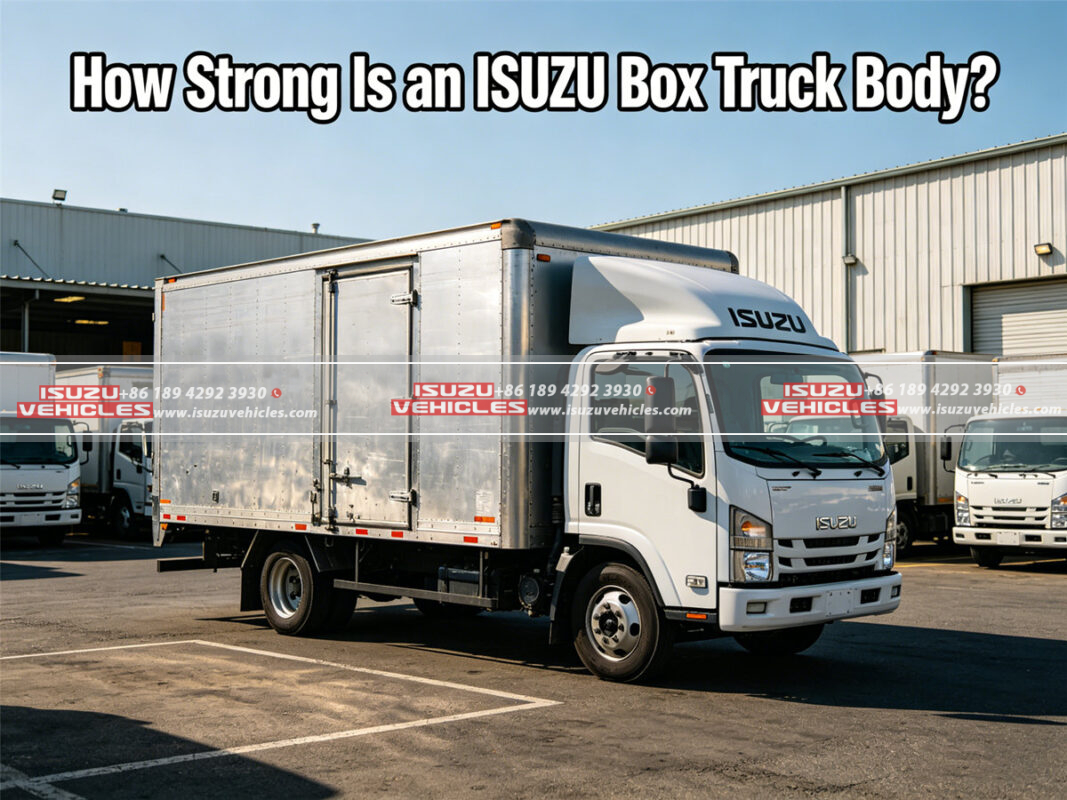
How Strong Is an ISUZU Box Truck Body?
When businesses invest in commercial delivery vehicles, one of the most important factors they consider is durability, especially when the truck will be used daily under demanding transportation conditions that involve heavy cargo loads, repeated loading cycles, changing weather environments, and long operational hours. The body structure of a truck plays a critical role in determining not only how much weight the vehicle can safely handle but also how well it protects cargo, maintains long-term reliability, and minimizes maintenance costs over time. For companies involved in logistics, retail distribution, furniture moving, food transportation, construction supply delivery, or industrial hauling, the strength of a truck body can directly affect operational efficiency and long-term profitability.
Among commercial delivery vehicles, ISUZU box trucks have earned a strong reputation for their body durability, structural integrity, and practical design. Many fleet operators and transportation companies choose ISUZU because the vehicles are engineered specifically for demanding commercial applications rather than occasional light-duty use. The strength of an ISUZU box truck body is not based on a single feature alone but on a combination of reinforced chassis engineering, high-quality materials, structural design efficiency, and the brand’s experience in producing dependable commercial transportation solutions.
Engineered for Commercial Durability
The body strength of a truck begins with its overall engineering philosophy, and ISUZU has long focused on building commercial vehicles capable of enduring years of intensive use in real-world operating environments. Unlike standard passenger vehicles adapted for light cargo applications, ISUZU box trucks are purpose-built for commercial transportation, which means their body structures are designed to withstand constant stress from cargo weight, road vibration, loading equipment, and repeated delivery operations.
The truck body is supported by a durable chassis frame that distributes weight efficiently across the vehicle while maintaining stability during transportation. This reinforced framework helps reduce body flex under heavy loads, which is essential for preserving structural integrity over time. In industries where trucks operate daily with full cargo capacity, body durability becomes essential because structural weakness can eventually lead to panel damage, alignment problems, or expensive repairs.
High-Strength Materials for Better Protection
One of the reasons ISUZU box truck bodies are known for their strength is the use of durable construction materials that provide both rigidity and resistance to wear. Depending on the truck configuration and application, many ISUZU box bodies incorporate reinforced aluminum panels, galvanized steel sections, or composite materials that balance strength with manageable vehicle weight.
This balance is particularly important because excessive body weight can reduce fuel efficiency and limit payload capacity, while weak materials may fail under commercial use. ISUZU engineers aim to create truck bodies that remain structurally dependable without unnecessarily increasing operational costs.
Strong side panels, reinforced flooring systems, and secure roof structures all contribute to the truck’s ability to handle demanding transportation conditions. Businesses that transport furniture, industrial equipment, packaged goods, or retail inventory benefit from this durable construction because cargo protection becomes more reliable during daily operations.
Resistance to Harsh Working Conditions
Commercial delivery vehicles are exposed to many environmental challenges, including rain, humidity, intense sunlight, rough road conditions, and temperature fluctuations. Over time, poor-quality truck bodies may develop corrosion, weakened structural joints, or panel deterioration that compromise overall performance.
ISUZU box trucks are designed with commercial longevity in mind, and many models include corrosion-resistant treatments and durable body finishes that help preserve structural strength even under challenging operating conditions. This becomes especially valuable for businesses operating in coastal areas, regions with frequent rainfall, or industrial environments where trucks are constantly exposed to moisture and debris.
Structural Design That Supports Heavy Cargo Loads
The strength of a truck body is not determined only by material thickness or exterior appearance. Proper structural design is equally important because commercial vehicles must support dynamic cargo movement during acceleration, braking, turning, and uneven road travel. ISUZU box truck bodies are engineered to provide stable cargo support while minimizing unnecessary strain on the vehicle structure.
The floor systems in many ISUZU box trucks are reinforced to handle heavy palletized goods, machinery, bulk shipments, and repeated forklift loading operations. A weak floor structure can quickly become a major problem in commercial transportation because constant pressure from concentrated cargo loads may lead to cracking, warping, or instability over time.
Reinforced Flooring and Wall Support
The flooring inside an ISUZU box truck is often designed using heavy-duty support beams that improve weight distribution while enhancing long-term durability. This reinforced construction allows businesses to transport heavier loads more confidently without compromising structural reliability.
Wall support systems also contribute significantly to body strength. Cargo shifts during transportation can place intense pressure on side panels, especially when trucks operate on uneven roads or during sudden stops. ISUZU box truck bodies are built to manage these stresses through reinforced framing and secure panel integration that help maintain body stability under challenging operating conditions.
Designed for Frequent Loading Cycles
Commercial delivery vehicles rarely remain idle for long periods. Many box trucks complete multiple delivery routes every day, with repeated loading and unloading cycles that place continuous stress on rear doors, flooring systems, hinges, and cargo access points.
ISUZU truck bodies are designed to endure these repetitive operational demands without rapid structural wear. Durable rear door systems, reinforced hinges, and strong cargo access frames help maintain long-term functionality even under heavy commercial usage. This durability becomes especially important for logistics companies, retail distributors, and moving businesses where loading operations occur constantly throughout the workday.
Long-Term Reliability and Lower Maintenance Impact
Truck body strength is closely connected to long-term maintenance costs because weak structural systems often lead to frequent repairs, panel replacements, water leaks, cargo damage, and operational downtime. Businesses investing in commercial vehicles generally look for transportation solutions that provide dependable performance over many years while keeping maintenance demands manageable.
One of the major advantages of ISUZU box trucks is their reputation for long-term reliability in commercial environments. The body structures are designed to maintain their integrity even after years of continuous operation, which helps reduce maintenance interruptions and extend vehicle lifespan.
Reduced Structural Fatigue Over Time
Commercial trucks experience constant vibration during daily transportation, especially when carrying heavy cargo or traveling on rough road surfaces. Over time, this repeated stress can weaken structural joints, loosen fasteners, and create fatigue-related damage in poorly engineered truck bodies.
ISUZU addresses these challenges through reinforced body integration and durable chassis support systems that minimize excessive structural movement. By reducing body flex and improving weight distribution, the truck body can better withstand long-term operational stress without developing premature structural problems.
This reliability is particularly important for businesses that depend heavily on fleet consistency because vehicle downtime can disrupt delivery schedules, increase repair expenses, and negatively affect customer satisfaction.
Better Cargo Protection During Transportation
A strong truck body does more than protect the vehicle itself. It also protects the cargo inside. In industries where goods are valuable, fragile, or sensitive to environmental exposure, body durability directly influences transportation quality.
ISUZU box truck bodies are designed to create stable and secure cargo environments that reduce the risk of damage caused by vibration, moisture intrusion, or structural instability. Strong body construction helps maintain alignment between doors, walls, and flooring systems, which improves cargo security during transit.
This level of reliability becomes especially important for businesses transporting electronics, appliances, packaged foods, commercial products, or temperature-sensitive shipments that require dependable protection throughout the delivery process.
Why ISUZU Box Trucks Remain a Trusted Commercial Choice
Commercial transportation businesses operate in highly competitive environments where vehicle performance, durability, and operational efficiency directly influence profitability. Companies need trucks capable of handling demanding workloads without excessive maintenance costs or structural failures that could interrupt delivery operations. This is one reason why ISUZU box trucks continue to be widely trusted across logistics, retail, construction, food distribution, and industrial transportation industries.
The strength of an ISUZU box truck body comes from a combination of reinforced engineering, durable construction materials, efficient structural design, and long-term reliability under commercial use. These trucks are built to handle real-world transportation challenges while maintaining dependable performance over extended operational lifespans.
Businesses searching for a reliable cargo truck often value ISUZU because the truck bodies are capable of supporting heavy payloads while maintaining structural stability during frequent deliveries and demanding transportation schedules. This combination of durability and operational practicality allows businesses to transport goods more confidently while minimizing downtime and maintenance concerns.
In industries involving cold-chain logistics, companies may also compare box trucks with a refrigerator truck configuration, especially when transporting temperature-sensitive products. ISUZU’s commercial engineering expertise extends across multiple truck applications, which helps businesses choose vehicles that match both cargo protection requirements and operational efficiency goals.
For many fleet operators, investing in dependable ISUZU Vehicles means more than simply purchasing transportation equipment. It means selecting commercial vehicles designed to support long-term business performance through strong body construction, reliable cargo protection, manageable operating costs, and consistent durability that can withstand the pressures of modern delivery operations year after year.