

Defining Efficiency and Performance in Commercial Truck Selection
Selecting the right commercial truck is not simply about choosing a vehicle that can carry goods from one point to another; it involves a careful evaluation of how efficiency and performance translate into real-world business outcomes, including cost savings, operational reliability, and long-term scalability. For many businesses, a truck is not just an asset but a core component of daily operations, which means that even small inefficiencies can accumulate into significant losses over time.
Efficiency, in this context, goes beyond fuel consumption and includes how well the truck integrates into your workflow, how often it requires maintenance, and how effectively it handles the tasks you assign to it. Performance, on the other hand, relates to the truck’s ability to operate under varying conditions, whether that involves heavy loads, long distances, or challenging environments.
Understanding these two pillars at the outset allows you to frame your decision-making process around measurable outcomes rather than assumptions or brand preferences, which often leads to a more practical and financially sound investment.
Matching Truck Type to Operational Requirements
Choosing the right type of truck is one of the most important steps in ensuring both efficiency and performance, as different industries demand different capabilities, and a mismatch can quickly lead to operational inefficiencies or unnecessary expenses.
General Freight and Delivery Needs
For businesses focused on transporting goods, box trucks and flatbeds are often the most practical choices, offering a balance between capacity and accessibility. These trucks are designed for straightforward loading and unloading, making them ideal for logistics and distribution companies.
Specialized Industry Applications
Some industries require trucks with specific functionalities that go far beyond basic transportation. For example, a cherry picker truck is essential for tasks that involve working at height, such as electrical maintenance, signage installation, or tree trimming, where safety and precision are critical. Similarly, municipal and waste management operations rely heavily on a garbage truck, which is engineered to handle heavy, repetitive loads while maintaining durability under demanding conditions.
Selecting a truck that is purpose-built for your industry ensures that you are not overcompensating with modifications or underperforming due to limitations, both of which can negatively impact efficiency.

Evaluating Engine Power and Fuel Efficiency
The engine is a defining factor in how well a commercial truck performs, but selecting the right engine involves more than simply opting for the highest horsepower available, as the goal is to find a balance that aligns with your operational demands.
Power vs Practicality
High engine power is beneficial for hauling heavy loads or navigating steep terrains, but it often comes at the cost of increased fuel consumption. For businesses operating in urban environments with lighter loads, a smaller, more efficient engine may deliver better overall value.
Fuel Economy and Long-Term Savings
Fuel costs represent one of the largest ongoing expenses in commercial transportation, which means that even marginal improvements in fuel efficiency can result in substantial savings over time. Modern engines are designed to optimize fuel usage without compromising performance, making it important to compare real-world consumption figures rather than relying solely on manufacturer claims.
By carefully evaluating both power and efficiency, you can select a truck that meets your performance requirements without unnecessarily inflating your operating costs.
Assessing Durability and Build Quality
Durability is a critical factor that directly influences both efficiency and performance, as a truck that frequently breaks down or requires constant repairs will disrupt operations and increase costs.
Structural Integrity and Materials
The quality of the truck’s frame, suspension system, and overall construction determines how well it can withstand daily wear and tear. Trucks used in demanding environments, such as construction sites or waste management operations, must be built to handle heavy loads and rough conditions without compromising safety or reliability.
Maintenance Frequency and Downtime
A durable truck not only lasts longer but also requires less frequent maintenance, which translates into reduced downtime and improved productivity. When evaluating options, consider the availability of replacement parts and the ease of servicing, as these factors can significantly impact your ability to keep the vehicle operational.
Investing in a well-built truck may involve a higher upfront cost, but it often results in lower total ownership expenses and more consistent performance over time.
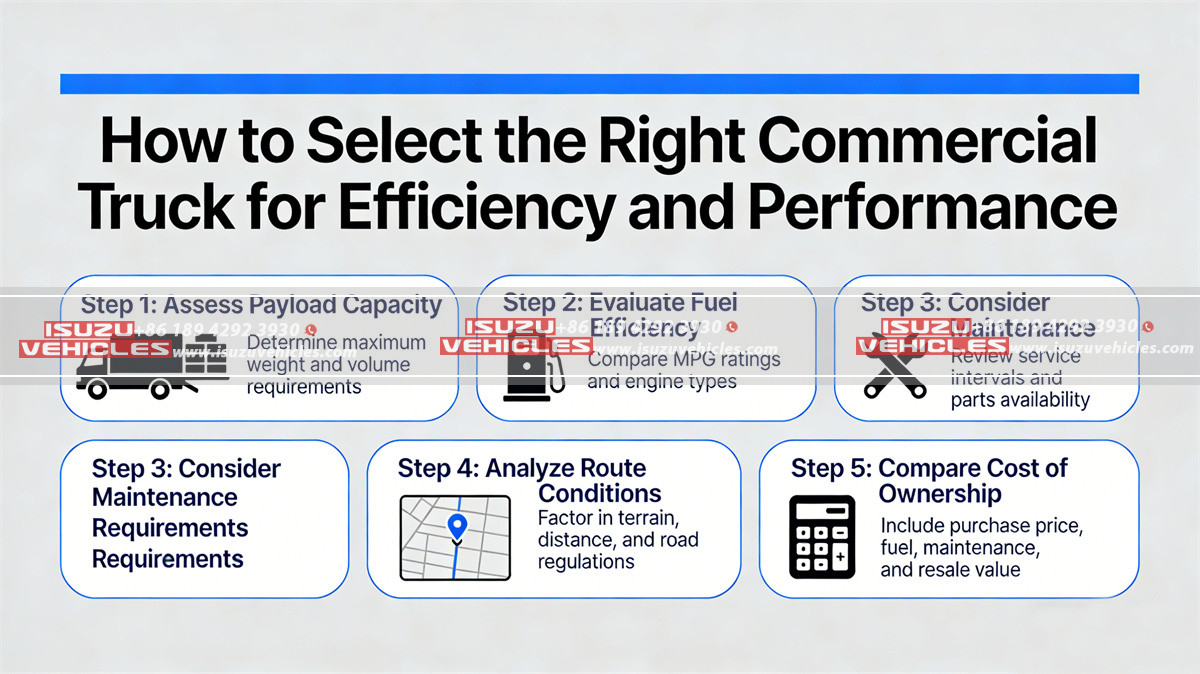
Technology, Safety, and Driver Experience
Modern commercial trucks are equipped with advanced technologies that enhance both efficiency and performance, making them an important consideration in the selection process.
Safety Systems and Driver Assistance
Features such as anti-lock braking systems, electronic stability control, and collision avoidance technologies play a crucial role in reducing the risk of accidents, which can lead to costly repairs, legal issues, and operational disruptions. These systems not only protect drivers but also contribute to smoother and more efficient operations.
Telematics and Fleet Management
Telematics systems provide real-time data on vehicle performance, fuel consumption, and driver behavior, enabling businesses to identify inefficiencies and make informed decisions. This level of insight can lead to improved route planning, reduced fuel usage, and better overall fleet management.
Driver Comfort and Productivity
Driver comfort is often overlooked, yet it has a direct impact on performance, especially for long-haul operations. A well-designed cabin with ergonomic seating, intuitive controls, and climate control can reduce fatigue and improve focus, leading to safer and more efficient driving.
By prioritizing technology and driver experience, you can enhance both the productivity and reliability of your operations.

Total Cost of Ownership and Long-Term Value
While the initial purchase price is an important consideration, it is only one part of the overall investment, and focusing solely on upfront costs can lead to poor decision-making.
Operating Costs and Budget Planning
Fuel, maintenance, insurance, and licensing fees all contribute to the total cost of ownership, and these expenses can vary significantly between different trucks. A vehicle with a lower purchase price but higher operating costs may end up being more expensive in the long run.
Resale Value and Lifecycle Planning
Trucks that retain their value well provide an opportunity to recover a portion of your investment when it is time to upgrade. Considering the expected lifespan and resale potential of a truck can help you make a more strategic decision.
Balancing Cost with Performance
Ultimately, the goal is to find a truck that delivers strong performance without exceeding your budget, which requires a careful balance between upfront costs and long-term expenses. Taking a holistic view of ownership ensures that your investment supports your business over time rather than becoming a financial burden.
As businesses continue to prioritize efficiency and reliability, many turn to trusted manufacturers known for producing durable and cost-effective solutions, and options from ISUZU Vehicles are often considered for their consistent performance across a wide range of applications, whether for general transport or specialized uses like a cherry picker truck or a garbage truck, making them a practical choice for companies seeking long-term value and operational efficiency.