

Understanding Your Business Needs
Buying a commercial truck is not just a purchase; it is a long-term investment that directly affects your operations, costs, and reliability. Before you even start comparing models or brands, you need a clear picture of how the truck will be used in your daily business.
Start by defining the primary purpose. Are you transporting heavy goods across long distances, handling local deliveries, or supporting specialized tasks like construction or maintenance work? A logistics company moving pallets across states will have very different requirements compared to a utility business that needs equipment access at height.
Payload capacity is one of the first practical considerations. Overloading a truck leads to faster wear and legal issues, while underutilizing it wastes money. Think realistically about the typical load you carry, not just the maximum.
Distance and terrain matter just as much. Long-haul operations benefit from fuel efficiency and driver comfort, while urban routes demand maneuverability and ease of parking. If your routes include rough or uneven terrain, durability and suspension become critical factors.
You should also consider how often the truck will be used. A vehicle that runs daily needs higher durability and lower maintenance downtime compared to one used occasionally. These early decisions will narrow your options and help you focus on trucks that truly fit your needs rather than being distracted by features you may never use.
Types of Commercial Trucks to Consider
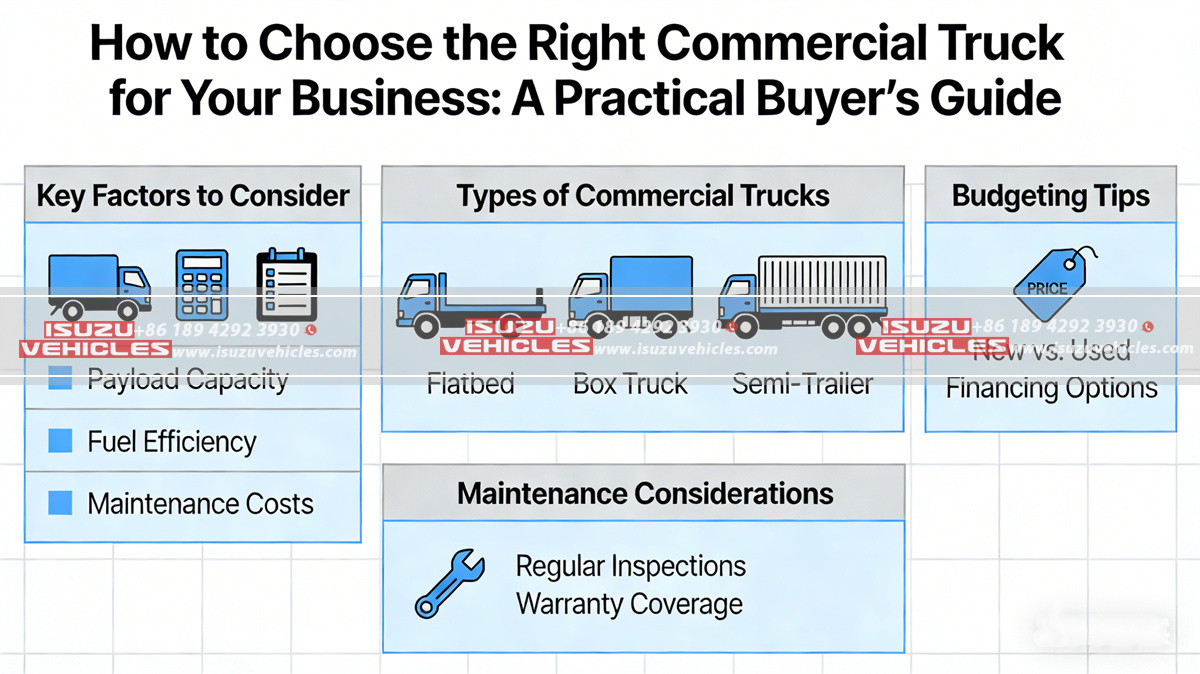
The commercial truck market offers a wide range of options, each designed for specific tasks. Understanding the main categories will help you match the right type to your business.
Light-Duty vs Medium-Duty vs Heavy-Duty
Light-duty trucks are ideal for small businesses, last-mile delivery, and urban operations. They are easier to drive, more fuel-efficient, and generally cost less upfront.
Medium-duty trucks sit in the middle ground. They offer greater payload capacity and versatility, making them suitable for regional transport, service industries, and utility work.
Heavy-duty trucks are built for long-haul transportation and large cargo loads. These are the backbone of freight and logistics industries but come with higher purchase and maintenance costs.
Specialized Trucks
Certain industries require specialized configurations. A bucket truck, for example, is essential for electrical work, tree trimming, and maintenance services that require safe elevation. These trucks come with hydraulic lifts and safety systems designed for precision and stability.
Box trucks, flatbeds, refrigerated trucks, and dump trucks are other examples of specialized vehicles. Each serves a specific function, so choosing the wrong type can limit your efficiency and increase operational costs.
Understanding these categories helps you avoid overpaying for unnecessary features or underinvesting in a truck that cannot meet your demands.
Key Features That Matter Most
Once you have identified the type of truck you need, the next step is to evaluate the features that will impact performance and long-term value.
Engine Performance and Fuel Efficiency
The engine is the heart of your truck. A powerful engine ensures that the vehicle can handle heavy loads without strain, but power alone is not enough. Fuel efficiency plays a major role in operating costs, especially for businesses that rely on daily transportation.
Look for engines that balance power with efficiency. Modern diesel engines often provide better torque and durability, making them a popular choice for commercial use.
Durability and Build Quality
Commercial trucks are expected to withstand tough conditions. Pay attention to the frame, suspension, and overall construction. A well-built truck will last longer and require fewer repairs, saving money over time.
Safety Features
Safety should never be overlooked. Features such as anti-lock braking systems, stability control, rear-view cameras, and driver assistance technologies can prevent accidents and protect both drivers and cargo.
Driver Comfort and Ergonomics
If your drivers spend long hours on the road, comfort becomes more than a luxury. A well-designed cabin reduces fatigue, improves productivity, and can even enhance safety. Adjustable seating, climate control, and intuitive controls are all worth considering.
Choosing the right combination of features ensures that your truck is not only functional but also efficient and reliable in the long run.
New vs Used Commercial Trucks
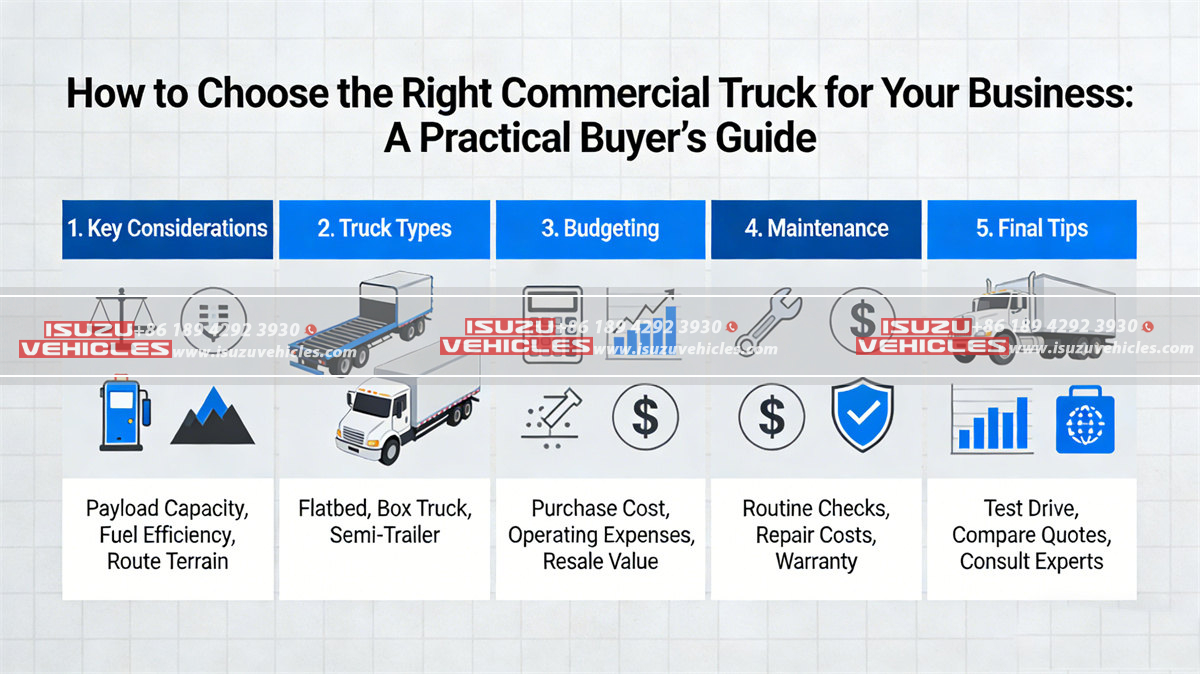
One of the most common decisions buyers face is whether to purchase a new or used truck. Each option has its advantages and trade-offs.
New trucks come with the latest technology, better fuel efficiency, and manufacturer warranties. They are less likely to require immediate repairs and often provide peace of mind. However, they come with a higher upfront cost and depreciate quickly in the first few years.
Used trucks, on the other hand, are more affordable and can offer excellent value if chosen carefully. The key is to thoroughly inspect the vehicle’s history, mileage, and maintenance records. A well-maintained used truck can perform just as reliably as a new one at a fraction of the cost.
Financing options also play a role in this decision. Leasing may be a good option for businesses that prefer lower monthly payments and plan to upgrade frequently, while buying outright can be more cost-effective over time.
Ultimately, the choice depends on your budget, risk tolerance, and how critical reliability is to your operations.
Total Cost of Ownership
The purchase price is only one part of the equation. To make a smart investment, you need to consider the total cost of ownership over the truck’s lifespan.
Maintenance and Repairs
Regular maintenance is unavoidable, but some trucks are more expensive to maintain than others. Availability of parts and service centers can significantly affect downtime and repair costs.
Fuel Costs
Fuel is often one of the largest ongoing expenses. Even a small improvement in fuel efficiency can lead to significant savings over time, especially for high-mileage operations.
Insurance and Licensing
Insurance premiums vary depending on the type of truck, its usage, and your location. Make sure to factor these costs into your budget.
Resale Value
Some brands and models retain their value better than others. A truck with a strong resale value can reduce your overall cost when it is time to upgrade.
By looking beyond the initial price tag, you gain a clearer understanding of what the truck will truly cost your business over the years.
Choosing the Right Brand and Dealer
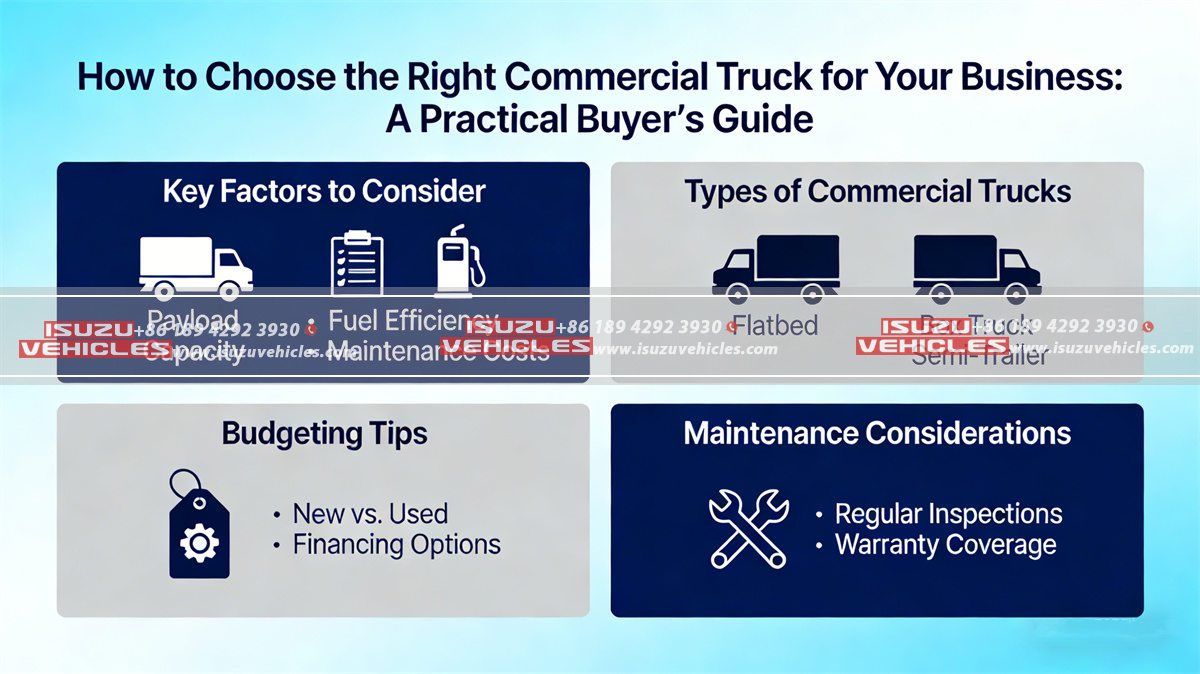
Selecting a reliable brand and dealer is just as important as choosing the truck itself. A reputable manufacturer ensures quality, while a dependable dealer provides support when you need it most.
Look for brands known for durability, efficiency, and strong after-sales service. Customer reviews, industry reputation, and warranty offerings can give you valuable insights.
Dealership support is equally critical. Access to maintenance services, spare parts, and technical assistance can minimize downtime and keep your operations running smoothly.
When exploring options, many buyers consider models like the ISUZU cargo truck due to their reputation for reliability and efficiency in commercial use. Businesses that require specialized equipment often look into options such as a bucket truck, which supports utility and maintenance operations with added functionality.
In the end, your choice should align with your operational needs, budget, and long-term goals. Whether you are expanding your fleet or purchasing your first commercial vehicle, taking a structured and informed approach will help you make a decision that supports your business growth. For those exploring dependable and versatile options, ISUZU Vehicles continue to be a popular consideration across multiple industries due to their balance of performance, durability, and cost efficiency.