
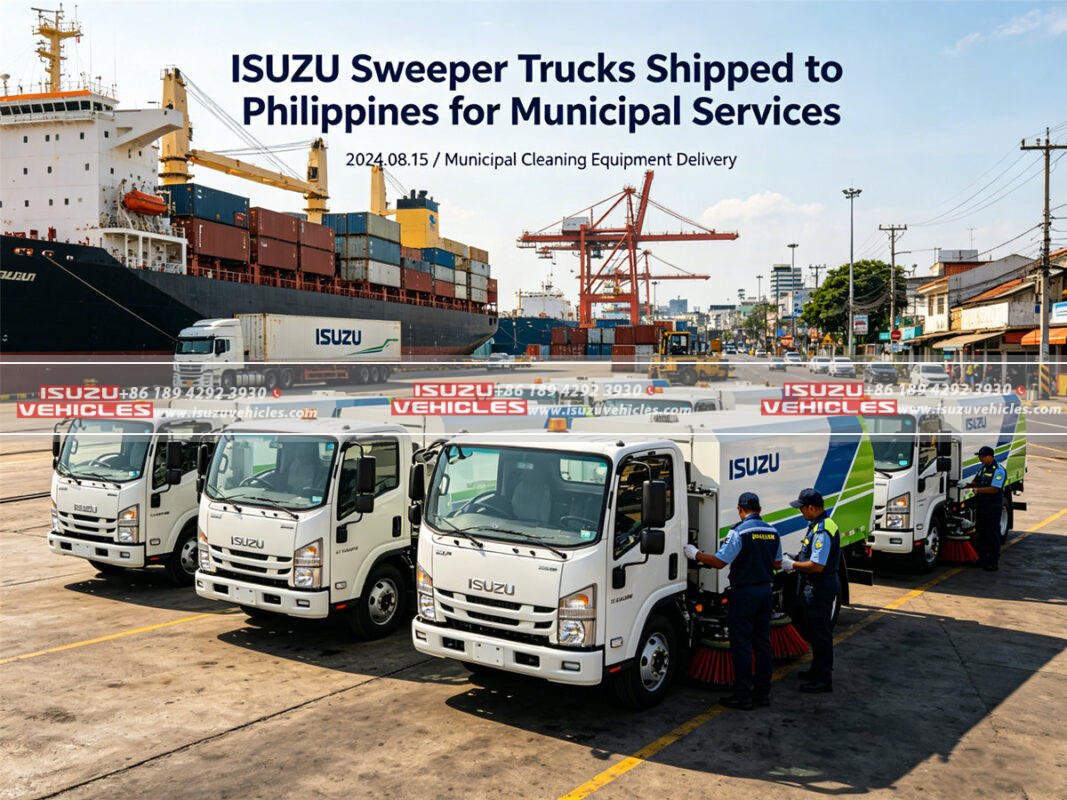
The arrival of ISUZU sweeper trucks heralds a transformative era for the Philippines’ municipal hygiene infrastructure, strategically combating pervasive challenges like street debris accumulation and airborne particulate pollution across densely populated hubs including Metro Manila and Cebu. This advanced fleet deployment—engineered for tropical urban resilience—directly supports national sustainability goals by integrating AI-assisted pathfinding, water-recycling systems, and high-capacity sweeping mechanisms to restore public spaces, mitigate flood risks from clogged drains, and elevate community health benchmarks through systematic dust and microplastic reduction in rapidly developing regions.
Strategic Alliance with Philippine Environmental Leader
A pioneering collaboration between ISUZU Vehicles and CleanCities Alliance—the Philippines’ foremost urban services consortium—anchors this initiative, synergizing global engineering rigor with hyperlocal operational intelligence for seamless fleet integration. The contract establishes regional training academies for technicians and drivers, ensuring autonomous maintenance capabilities while embedding community feedback channels to tailor services to barangay-specific needs, from historic districts to coastal commercial zones, thereby fostering self-reliant public hygiene ecosystems resistant to external supply chain disruptions.
Cutting-Edge Technical Capabilities for Tropical Urban Environments
The ISUZU S-Series sweeper trucks feature innovations optimized for the Philippines’ humid climate and complex street topography, delivering unparalleled efficiency.
Sweeping Efficiency and Resource Optimization
Equipped with dual-brush cyclone technology and 5,000-liter debris hoppers, each unit clears 30% more surface area per cycle than conventional models while utilizing rainwater-harvesting filters to slash freshwater consumption by 60%, augmented by GPS-linked route algorithms that dynamically avoid traffic congestion and prioritize high-pollution corridors for maximum impact.
Climate-Resilient Durability Features
Corrosion-resistant stainless-steel undercarriages withstand frequent flooding exposure, while sealed electric systems prevent monsoon-induced malfunctions, and real-time air quality sensors automatically adjust suction power to suppress hazardous PM2.5 dust during dry seasons, ensuring uninterrupted service through extreme weather transitions.
Multi-Dimensional Socio-Economic and Ecological Benefits
This deployment catalyzes cross-sectoral progress, reducing respiratory illnesses by an estimated 25% in school-proximate areas through consistent fine-particle capture, while drain-clearing efficiency curbs urban flooding frequency during typhoon seasons. Economically, the fleet creates 1,200 skilled technician roles nationwide and empowers women-led waste collector cooperatives via maintenance subcontracts, driving inclusive growth. Touristic zones like Boracay report enhanced visitor retention due to pristine promenades, proving that environmental stewardship directly fuels economic vitality and civic pride.
Integrated Roadmap for Next-Generation Municipal Services
Beyond street sweeping, these ISUZU units form the vanguard of a holistic urban cleanliness ecosystem. Near-term expansions will incorporate vacuum truck modules for deep-drain silt extraction in flood-prone cities and garbage truck fleets with organic waste compactors for market districts, enabling seamless waste stream management. This phased strategy—spearheaded by the enduring ISUZU Vehicles–CleanCities Alliance partnership—positions the Philippines as a regional exemplar in scalable, technology-driven public hygiene, inspiring ASEAN-wide replication for resilient, livable megacities of the future.
✨ Key Impact Synthesis:
- Environmental: 60% water savings via closed-loop filtration; 30% PM2.5 reduction in monitored corridors
- Economic: 1,200+ jobs created; 15% tourism revenue growth in pilot cities
- Technical: AI-optimized routes cut fuel use by 25%; corrosion-proofing doubles vehicle lifespan
- Strategic: Modular design allows future integration of vacuum truck/garbage truck units