
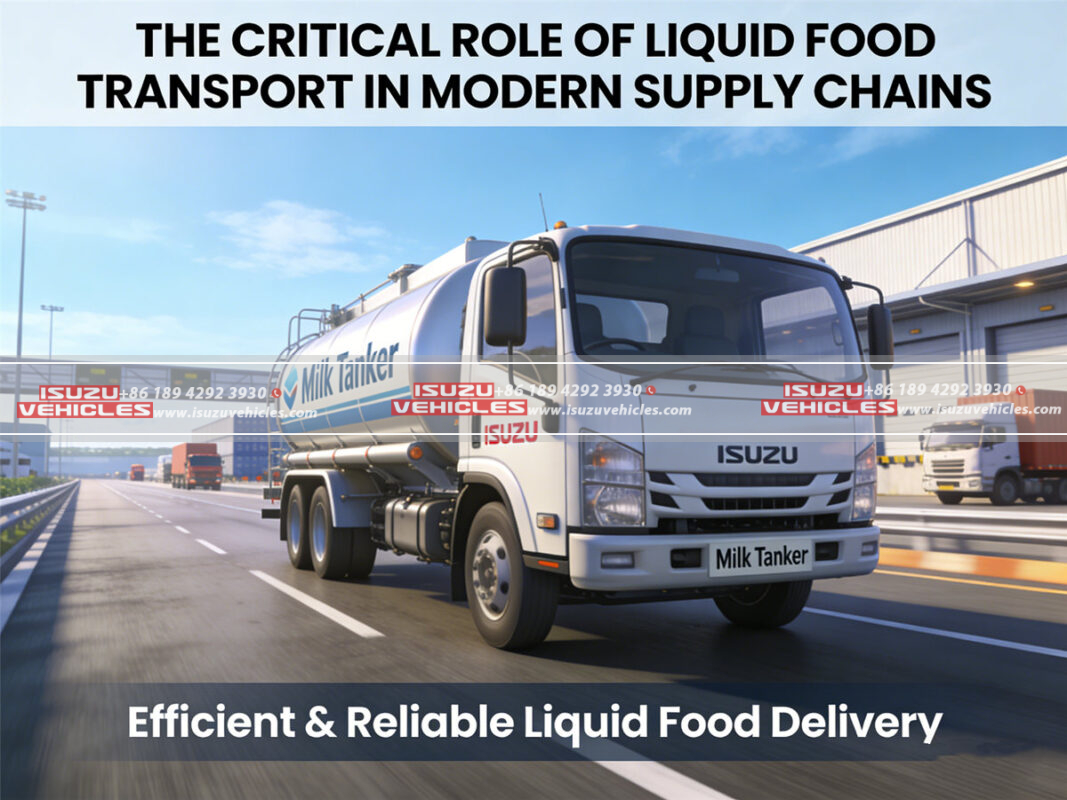
The Critical Role of Liquid Food Transport in Modern Supply Chains
The global food industry relies heavily on efficient logistics systems that can move large quantities of raw and processed food products safely from one location to another. Among the many specialized transportation solutions used in this industry, liquid food transport tankers play a particularly vital role. These vehicles are specifically designed to handle food-grade liquids such as milk, juice concentrates, edible oils, syrups, and other beverage ingredients while maintaining strict hygiene and safety standards.
In dairy and beverage supply chains, transportation must meet several critical requirements at once. The product must remain uncontaminated, temperature conditions must often be carefully controlled, and the transport process must be efficient enough to support high-volume production schedules. Liquid food tankers are therefore engineered with specialized materials, sanitary designs, and precision transfer systems that allow them to meet these demanding conditions.
As consumer demand for dairy products and beverages continues to expand globally, food manufacturers and distributors increasingly depend on well-designed tanker fleets to ensure that products move smoothly from farms and processing plants to bottling facilities and distribution centers.
Understanding the Design of Liquid Food Transport Tankers
The functionality of liquid food transport tankers begins with their carefully engineered structure. Unlike standard industrial tankers, food-grade tankers must comply with strict sanitary guidelines that prevent contamination and preserve product quality throughout the transportation process.
Most tanks used for dairy and beverage transport are constructed from polished stainless steel. This material is widely preferred because it resists corrosion, does not react with food products, and can be cleaned thoroughly between loads. The interior surfaces of the tank are usually smooth and seamless, preventing bacteria or residue from accumulating in hard-to-reach areas.
Another important design feature is the insulation layer often incorporated into the tank structure. Insulated tanks help maintain stable temperatures during transit, which is particularly important for dairy products that must remain within specific temperature ranges to prevent spoilage.
Food-grade tanker trucks are also equipped with sanitary valves, pumps, and sealed loading systems that minimize exposure to outside contaminants during both filling and unloading operations.
Transportation Requirements for Dairy Products
Dairy products represent one of the most sensitive categories within the liquid food supply chain. Raw milk, cream, and other dairy liquids must be transported quickly and under carefully controlled conditions to preserve freshness and prevent bacterial growth.
Maintaining Hygienic Conditions
One of the most critical aspects of dairy transportation is maintaining strict hygiene standards. Liquid food transport tankers used for milk collection and distribution undergo regular cleaning and sanitization processes known as Clean-In-Place systems. These automated cleaning procedures ensure that every internal surface of the tank is thoroughly washed and sterilized after each delivery.
Maintaining hygienic conditions is not only important for product quality but also for compliance with food safety regulations that govern dairy transportation in many countries.
Temperature Control During Transit
Milk and dairy liquids are highly perishable and must be kept at low temperatures during transportation. Insulated tanks and temperature monitoring systems help maintain the required conditions as milk travels from farms to processing plants.
In some cases, the tanker may also include cooling systems that support temperature stability during long-distance transportation.
Supporting Beverage Production and Distribution
While dairy products represent a major portion of liquid food logistics, beverage manufacturers also depend heavily on liquid food transport tankers for the movement of bulk ingredients and finished liquid products.
Transporting Beverage Ingredients
Many beverage production facilities rely on bulk shipments of liquid ingredients such as fruit concentrates, syrups, and flavor bases. These ingredients are often transported in large quantities using specialized tanker trucks that deliver them directly to bottling plants.
The use of tanker transport allows beverage manufacturers to reduce packaging waste and streamline production processes by receiving raw materials in bulk form.
Bulk Delivery of Finished Liquids
In addition to raw ingredients, tanker trucks may also be used to transport finished beverage products between production facilities and distribution centers. Bulk liquid transport allows companies to move large volumes efficiently before final packaging or regional distribution.
This approach helps optimize logistics costs while maintaining product consistency across multiple production locations.
Sanitary Technology and Food Safety Systems
Food safety remains a central priority in the design and operation of liquid food transport tankers. Advanced sanitary technologies are used throughout the tanker system to ensure that food products remain uncontaminated during transportation.
Sealed Transfer Systems
Modern tankers use sealed loading and unloading systems that prevent exposure to dust, insects, or airborne contaminants. These systems often include stainless steel pipes and secure valve connections that allow liquids to be transferred directly between tanks and processing equipment.
By minimizing direct contact with the external environment, sealed systems help maintain the purity of the transported product.
Automated Cleaning and Inspection
Automated cleaning systems play a major role in maintaining sanitation standards. High-pressure cleaning jets circulate cleaning solutions through the interior of the tank, removing residue and eliminating harmful bacteria.
Many operators also conduct routine inspections and quality checks to ensure that the tanker remains in compliance with food safety standards.
Logistics Efficiency and Supply Chain Reliability
Efficient transportation is essential for maintaining stable dairy and beverage supply chains. Liquid food transport tankers contribute significantly to logistics efficiency by enabling the movement of large product volumes in a single trip.
Bulk transportation reduces the need for smaller containers, packaging materials, and additional handling steps. This not only lowers operational costs but also simplifies logistics planning for producers and distributors.
In dairy supply chains, tanker trucks often operate on fixed routes between farms and processing plants, ensuring that fresh milk is collected and delivered quickly. For beverage manufacturers, tanker fleets support continuous production by maintaining a steady flow of raw materials.
Advanced fleet management technologies, including GPS tracking and route optimization systems, further improve the reliability of liquid food transportation. These tools allow companies to monitor deliveries in real time and adjust schedules when necessary.
Durability and Performance of Modern Transport Vehicles
The effectiveness of liquid food transport tankers depends not only on tank design but also on the reliability of the truck chassis carrying the tank. Transport vehicles must operate continuously across long distances while maintaining stable performance and fuel efficiency.
Commercial truck manufacturers design specialized chassis platforms capable of supporting heavy tanker loads without compromising vehicle stability. Strong frames, durable suspension systems, and efficient engines ensure that the vehicle can operate reliably under demanding transportation conditions.
In addition to mechanical durability, driver comfort and safety also play important roles in long-distance liquid transport. Well-designed cabins, clear visibility, and ergonomic controls help drivers maintain focus during extended journeys, which contributes to safer transportation operations overall.
Reliable transport vehicles help ensure that food products arrive at their destination in optimal condition and within the required delivery schedules.
The Expanding Role of Tanker Transport in Global Food Logistics
As the global demand for dairy products and beverages continues to increase, efficient bulk transportation systems are becoming even more important for maintaining reliable food supply chains. The role of liquid food transport tankers has expanded significantly in recent years, supporting everything from farm-level milk collection to large-scale beverage production and distribution.
These specialized vehicles provide the capacity, hygiene, and operational efficiency needed to move sensitive liquid food products across regional and international markets. Their integration into modern logistics networks allows producers to maintain consistent quality while responding to growing consumer demand.
Within broader transportation fleets, these tankers often operate alongside other specialized vehicles such as tanker truck units used for water or industrial liquids, Refrigerated truck systems that maintain temperature-controlled cargo, and a wide range of commercial transport solutions offered through ISUZU Vehicles, creating a comprehensive logistics ecosystem capable of supporting the evolving needs of the global food and beverage industry.
Fajne info o tych cysternach, nie miałem pojęcia że tak dużo trzeba brać pod uwagę w transporcie żywności. serio dało do myslenia
Dziękujemy za miłe słowa! Cieszymy się, że wpis okazał się pomocny i skłonił do refleksji. Rzeczywiście, transport żywności to bardzo wymagający obszar, w którym liczy się nie tylko sam pojazd, ale też spełnienie norm, bezpieczeństwo i odpowiednie warunki przewozu. Jeśli będziesz mieć pytania lub będziesz chciał dowiedzieć się więcej, chętnie pomożemy!