
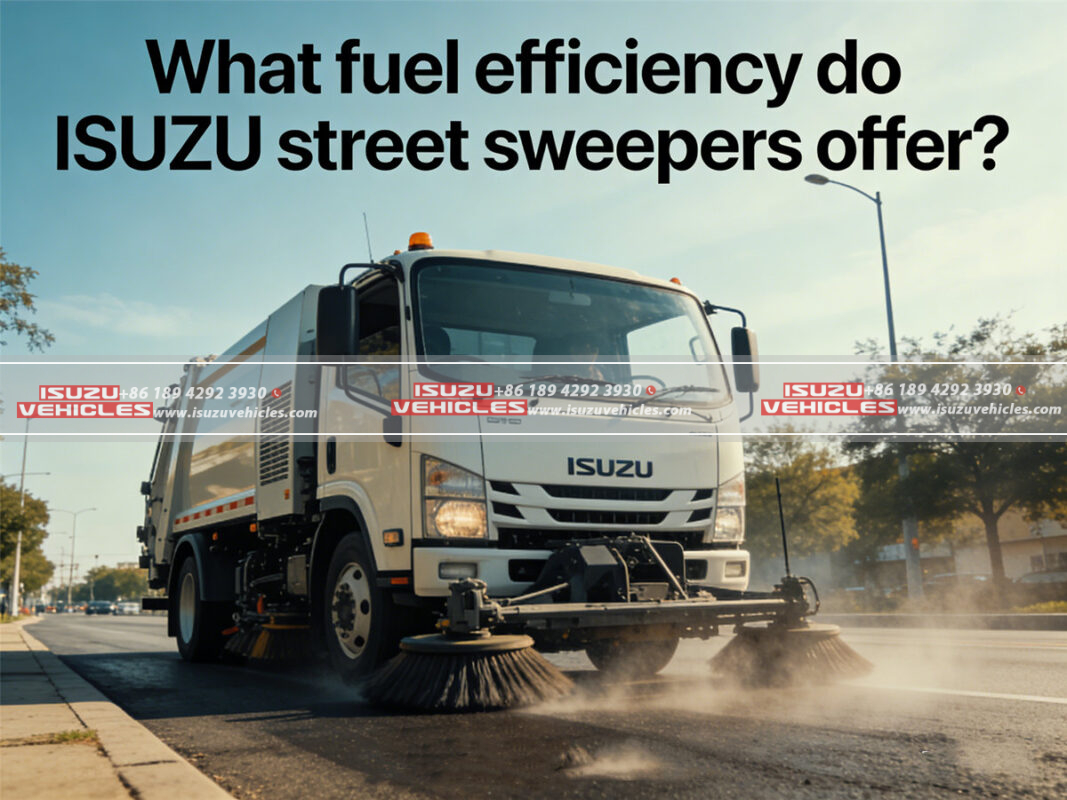
Understanding Fuel Efficiency in Modern Street Sweeping Operations
Urban sanitation departments and private contractors responsible for city cleaning services face an ongoing challenge: maintaining effective street cleaning operations while controlling operational costs and environmental impact. Among the many factors that influence these operations, fuel consumption plays a major role. Street sweepers typically operate for long hours each day, moving slowly along city streets while powering complex cleaning systems. For fleet managers, selecting vehicles with strong fuel economy can significantly reduce long-term operating expenses.
This is where ISUZU street sweepers stand out in many municipal fleets around the world. Built on efficient commercial truck platforms, these vehicles are designed to combine reliable street cleaning performance with practical fuel consumption levels. While exact fuel efficiency varies depending on model configuration, route conditions, and sweeping equipment type, ISUZU-based sweepers are widely recognized for delivering balanced performance between power, durability, and fuel economy.
Fuel efficiency in street sweepers is not determined solely by the engine itself. It is the result of an integrated system that includes the truck chassis, sweeping mechanism, hydraulic systems, and driving patterns used during sanitation operations. Understanding how these elements interact can help municipalities and contractors better evaluate the real-world fuel performance of modern street sweeper fleets.
Typical Fuel Efficiency of ISUZU Street Sweepers
The fuel efficiency of ISUZU street sweepers depends on several operational factors, including vehicle size, engine type, and the sweeping technology installed on the truck. In general, medium-duty street sweepers built on ISUZU truck platforms typically achieve fuel consumption levels ranging between approximately 10 and 16 liters per 100 kilometers under standard road driving conditions.
However, street sweeping operations differ significantly from normal highway driving. Sweepers often travel at low speeds, stop frequently, and run auxiliary equipment such as vacuum systems, brushes, and water pumps. Because of these additional power requirements, the effective fuel consumption during active sweeping operations is often measured in terms of fuel usage per operating hour rather than distance traveled.
Even under these demanding conditions, many fleet operators report that ISUZU-based sweepers maintain efficient fuel use compared to other vehicles in the same category. Their diesel engines are designed to deliver strong torque at low speeds, which helps maintain steady operation without excessive fuel consumption.
For municipalities that operate multiple sweepers daily, even small improvements in fuel efficiency can translate into significant annual cost savings.
Engine Technology That Supports Efficient Fuel Use
The fuel performance of ISUZU street sweepers is largely driven by the engineering of the truck’s powertrain. ISUZU has built a strong reputation for producing diesel engines that balance performance with efficiency, making them well suited for commercial applications that require long operating hours.
High-Efficiency Diesel Engines
ISUZU diesel engines are designed to provide strong torque output at relatively low engine speeds. This characteristic is particularly important for street sweeping operations, where vehicles often move slowly while powering heavy cleaning equipment.
Because the engine does not need to operate at high revolutions to produce the required torque, fuel consumption remains relatively stable even during continuous operation.
These engines also incorporate modern fuel injection systems that optimize the air-fuel mixture during combustion. Precise fuel delivery improves energy conversion efficiency and helps reduce unnecessary fuel usage.
Optimized Transmission Systems
Transmission design also contributes to overall fuel efficiency. Many ISUZU street sweepers use transmissions that allow smooth power delivery at low speeds, which is ideal for stop-and-go city cleaning routes.
Well-matched gear ratios allow the engine to operate within its most efficient performance range while supporting the slow and steady movement required for effective street cleaning.
The Impact of Sweeping Technology on Fuel Consumption
While the truck engine provides propulsion, the street sweeping equipment itself also influences the total fuel consumption of ISUZU street sweepers.
Vacuum Sweeping Systems
Vacuum sweepers use powerful suction systems to collect dust, debris, and litter from road surfaces. These systems rely on high-capacity fans driven by auxiliary engines or hydraulic systems powered by the main truck engine.
The energy required to operate the vacuum fan contributes to fuel consumption during sweeping operations. However, modern vacuum sweepers are designed to optimize airflow and suction efficiency, reducing the power needed to maintain effective cleaning performance.
Mechanical Brush Systems
Mechanical sweepers use rotating brushes to gather debris and direct it toward the collection hopper. Compared to vacuum systems, mechanical brushes often require less energy to operate, which can help reduce fuel consumption during certain types of cleaning tasks.
Many ISUZU street sweepers combine both vacuum and mechanical systems to achieve efficient debris collection while balancing power usage.
Water Spray Systems for Dust Control
Street sweepers typically include water spray systems that suppress dust during cleaning operations. These systems use pumps and spray nozzles to distribute water onto the road surface.
Although water pumps require energy, their fuel impact is relatively small compared to the power required for propulsion and suction systems.
Operational Factors That Influence Real-World Efficiency
Fuel efficiency for ISUZU street sweepers is influenced not only by vehicle design but also by how the vehicles are operated within daily sanitation routines.
Route Planning and Traffic Conditions
City traffic conditions can significantly affect fuel consumption. Routes with heavy congestion, frequent stops, and steep inclines may increase fuel usage. Careful route planning helps minimize unnecessary idling and improves overall operational efficiency.
Some municipalities use digital fleet management systems that analyze traffic patterns and optimize sweeping routes to reduce travel time and fuel consumption.
Operator Driving Practices
Driver behavior plays an important role in fuel efficiency. Smooth acceleration, controlled braking, and consistent driving speeds help maintain optimal fuel use.
Training programs for street sweeper operators often include guidance on fuel-efficient driving techniques that support both environmental goals and cost control.
Maintenance and Equipment Condition
Regular vehicle maintenance is essential for maintaining good fuel efficiency. Clean air filters, properly inflated tires, and well-maintained engines help ensure that the truck operates at peak performance.
Hydraulic systems and sweeping equipment also require routine inspection to ensure that they operate smoothly without placing unnecessary strain on the engine.
Long-Term Cost and Environmental Benefits
Fuel efficiency is not just about reducing fuel expenses; it also contributes to broader environmental and operational benefits. ISUZU street sweepers that use fuel efficiently produce fewer emissions, which supports cleaner urban environments and helps municipalities meet environmental sustainability goals.
Lower fuel consumption also reduces the overall operating cost of sanitation fleets. Over the lifespan of a street sweeper, fuel savings can represent a significant portion of the total cost of ownership.
Efficient vehicles also reduce the frequency of refueling stops, allowing operators to spend more time performing cleaning tasks and less time managing logistics.
These advantages make fuel-efficient street sweepers a valuable investment for both public sanitation departments and private environmental service companies.
The Role of Efficient Street Sweepers in Modern Urban Fleets
Modern cities rely on well-coordinated sanitation fleets to maintain clean streets, healthy living environments, and efficient waste management systems. Within these fleets, ISUZU street sweepers provide a balance of reliable cleaning performance and practical fuel economy, helping municipalities manage operational costs while maintaining high sanitation standards.
Their efficient diesel engines, optimized sweeping technologies, and durable truck platforms allow them to operate effectively in demanding urban environments where daily cleaning is essential. When combined with intelligent route planning and proper vehicle maintenance, these trucks can deliver dependable service while keeping fuel consumption under control.
Street sweepers often operate alongside other specialized municipal vehicles that serve different roles within urban maintenance systems. For example, a garbage truck may collect household waste from residential areas, while a sprinkler truck is used for dust suppression, road cleaning, and landscaping support.
Together with the broad range of commercial solutions offered by ISUZU Vehicles, these sanitation and service trucks help cities build efficient, sustainable fleets capable of maintaining clean and well-functioning urban infrastructure for growing populations.