
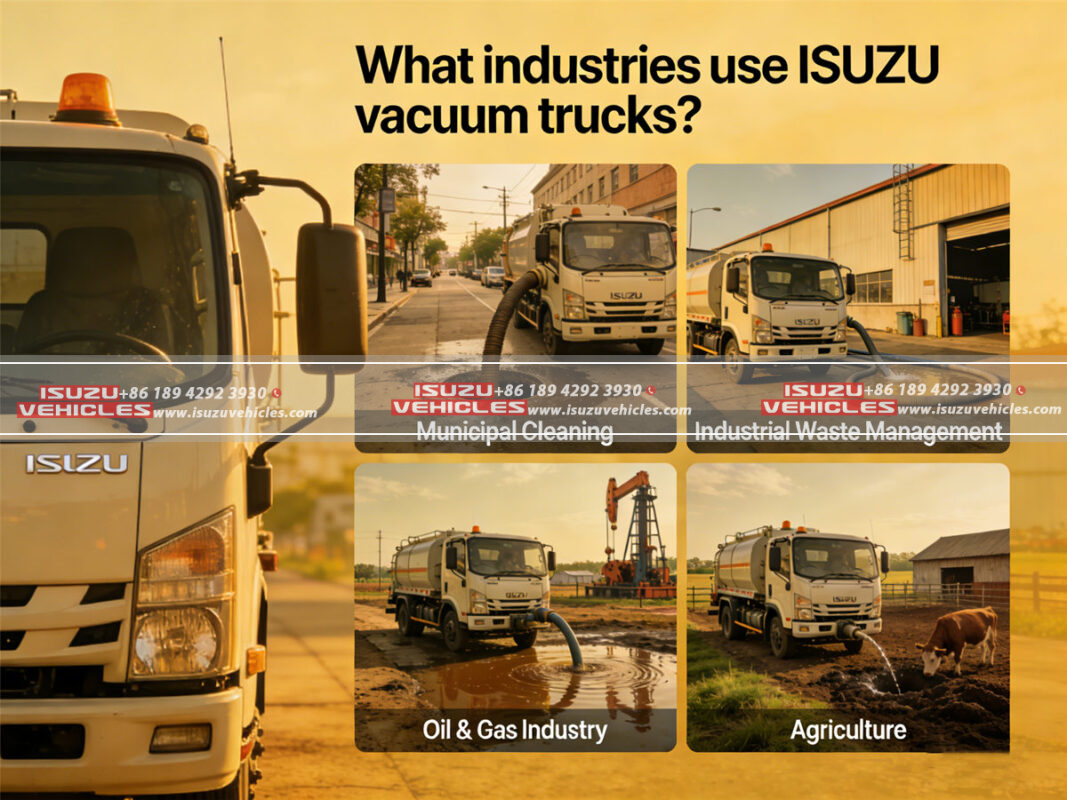
Understanding the Role of ISUZU Vacuum Trucks in Modern Industry
In today’s industrial landscape, where environmental compliance, operational efficiency, and public health standards are more demanding than ever, specialized equipment plays a critical role in maintaining infrastructure and ensuring uninterrupted service delivery. Among these specialized assets, ISUZU vacuum trucks have emerged as versatile and dependable solutions for liquid waste removal, sludge transport, hydro-excavation, and industrial cleaning operations. Built on durable commercial chassis platforms and engineered for reliability, these vehicles serve a broad spectrum of industries that depend on controlled suction, safe containment, and efficient material transfer.
Vacuum trucks are not merely utility vehicles; they are integral components of sanitation systems, oilfield services, municipal infrastructure maintenance, and manufacturing processes. Their ability to safely extract, transport, and discharge both wet and semi-solid materials makes them indispensable in environments where downtime can lead to regulatory penalties, environmental damage, or operational disruption. Understanding which industries rely on these trucks helps fleet managers and procurement officers make informed decisions based on real-world operating demands rather than theoretical specifications.
Municipal Sanitation and Public Works
One of the largest user groups of vacuum trucks is the municipal sector, where public health and environmental protection are primary responsibilities of local governments.
Sewer and Drain Maintenance
City sewer networks require constant inspection, cleaning, and sludge removal to prevent blockages, overflows, and contamination. ISUZU vacuum trucks are frequently deployed to:
- Extract sludge from sewer lines
- Clean stormwater drainage systems
- Maintain septic tanks in residential zones
- Remove debris from culverts and underground channels
In densely populated urban areas, maneuverability and reliability are critical. Municipal operators often choose medium-capacity vacuum configurations mounted on agile ISUZU chassis platforms, allowing crews to navigate narrow streets while maintaining sufficient tank volume for efficient service cycles.
Emergency Spill Response
Public works departments also rely on vacuum trucks for emergency response scenarios, including flood recovery and accidental wastewater discharges. The ability to rapidly deploy a truck capable of high-capacity suction minimizes environmental damage and reduces cleanup time, particularly in areas prone to heavy rainfall or infrastructure strain.
For municipalities balancing limited budgets with growing service demands, investing in dependable vacuum equipment can significantly reduce long-term maintenance costs across water and waste systems.
Oil and Gas Industry Applications
The oil and gas sector represents one of the most demanding operational environments for vacuum truck deployment, where equipment must withstand harsh conditions and continuous heavy-duty use.
Drilling Site Waste Removal
During drilling operations, significant volumes of drilling mud, cuttings, and wastewater accumulate at well sites. ISUZU vacuum trucks are used to:
- Remove drilling fluids
- Transport contaminated water
- Extract sludge from containment pits
- Support rig maintenance
These operations often occur in remote locations where road conditions are challenging and service intervals are extended. The durability of ISUZU’s commercial chassis, combined with reinforced tank and pump systems, provides a reliable platform for such rugged environments.
Refinery and Industrial Cleaning
Within refineries and petrochemical facilities, vacuum trucks assist with tank cleaning, sludge removal, and hazardous material containment. Given the strict regulatory frameworks governing environmental safety, equipment must meet compliance standards while maintaining operational efficiency. High-powered suction systems and corrosion-resistant tanks ensure that hazardous materials can be safely managed and transported.
Construction and Infrastructure Development
The construction industry relies heavily on vacuum trucks, particularly in projects where excavation intersects with underground utilities or contaminated materials.
Hydro-Excavation Services
Hydro-excavation, which uses pressurized water combined with vacuum suction to expose underground utilities safely, has become increasingly popular due to its precision and reduced risk of damaging infrastructure. ISUZU vacuum trucks equipped with hydro-excavation systems are frequently used for:
- Utility line installation
- Fiber optic cable placement
- Pipeline maintenance
- Foundation preparation
This non-destructive method minimizes project delays and reduces liability risks associated with accidental strikes on gas, water, or electrical lines.
Concrete Slurry and Site Cleanup
Construction sites generate slurry, sediment, and wastewater that must be properly managed to prevent environmental violations. Vacuum trucks play a vital role in extracting and transporting these materials to approved disposal facilities, ensuring compliance with environmental regulations and keeping project timelines on track.
Industrial Manufacturing and Processing Facilities
Manufacturing plants, food processing facilities, and heavy industrial complexes also depend on vacuum trucks for routine maintenance and regulatory compliance.
Tank and Pit Cleaning
Many industrial processes involve storage tanks, sediment pits, or wastewater basins that require periodic cleaning to maintain efficiency and prevent contamination. ISUZU vacuum trucks offer a mobile solution that can service multiple facilities within a region, reducing the need for permanent on-site cleaning systems.
Hazardous Waste Handling
Facilities that generate hazardous byproducts must adhere to strict environmental standards. Vacuum trucks equipped with sealed containment systems allow safe collection and transport of hazardous liquids and sludge, supporting compliance with national and international environmental regulations.
For plant managers, the value of vacuum trucks lies not only in waste removal but in their ability to prevent costly shutdowns caused by clogged systems or regulatory breaches.
Agriculture and Environmental Services
The agricultural sector may not be the first industry associated with vacuum trucks, yet it represents an important and growing user base.
Manure and Wastewater Management
Large-scale livestock operations generate significant volumes of manure and wastewater that must be safely removed and redistributed. Vacuum trucks assist in transporting liquid waste to designated treatment or land application sites, ensuring efficient nutrient management and environmental protection.
Environmental Remediation
Environmental service providers utilize vacuum trucks in soil remediation, contaminated site cleanup, and waterway restoration projects. The controlled suction capability allows operators to remove pollutants without spreading contamination, which is particularly important in sensitive ecosystems.
As environmental regulations tighten worldwide, the demand for reliable vacuum solutions in both agriculture and remediation continues to expand.
Fleet Strategy and Equipment Integration Across Industries
When evaluating the industries that rely on vacuum trucks, a common thread emerges: the need for dependable, adaptable, and durable equipment capable of handling diverse materials under challenging conditions. For fleet managers, integrating vacuum trucks into a broader commercial vehicle portfolio requires strategic planning that considers service coverage, maintenance support, and long-term scalability.
In many organizations, vacuum trucks operate alongside other specialized vehicles such as a garbage truck for solid waste collection or a sweeper truck for roadway cleaning, creating a comprehensive municipal or industrial service fleet. Each vehicle type serves a distinct purpose, yet all rely on robust chassis engineering and dependable performance standards. By leveraging the reliability and adaptability of ISUZU Vehicles, businesses and public agencies can build integrated fleets that address sanitation, environmental protection, and infrastructure maintenance in a coordinated and cost-effective manner, ensuring operational resilience across multiple industries and evolving service demands.