
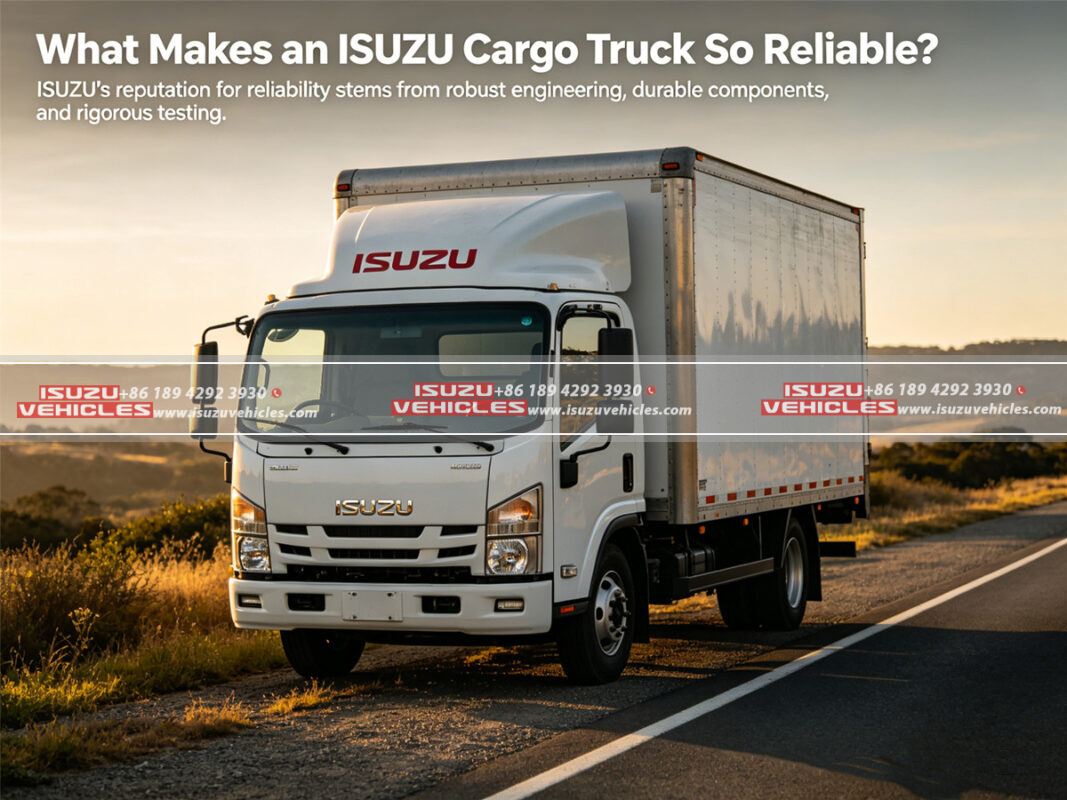
The Foundation of Reliability in Modern Commercial Transport
In the world of commercial transportation, reliability is not just a desirable feature but a fundamental requirement that determines operational success, profitability, and long-term sustainability for businesses that depend on consistent movement of goods. Whether operating in logistics, construction supply chains, retail distribution, or industrial freight, companies require vehicles that can perform day after day without unexpected breakdowns or costly downtime, and this is where the reputation of the ISUZU cargo truck has been firmly established.
Reliability in this context is not achieved through a single design element but rather through a combination of engineering precision, durable materials, and decades of refinement in vehicle manufacturing. ISUZU has built its reputation by consistently delivering trucks that are capable of handling demanding workloads while maintaining efficiency and mechanical stability across diverse operating environments, from congested urban streets to long-haul regional routes.
Engine Engineering and Mechanical Durability
At the core of any reliable cargo truck lies its engine system, and ISUZU has invested heavily in developing powertrains that prioritize endurance, fuel efficiency, and consistent performance under varying load conditions. These engines are designed not only to deliver sufficient power but also to maintain stability over long periods of continuous operation, which is essential for commercial fleets that operate daily schedules without interruption.
Fuel-Efficient and High-Torque Performance
One of the defining characteristics of ISUZU engines is their ability to balance fuel efficiency with high torque output, ensuring that the truck can carry heavy loads without excessive fuel consumption. This balance is particularly important in industries where operational costs are closely monitored, and even small improvements in fuel efficiency can translate into significant long-term savings.
High torque performance also ensures that the truck can handle steep inclines, heavy payloads, and stop-and-go traffic conditions without strain, making it suitable for both urban and rural applications.
Long-Term Engine Reliability and Maintenance Intervals
Another key factor contributing to reliability is the extended maintenance intervals engineered into ISUZU cargo trucks. These vehicles are designed to operate for long periods between servicing, reducing downtime and allowing businesses to maximize operational efficiency.
The durability of internal components, including pistons, fuel injection systems, and cooling mechanisms, ensures that the engine remains stable even under continuous stress, which is critical for fleet operators managing multiple vehicles.
Thermal Management and Operational Stability
Effective thermal management is essential for maintaining engine health, especially in demanding climates or during extended periods of operation. ISUZU cargo trucks incorporate advanced cooling systems that regulate engine temperature efficiently, preventing overheating and ensuring consistent performance.
This stability reduces wear and tear on critical components, further enhancing long-term reliability.
Structural Design and Load-Bearing Capability
Beyond the engine, the structural integrity of the truck plays a major role in determining its overall reliability, particularly when transporting heavy or uneven loads across varying road conditions.
Reinforced Chassis Construction
The chassis of an ISUZU cargo truck is engineered with high-strength materials that provide exceptional durability and resistance to stress, ensuring that the vehicle can withstand continuous loading and unloading cycles without structural degradation.
This reinforcement is particularly important for businesses that rely on daily freight movement, as it reduces the likelihood of structural failures over time.
Balanced Load Distribution Systems
Proper weight distribution is essential for maintaining stability and reducing mechanical stress on the vehicle. ISUZU trucks are designed with optimized axle configurations that ensure loads are evenly distributed, improving handling and reducing tire and suspension wear.
This contributes directly to safer operation and longer vehicle lifespan.
Adaptability for Different Cargo Types
ISUZU cargo trucks are versatile enough to accommodate a wide range of cargo configurations, including palletized goods, loose materials, and temperature-sensitive shipments. This adaptability allows businesses to use a single platform for multiple applications.
In some cases, these trucks are configured as a box truck, providing enclosed cargo protection for secure and organized transportation of goods.
Technology, Safety, and Operational Intelligence
Modern cargo trucks are no longer purely mechanical systems; they are increasingly integrated with advanced technologies that enhance safety, monitoring, and operational efficiency.
Driver Assistance and Safety Systems
ISUZU cargo trucks are equipped with safety features such as anti-lock braking systems, stability control, and advanced suspension systems that improve handling and reduce accident risk. These systems are particularly important in urban environments where sudden stops and tight maneuvering are common.
Safety technologies not only protect drivers but also help reduce operational disruptions caused by accidents or vehicle damage.
Telematics and Fleet Monitoring
Many ISUZU trucks now include telematics systems that allow fleet operators to monitor vehicle performance, location, fuel consumption, and maintenance needs in real time. This data-driven approach enables better decision-making and more efficient fleet management.
By identifying potential issues early, operators can prevent breakdowns and extend vehicle lifespan.
Driver Comfort and Ergonomic Design
Reliability is also influenced by driver performance, which is why ISUZU places strong emphasis on cabin comfort and ergonomic design. Comfortable seating, intuitive controls, and reduced cabin noise all contribute to lower driver fatigue.
A well-rested driver is less likely to make errors, which directly improves operational reliability.
Operational Versatility Across Industries
One of the reasons ISUZU cargo trucks are considered highly reliable is their ability to perform consistently across multiple industries and use cases, adapting to different logistical demands without compromising performance.
Urban Logistics and Distribution Networks
In urban environments, ISUZU cargo trucks are widely used for last-mile delivery and retail distribution, where frequent stops and tight delivery schedules require dependable performance. Their maneuverability and efficiency make them ideal for city operations.
This reliability ensures that goods are delivered on time, even under congested traffic conditions.
Cold Chain and Temperature-Controlled Transport
When equipped with refrigeration systems, ISUZU cargo trucks can function as a freezer truck, enabling the safe transport of perishable goods such as food, pharmaceuticals, and medical supplies.
Maintaining consistent internal temperatures is critical in these applications, and ISUZU’s engineering ensures that cooling systems operate efficiently without compromising fuel performance.
Industrial and Commercial Freight Operations
In industrial settings, ISUZU cargo trucks are used for transporting raw materials, machinery, and equipment, often under demanding conditions. Their durability and load-handling capability make them suitable for continuous heavy-duty use.
This versatility enhances their value for businesses operating across multiple sectors.
Maintenance Efficiency and Lifecycle Performance
A major contributor to the reliability of ISUZU cargo trucks is their ease of maintenance and long operational lifecycle, which allows businesses to maximize return on investment.
Simplified Service Requirements
ISUZU vehicles are designed to simplify maintenance procedures, with accessible components and standardized systems that reduce service time. This allows fleet operators to keep vehicles on the road for longer periods.
Reduced maintenance complexity also lowers overall operating costs.
Durable Component Lifespan
Key components such as transmissions, suspension systems, and braking mechanisms are built to withstand extended use, reducing the frequency of replacements and repairs. This durability is essential for maintaining consistent fleet performance.
Long-lasting components contribute directly to operational reliability.
Predictable Lifecycle Planning
Because ISUZU trucks are known for their consistent performance over time, businesses can plan fleet upgrades and replacements more effectively, avoiding unexpected disruptions.
This predictability is a significant advantage in logistics planning.
In modern transport ecosystems, ISUZU cargo trucks often operate alongside specialized vehicles such as a box truck for structured urban deliveries and a freezer truck for temperature-sensitive logistics, forming an integrated and highly efficient fleet system that reflects the engineering reliability and long-term durability associated with ISUZU Vehicles.