
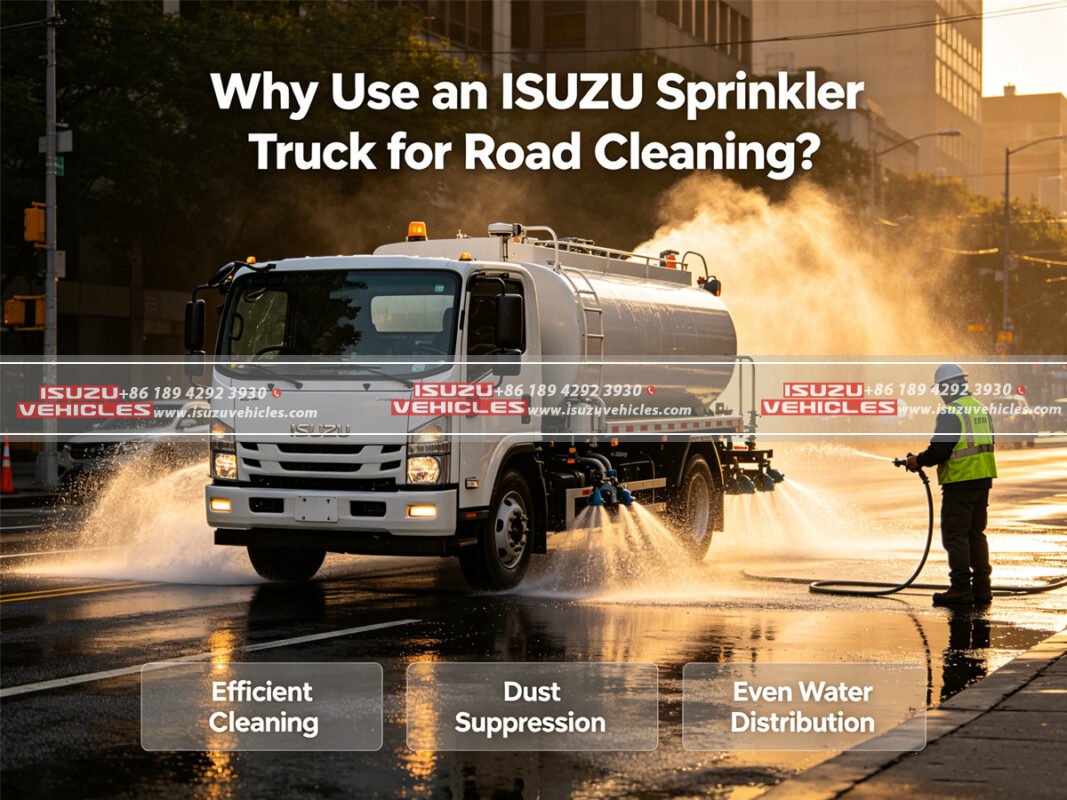
Understanding the Importance of Road Cleaning and the Role of ISUZU Sprinkler Trucks
In modern cities, road cleaning is no longer limited to simply removing visible dust and debris from streets. It has become an essential part of urban environmental management, involving dust suppression, road surface maintenance, pollution control, and improvement of public spaces. As cities continue to expand and vehicle traffic increases, municipal departments and sanitation companies require reliable equipment that can maintain clean and safe road conditions efficiently. This is where the ISUZU Sprinkler Truck plays an important role by providing a professional solution for large-scale road washing, watering, and dust reduction operations.
A sprinkler truck , also commonly known as a water spray truck, is specially designed to transport and distribute large amounts of water through a series of pumps, pipelines, and spray nozzles. Unlike ordinary water transportation vehicles, it is equipped with advanced spraying systems that allow operators to control water flow, spraying distance, and coverage area according to different road cleaning requirements.
Built on the reliable foundation of ISUZU commercial vehicle technology, ISUZU sprinkler trucks combine strong chassis performance, efficient water delivery systems, and durable tank structures to handle demanding municipal operations. These trucks are widely used for urban road cleaning, highway maintenance, construction dust control, landscaping irrigation, and emergency water supply.
The reason many cities choose ISUZU sprinkler trucks is not only because of their water carrying capacity but also because of their ability to provide stable, repeatable, and efficient cleaning performance over long operating periods. For sanitation departments, investing in a dependable sprinkler truck means improving road cleanliness while reducing labor requirements and increasing operational efficiency.
How ISUZU Sprinkler Truck Systems Improve Road Cleaning Efficiency
The effectiveness of a sprinkler truck depends on the cooperation between several key systems, including the water tank, pump system, spraying equipment, and vehicle control mechanisms. Each component contributes to creating a more efficient and controlled road cleaning process.
Large-Capacity Water Tank for Extended Operations
One of the primary advantages of an ISUZU Sprinkler Truck is its large-capacity water tank, which allows the vehicle to complete longer cleaning routes without frequent refilling. The tank is manufactured using durable materials that provide excellent corrosion resistance, ensuring reliable performance even after years of exposure to water and outdoor working conditions.
Different models can be equipped with various tank capacities depending on application requirements. Smaller units are suitable for urban streets and residential areas where maneuverability is important, while larger configurations are ideal for highways, industrial zones, and large municipal projects where continuous operation is required.
A larger water capacity improves productivity because operators can cover more road distance during each working cycle. This reduces unnecessary travel between water sources and cleaning areas, saving both time and fuel.
High-Pressure Water Pump and Spray Control System
The heart of the sprinkler truck is the water pumping system, which determines the pressure, range, and consistency of water spraying. ISUZU sprinkler trucks are equipped with efficient water pumps that provide stable pressure output, allowing water to be distributed evenly across different road surfaces.
The spray system usually includes front sprinklers, rear sprinklers, side nozzles, and water cannons. Each spraying method serves a different purpose:
- Front sprinklers are commonly used for road surface washing.
- Rear spray bars provide wide-area watering coverage.
- Side nozzles help clean road edges and sidewalks.
- Water cannons provide long-distance spraying for dust suppression and special applications.
This flexible design allows operators to adapt the truck’s performance based on road conditions, weather changes, and cleaning requirements.
Environmental Benefits of Using ISUZU Sprinkler Trucks for Road Maintenance
Road cleaning is not only about improving appearance; it also directly contributes to environmental protection and public health. Dust particles, vehicle emissions, and construction activities can create air quality problems, especially in densely populated urban areas.
Effective Dust Suppression and Air Quality Improvement
One of the most important functions of an ISUZU sprinkler truck is controlling airborne dust. When roads become dry, vehicle movement can lift fine particles into the air, creating pollution that affects pedestrians, drivers, and nearby communities.
By spraying controlled amounts of water onto road surfaces, sprinkler trucks reduce dust generation and help maintain cleaner air conditions. This is particularly valuable near construction areas, industrial zones, and heavily traveled roads where dust levels are often higher.
Regular water spraying also helps reduce the accumulation of dirt and pollutants on road surfaces, creating a cleaner and healthier urban environment.
Supporting Green City Development
Many cities are focusing on sustainable development and improving public infrastructure quality. Sprinkler trucks support these goals by helping maintain cleaner streets, healthier roadside vegetation, and more attractive public spaces.
Beyond road cleaning, ISUZU sprinkler trucks can also support landscaping operations by providing irrigation services for trees, parks, and roadside plants. This multifunctional capability makes them valuable assets for municipal departments that need one vehicle to perform multiple environmental maintenance tasks.
Durability and Operational Advantages of ISUZU Sprinkler Trucks
For municipal and commercial operators, vehicle durability is one of the most important purchasing considerations. Road cleaning vehicles often work every day under challenging conditions, including heavy traffic, changing weather, and long operating hours.
Strong Chassis Performance for Heavy-Duty Work
ISUZU sprinkler trucks are built on commercial truck chassis designed for continuous operation. The reinforced frame structure provides strong load-bearing capability, allowing the vehicle to safely carry thousands of liters of water while maintaining stable driving performance.
A fully loaded sprinkler truck creates significant weight pressure on the chassis, suspension, and braking system. ISUZU engineering focuses on balancing strength and reliability, ensuring that the vehicle remains stable during acceleration, braking, and turning.
This durability reduces maintenance frequency and helps operators achieve a longer service life from their fleet investment.
Fuel Efficiency and Easy Maintenance
Operating costs are another important factor for sanitation fleets. Since sprinkler trucks often travel long distances every day, fuel efficiency directly affects overall expenses.
ISUZU engines are designed to provide reliable power while maintaining efficient fuel consumption. Combined with accessible maintenance points and widely available service support, these vehicles are easier to manage throughout their operational lifespan.
For fleet owners, this means reduced downtime, predictable maintenance costs, and improved productivity.
ISUZU Sprinkler Trucks Compared with Other Sanitation Vehicles
Modern urban cleaning operations usually require several types of specialized vehicles working together. While sprinkler trucks play an important role in washing and dust control, other sanitation vehicles handle different cleaning tasks.
Sprinkler Truck vs Sweeper Truck
A sweeper truck is designed mainly for collecting dust, leaves, garbage, and debris from road surfaces. It uses brushes and vacuum systems to physically remove waste materials.
An ISUZU sprinkler truck, however, focuses on water-based cleaning and dust suppression. Instead of collecting debris, it improves road conditions by washing surfaces and controlling airborne particles.
In many municipal operations, sprinkler trucks and sweeper trucks work together. The sprinkler truck first reduces dust and softens accumulated dirt, while the sweeper truck removes the loosened materials more effectively.
Sprinkler Truck vs Garbage Truck
A garbage truck has a completely different purpose, as it is designed for waste collection, compression, and transportation rather than road cleaning.
While garbage trucks improve urban sanitation by managing household and commercial waste, sprinkler trucks focus on maintaining road environments. Together, these specialized vehicles create a complete urban cleaning system covering waste management, road maintenance, and environmental improvement.
Applications and Future Development of ISUZU Sprinkler Trucks
The application range of ISUZU sprinkler trucks continues to expand as cities require more efficient environmental management solutions. They are widely used by municipal governments, construction companies, industrial parks, airports, highways, and landscaping departments.
In construction areas, sprinkler trucks reduce the dust generated by excavation and transportation activities. On highways, they help maintain road cleanliness and improve driving visibility. In urban areas, they support daily sanitation programs and create cleaner living environments for residents.
With increasing attention toward smart city development, future sprinkler trucks are expected to include more advanced technologies such as intelligent water control systems, automated route planning, and improved energy efficiency.
As part of a complete sanitation and infrastructure fleet, ISUZU Vehicles continue to provide dependable solutions for modern urban management. Whether supporting road cleaning, environmental protection, or public maintenance projects, ISUZU sprinkler trucks demonstrate the durability, versatility, and operational efficiency required for today’s demanding sanitation tasks.