
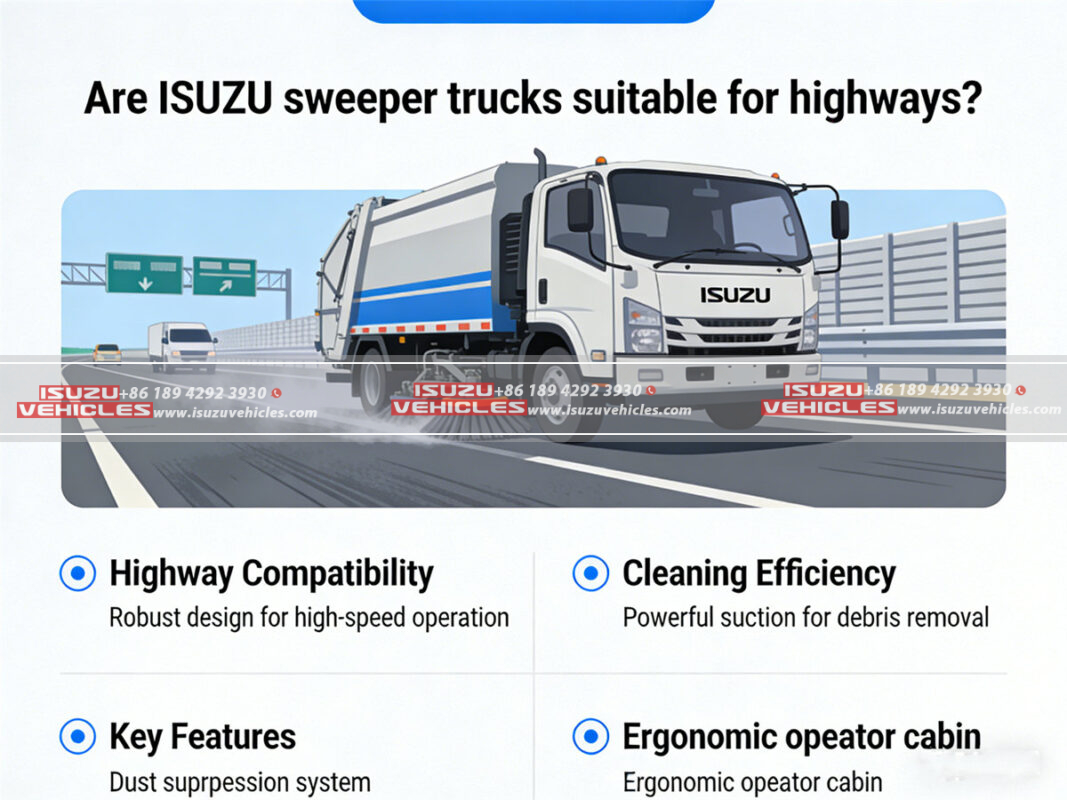
Highway infrastructure represents one of the most critical public assets in any nation, supporting economic growth, supply chain continuity, emergency mobility, and daily commuter traffic, all of which depend on safe and well-maintained road surfaces. As transportation authorities and private contractors evaluate equipment for large-scale roadway cleaning operations, a common and practical question arises: are ISUZU sweeper trucks truly suitable for highway applications, where higher speeds, wider lanes, heavier debris loads, and extended operational cycles create a far more demanding environment than standard urban street cleaning?
The answer requires a comprehensive examination of vehicle engineering, sweeping system performance, durability under sustained workloads, safety compliance, and long-term cost efficiency. While sweepers are often associated with city streets and municipal roads, highway maintenance presents distinct operational challenges that require equipment capable of maintaining stability at speed, handling coarse debris, and sustaining productivity over long shifts without excessive downtime. Understanding whether ISUZU-based sweepers meet these criteria demands a deeper, real-world perspective rather than a superficial review of specifications.
Operational Demands of Highway Sweeping
Highway cleaning is fundamentally different from residential or downtown street sweeping, and equipment selection must reflect those differences.
Higher Speeds and Extended Coverage
Unlike city streets where sweeping may occur at slow speeds with frequent stops, highway maintenance often requires covering dozens or even hundreds of kilometers in a single operational cycle. Although sweeping speed itself remains moderate for effective debris collection, the truck must travel at higher transit speeds between sections, which places additional stress on chassis components and braking systems.
An appropriate highway sweeper must therefore provide:
- Stable handling at highway travel speeds
- Reliable braking performance under load
- Strong suspension systems to absorb road vibration
- Efficient fuel consumption over long distances
ISUZU’s commercial chassis platforms are engineered for consistent highway travel in logistics and utility sectors, which provides a strong foundation for adaptation into sweeping configurations.
Heavier and More Hazardous Debris
Highways accumulate different types of debris compared to urban streets, including tire fragments, gravel, sand from winter operations, cargo spillage, and occasionally metallic objects. The sweeping mechanism must be powerful enough to collect heavier materials without excessive wear or mechanical failure.
Vacuum systems, mechanical broom assemblies, and high-capacity hoppers must be engineered to withstand abrasive materials while maintaining consistent suction and airflow.
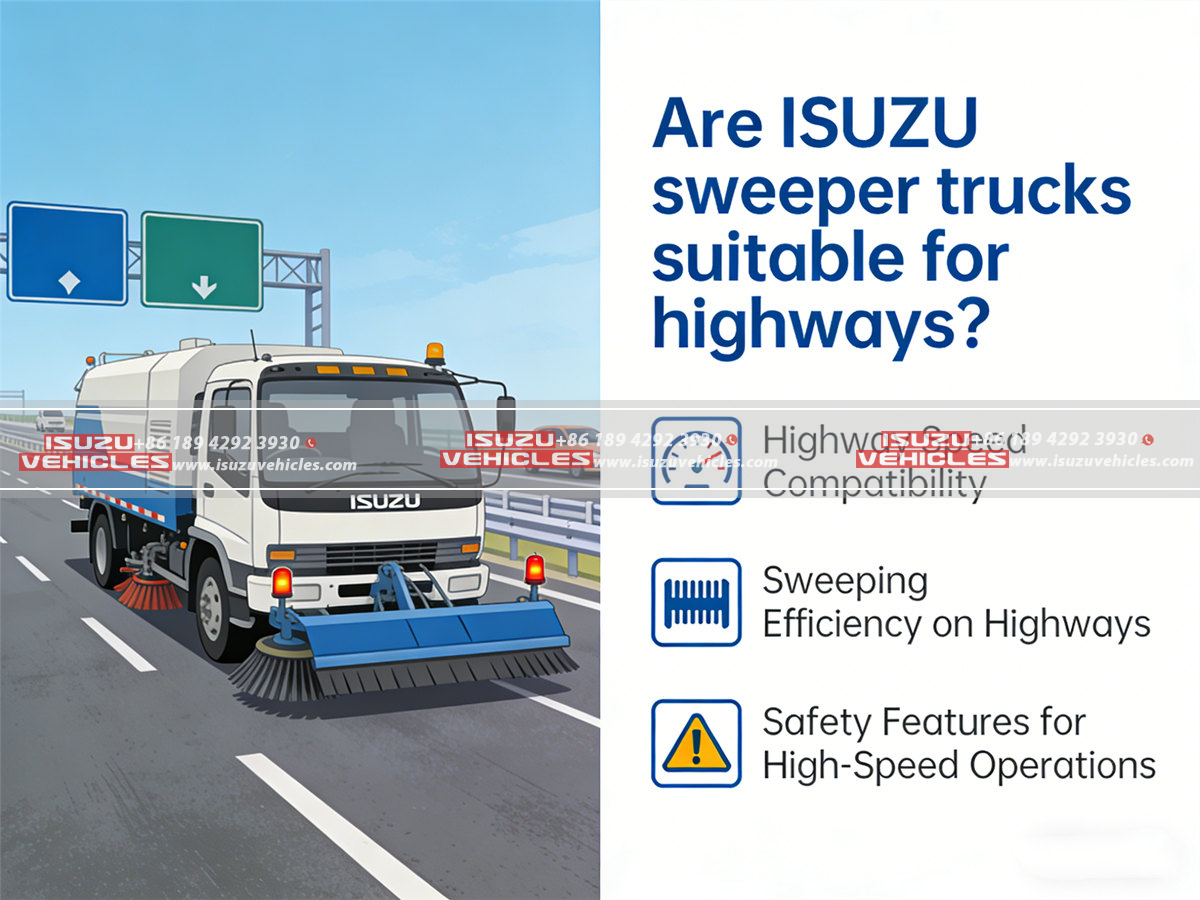
Chassis Stability and Structural Durability
The underlying chassis is the backbone of any specialized vehicle, and in highway applications, structural integrity becomes even more critical due to sustained usage cycles.
Frame Reinforcement and Load Distribution
An effective ISUZU sweeper truck built for highways typically features reinforced frame rails to accommodate the additional weight of water tanks, debris hoppers, vacuum systems, and auxiliary hydraulic components. Proper load distribution across axles ensures stability, particularly when the hopper becomes fully loaded.
Because highway sweeping often involves long uninterrupted runs, uneven load distribution could result in accelerated tire wear, compromised steering response, or braking inefficiencies. ISUZU’s heavy-duty and medium-duty platforms are designed with balanced weight geometry, making them suitable candidates for high-demand sweeping conversions.
Suspension and Ride Control
Highway surfaces, while smoother than urban streets, still produce significant vibration over extended distances. Enhanced suspension systems reduce operator fatigue and protect mechanical components from premature wear. For fleet managers evaluating lifecycle costs, suspension quality directly affects maintenance frequency and long-term durability.
Sweeping System Performance for Highway Conditions
Beyond chassis strength, the effectiveness of a highway sweeper depends heavily on its cleaning system.
Vacuum and Mechanical Broom Integration
Highway sweepers typically combine mechanical side brushes with high-powered vacuum systems to collect both fine dust and larger debris. ISUZU-based sweepers can be configured with:
- Dual or triple brush assemblies
- High-capacity suction turbines
- Dust suppression water spray systems
- Large-volume debris hoppers
These features enable consistent cleaning performance across wide lanes and shoulders, areas that often accumulate debris blown by wind turbulence from passing vehicles.
Water Tank and Dust Control Capacity
Dust control is particularly important on highways, where high-speed traffic can create significant air displacement. Adequate onboard water capacity ensures continuous dust suppression during sweeping operations, improving visibility and reducing airborne particulate hazards.
Larger water tanks also allow for extended operational windows before refilling, which is essential when working on long highway stretches far from service depots.
Safety and Regulatory Compliance
Highway work zones are inherently high-risk environments, and equipment must meet stringent safety standards.
Visibility and Warning Systems
Highway sweeper trucks must be equipped with high-visibility markings, LED warning lights, arrow boards, and reflective surfaces to alert approaching drivers. Because traffic speeds are significantly higher than in urban settings, advanced warning systems are critical to preventing collisions.
ISUZU chassis platforms provide stable electrical systems capable of supporting these auxiliary safety features without compromising performance.
Braking and Control Systems
Reliable braking systems are essential when operating in live traffic conditions. Anti-lock braking systems (ABS), stability control, and effective retarder systems contribute to safer operation, particularly when the vehicle is heavily loaded with collected debris.
For agencies responsible for public safety, compliance with national transportation regulations is non-negotiable, and selecting a chassis platform known for consistent highway performance provides an added layer of confidence.
Cost Efficiency and Lifecycle Considerations
From a procurement perspective, suitability is not solely determined by performance metrics; long-term financial sustainability must also be evaluated.
Fuel Consumption and Operating Range
Highway sweeping can involve long transit distances between cleaning zones. Fuel efficiency, therefore, becomes a significant factor in operational budgeting. ISUZU engines are recognized for their balanced fuel economy and durability, making them attractive for agencies seeking to manage recurring costs without sacrificing reliability.
Maintenance Accessibility and Downtime
Because highway sweepers often operate on fixed schedules tied to public safety requirements, unexpected downtime can disrupt service delivery. Access to widely available service networks and spare parts reduces repair turnaround time and enhances fleet availability.
ISUZU’s global footprint and established service infrastructure contribute to predictable maintenance cycles, which is particularly valuable for contractors managing multiple service routes.
Strategic Fit Within a Highway Maintenance Fleet
When determining whether ISUZU-based sweepers are appropriate for highway use, decision-makers must assess how these vehicles integrate within a broader fleet strategy. Highway maintenance operations typically include multiple specialized units, ranging from snow plows and debris removal equipment to support vehicles.
In many public works departments, a garbage truck handles solid waste collection in urban areas, while a specialized sweeper truck addresses surface debris control. When built on reliable commercial chassis platforms, these vehicles complement each other within a diversified service fleet. By incorporating durable and adaptable ISUZU Vehicles into highway maintenance programs, agencies and contractors can achieve a balanced combination of maneuverability, operational efficiency, and long-term cost control, ensuring that high-speed transportation corridors remain safe, clean, and fully functional under demanding real-world conditions.