
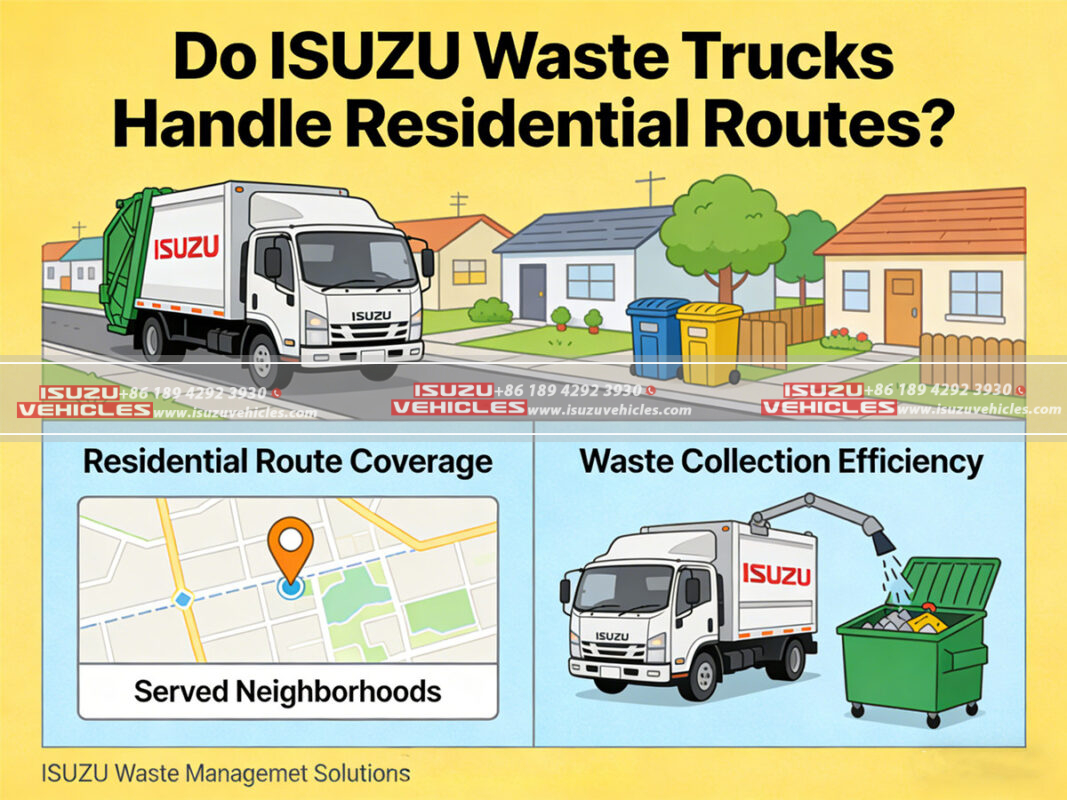
Understanding Residential Waste Collection Demands
Residential waste collection may appear straightforward from a distance, yet any fleet manager or municipal sanitation director understands that neighborhood routes present a uniquely demanding operational environment where vehicle maneuverability, stop-and-go durability, hydraulic reliability, and driver ergonomics are tested every single day. The question of whether ISUZU waste trucks can effectively handle residential routes is therefore not merely about engine power or payload capacity, but about how well the entire vehicle system performs under tight turning radii, frequent braking cycles, variable waste volumes, and the unpredictable realities of suburban and urban infrastructure.
Unlike long-haul freight vehicles that operate primarily on open highways, residential waste trucks must navigate narrow streets lined with parked cars, cul-de-sacs with limited turnaround space, low-hanging tree branches, uneven pavement, and high pedestrian activity. Each shift can involve hundreds of stops, constant hydraulic compaction cycles, and significant driver interaction with collection mechanisms. Consequently, the suitability of a waste truck for residential service depends on its adaptability, reliability, and efficiency within this high-frequency operational model.
ISUZU, with its longstanding presence in medium-duty commercial vehicle manufacturing, has positioned its waste truck platforms as practical solutions for municipalities and private waste management companies seeking balance between maneuverability and payload capacity. To evaluate whether they truly meet residential route demands, it is essential to examine chassis configuration, body integration, compaction systems, fuel efficiency, safety features, and lifecycle cost considerations.
Chassis Design and Maneuverability in Residential Areas
One of the defining characteristics of residential waste collection is the necessity for agile vehicle handling in confined spaces, where large turning radii and excessive vehicle length can create operational bottlenecks.
Compact Dimensions with Adequate Payload
ISUZU waste trucks are commonly built on medium-duty chassis platforms that offer a strong compromise between compact overall length and sufficient gross vehicle weight rating (GVWR). This balance allows operators to carry substantial waste volumes without sacrificing the ability to maneuver through tight residential grids.
A shorter wheelbase configuration is particularly advantageous in neighborhoods featuring:
- Cul-de-sacs
- Narrow alleyways
- Closely spaced driveways
- Limited on-street clearance
These design attributes make ISUZU platforms especially suitable for suburban and small urban municipalities that require efficiency without the bulk of heavy-duty refuse haulers typically reserved for industrial or metropolitan cores.
Steering and Suspension Performance
Residential routes involve constant cornering and repetitive curb approaches. A well-calibrated steering system, combined with durable suspension components, reduces driver fatigue and protects structural integrity over time. ISUZU’s chassis engineering emphasizes balanced weight distribution and responsive handling, which contributes to consistent performance in stop-and-go environments.
Hydraulic Systems and Compaction Efficiency
Waste collection vehicles rely heavily on hydraulic systems to power lifting arms, compactors, and rear-loading mechanisms. In residential service, where hundreds of bins may be processed daily, hydraulic reliability is paramount.
High-Frequency Compaction Cycles
Residential routes often generate lighter but more frequent waste loads compared to commercial districts. This means the compaction system must operate repeatedly without overheating or experiencing pressure inconsistencies. ISUZU waste truck configurations are typically integrated with robust hydraulic pumps and reinforced compactor bodies designed to withstand sustained cyclical operation.
Efficient compaction directly impacts route productivity because:
- Better compaction increases payload density
- Fewer trips to disposal sites are required
- Fuel consumption per collected ton decreases
Over time, these efficiencies translate into measurable cost savings for municipalities and private contractors.
Automated Lifting Mechanisms
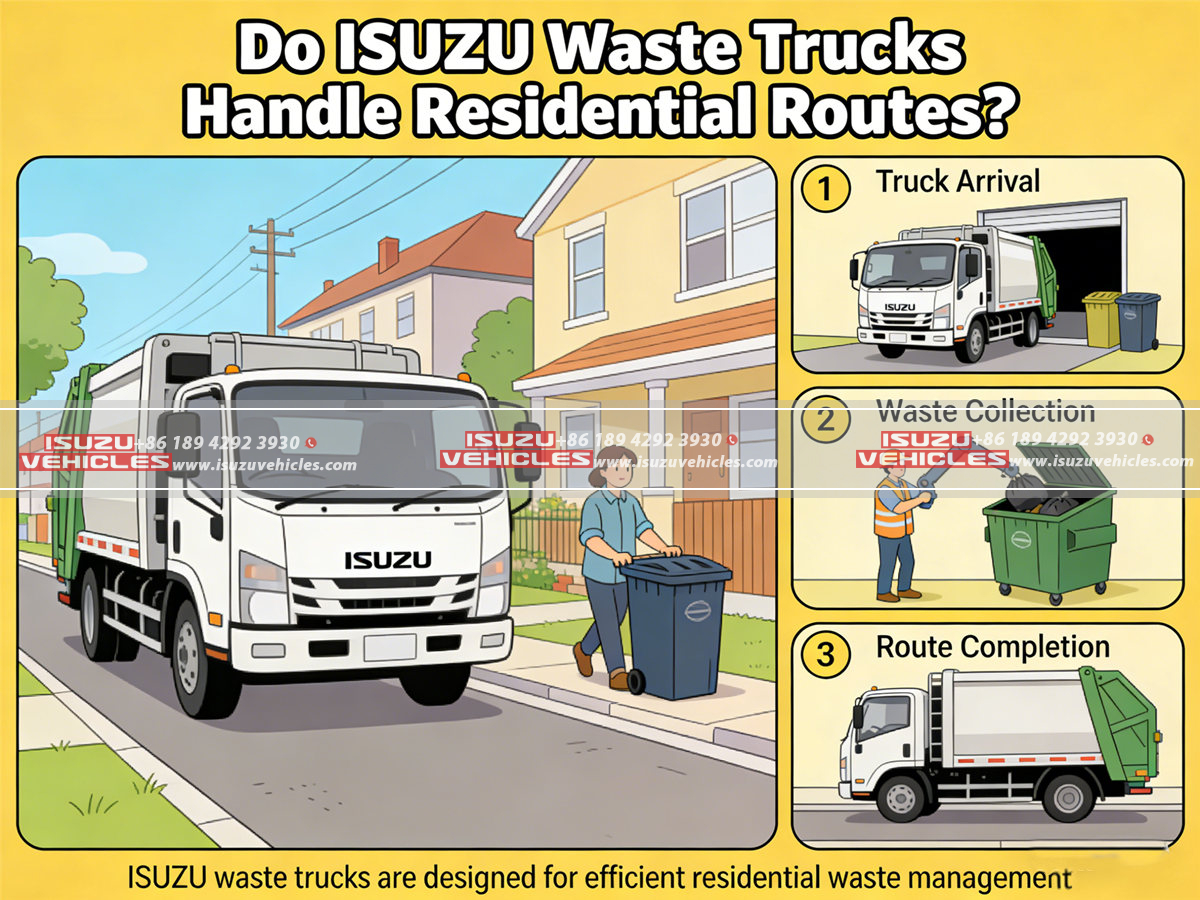
Modern residential waste collection increasingly relies on automated side loaders or rear lifters to minimize manual handling. ISUZU platforms can be equipped with advanced lifting arms capable of handling standardized bins with speed and consistency, improving both operator safety and route throughput.
Fuel Efficiency and Environmental Considerations
Fuel consumption is a significant operational expense in residential waste management, particularly because collection routes involve continuous acceleration and braking, which traditionally increases fuel burn.
Engine Efficiency in Stop-and-Go Operation
ISUZU engines are widely recognized for delivering competitive fuel economy within the medium-duty commercial vehicle segment. Their torque characteristics are well-suited to low-speed, high-frequency operation, allowing drivers to accelerate smoothly between short distances without excessive fuel waste.
For municipalities pursuing sustainability goals, improved fuel efficiency not only reduces operating budgets but also lowers carbon emissions across the fleet.
Emissions Compliance and Urban Air Quality
Residential neighborhoods are sensitive environments, and emissions compliance plays a growing role in procurement decisions. ISUZU waste trucks are designed to meet stringent emissions standards in many markets, supporting cleaner air initiatives and aligning with regulatory requirements.
Some fleet operators may also explore alternative fuel configurations or hybrid adaptations to reduce environmental impact in densely populated districts further.
Driver Comfort, Safety, and Productivity
The effectiveness of residential waste collection is directly tied to driver performance and job satisfaction. Long hours, repetitive motion, and constant vigilance demand a cab environment that promotes comfort and safety.
Ergonomic Cab Design
ISUZU waste truck cabs are typically engineered with practical ergonomics in mind, including:
- Adjustable seating
- Intuitive dashboard layouts
- Clear visibility from elevated driving positions
- Climate control systems
Enhanced visibility is particularly important in residential neighborhoods where children, pets, cyclists, and pedestrians may enter the roadway unexpectedly.
Safety Systems and Operational Controls
Modern safety features such as anti-lock braking systems (ABS), rear-view cameras, and proximity sensors contribute to reduced accident risk. Given the frequent stops and close-quarters maneuvering required on residential routes, these technologies enhance both operational safety and liability management.
For waste management companies, improved safety records can lead to lower insurance premiums and stronger public trust.
Lifecycle Cost and Maintenance Considerations
No evaluation of residential suitability would be complete without examining long-term ownership costs. Waste trucks operate under demanding conditions, and durability directly influences return on investment.
Service Accessibility and Downtime Reduction
Routine maintenance for hydraulic systems, compaction mechanisms, and chassis components must be straightforward and supported by a reliable parts network. ISUZU’s established service infrastructure in many regions provides accessible maintenance solutions, reducing downtime and ensuring fleet continuity.
Preventive maintenance programs, when paired with durable chassis engineering, help extend vehicle lifespan even under the stress of daily residential routes.
Resale Value and Fleet Renewal
As municipalities and private contractors cycle equipment over time, resale value becomes an important factor in financial planning. Vehicles with strong reputations for reliability tend to maintain higher residual values, easing the transition to newer models and supporting long-term capital budgeting strategies.
Strategic Role Within a Municipal Fleet
Residential waste collection is rarely managed by a single vehicle type. Instead, it forms part of a broader sanitation ecosystem that may include specialized vehicles for commercial waste, recycling, street cleaning, and bulk pickup services.
Within this integrated fleet structure, a garbage truck dedicated to household refuse collection often operates alongside a sweeper truck responsible for maintaining clean road surfaces and preventing debris accumulation in public areas. By incorporating reliable and adaptable platforms from ISUZU Vehicles, municipalities and contractors can build cohesive fleets that address residential sanitation needs while maintaining operational flexibility and cost efficiency across diverse service categories.