
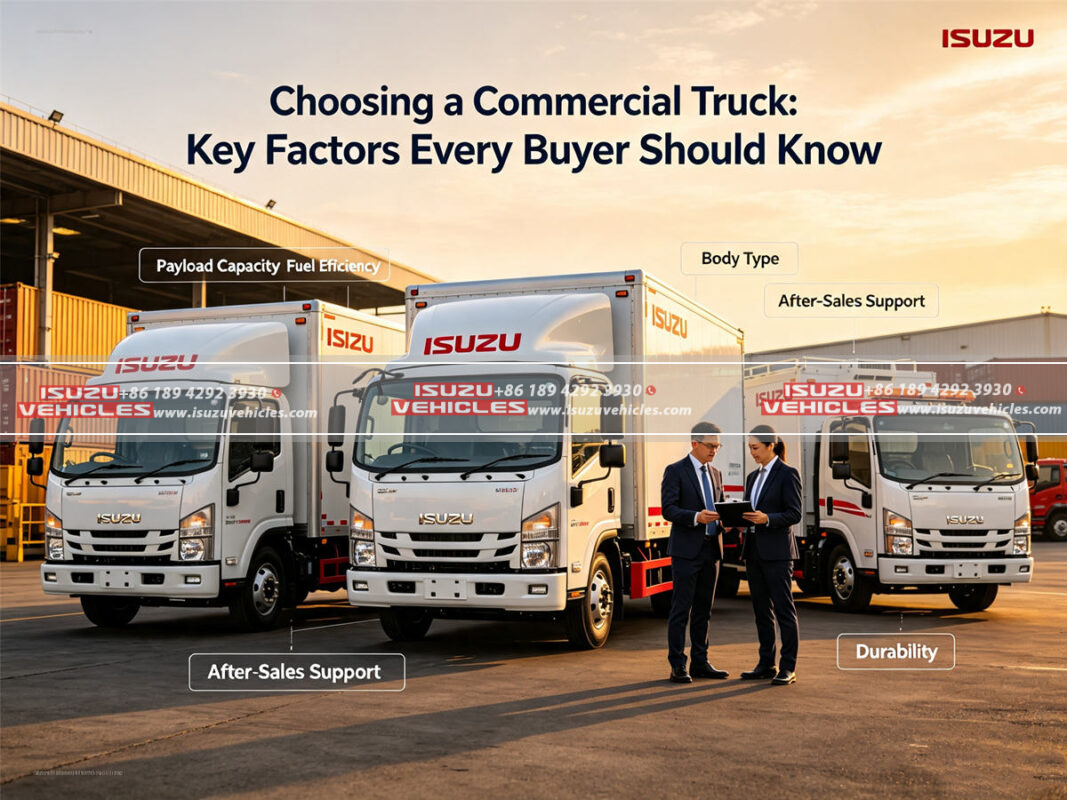
Purchasing a commercial truck is one of the most important investments for any business involved in logistics, construction, municipal services, agriculture, or distribution. Unlike passenger vehicles, commercial trucks are expected to operate for thousands of hours under demanding conditions while carrying heavy loads, traveling long distances, and maintaining reliable performance year after year. A well-chosen truck can improve operational efficiency, reduce maintenance costs, and support business growth, whereas the wrong choice may lead to frequent downtime, unnecessary expenses, and reduced productivity.
Today’s commercial vehicle market offers a wide variety of truck sizes, body configurations, engine options, and specialized equipment, making the buying process more complex than ever before. From light-duty delivery trucks to heavy-duty vocational vehicles, every model is designed with specific applications in mind. Understanding the factors that truly matter before making a purchase helps buyers invest with confidence and ensures that the truck will continue to meet operational demands as the business evolves.
Define Your Transportation Needs Before Comparing Models
The first step in selecting the right commercial truck is identifying exactly how the vehicle will be used. Many buyers focus immediately on horsepower or payload capacity, but the intended application should always drive the purchasing decision.
A company delivering retail products within a city has very different requirements from a contractor transporting heavy construction materials or a municipality operating sanitation vehicles. Understanding daily operating conditions allows buyers to narrow their options before evaluating technical specifications.
Consider the Type of Cargo
The nature of the cargo influences nearly every aspect of truck selection.
For example:
- Packaged consumer goods may only require an enclosed cargo body.
- Fresh food products need refrigerated transportation.
- Sand, gravel, or demolition debris require a dump body.
- Fuel or water transportation calls for specialized tank trucks.
- Large equipment often requires flatbed or low-bed configurations.
Matching the truck body to the cargo ensures greater efficiency while minimizing unnecessary operating costs.
Estimate Daily Operating Distance
Mileage also plays a significant role.
Urban delivery vehicles typically prioritize maneuverability, visibility, and fuel efficiency, while trucks covering long highway routes require larger fuel tanks, improved driver comfort, and engines designed for extended continuous operation.
Accurately estimating annual mileage can help predict fuel expenses, maintenance schedules, and long-term ownership costs.
Evaluate Payload Capacity Without Overestimating Your Needs
Payload capacity is one of the most frequently discussed specifications, yet it is also one of the most misunderstood.
Buying a truck with insufficient capacity may limit future operations, but purchasing an oversized vehicle often results in higher acquisition costs, increased fuel consumption, and unnecessary maintenance expenses.
The ideal truck should comfortably handle the maximum expected load while maintaining a safety margin for occasional heavier shipments.
Understand Gross Vehicle Weight Rating (GVWR)
GVWR represents the maximum allowable operating weight of the truck, including:
- Vehicle weight
- Driver and passengers
- Fuel
- Cargo
- Mounted equipment
Exceeding this rating affects braking performance, tire wear, suspension life, and legal compliance.
Think Beyond Maximum Weight
Not all freight is heavy.
Furniture, packaging materials, plastic products, and household goods occupy substantial cargo space despite having relatively low weight. In these situations, cargo volume becomes more important than payload capacity.
Selecting the correct body dimensions often improves transportation efficiency more than simply choosing a larger truck.
Pay Attention to Engine Performance and Fuel Efficiency
A truck’s engine determines not only its performance but also a significant portion of its lifetime operating expenses. Fuel costs remain one of the largest recurring expenses for commercial fleets, making engine selection an important financial decision.
Modern diesel engines are designed to balance power with efficiency, offering improved fuel economy while meeting increasingly strict emissions standards.
Choose the Right Power Output
More horsepower is not always better.
For example:
- Urban delivery trucks generally benefit from moderate engine output combined with excellent fuel economy.
- Construction vehicles frequently require higher torque for climbing steep grades and carrying heavy materials.
- Long-distance transport often emphasizes steady highway performance and engine durability.
Selecting an engine that aligns with daily operating conditions helps maximize efficiency without paying for unnecessary performance.
Transmission Matters Too
Transmission choice influences fuel consumption, driver comfort, and productivity.
Manual transmissions may offer lower purchase costs and greater driver control in certain applications, while automated manual transmissions (AMTs) have become increasingly popular due to smoother shifting, reduced driver fatigue, and improved fuel efficiency.
As labor shortages continue to affect the transportation industry, easier-to-operate transmissions can also simplify driver recruitment and training.
Look Beyond the Purchase Price
One of the most common mistakes buyers make is evaluating trucks solely based on their initial purchase price. While budget considerations are certainly important, the total cost of ownership provides a far more accurate picture of long-term value.
A truck with a slightly higher purchase price may ultimately cost less over its service life if it delivers better fuel economy, lower maintenance expenses, and stronger resale value.
Maintenance and Parts Availability
Routine maintenance is unavoidable, but repair costs vary considerably between manufacturers.
Before purchasing, buyers should consider:
- Availability of replacement parts
- Dealer service network
- Maintenance intervals
- Warranty coverage
- Technician expertise
A well-established service network reduces downtime and helps keep vehicles operating efficiently throughout their lifespan.
Reliability and Resale Value
Commercial vehicles represent long-term investments.
Brands with proven durability often retain higher resale values because second-hand buyers recognize their reliability and lower maintenance risk.
A strong resale market can significantly reduce the effective ownership cost when it is time to upgrade the fleet.
Prioritize Safety, Driver Comfort, and Future Business Growth
Modern commercial trucks are expected to do more than transport cargo. They must also provide a safe, comfortable working environment for drivers while remaining adaptable to changing business needs.
Advanced safety technologies have become increasingly common across commercial fleets, helping reduce accident risks and improve operational efficiency. Features such as anti-lock braking systems (ABS), electronic stability control, lane departure warnings, adaptive cruise control, reversing cameras, and collision mitigation systems enhance driver confidence while protecting valuable cargo.
Driver comfort also deserves careful consideration, particularly for businesses operating long routes or multiple daily deliveries. Ergonomic seating, adjustable steering wheels, intuitive dashboard layouts, effective climate control, low cabin noise, and excellent visibility contribute to reduced fatigue and higher productivity. Comfortable drivers are generally more focused, experience less physical strain, and are better equipped to maintain consistent performance throughout demanding workdays.
Finally, buyers should think beyond today’s transportation requirements and consider where their business may be several years from now. A company planning to expand its customer base, diversify services, or increase delivery volumes may benefit from selecting a truck platform that supports future body modifications or additional equipment. Investing in a versatile chassis can eliminate the need for premature fleet replacement as operational demands evolve.
Making a Smarter Investment for Long-Term Success
Choosing the right commercial truck is ultimately about balancing operational requirements, performance, efficiency, reliability, and long-term value rather than focusing on a single specification or the lowest purchase price. Careful planning before buying allows businesses to reduce operating costs, improve fleet utilization, and build a transportation system capable of supporting sustainable growth for years to come.
From evaluating payload capacity and engine performance to considering maintenance support, driver comfort, safety technologies, and future expansion plans, every decision contributes to the overall success of the investment. Businesses that take the time to analyze their transportation needs thoroughly are far more likely to select vehicles that deliver dependable service under real-world operating conditions.
Whether you operate a single truck or manage a growing commercial fleet, choosing proven and dependable ISUZU Vehicles can provide the durability, fuel efficiency, versatility, and long-term reliability needed to keep your business moving efficiently in today’s competitive transportation industry.
Mega important these factors when choosing a truck because often people forget about it, and then sneeze with it is. I need more advice because it’s not that easy.
Totally agree – these factors are often overlooked, and then people end up with a truck that doesn’t really fit their daily work.
The most important thing is to start with how you will actually use the truck:
What kind of cargo?
How far do you drive every day?
City or long-distance?
After that, pay attention to payload capacity (don’t oversize), fuel efficiency, maintenance costs, and driver comfort. A slightly more expensive truck that is reliable and fuel-efficient usually costs less in the long run than a cheap one that breaks down often.
If you tell me more about your work (what you transport, daily mileage, city or highway), I can give you more specific advice.