
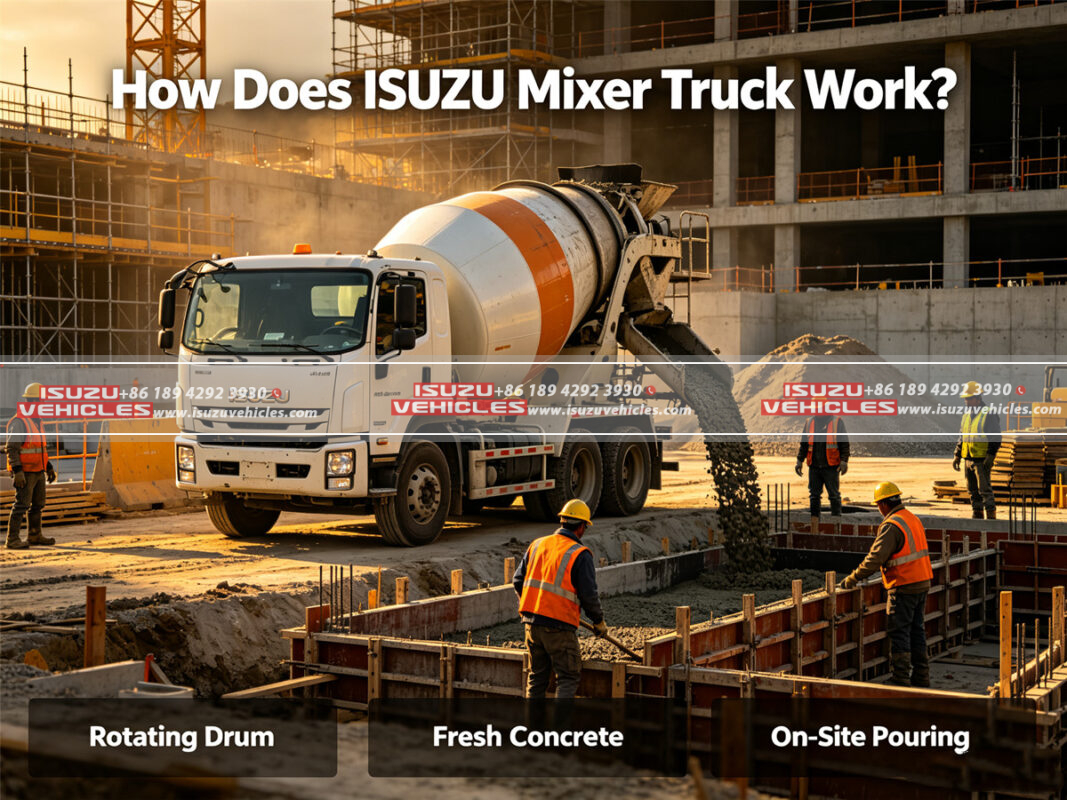
Understanding the Working Principle of an ISUZU Mixer Truck
In modern construction projects, concrete quality and delivery efficiency directly influence the strength, durability, and completion speed of buildings, bridges, roads, and other infrastructure developments. The ISUZU Mixer Truck plays a vital role in this process by providing a reliable method of transporting freshly mixed concrete while continuously maintaining the required consistency from the batching plant to the construction site.
Unlike ordinary transport vehicles that simply carry materials from one location to another, a mixer truck is a specialized engineering vehicle that combines transportation and mixing functions into a single mobile system. Its main task is not only to move concrete but also to prevent the mixture from separating, hardening, or losing quality before it reaches the pouring location.
Built on the proven commercial vehicle platform of ISUZU, ISUZU mixer trucks integrate a strong truck chassis, efficient powertrain, hydraulic drive system, and rotating mixing drum to achieve stable operation under heavy-duty construction conditions. Whether operating on urban construction sites, highways, industrial projects, or large infrastructure developments, these vehicles are designed to maintain concrete quality while improving transportation efficiency.
The working process of an ISUZU mixer truck can be divided into several key stages: loading concrete materials, rotating the drum during transportation, maintaining mixture consistency, and unloading concrete accurately at the construction site. Each stage depends on precise mechanical coordination between different systems.
Main Components That Make an ISUZU Mixer Truck Work
The performance of an ISUZU Mixer Truck depends on the interaction of multiple components, each designed to handle specific challenges associated with concrete transportation. From the chassis to the mixing drum, every part contributes to reliability, efficiency, and safe operation.
Heavy-Duty Chassis and Power System
The chassis serves as the foundation of the entire mixer truck and must support the combined weight of the vehicle, mixing equipment, and several tons of concrete. ISUZU mixer trucks use durable chassis structures designed to withstand continuous loading, vibration, and demanding road conditions.
A powerful engine provides the necessary torque for both driving and supporting auxiliary systems. Since mixer trucks frequently operate on construction sites with uneven terrain and steep access roads, sufficient engine power is essential for maintaining stable movement even under full load conditions.
The transmission system works together with the engine to deliver smooth power distribution, allowing the vehicle to operate efficiently in both city traffic and construction environments.
Rotating Mixing Drum Structure
The most recognizable feature of a mixer truck is the large cylindrical drum mounted behind the cab. Inside the drum are spiral mixing blades that continuously rotate to keep concrete components evenly distributed.
During transportation, the drum rotates slowly to prevent the concrete mixture from separating. This continuous movement ensures that cement, water, sand, and aggregate remain properly combined until the concrete reaches the construction site.
The drum itself is manufactured using high-strength steel materials that can withstand constant rotation, heavy weight, and abrasive contact with concrete materials over long operating periods.
The Concrete Mixing and Transportation Process
The actual operation of an ISUZU mixer truck involves a carefully controlled process designed to maintain concrete quality from production to final application.
Loading Fresh Concrete at the Batching Plant
The process begins when ready-mixed concrete is loaded into the rotating drum at a concrete batching plant. During loading, the drum rotates at a higher speed to help distribute materials evenly throughout the internal mixing chamber.
Once the required amount of concrete has been loaded, the operator adjusts the drum speed to transportation mode, where it rotates more slowly to maintain consistency rather than actively mix the material at maximum intensity.
This balance is important because excessive rotation can introduce unnecessary air into the mixture, while insufficient movement may cause separation of heavier aggregate materials.
Maintaining Concrete Quality During Transportation
During transportation, the hydraulic system continuously powers the drum rotation. This system allows the drum to rotate independently from the vehicle’s driving system, ensuring that concrete quality is maintained regardless of road conditions or travel distance.
The hydraulic motor, hydraulic pump, and control valves work together to regulate drum speed, allowing operators to adjust rotation according to concrete type, weather conditions, and transportation requirements.
For longer-distance deliveries, maintaining proper drum rotation becomes especially important because concrete can begin to lose workability if it remains stationary for extended periods.
Hydraulic Drive System and Drum Rotation Control
The hydraulic system is one of the most important technologies behind mixer truck operation because it converts engine power into controlled drum movement.
How the Hydraulic System Operates
The hydraulic pump receives power from the engine and transfers hydraulic fluid under pressure to the hydraulic motor connected to the mixing drum. The motor then converts hydraulic energy into mechanical rotation, allowing the drum to turn smoothly.
One major advantage of hydraulic drive systems is their ability to provide precise speed control and strong torque output. This allows the drum to rotate effectively even when carrying a full load of heavy concrete.
The hydraulic system also reduces mechanical stress because power transmission is smoother compared with direct mechanical drive methods.
Forward and Reverse Drum Rotation
The operator can control the direction of drum rotation depending on the required operation. During transportation and mixing, the drum rotates in one direction to keep the concrete blended. During unloading, the rotation direction is reversed, causing the internal blades to push concrete toward the discharge opening.
This simple but highly effective mechanism allows the mixer truck to perform both transportation and controlled concrete discharge using the same drum system.
Concrete Discharge and Construction Site Operation
When the ISUZU mixer truck arrives at the construction site, the unloading process begins. This stage requires precision because concrete must be delivered at the correct location and consistency.
Discharging Concrete Through Chutes
During unloading, the operator reverses the drum rotation direction, allowing the internal spiral blades to move concrete toward the rear outlet. Adjustable discharge chutes guide the concrete from the drum to the required pouring position.
The chute system allows workers to control where concrete is placed, which improves efficiency during foundation construction, road paving, building projects, and other applications.
Supporting Different Construction Environments
ISUZU mixer trucks are designed to operate in various construction environments, from large-scale infrastructure projects to smaller urban developments. Their compact chassis options allow them to access narrower roads, while larger configurations provide greater concrete transportation capacity.
This flexibility makes them suitable for contractors who require reliable concrete delivery solutions across different project sizes.
Advantages of Using ISUZU Mixer Trucks in Construction Projects
The popularity of ISUZU mixer trucks comes from their combination of durability, operational efficiency, and adaptability in demanding construction environments.
Reliable Performance Under Heavy Workloads
Construction sites often require vehicles to operate for long hours under challenging conditions. ISUZU mixer trucks are engineered with durable components that can withstand repeated loading cycles, vibration, dust, and uneven terrain.
Their reliable chassis and efficient engine systems help reduce downtime, allowing construction projects to maintain steady progress.
Fuel Efficiency and Maintenance Benefits
Fuel consumption is an important consideration for construction companies operating multiple vehicles. ISUZU engines are designed to balance power requirements with fuel efficiency, helping reduce operating costs over the vehicle’s service life.
In addition, standardized components and accessible maintenance points simplify servicing procedures, reducing repair time and improving fleet management efficiency.
Safety Features and Maintenance Requirements for Long-Term Operation
Safe operation of a mixer truck requires both reliable engineering and proper maintenance practices. Since these vehicles carry heavy loads and operate near construction workers, safety systems are essential.
Regular inspections of the hydraulic system, drum structure, tires, brakes, and chassis components help prevent unexpected failures. Operators must also ensure that the drum rotation system functions correctly before transportation and unloading.
The mixer truck should be cleaned after each operation because hardened concrete residue inside the drum can reduce mixing efficiency and increase maintenance costs. Proper cleaning and scheduled servicing significantly extend the working life of the vehicle.
The Role of ISUZU Mixer Trucks in Modern Construction Transport Networks
In modern construction ecosystems, mixer trucks often operate together with other specialized vehicles to complete complex projects efficiently. For example, a dump truck may transport construction materials such as sand and gravel, while an ISUZU Mixer Truck delivers ready-mixed concrete for structural applications. During emergency situations or construction site accidents, a tow truck may also support equipment recovery and vehicle relocation.
This coordinated approach allows different vehicle types to handle specific tasks while improving overall project efficiency. With strong engineering, dependable performance, and flexible configurations, ISUZU Vehicles continue to provide reliable solutions for construction, transportation, and infrastructure industries worldwide, helping businesses complete demanding projects with greater efficiency and confidence.