
Understanding the Brand’s Origin and Global Manufacturing Network
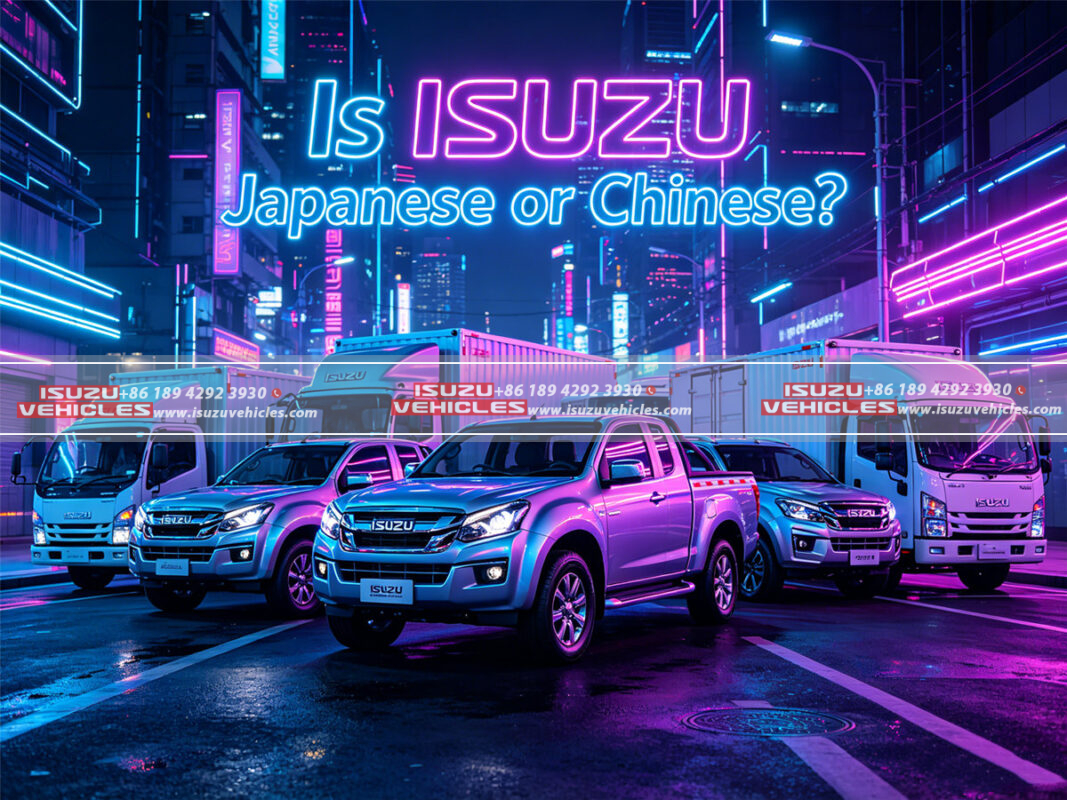
For many truck buyers, fleet operators, and logistics companies around the world, one common question continues to appear when discussing commercial vehicles: Is ISUZU Japanese or Chinese? The confusion is understandable, especially because ISUZU trucks are widely manufactured, assembled, and distributed across multiple countries, including China. However, the answer is very clear from a historical and corporate standpoint: ISUZU is a Japanese brand with deep roots in Japan’s automotive industry, although it also operates major production facilities and partnerships in China, including a significant manufacturing presence in Chongqing.
Understanding the relationship between ISUZU’s Japanese identity and its Chinese manufacturing operations is important for buyers who want clarity regarding engineering standards, product quality, supply chain efficiency, and global production strategy. The modern commercial vehicle industry is highly international, and ISUZU represents one of the strongest examples of how a Japanese manufacturer can successfully combine Japanese engineering with large-scale overseas manufacturing capabilities.
1. The Origins of ISUZU: A Historic Japanese Automotive Brand
The history of ISUZU Motors Limited begins in Japan, where the company established itself as one of the country’s earliest automobile manufacturers. ISUZU traces its roots back to the early twentieth century and officially became known as ISUZU Motors in 1949. The company was named after the Isuzu River in Japan, reflecting its strong national identity and heritage.
From the very beginning, ISUZU focused heavily on diesel engines, commercial vehicles, and industrial transportation solutions rather than passenger cars alone. Over the decades, the company earned a global reputation for producing durable trucks, reliable powertrains, and fuel-efficient diesel technology that could operate under demanding road and climate conditions.
4.1 Japanese Engineering Philosophy
One of the defining characteristics of ISUZU is its adherence to Japanese engineering principles, including:
- Precision manufacturing
- Long-term durability
- Fuel efficiency optimization
- Reliability under heavy workloads
- Simplified maintenance design
These engineering standards remain central to the company’s global operations today, regardless of where the vehicles are assembled.
4.2 Global Recognition of Japanese Quality
In international markets across Asia, Africa, the Middle East, Latin America, and Europe, ISUZU trucks are widely recognized as Japanese commercial vehicles. Their reputation for durability and operational efficiency has made them particularly popular among logistics companies, municipal fleets, construction operators, and industrial transportation businesses.
Even when produced outside Japan, ISUZU vehicles generally follow Japanese technical specifications, quality control systems, and production management processes.
2. Why People Think ISUZU Might Be Chinese
The confusion surrounding ISUZU’s identity largely comes from the company’s extensive manufacturing activities in China. Because many ISUZU trucks sold internationally are assembled or manufactured in Chinese facilities, some buyers naturally assume the brand itself is Chinese.
In reality, this reflects a broader trend within the global automotive industry, where many internationally recognized brands operate factories in multiple countries to improve efficiency, reduce logistics costs, and serve regional markets more effectively.
2.1 China’s Role in Commercial Vehicle Manufacturing
China has become one of the world’s largest manufacturing hubs for commercial vehicles and automotive components. Nearly every major truck manufacturer now maintains some level of production or partnership within China due to:
- Strong industrial infrastructure
- Large-scale component supply chains
- Competitive manufacturing costs
- Access to skilled labor
- Strategic export logistics
ISUZU’s presence in China is part of this global manufacturing strategy rather than a change in brand nationality.
2.2 Chinese-Assembled ISUZU Trucks
Many trucks carrying the ISUZU badge are assembled in China for export to developing markets. These vehicles often use Japanese-designed engines, chassis systems, and engineering platforms while benefiting from China’s large-scale production capacity.
As a result, customers may encounter ISUZU trucks labeled “Made in China,” even though the brand itself remains Japanese.
3. The Huge ISUZU Factory Presence in Chongqing, China
One of the most important aspects of ISUZU’s global manufacturing strategy is its major production presence in Chongqing, China. This facility has become a key part of ISUZU’s international supply chain and export operations.
3.1 Chongqing as a Manufacturing Center
Chongqing is one of China’s most significant industrial cities and has developed into a major automotive manufacturing hub. The region offers extensive transportation infrastructure, advanced industrial capabilities, and access to large-scale supplier networks.
ISUZU’s operations in Chongqing allow the company to efficiently produce commercial vehicles for both domestic Chinese markets and overseas export destinations.
3.2 Cooperation With Chinese Manufacturers
ISUZU has maintained long-term joint ventures and partnerships with Chinese automotive companies to strengthen production capacity and regional market penetration. Through these collaborations, the company combines:
- Japanese engineering expertise
- Chinese manufacturing efficiency
- Localized production capabilities
- Regional market adaptability
This approach enables ISUZU to remain competitive in rapidly growing commercial vehicle markets around the world.
3.3 Quality Standards Inside the Chongqing Facilities
Although the trucks may be manufactured in China, the production systems often follow strict Japanese operational standards, including:
- Detailed inspection protocols
- Component traceability systems
- Precision assembly procedures
- Durability testing standards
- Engine performance verification
For many buyers, this hybrid production model offers the advantages of Japanese engineering combined with efficient manufacturing scalability.
4. How Japanese Engineering Still Defines ISUZU Trucks
Even with extensive overseas manufacturing, the technical DNA of ISUZU remains fundamentally Japanese. The company continues to invest heavily in research, powertrain development, emissions technology, and commercial vehicle engineering.
4.1 Diesel Engine Leadership
ISUZU has long been regarded as one of the world’s leading diesel engine manufacturers. Its engines are widely respected for:
- Long service life
- Fuel economy
- Stable torque delivery
- Low maintenance requirements
- Adaptability to difficult road conditions
Many of these engine technologies are designed or developed under Japanese engineering leadership before being integrated into vehicles manufactured globally.
4.2 Chassis and Structural Design
ISUZU trucks are particularly known for their strong yet lightweight chassis structures, which help improve payload efficiency while maintaining durability. This design philosophy is deeply connected to Japanese commercial transportation engineering, where balancing efficiency and reliability is considered essential.
4.3 Global Technical Oversight
Even factories located outside Japan often operate under technical supervision or manufacturing systems influenced by ISUZU’s Japanese headquarters. This helps maintain consistency across global production lines and ensures vehicles meet the company’s quality expectations.
5. ISUZU’s Global Manufacturing Strategy and Market Expansion
Modern truck manufacturing is no longer limited to one country. Like many major automotive brands, ISUZU operates through an international production network designed to support worldwide demand.
The company maintains manufacturing, assembly, and partnership operations in several countries throughout Asia and other global regions. This allows ISUZU to:
- Reduce shipping costs
- Improve delivery times
- Adapt products for local regulations
- Expand export capabilities
- Maintain competitive pricing
5.1 Why Overseas Factories Matter
Commercial vehicle markets are highly competitive, especially in developing economies where affordability and durability are equally important. Manufacturing in China helps ISUZU balance production efficiency with market accessibility.
For fleet operators, this often translates into more readily available spare parts, shorter lead times, and broader vehicle availability.
5.2 Export-Oriented Production
Many Chongqing-manufactured ISUZU trucks are exported internationally rather than remaining exclusively in China. These exports support infrastructure projects, municipal fleets, logistics companies, and industrial transportation operations worldwide.
As a result, buyers in many countries may purchase a Chinese-assembled ISUZU truck while still receiving a product developed under Japanese engineering principles.
6. Understanding the Difference Between Brand Nationality and Manufacturing Location
One of the biggest misunderstandings in the automotive industry is the assumption that manufacturing location automatically determines a brand’s nationality. In reality, these are two very different concepts.
A vehicle brand’s nationality is determined by:
- Corporate origin
- Brand ownership
- Historical development
- Headquarters location
- Engineering leadership
By these standards, ISUZU is unquestionably a Japanese brand. The company was founded in Japan, remains headquartered in Japan, and continues to operate as a Japanese commercial vehicle manufacturer.
At the same time, ISUZU has embraced international manufacturing strategies, including its enormous and strategically important production operations in Chongqing, China. These facilities play a major role in supporting global demand and expanding the reach of ISUZU trucks into international markets.
Today’s global trucking industry depends heavily on international cooperation, and ISUZU represents a strong example of how Japanese engineering excellence can successfully combine with Chinese manufacturing capabilities to create durable and competitive commercial vehicles for worldwide customers. Whether buyers are looking for a reliable cargo truck, a durable box truck, or a complete lineup of professional ISUZU Vehicles, understanding this relationship helps explain why ISUZU continues to maintain a strong reputation across both developed and emerging transportation markets.