
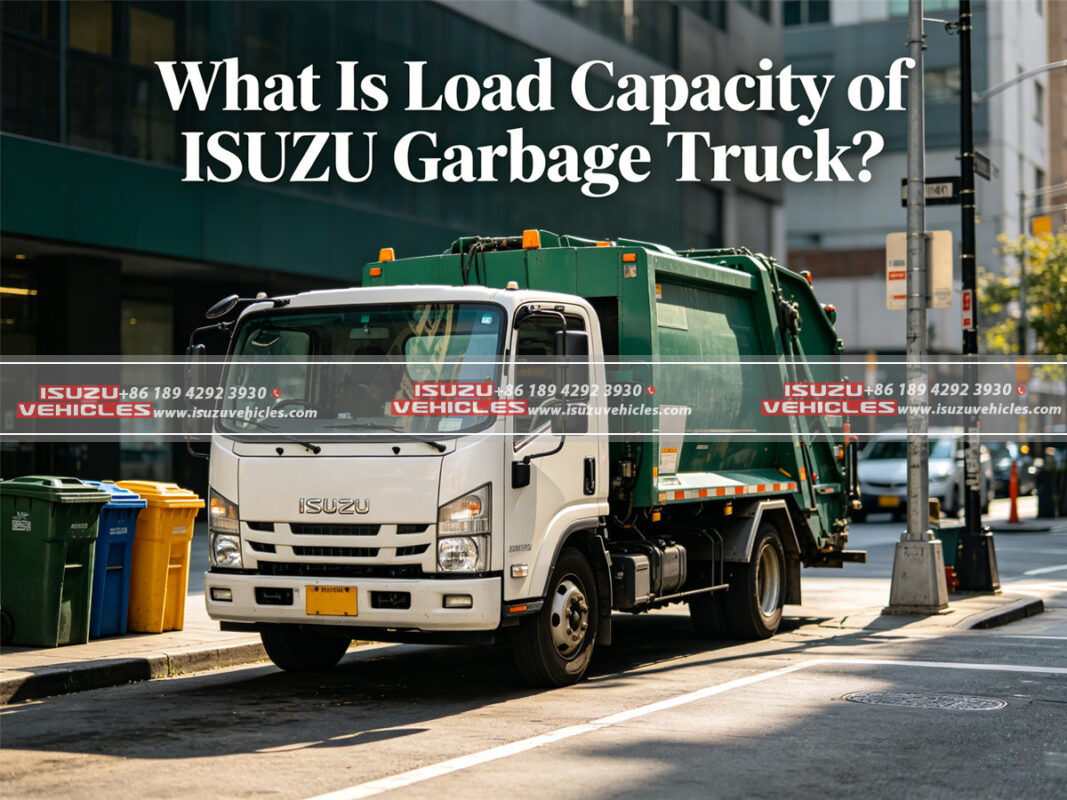
Understanding the Importance of Load Capacity in Garbage Trucks
In modern urban sanitation systems, waste collection efficiency depends heavily on the performance and carrying capability of collection vehicles, because municipalities and environmental service companies must handle growing volumes of residential, commercial, and industrial waste while maintaining reliable daily operations. Among the many commercial sanitation vehicles used worldwide, ISUZU garbage trucks have become highly respected for their durability, operational efficiency, and balanced load capacity, making them a preferred choice for both municipal and private waste management fleets.
Load capacity is one of the most important factors when selecting a garbage truck because it directly affects route efficiency, fuel consumption, labor productivity, and operational costs. A truck with insufficient carrying capacity may require frequent unloading trips, increasing downtime and reducing overall collection productivity, while an overloaded vehicle can experience accelerated wear, reduced stability, and increased maintenance expenses. This is why sanitation operators carefully evaluate garbage truck load specifications before investing in fleet equipment.
The load capacity of an ISUZU garbage truck can vary significantly depending on the truck model, body configuration, compaction system, axle setup, and intended operational application. Some lighter models are designed for compact urban waste collection routes where maneuverability is more important than maximum payload, while larger heavy-duty configurations are built for transporting high volumes of waste across industrial zones, large cities, and long-distance disposal operations.
Factors That Affect ISUZU Garbage Truck Load Capacity
Truck Chassis and Gross Vehicle Weight Rating
One of the main factors determining the load capacity of an ISUZU garbage truck is the chassis structure and Gross Vehicle Weight Rating, commonly referred to as GVWR. This specification defines the maximum total weight the vehicle can safely handle, including the truck itself, waste payload, fuel, crew members, and additional equipment.
ISUZU manufactures multiple truck platforms ranging from medium-duty urban sanitation vehicles to larger heavy-duty commercial models, allowing operators to choose configurations that match their specific waste collection requirements. Smaller urban garbage trucks may carry lighter payloads while offering greater maneuverability, whereas larger industrial units are designed for maximum hauling capacity and continuous heavy-duty operation.
The reinforced chassis design found in ISUZU sanitation vehicles helps distribute heavy waste loads more effectively while maintaining structural stability and long-term durability, which is essential for demanding collection environments.
Compaction System Efficiency
The compaction system plays a major role in determining how much waste a garbage truck can carry during daily operations. Modern ISUZU garbage trucks are often equipped with hydraulic compaction systems that compress waste materials inside the storage body, allowing the truck to carry significantly larger waste volumes than non-compacting collection vehicles.
Compaction ratios vary depending on the truck body design and hydraulic system configuration, but efficient compaction technology can greatly improve operational productivity by reducing the number of unloading trips required during collection routes.
This increased waste density not only improves route efficiency but also helps reduce fuel usage and labor costs because trucks can remain operational longer before reaching maximum capacity.
Body Type and Waste Material
Different garbage truck body configurations are designed for different waste collection applications, and this directly affects payload capability. Rear loader, side loader, front loader, and compactor truck designs each have unique operational advantages depending on the type of waste being collected and the working environment.
The weight and density of waste materials also influence effective load capacity. Lightweight household waste occupies more physical volume but may weigh less overall, while industrial debris or construction waste can place much greater weight stress on the vehicle even when occupying less cargo space.
Because of these variations, ISUZU garbage trucks are often customized according to operational needs, allowing sanitation companies to optimize load capacity for specific waste collection tasks.
Typical Load Capacity Ranges of ISUZU Garbage Trucks
Medium-Duty Urban Collection Trucks
Many medium-duty ISUZU garbage trucks used for residential and urban waste collection are designed with payload capacities ranging from several tons up to moderate heavy-duty limits, depending on the compaction body and axle configuration. These vehicles are highly suitable for city operations where narrow streets, frequent stops, and maneuverability are major operational concerns.
Their balanced size allows operators to maintain efficient collection performance while navigating crowded urban environments more easily than oversized sanitation vehicles. Despite their more compact dimensions, advanced compaction systems still allow these trucks to handle substantial waste volumes during daily collection routes.
Heavy-Duty Industrial Garbage Trucks
For industrial waste management and high-volume municipal operations, larger heavy-duty ISUZU garbage trucks are available with significantly increased payload capacities capable of handling demanding large-scale waste transportation requirements.
These trucks are typically equipped with reinforced suspension systems, multiple axle configurations, and larger compaction bodies designed to maximize waste transportation efficiency over extended operational periods. Heavy-duty models are especially useful in metropolitan regions where sanitation fleets must collect and transport large waste volumes continuously throughout the day.
The increased carrying capacity of these trucks helps reduce operational interruptions while improving fleet productivity and reducing transportation costs associated with landfill trips.
Specialized Waste Collection Applications
Certain ISUZU garbage truck configurations are designed for specialized sanitation tasks such as industrial waste handling, recycling collection, hazardous material transportation, and commercial refuse management. These specialized vehicles may prioritize containment systems, waste separation features, or operational flexibility rather than simply maximizing payload volume.
In these cases, load capacity is balanced with safety requirements, regulatory compliance, and specialized waste handling functionality to ensure efficient and secure transportation operations.
How Higher Load Capacity Improves Waste Collection Efficiency
Reduced Collection Trips
One of the biggest operational advantages of higher load capacity in ISUZU garbage trucks is the ability to reduce the number of trips required between collection zones and disposal facilities. Fewer unloading trips mean less fuel consumption, reduced travel time, lower labor costs, and improved route efficiency.
For municipalities managing large urban populations, improving route productivity can significantly reduce overall sanitation expenses while maintaining reliable waste collection schedules.
Lower Fuel and Maintenance Costs
Although larger payloads increase vehicle workload, efficient compaction systems and optimized route performance can actually help reduce overall operational costs by minimizing unnecessary transportation cycles. ISUZU garbage trucks are engineered to balance carrying capacity with fuel efficiency, helping operators manage long-term operating expenses more effectively.
In addition, fewer disposal trips reduce wear on vehicle components such as tires, brakes, and drivetrain systems, contributing to lower maintenance costs and longer service life.
Improved Fleet Productivity
Waste management companies and municipal sanitation departments often operate under strict collection schedules, making fleet productivity extremely important for maintaining service quality. Higher-capacity garbage trucks allow operators to complete larger collection areas within shorter operational periods, improving workforce efficiency and overall service reliability.
This productivity advantage becomes especially valuable during periods of increased waste generation or in densely populated urban regions where collection demands remain consistently high.
Why ISUZU Garbage Trucks Remain a Trusted Choice Worldwide
The continued popularity of ISUZU garbage trucks across global sanitation markets is closely connected to their ability to combine strong load capacity, reliable mechanical performance, durable chassis engineering, and efficient waste handling systems within a highly practical commercial vehicle platform. Municipal authorities and private waste management companies require trucks capable of handling demanding workloads while maintaining operational stability over many years of continuous service, and ISUZU vehicles consistently deliver these qualities.
As waste management systems continue evolving alongside urban growth and stricter environmental regulations, sanitation fleets are increasingly focused on vehicles that improve efficiency, reduce operational costs, and support sustainable infrastructure management. ISUZU garbage trucks remain highly competitive because they provide the versatility and durability necessary for both traditional waste collection and modern environmental service operations.
In addition to garbage collection vehicles, municipalities and contractors also rely on specialized sanitation equipment such as advanced sweeper truck systems for road cleaning operations and industrial vacuum truck units for sewage and liquid waste maintenance, all of which contribute to the broader reputation of dependable ISUZU Vehicles used across sanitation, infrastructure, and public service industries worldwide.