
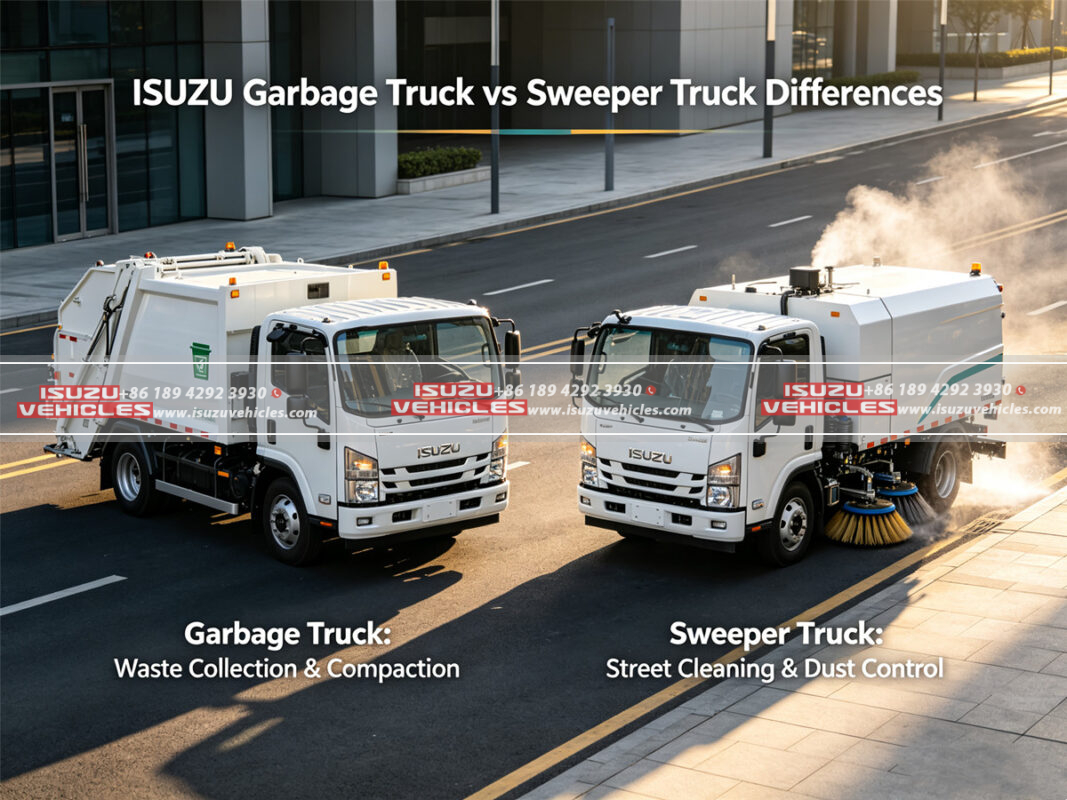
The Different Roles of ISUZU Garbage Trucks and Sweeper Trucks in Modern Cities
Urban sanitation is one of the most important parts of city management, directly affecting environmental quality, public health, and the overall living experience of residents. As cities continue to grow and waste volumes increase, municipalities and sanitation companies require specialized vehicles that can handle different cleaning and waste management tasks efficiently. Among the most commonly used sanitation vehicles are the ISUZU Garbage Truck and the ISUZU Sweeper Truck, both of which play important but completely different roles in maintaining clean urban environments.
Although both vehicles are often seen working on city streets, they are designed for different purposes. A garbage truck focuses on collecting, compressing, and transporting solid waste from residential areas, commercial locations, and public spaces. A sweeper truck, on the other hand, is designed to clean road surfaces by removing dust, dirt, leaves, sand, and other debris through sweeping and vacuum systems.
Understanding the differences between these two vehicles is essential for cities and businesses when selecting sanitation equipment. Choosing the wrong type of truck may lead to inefficient operations, higher maintenance costs, and reduced cleaning effectiveness.
Built on the reliable commercial vehicle platform of ISUZU, ISUZU sanitation trucks provide durable, efficient, and flexible solutions for different municipal applications. Whether managing household waste collection or maintaining clean road surfaces, ISUZU specialized vehicles are designed to support modern urban sanitation requirements.
ISUZU Garbage Truck: Designed for Waste Collection and Transportation
The primary function of a garbage truck is collecting and transporting solid waste. These vehicles are an essential part of municipal waste management systems because they allow sanitation teams to efficiently remove waste from communities and deliver it to disposal or recycling facilities.
Main Functions of ISUZU Garbage Trucks
ISUZU garbage trucks are designed to handle various types of waste, including household garbage, commercial waste, and public area waste. Different configurations are available depending on operational requirements, including rear loader garbage trucks, side loader garbage trucks, and compression garbage trucks.
The main working process usually includes:
- Loading waste into the collection compartment.
- Compressing waste to increase transportation efficiency.
- Transporting collected waste to disposal locations.
- Unloading waste through hydraulic mechanisms.
The compression function is one of the most important features because it allows the truck body to hold a larger amount of waste compared with a standard cargo vehicle.
Advantages of ISUZU Garbage Trucks
ISUZU garbage trucks offer several advantages for waste management operations:
- Higher waste collection efficiency
- Reduced transportation frequency
- Cleaner waste handling process
- Improved worker safety
- Better control of unpleasant odors and leakage
The sealed garbage compartment helps prevent waste from falling onto roads while reducing environmental pollution during transportation.
For cities with large populations, efficient garbage collection is essential because waste accumulation can quickly affect public health and urban cleanliness.
ISUZU Sweeper Truck: Designed for Road Surface Cleaning
Unlike garbage trucks, a sweeper truck is not designed to collect household waste. Its main purpose is maintaining road cleanliness by removing dust, dirt, small debris, and other materials from streets and public areas.
How ISUZU Sweeper Trucks Work
Modern ISUZU sweeper trucks combine several cleaning technologies, including rotating brushes, vacuum systems, and water spraying functions.
The cleaning process typically involves:
- Side brushes moving debris toward the center area.
- Main brushes collecting materials from the road surface.
- Vacuum systems removing fine particles.
- Water spraying systems reducing dust during operation.
This integrated system allows sweeper trucks to clean large areas efficiently while improving urban air quality.
Applications of ISUZU Sweeper Trucks
Sweeper trucks are widely used in:
- City roads
- Highways
- Industrial parks
- Airports
- Public squares
- Residential communities
They are especially valuable in areas where dust control and environmental protection are priorities.
For example, industrial zones may generate large amounts of dust from vehicle movement and material handling. A sweeper truck can regularly clean these areas and reduce airborne particles.
Key Differences Between ISUZU Garbage Trucks and Sweeper Trucks
Although both vehicles support urban sanitation, their functions, designs, and operating methods are significantly different.
Purpose and Working Area
The biggest difference is the type of cleaning task each vehicle performs.
A garbage truck focuses on waste collection:
- Collects household and commercial waste
- Transports solid waste
- Compresses garbage for efficient hauling
A sweeper truck focuses on road maintenance:
- Removes dust and debris from surfaces
- Cleans streets and public areas
- Controls airborne particles
In simple terms, garbage trucks manage waste disposal, while sweeper trucks maintain road cleanliness.
Equipment Structure Differences
The body design of each vehicle reflects its purpose.
A garbage truck usually includes:
- Sealed waste storage compartment
- Hydraulic compression system
- Loading mechanism
- Waste discharge system
A sweeper truck usually includes:
- Sweeping brushes
- Vacuum collection system
- Water tank
- Dust suppression equipment
Because the equipment requirements are different, the two vehicles cannot replace each other.
Operating Methods
Garbage trucks typically operate according to collection schedules, visiting residential communities, businesses, and waste collection points.
Sweeper trucks often operate according to road cleaning schedules, covering large areas during early mornings, nights, or low-traffic periods to avoid disrupting transportation.
Choosing Between an ISUZU Garbage Truck and Sweeper Truck
The right choice depends on the specific sanitation requirements of the organization.
When to Choose an ISUZU Garbage Truck
A garbage truck is the better choice when the main task is waste collection and transportation.
It is suitable for:
- Municipal waste management departments
- Residential waste collection services
- Commercial waste companies
- Industrial waste transportation
For cities dealing with increasing waste volumes, garbage trucks provide an efficient solution for maintaining clean communities.
When to Choose an ISUZU Sweeper Truck
A sweeper truck is more suitable when the main goal is improving road cleanliness and controlling dust.
It is ideal for:
- Highway maintenance
- Urban road cleaning
- Airport maintenance
- Industrial area cleaning
For cities focusing on environmental quality and air pollution control, sweeper trucks provide important support.
How ISUZU Sanitation Vehicles Improve Smart City Development
Modern cities are moving toward smarter and more sustainable sanitation systems. Advanced sanitation vehicles now include intelligent controls, improved fuel efficiency, and better environmental protection features.
Integration with Digital Fleet Management
Many modern sanitation fleets use digital systems to monitor:
- Vehicle location
- Working hours
- Fuel consumption
- Maintenance status
- Cleaning routes
This helps managers optimize operations and reduce unnecessary costs.
Combining Different Sanitation Vehicles
A complete urban cleaning system usually requires multiple specialized vehicles working together.
For example, a garbage truck handles waste collection, while a sweeper truck maintains road cleanliness. Other vehicles, such as a vacuum truck, can support sewer cleaning and wastewater management, while a sprinkler truck can provide road washing, dust suppression, and landscape watering functions.
Each vehicle performs a specific role, creating a complete sanitation network.
Maintenance Considerations for ISUZU Garbage Trucks and Sweeper Trucks
Regular maintenance is essential because sanitation vehicles often operate every day under demanding conditions.
Garbage Truck Maintenance
Important maintenance tasks include:
- Checking hydraulic compression systems
- Inspecting waste containers
- Maintaining loading mechanisms
- Cleaning sealing components
Proper maintenance ensures reliable waste collection and prevents operational interruptions.
Sweeper Truck Maintenance
Sweeper trucks require regular inspection of:
- Brushes
- Vacuum systems
- Water pumps
- Hydraulic components
- Dust control systems
Maintaining these components helps ensure consistent cleaning performance.
Future Development of ISUZU Sanitation Vehicles
As cities continue to focus on environmental protection and intelligent management, sanitation vehicles are becoming more advanced. Future garbage trucks and sweeper trucks are expected to include smarter control systems, cleaner energy solutions, and improved automation.
Electric and hybrid technologies, intelligent route planning, and advanced monitoring systems will help cities reduce emissions while improving sanitation efficiency.
Selecting the right sanitation vehicle is an important decision for any city or organization. While an ISUZU Garbage Truck provides efficient waste collection and transportation, an ISUZU Sweeper Truck focuses on road cleaning and dust control. Together with supporting equipment such as a vacuum truck and sprinkler truck, these specialized solutions create a complete urban maintenance system. With reliable engineering, flexible configurations, and professional manufacturing experience, ISUZU Vehicles continue to support cleaner, safer, and more sustainable cities worldwide.